
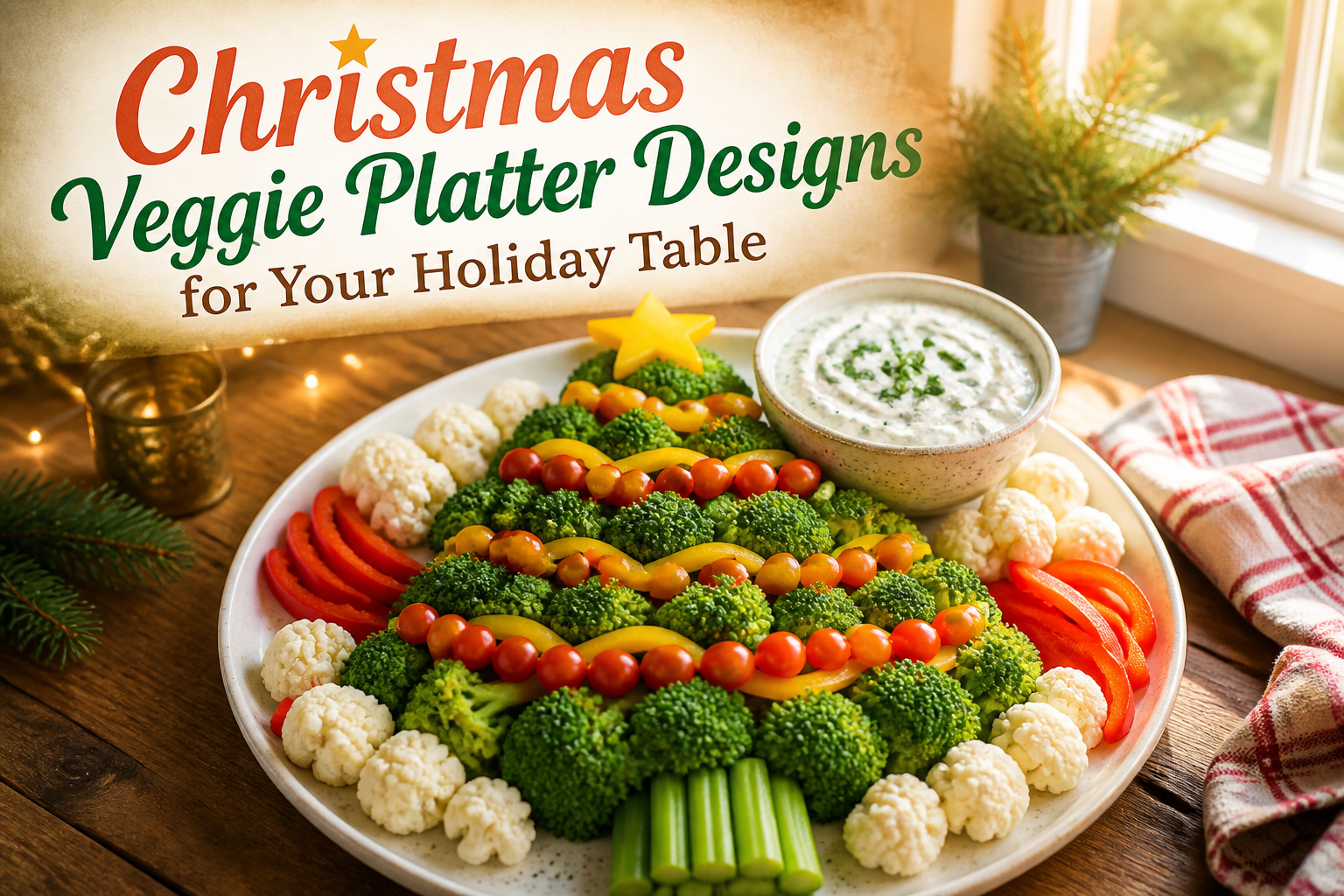
A christmas veggie platter is an arrangement of raw vegetables shaped into holiday figures like trees, wreaths, or snowmen, served with dip.
Most designs fail because the vegetables are not dried thoroughly after rinsing; wet broccoli weeps onto the tray and turns the whole thing soggy within an hour.
The Christmas tree version alone needs an hour and twenty-five minutes, but most of that is just letting the homemade ranch dip rest in the refrigerator so the parsley, chives, and Worcestershire actually taste like something.
Christmas Tree Veggie Platter
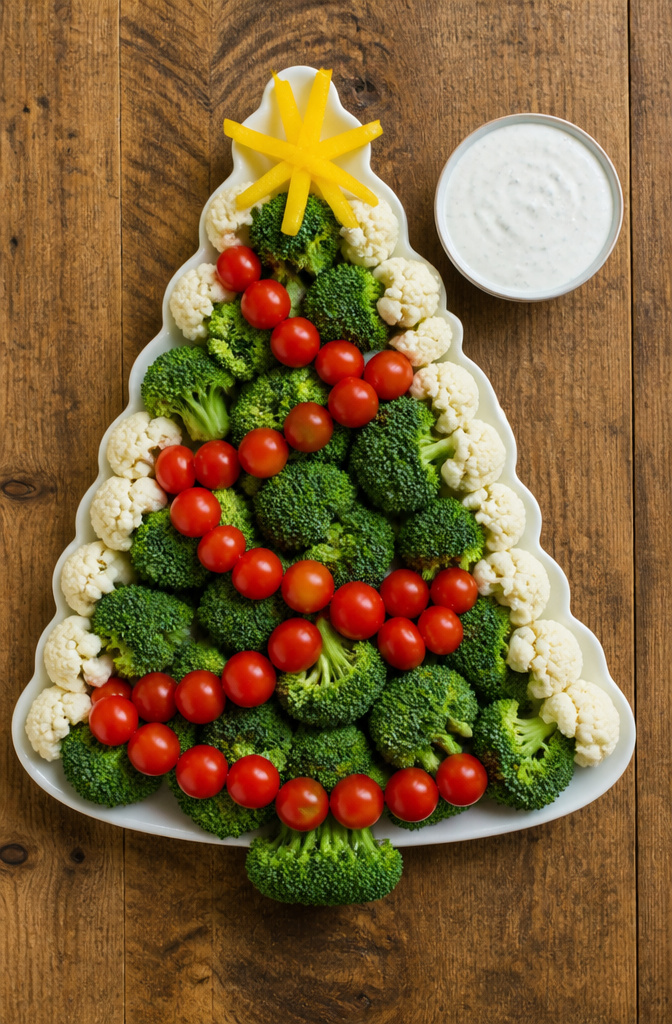
You need about 1 hour 25 minutes total for this one, though most of that is the dip resting in the fridge. Start the ranch-style dip first: sour cream, mayonnaise, chopped parsley and chives, Worcestershire, garlic, salt, and pepper.
It needs at least an hour for the flavors to blend, and it holds fine covered in the refrigerator.
While the dip chills, rinse and dry your vegetables thoroughly. Trim the stems on three cups of broccoli florets and one and a half cups of cauliflower so they sit flat.
On a large oblong platter, arrange the broccoli into a triangular tree shape, wide at the bottom and narrowing as you go up.
Tuck cauliflower florets into any gaps where the green thins out; they read as snow against the darker tree and keep the shape full.
For ornaments, press fourteen grape tomatoes into the broccoli in rows like garland, or scatter them.
Cut half a yellow bell pepper into strips and lay them diagonally across as draped garland, or shape a few pieces into a star at the top where the tree narrows.
The yellow pops against the green in a way red alone does not.
Cover and refrigerate up to four hours if you want the work done early. Right before guests arrive, stand about forty pretzel sticks at the bottom for the trunk.
The pretzels go in last because they soften if they sit on the moist vegetables too long. Serve the dip in a bowl beside the platter, not on it, so the tree stays intact while people dip.
Christmas Wreath Veggie Tray
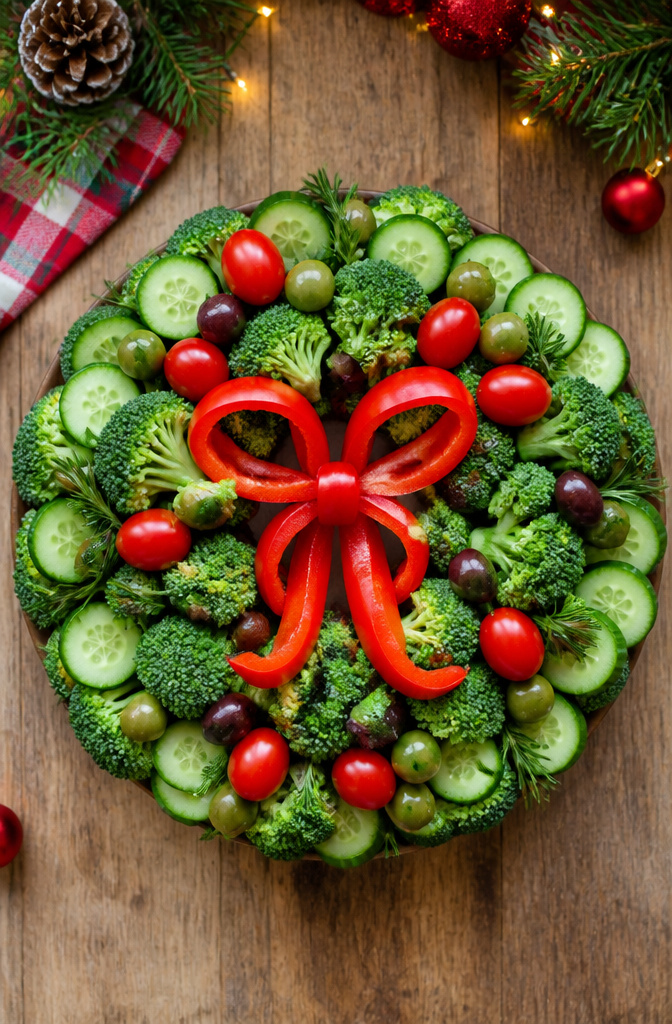
A Christmas wreath veggie tray takes about fifteen minutes to assemble and reads instantly as holiday fare. Build the circle from green vegetables cut into bite-sized pieces.
Broccoli florets work well, as do sliced cucumbers, snap peas, or celery. Lay them in a dense ring on a large round platter, overlapping slightly so no gaps show.
For the bow at the bottom, cut a red bell pepper into strips. Two curved pieces form the loops, a narrow strip with a small V-cut makes the ribbon tails, and a thin ridge piece fills the center knot.
Cherry tomatoes tucked around the wreath read as ornaments; radishes or olives pressed into the greens give the dimpled look of berries on holly.
The contrast of red against green does most of the visual work, so the pepper bow does not need to be precise to register from across the room.
This arrangement scales up or down by platter size. A small dinner plate works for a household of four; a full tray feeds a party.
The vegetables hold at room temperature for an hour or two, or you can cover and refrigerate until guests arrive.
Snowman Veggie Tray
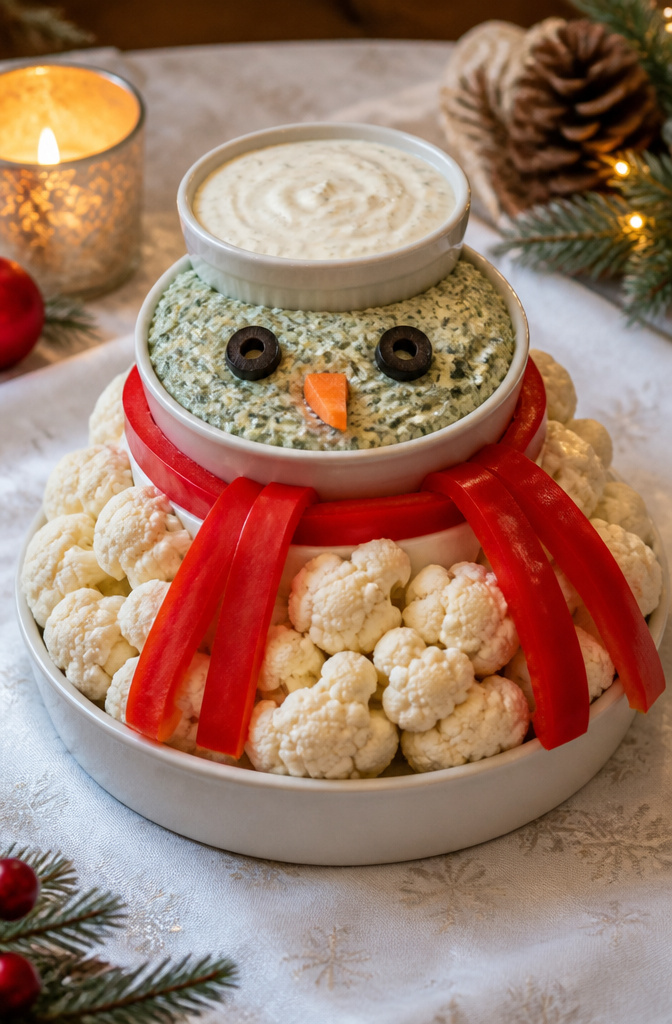
A three-tiered snowman starts with three bowls of dip arranged small to large on your tray or cutting board.
Ranch goes in the smallest bowl, spinach or artichoke dip in the medium, and cauliflower florets piled high in the largest to form the base.
Build the second tier from more cauliflower or switch to cucumber slices if you want cleaner lines and less prep time.
For the face, press two sliced black olives into the medium dip bowl for eyes and stand a baby carrot on end for the nose. A cucumber slice cut with a paring knife or water bottle cap makes the mouth.
Add three more olive slices down the front as buttons, right on the dip. Finish with three strips of red bell pepper draped across for the scarf, letting the ends trail onto the tray.
This is one of two snowman designs worth considering. The cauliflower version reads fluffy and white, but the slices hold structure longer on a buffet table.
Either way, the face pieces anchor best into dip, not raw veg, so place your bowls with that in mind.
Santa Veggie Tray

A Santa veggie tray builds a 15-serving platter that reads instantly from across the room. Start with the hat: cherry tomatoes packed tight in a triangular wedge, stem ends down so they sit flat.
Cauliflower florets fill the beard and the white trim, broken small enough to scoop with a cracker. Two black olives, pitted and halved, become the eyes; set them slightly uneven, and the face looks alive instead of mechanical.
The hat band and brim need a color break. Cucumber strips laid skin-side-up give you that dark green edge, or use red or green pepper strips if you want more pop against the tomatoes.
Either way, cut them to the width of a vegetable stick, not thin enough to curl.
Space the pieces evenly so the red and white read instantly as Santa. Pack the cauliflower too dense and it reads as a white blob; leave gaps and the board shows through like a bald spot.
Aim for florets touching at the edges but not crushed. Build the beard first, then set the hat on top so the tomato line stays clean.
The whole thing takes about twenty minutes once your vegetables are cut, and it holds on the counter for an hour before the cauliflower edges start to dull.
Holiday Tree Veggies
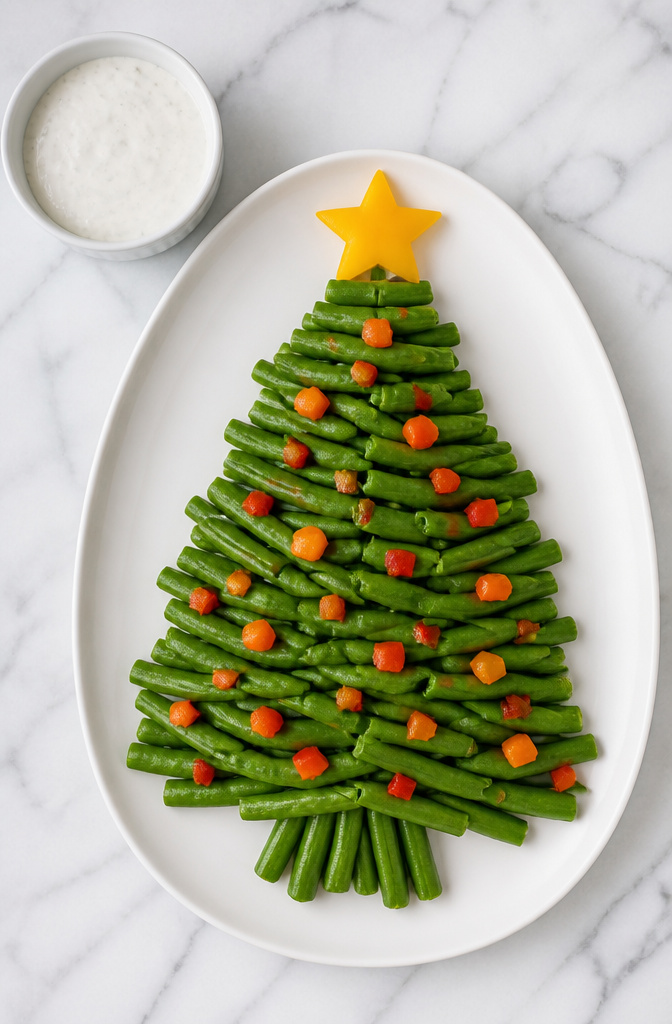
A holiday tree built from green beans handles differently than the usual broccoli or snap-pea base.
You microwave four cups of them with a third of a cup of water for five minutes, covered, which softens the beans enough that kids can press them into a tree shape without snapping stems.
That cooked texture is the structural difference here: raw florets stand on their own, but these beans need that five-minute head start to lie flat and stay put.
The ornament dice come from red and orange bell peppers, cut to roughly the width of the beans so they read as bulbs rather than confetti. A yellow pepper gets the star job, punched with a small star-shaped cutter.
For trunks, you halve string cheese sticks, which gives you a pale, straight anchor that contrasts with the green.
The thirty-five-minute total includes that microwave stint, so this is not a last-minute assembly. The prep is front-loaded: cook the beans, dice the peppers, cut the cheese, then hand the layout to whoever is fastest at arranging.
Veggie House Appetizer
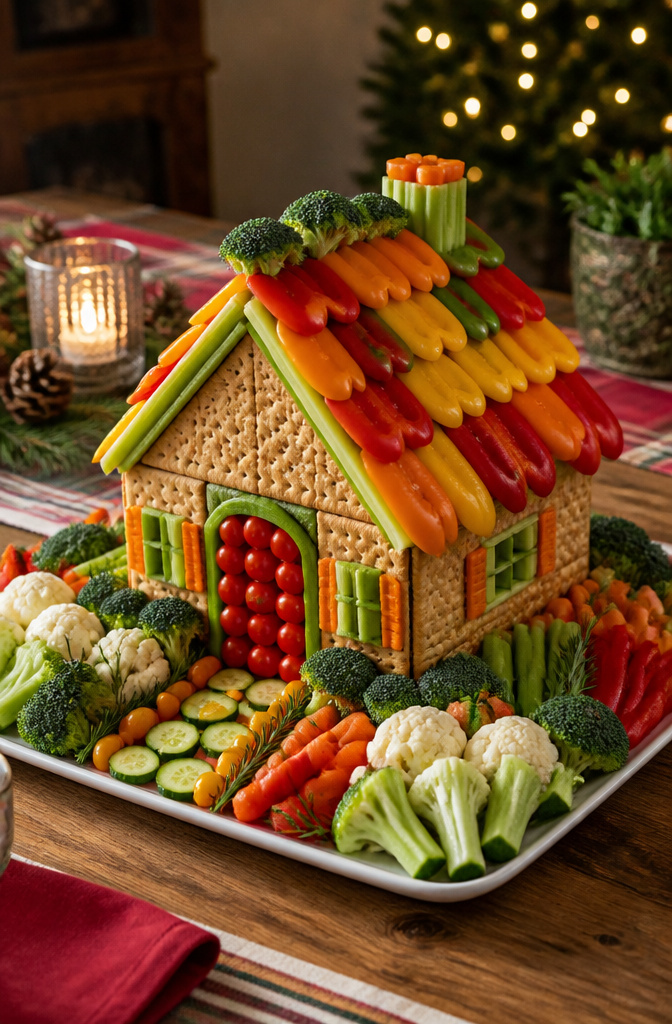
A house-shaped veggie platter asks more of you than a flat wreath or a vertical tree, but guests circle back to a centerpiece that stands up from the table.
You build walls from sturdy crackers or bread slices, standing them in soft dip like hummus or labneh so they hold without fuss.
The roof is where the vegetables live: bell pepper shingles in overlapping rows, broccoli florets packed tight for a thatched look, or cucumber slices layered like slate tiles. A cherry tomato door and a pretzel-stick window frame finish the scene.
Build the walls first and let them set for ten minutes before adding the roof; sliding crackers ruin the effect and leave you starting over. The tree and wreath shapes let you pile vegetables loose and call it done.
The house needs structure, which means fewer total vegetables and more engineering. That also means it empties faster, so set out a refill bowl nearby or plan it for a smaller gathering rather than a thirty-person open house.
Cleanup runs higher here. Dip gets into cracker crevices, and bread softens if it sits too long.
Assemble it within an hour of serving, or use crackers over bread for longer stability.
Christmas Ornament Veggie Tray
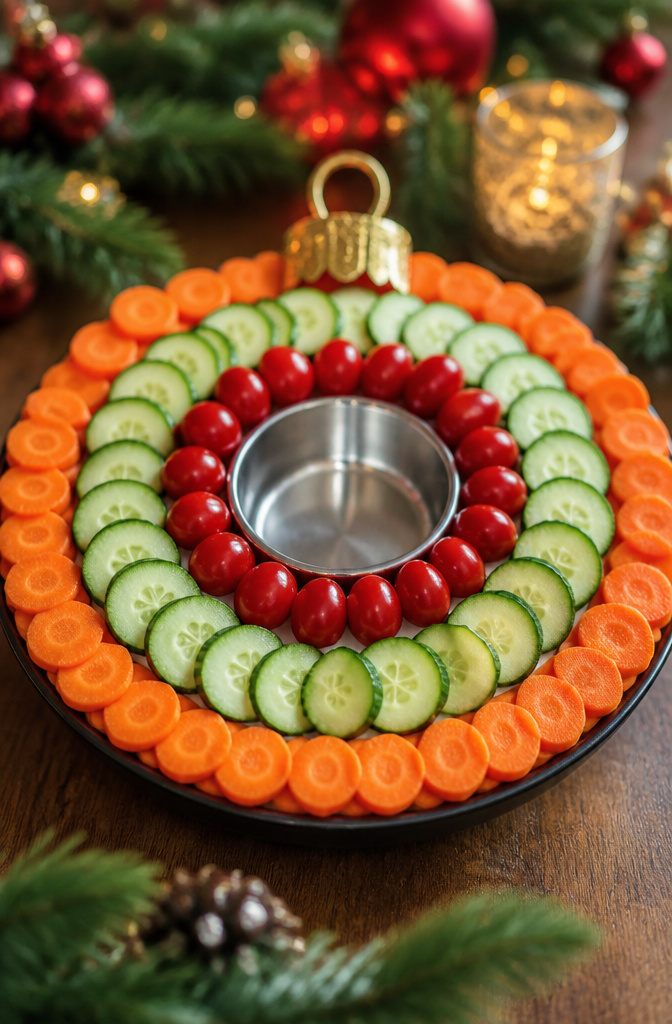
A round platter turns into a Christmas ornament faster than you might expect.
Start with a large circular tray and pack vegetables in tight concentric rings: cherry tomatoes, then cucumber slices, then carrot coins, working outward until the surface reads as a single bold color from across the room.
Leave the center open for a dip bowl in metallic gold or silver, which reads as the ornament cap and hook.
For individual pieces, skewer a cheese cube and a folded basil leaf between two grape tomatoes so the whole thing forms a small ball.
Set these on a bed of greens so they look suspended against foliage, the way ornaments hang on a tree. Pack the color tight so the round reads as an ornament from across the room.
Pale vegetables disappear against a white plate, so reach for deep purple cauliflower florets, bright orange peppers, and radishes that still have their pink shoulders attached.
One dim ring on an otherwise vivid platter will flatten the whole thing, so edit ruthlessly. If the asparagus looks gray, swap it out for snap peas or blanched green beans that hold their color under room-temperature sitting.
Christmas Veggie Wreath Pizza
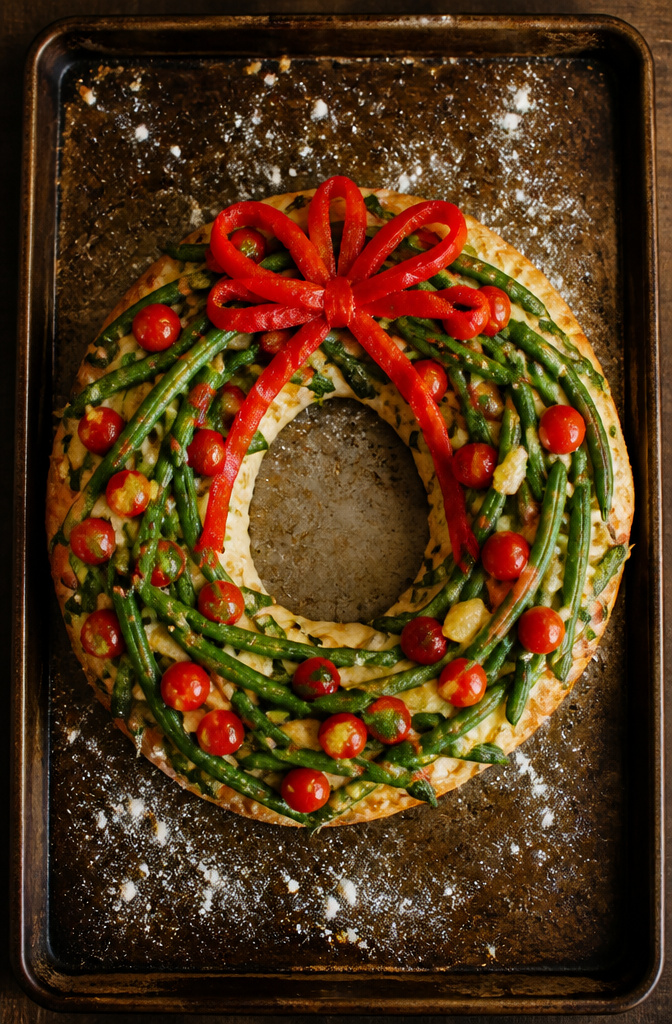
A baked crust base turns the wreath into actual food, not just a vehicle for dip. Store-bought pizza dough or flatbread saves you from shaping raw vegetables into a circle that falls apart when someone reaches for the broccoli.
Blind-bake the crust until it holds its shape, then add a thin layer of cream cheese or hummus as glue.
Arrange blanched green beans or asparagus in overlapping rows for the greenery, cherry tomatoes at even intervals for berries, and a bow made from roasted red pepper strips at the top.
The heat from the crust keeps vegetables slightly warm, which matters more than you would expect at a crowded holiday table.
Cleanup runs higher here: you are washing a baking sheet and a serving platter instead of just rinsing a tray. The trade is worth it if your crowd treats appetizers as dinner while they wait for the main event.
Skip this version only if you need something that can sit out for two hours without changing texture, since the base softens as it cools.
Festive Holiday Veggie Tray
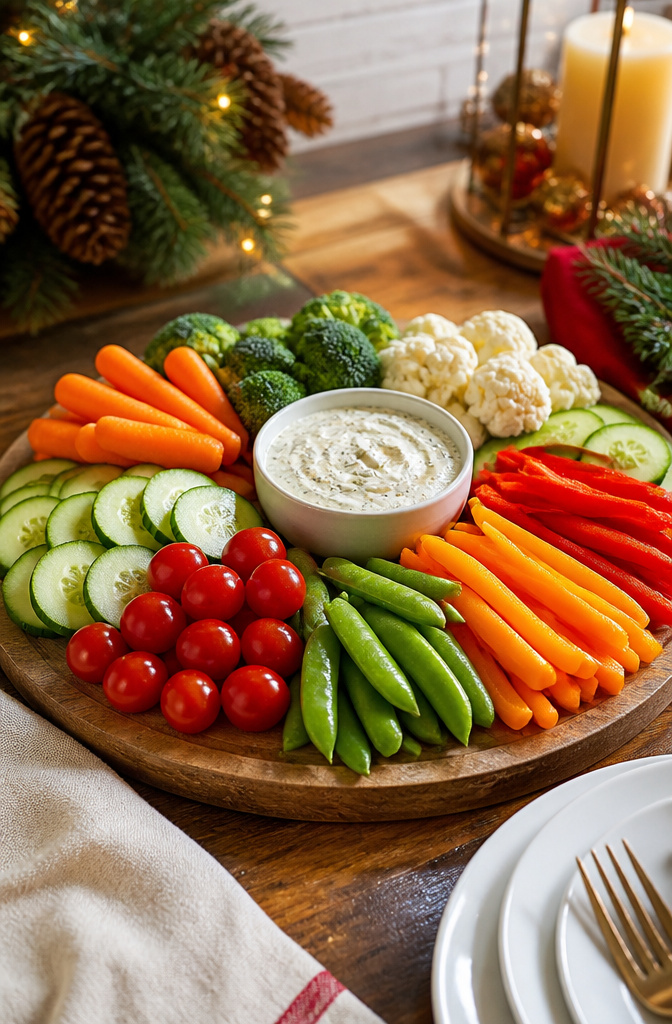
A festive holiday veggie tray trades one fixed shape for blocks of color and mixed patterns that read as celebration without requiring a template.
You might choose this when you need to feed a crowd that grazes, or when your cutting skills and your patience both run short.
Build it in zones: red cherry tomatoes and green sugar snap peas in one corner, orange pepper strips and purple cauliflower in another, with a pale dip at center so the vegetables pop against it.
Striped rows work, or concentric rough circles, or a simple quadrant split like a color wheel. Deliberate contrast matters more than precision.
This approach forgives last-minute grocery substitutions. If the store is out of radicchio, swap in red endive and the block still holds.
Cleanup is faster too, since you are not fitting individual pieces into a silhouette. Choose this when you want the platter to look considered but not precious, and when you would rather spend the saved time on the main dish.
Vegetable Snowman Tray
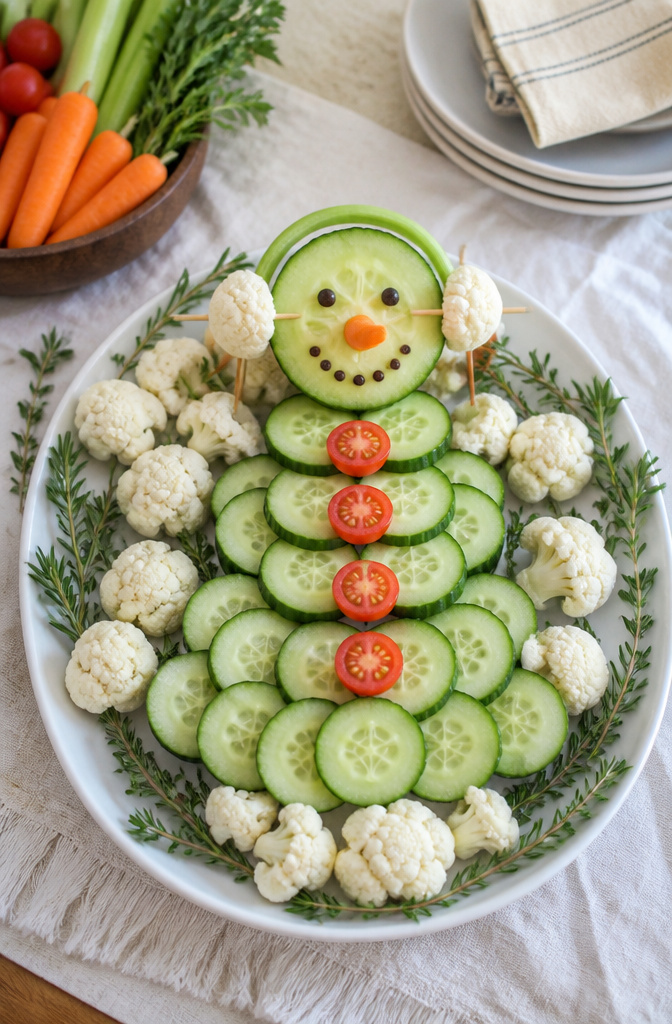
The second snowman variation builds the body from stacked cucumber rounds instead of a single flat base, which gives you height without needing a tray deep enough for a full spread.
Slice English cucumbers into half-inch coins and pat them dry; three descending tiers become the torso, held together by a dab of dip between each layer.
Baby carrots still work for the nose, but switch to halved cherry tomatoes for buttons so the red pops against the green. Two small cauliflower florets on toothpicks make the earmuffs, with a thin celery strip as the band.
This version shines on individual plates, one snowman per guest, which solves the problem of double-dipped vegetables at a crowded party. It also travels better if you are bringing an appetizer rather than hosting.
You will need to assemble it on-site, though.
The stacked structure collapses after about twenty minutes once the salt in the dip draws moisture from the cucumbers, so build it within ten minutes of serving or keep the components chilled and let guests stack their own.
What Vegetables to Buy
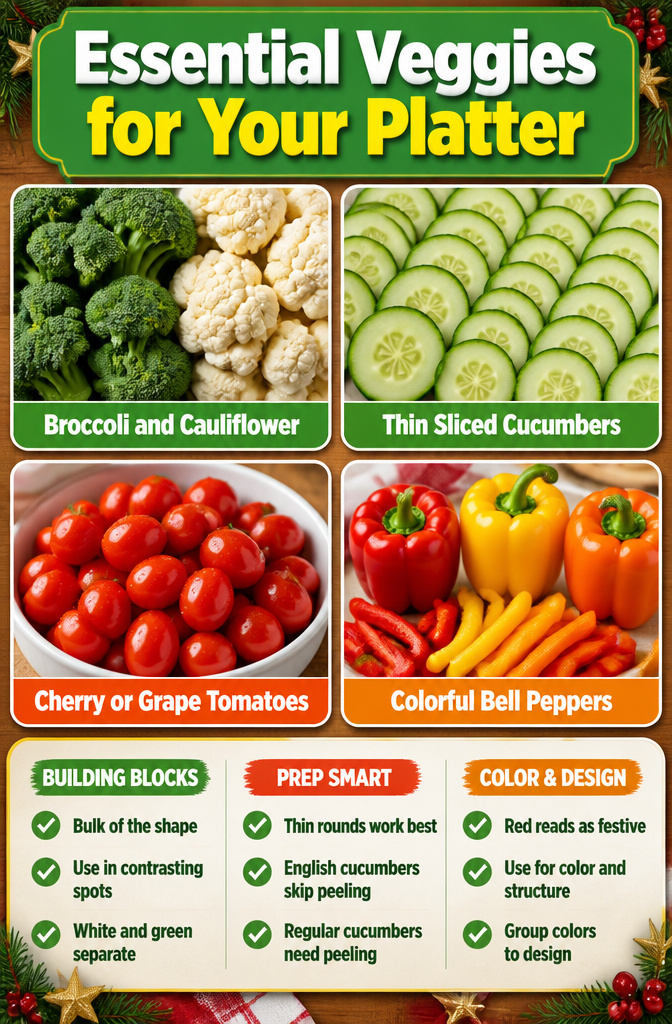
Ordinary vegetables build a christmas veggie platter that looks intentional. The vegetables that show up in every design are the ones already sitting in the produce section of any grocery store.
- Broccoli and cauliflower give you the bulk of the shape. Use them in contrasting spots, not mixed together, so the white and green read as separate blocks of color.
- Cucumbers work best as thin rounds. English cucumbers skip the peeling step entirely; regular cucumbers need peeling first or the waxy skin catches the light wrong against the other vegetables.
- Cherry or grape tomatoes add the red that reads as festive against all that green and white. Either size works, though grape tomatoes hold up a little longer if the platter sits out.
- Bell peppers, especially red ones, do double duty as color and as structural pieces when you need a bow or ribbon shape. Save the top and bottom cuts for that, then slice the sides into strips.
The one move that separates a flat platter from one that registers as designed is color grouping. Pile the broccoli together, the cauliflower together, the tomatoes together.
Mixed vegetables read as leftover; grouped ones read as deliberate.
Dips That Work
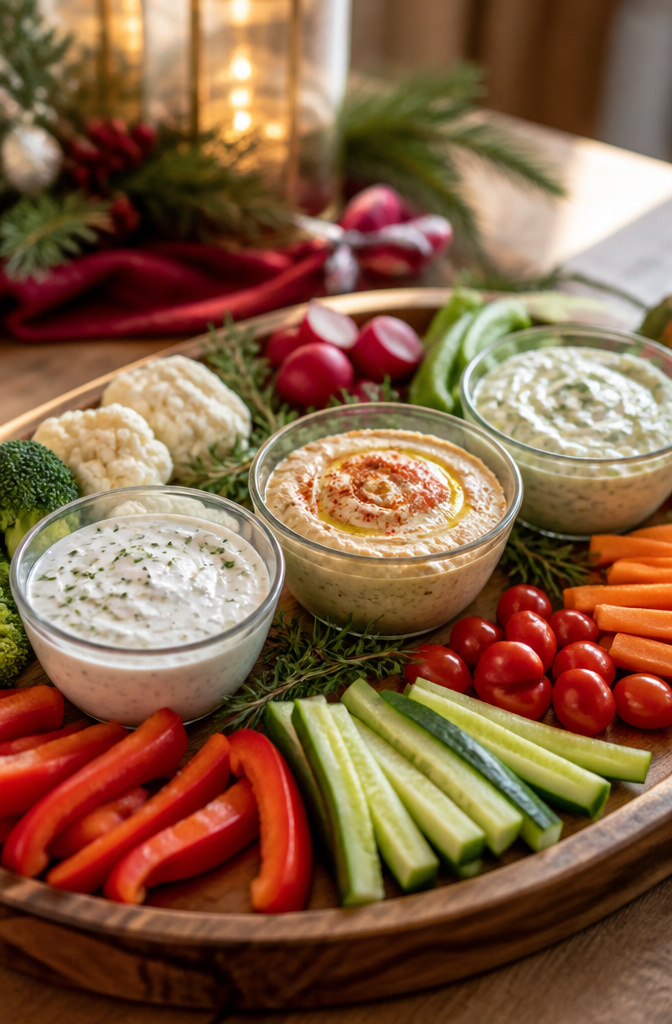
Ranch dressing, hummus, and tzatziki are the three dips that actually get eaten at a holiday gathering. Ranch is the safe bet for kids and anyone who wants something familiar.
Hummus holds up better than you’d expect at room temperature, and it gives you a plant-based option without making a separate thing.
Tzatziki is brighter than ranch, less heavy, and cuts through the richness of all the cheese and crackers on the table.
Two or three choices are plenty. Set them in the center of the platter or in small bowls alongside; either way, guests can reach them without dismantling your tree or wreath design.
Two dips covers most dietary needs and preferences. Three is generous without looking like you’re trying too hard.
Homemade ranch dip beats the bottle if you have five minutes to stir it together. For hummus, store-bought is fine; smooth it with the back of a spoon before you add any garnish.
Tzatziki is worth making yourself if you start with thick Greek yogurt, since the watery kind turns your platter soggy by hour two.
Prep Ahead and Store
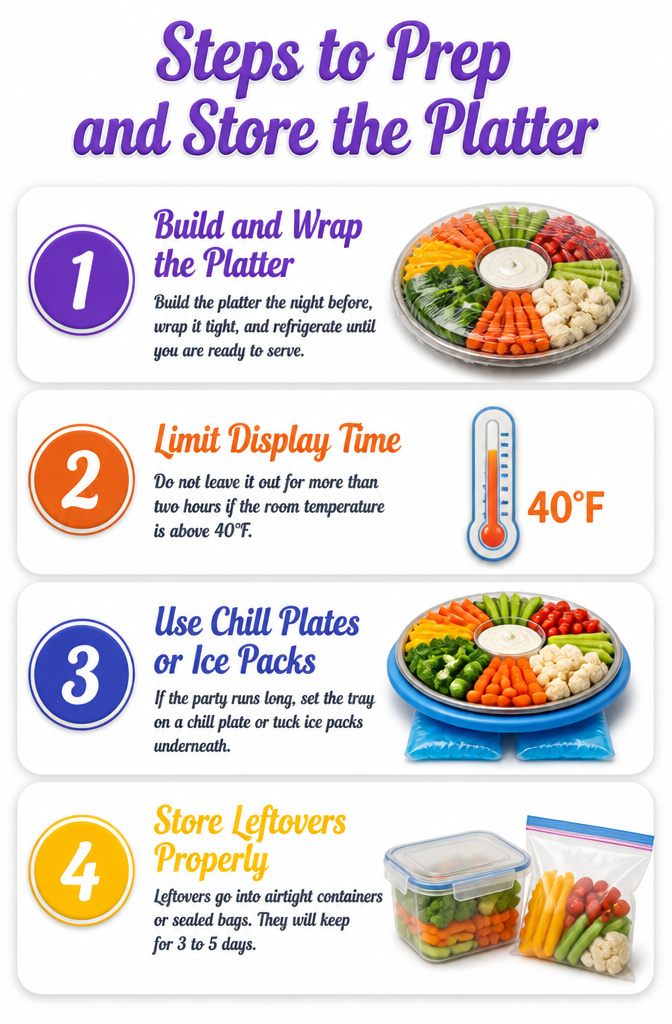
- Build the platter the night before, wrap it tight, and refrigerate until you are ready to serve. The vegetables stay crisp and the arrangement holds.
- Do not leave it out for more than two hours if the room temperature is above 40°F. That timer includes prep and display time, not just active serving.
- If the party runs long, set the tray on a chill plate or tuck ice packs underneath. That buys you extra safe time without the vegetables going soft.
- Leftovers go into airtight containers or sealed bags. They will keep for 3 to 5 days, which gives you enough runway for soups, weekday lunches, or a second round of snacking.
Arranging for the Best Look
Cut vegetables up to a day ahead and store them in containers with a damp paper towel to keep them crisp. This is the move that saves your afternoon without sacrificing the snap people notice when they bite in.
Arrange the platter right before serving, not hours ahead, or the surface dries and the edges curl.
A plain platter or a basic bowl works as well as anything shaped.
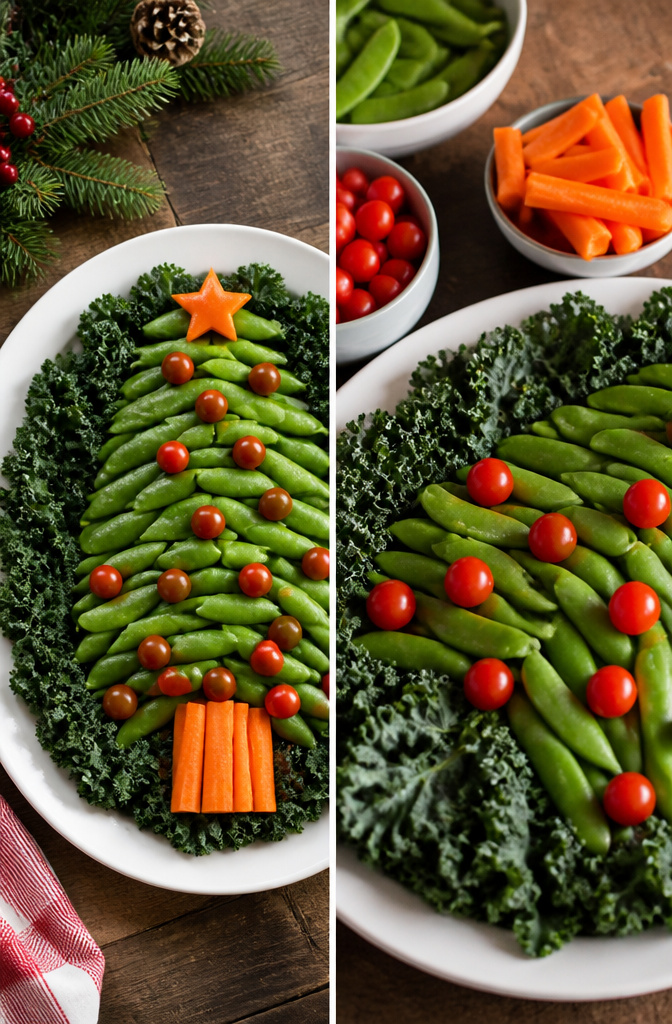
Any large plate works, and a flat one gives you more control over outlines, whether you are building a Christmas tree with sugar snap peas or keeping things loose and informal.
If you do own a holiday-shaped tray, use it; if you do not, skip the purchase. The vegetables carry the look, not the dish underneath.
Dry vegetables thoroughly after rinsing so they do not weep onto the platter and turn your arrangement soggy.
Keep the assembled tray chilled until the moment you set it out, and plan to return it to the refrigerator after about two hours at room temperature. Leftovers hold in an airtight container for four to five days.
Frequently Asked Questions
Can you prepare your veggie tray in advance?
Yes. Wrap the finished platter tight and refrigerate it until serving time, or wash and cut the vegetables a day ahead and store them in containers with a damp paper towel to keep them crisp.
Assemble the arrangement right before guests arrive so the surface does not dry out and edges curl.
How long can I leave my veggie tray out at room temperature?
Do not leave it out for more than two hours if the room is above 40°F. That timer counts prep and display time together, not just active serving.
Set the tray on a chill plate or tuck ice packs underneath if the party runs longer.
What dips go well with a veggie tray?
Ranch dressing, hummus, and tzatziki are the three that actually get eaten at holiday gatherings.
Ranch suits kids and anyone wanting something familiar; hummus holds up well at room temperature and works for plant-based guests; tzatziki is lighter and cuts through richer foods on the table.
Two dips covers most needs; three is generous without overdoing it.
Is it cheaper to buy or make a veggie tray?
Making your own costs less than a store-bought tray and lets you pick vegetables that hold their color and shape for the design you want.
You also control portion sizes for the crowd you are feeding, whether that is four people or thirty.
What are the best veggies for a veggie platter?
Broccoli and cauliflower give you the bulk of most shapes; cucumbers work best as thin rounds; cherry or grape tomatoes add the red that reads as festive; and bell peppers, especially red ones, double as color and structural pieces like bows or ribbons.
The move that separates a flat platter from one that looks designed is grouping colors together rather than mixing them.
How can I make my veggie platter look fancy?
Group colors deliberately rather than mixing vegetables randomly; pile broccoli together, cauliflower together, tomatoes together. Choose a themed shape like a tree, wreath, or snowman, or build a festive holiday tray in bold blocks of color and pattern.
Dry vegetables thoroughly after rinsing so they do not weep onto the platter, and keep the assembled tray chilled until the moment you set it out.