
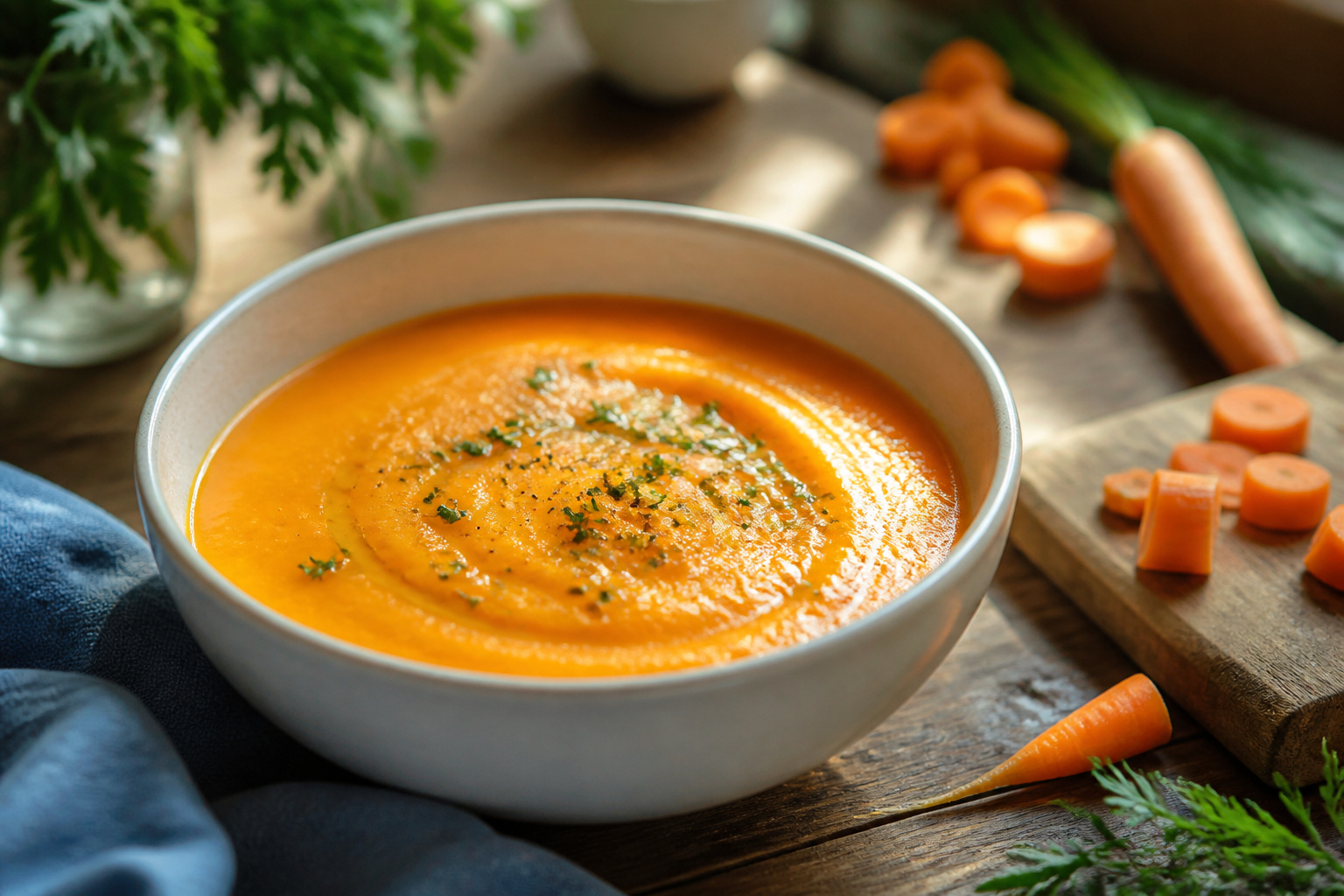
Carrot soup tastes sweet and mild with a velvety texture that comes from blending, not from relying on heavy cream. The total time runs about 45 minutes from peeling to bowl.
What changes the outcome is whether the carrots are fully tender before they hit the blender. Undercooked carrots leave graininess no amount of dairy can fix, so the fork test matters: it should slide through with zero resistance.
Creamy Carrot Soup

Creamy carrot soup is what you make when the fridge holds carrots, an onion, and a few garlic cloves, and you need dinner on the table in half an hour.
The carrots soften in broth with aromatics, then get blended until completely silky — no cream required for that texture, though a splash of half-and-half or a spoonful of nut butter finishes it nicely if you have it.
The cook time runs about 25 to 30 minutes, and every ingredient comes from a standard grocery store. You can build it on the stove with a pot and a blender, or let an Instant Pot handle the simmering.
It lands light enough for a hot evening but still counts as a full bowl of comfort, and the mild, sweet flavor means kids who side-eye vegetables usually accept it without a fight.
Pair it with grilled cheese or crackers, or serve it straight with a few fresh herbs on top if that is all the energy left in the evening.
What You Need

Creamy carrot soup calls for everyday ingredients. A heavy pot and a blender, either immersion or standard, handle the whole job.
- 2 pounds carrots, peeled and cut into 1/2-inch pieces
- 1 medium onion, diced
- 2 to 4 cloves garlic, minced
- 4 to 6 cups vegetable or chicken broth
- 1/2 to 1 cup heavy cream or coconut milk
- Olive oil or butter, for sautéing
Use vegetable broth and coconut milk to keep it vegan, or chicken broth and heavy cream for a richer, more traditional bowl.
The range on the garlic lets you decide how much punch you want; four cloves is plenty assertive without taking over.
How to Make It

- Peel and chop 2 pounds of carrots into half-inch pieces, dice one medium onion, and mince 2 to 4 garlic cloves depending on how much kick you want.
- Warm 1 tablespoon of olive oil or butter in a large pot over medium heat. Add the onion and garlic and cook until the onion turns translucent, about 5 to 7 minutes.
- Add the carrots to the pot and stir so they pick up the fat. If you want a thicker soup, toss in a diced Russet potato or a couple stalks of celery here. Pour in 4 cups of vegetable or chicken broth.
- Bring the pot to a boil, then cover, drop the heat to low, and simmer 20 to 30 minutes until a fork slides through a carrot piece with no resistance.
- Blend until the soup is completely smooth, either with an immersion blender right in the pot or by cooling the soup slightly and working in batches in a countertop blender.
- Stir in your creamy element: half a cup of heavy cream, three-quarters of a cup of milk, or one 14-ounce can of full-fat coconut milk. Season with salt and pepper, and taste. The soup should be sweet, savory, and just rich enough.
- Ladle into bowls and top as you like: a swirl of extra cream, crisped bacon, fresh herbs, or a dollop of sour cream with chopped chives.
Yield: 4 to 6 servings. Total time: about 45 minutes.
Why This Works

Carrots, onion, and garlic are the foundation, and they are probably already in your drawer at the end of the week. Onion and garlic build the savory base; carrots bring sweetness and bulk.
Broth carries it all, adding depth without competing for attention.
The creamy texture comes from what you add after cooking. Dairy works, and so does coconut milk.
Both blend into something thick and smooth, but only if the carrots are fully tender first. Cook them until they give no resistance to a knife, then blend.
Undercooked carrots leave graininess no amount of milk can fix.
Gentle simmering, not hard boiling, softens them evenly. Ten minutes is the mark most recipes land on, though thicker cuts need more time.
Once tender, the blender turns the pot into soup that is actually creamy, not just called creamy.
Calories and What You Get

A bowl of creamy carrot soup lands anywhere from 98 to 351 calories per serving, depending on what you stir in at the end. Skip the bacon and you drop to about 200 calories.
Skip the cream too and you hit that 98-calorie mark. Full-fat cream or coconut milk pushes you toward the higher end, around 219 to 351 calories, with saturated fat climbing to 11 to 13 grams.
Carrots carry the real prize here: 12,898 to 13,360 IU of vitamin A per serving, well over two hundred percent of what you need in a day. That is the nutrient doing the heavy lifting, not the cream.
The soup is naturally gluten-free. No flour, no thickeners needed unless you want them.
It also takes to a vegan build without much trouble: swap the cream for coconut milk, use vegetable stock, and you keep the velvety texture without the dairy.
The cholesterol drops to zero, though sodium stays in the 379 to 793 mg range depending on how salty your broth is.
Curry, Coconut, and Roasted Versions

You can build a creamy carrot soup in several directions without changing the core method. Each version changes what goes in and what comes out.
- Classic: Carrots, onion, garlic, broth, and a finish of cream or buttermilk. This is the baseline. Simmer until tender, puree, and stir in the dairy at the end. Do not let it boil once the dairy goes in, or it risks breaking.
- Curried: Add curry powder when you add the garlic. Use 1 teaspoon for a mild warmth or 2 teaspoons if you want more heat and fragrance. The carrots still carry the soup, but the spice layer becomes the point.
- Vegan: Swap the dairy for coconut milk. Full-fat coconut milk gives the same richness cream would. Some cooks use it in place of sour cream too. The flavor tilts slightly tropical, but the texture stays where it should.
- Roasted: Roast the carrots at 400°F for 25 to 40 minutes before they ever see the pot. This deepens the sweetness and adds a faint caramel note that simmered carrots do not reach. The rest of the soup stays the same.
- Thai-Inspired: Coconut milk again, plus lime juice at the end. Some versions also add a pinch of cayenne or a spoon of peanut butter before pureeing. Top with cilantro. The acid from the lime cuts the richness and brightens the whole bowl.
Bread, Cheese, and Salad on the Side

You need something on the plate besides the bowl, but weeknight energy is limited.
- Crusty bread is the default for a reason. A torn hunk of sourdough or a cheap baguette from the grocery bakery bin does the work of a spoon for the last of the soup. Toast it if the loaf is a day old; the crunch against the smooth soup is worth the two minutes.
- Grilled cheese turns soup into supper for kids without extra cooking. Use whatever cheese melts in your skillet: American for speed, gruyère if you have it. Cut the sandwich into strips and let them dip. The salty fat balances the carrot’s sweetness better than bread alone.
- Green salad adds the cold, crisp thing every creamy meal needs. Bagged arugula dressed in the bowl with lemon, olive oil, and salt takes ninety seconds. The peppery bite keeps the whole plate from going soft.
Pick two, not three. Bread and salad for adults; bread and grilled cheese for kids.
The soup is already the project.
Keep It, Freeze It, Reheat It

Leftover creamy carrot soup keeps 3 to 4 days in the fridge in an airtight container. Glass with a tight lid works better than plastic, which can hold the carrot color and smell.
Reheat it gently on the stove over medium-low heat, or use the microwave. If the soup thickened overnight, thin it with a splash of broth and stir as it warms.
Freezing stretches the timeline to about a month. Cool the soup completely first, then portion it into freezer-safe containers so you are not thawing a whole pot for one bowl.
Thaw overnight in the fridge, or run the container under cool water if you forgot to plan ahead.
Dairy-based creamy carrot soups may separate slightly after freezing. The fat rises and the texture looks grainy at first.
A low, slow reheat with steady stirring usually brings it back together. Coconut milk versions behave better in the freezer; they thaw with the same smooth pour they went in with.
For a fast second dinner, toss leftover soup with hot pasta and call it sauce. A little grated cheese on top and nobody notices they are eating leftovers.
Thicker, Thinner, Vegan, Dairy

The soup takes changes without much fuss.
- Make it vegan by swapping the dairy for coconut milk or coconut cream. The flavor shifts a little, but the body stays rich. Nut butter, almond or cashew, stirred in at the end adds extra depth and keeps it filling.
- Thicken it three ways: add more cream, blend longer for a tighter puree, or leave the pot uncovered and let it simmer down.
- Thin it out with extra broth, vegetable or chicken, whichever you started with. Both work; chicken gives a rounder base, vegetable keeps it lighter.
- Spice it with ginger powder, curry powder, or red pepper flakes. A spoonful of Thai red curry paste and a squeeze of lime at the end turns the whole pot in a different direction.
- Freeze it for up to one month. Thaw overnight and reheat gently; the texture holds fine.
- Serve it with a hunk of crusty bread, a grilled cheese, or a simple green salad. The soup is substantial enough to stand as dinner, light enough to start a bigger meal.
Frequently Asked Questions
Can creamy carrot soup be made vegan?
Yes. Swap the heavy cream for full-fat coconut milk and use vegetable broth instead of chicken broth.
The coconut milk gives the same velvety texture without any dairy, and the soup stays just as rich.
How do I make creamy carrot soup thicker?
Add more cream or coconut milk, blend longer for a tighter puree, or leave the pot uncovered and let it simmer down. A diced Russet potato tossed in with the carrots also builds extra body without changing the flavor much.
Can I freeze creamy carrot soup?
Yes, it keeps in the freezer for about a month. Cool it completely first, then portion it into freezer-safe containers so you thaw only what you need.
Dairy-based versions may separate slightly; reheat them gently over low heat while stirring and they usually come back together. Coconut milk versions freeze more cleanly.
What can I serve with creamy carrot soup?
Crusty bread, grilled cheese, or a simple green salad are the best matches.
A torn hunk of sourdough works as a spoon for the last drops; grilled cheese turns the soup into a full supper for kids; and a bagged arugula salad with lemon and olive oil adds the cold, crisp contrast every creamy bowl needs.
What makes carrot soup creamy?
The silky texture comes from blending fully tender carrots until completely smooth, then stirring in a creamy element at the end. Heavy cream, milk, coconut milk, or even a spoonful of nut butter all work.
The carrots must be soft enough that a fork slides through with no resistance; undercooked carrots leave graininess no amount of dairy can fix.
What are common mistakes when making carrot soup?
Undercooking the carrots is the big one. They need to simmer until a knife meets zero resistance, or the blended soup turns grainy instead of silky.
Another is letting the soup boil after adding dairy, which can cause it to break and separate.
What makes carrot soup taste better?
Roasting the carrots first at 400°F for 25 to 40 minutes deepens their sweetness and adds a faint caramel note that simmering alone cannot reach.
A squeeze of lime, a pinch of curry powder, or fresh herbs at the end also brightens the bowl without complicating the recipe.
What are the ingredients in 5-ingredient carrot soup?
Carrots, onion, garlic, broth, and a creamy finisher such as heavy cream or coconut milk. Olive oil or butter for sautéing is usually counted as a pantry staple rather than an ingredient.
That core set builds the whole soup; everything else is variation.