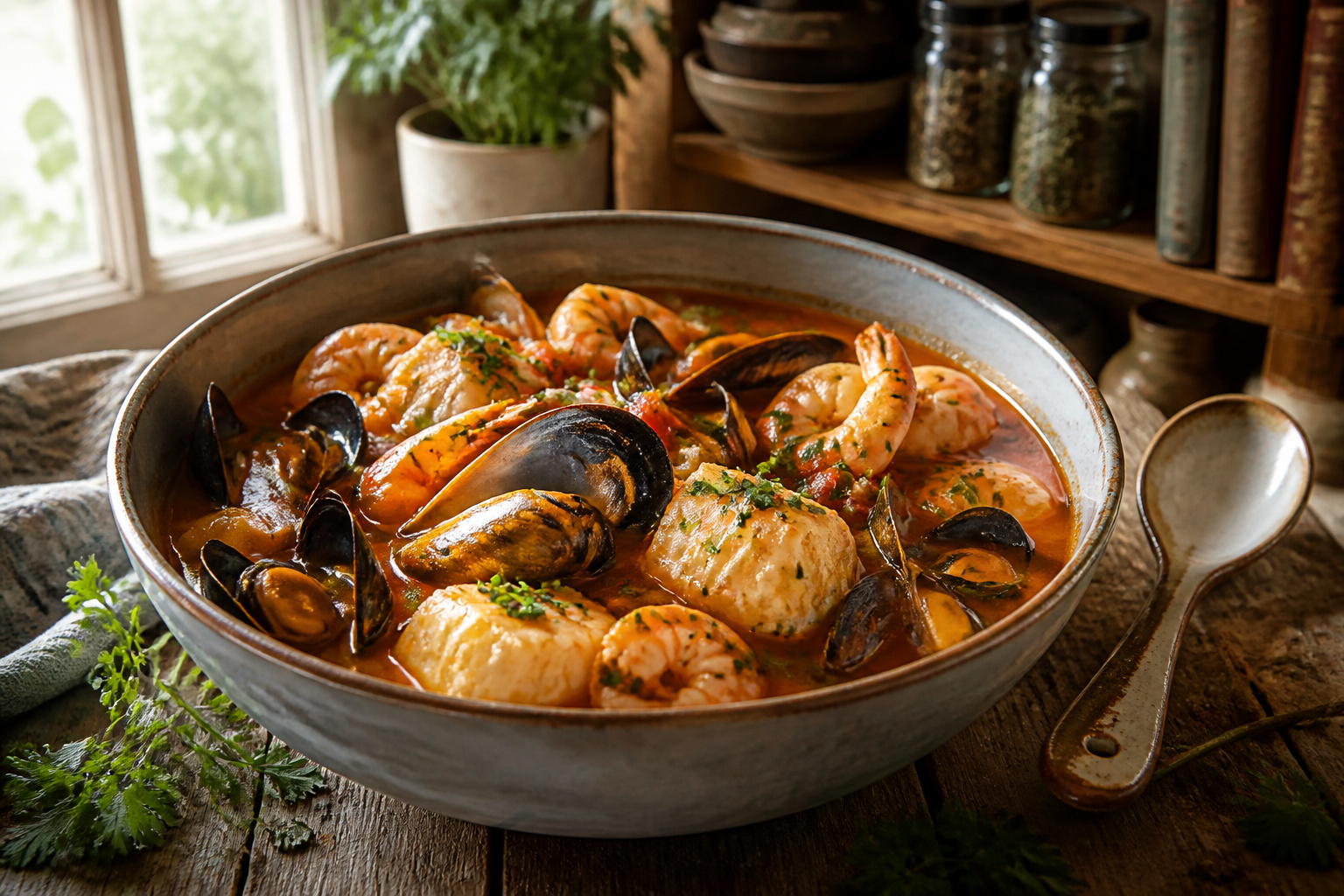
A proper fish stew tastes like a coastal restaurant but comes from your supermarket seafood case in 45 minutes.
The difference between Cioppino and Cacciucco is not which is better but which you can actually build: Cacciucco needs red mullet and vongole most US stores do not stock, while Cioppino works with cod, shrimp, scallops, and mussels already sitting on ice.
What Italian Fish Stew Is

When you make this right, you end up with a weeknight dinner that tastes like a coastal restaurant but comes from your regular supermarket seafood case.
The two stews worth knowing are Cioppino, the Italian-American version born in San Francisco with Dungeness crab in a tomato-wine broth, and Cacciucco, the Tuscan original built on red wine and served with garlic-rubbed bread.
There is also a fish-and-potato variation that skips the bread entirely, which works as a gluten-free option.
This recipe follows the Cioppino model. The reason is practical: Cacciucco calls for seafood like red mullet and vongole that most US grocery stores do not stock.
Cioppino builds from cod, shrimp, scallops, and mussels, the kind of mix you find in any decent fish case.
Either way, you are looking at 45 minutes from start to finish, one pot on the stove, and no equipment beyond a sharp knife and a wooden spoon.
Ingredients

You probably have most of the aromatics already. The seafood is what sends you to the store.
- 2 tablespoons olive oil
- 1 cup chopped onion
- 1 tablespoon chopped garlic
- ½ teaspoon red pepper flakes
- 1 fennel bulb, sliced thin (celery works if the store is out)
- 1 bay leaf
- 1 cup white wine (water with a splash of vinegar if you are out)
- 1 28-ounce can crushed tomatoes
- 12 ounces live mussels
- 1 pound shrimp, shelled and deveined
- 12 ounces white fish fillet, skin removed (cod or halibut; haddock holds up fine too)
- ¼ cup chopped fresh parsley
- Lemon wedges
- Crusty bread
Swap in clams for half the mussels if they look better on ice. Any firm white fish works; the stew does not care if you bought the cod or the halibut that was on sale.
How to Make It

- Prep the seafood first: 10 minutes. Clean the mussels by scrubbing the shells and pulling off any beard toward the hinged side. Tap open ones; if they don’t close, discard them. Devein the shrimp. Cut white fish fillet into 2-inch chunks, skin removed.
- Sauté aromatics in olive oil over medium heat until softened. Onion, garlic, oregano, red pepper flakes, and anchovies go in; cook about 3 minutes, stirring often.
- Add liquids: pour in white wine and let it cook down 2 minutes. Add crushed tomatoes and clam juice or seafood broth. Bring to a boil, cover, then reduce to a simmer for 10 minutes.
- Add seafood in stages. Fish and mussels go in first; simmer covered 5 minutes. Then tuck shrimp into the broth, cover, and simmer 3 minutes more.
- Mussels must open; discard any that do not. Shrimp should turn pink and opaque. Total cook time: 35 minutes. Taste and adjust salt.
- Serve in bowls with chopped fresh parsley, lemon wedges, and crusty bread for mopping up the broth. Total time from start to finish: 45 minutes.
Why the Order Matters

Layering is what separates a stew with real depth from boiled seafood in tomato water.
You start with aromatics in olive oil, let them soften until the kitchen smells like something, then add wine and let it reduce until the sharp alcohol edge is gone.
Tomatoes go in next and need time to lose their raw acidity and thicken into something that will coat a spoon. Only then does the seafood enter, and it goes in by cooking time, not all at once.
Fish that needs fifteen minutes hits the pot before shrimp that needs three, and mussels go in last so they have just enough heat to open without turning to leather.
Dump everything together and you get exactly the failure you would expect. The fish breaks into flakes and dissolves into the broth.
Shrimp turns rubbery while you wait for mussels to finally open. Mussels that started closed stay closed, buried under ingredients that cooled the broth too fast.
The base tastes thin because the wine never reduced, the tomatoes never concentrated, and the seafood juices watered everything down instead of seasoning it. Order is not fussiness here.
It is the only way the dish works.
What to Serve With It

Crusty bread is non-negotiable here. You need something with real chew and a crackling exterior to hold up against the broth without turning to mush halfway through the bowl.
In the Cacciucco tradition, that bread gets rubbed with a cut garlic clove while still warm from the toaster, then set right into the stew so it soaks up every drop of the tomato and seafood liquor.
Some cooks will tell you to ladle the stew over pasta or a mound of soft polenta instead. Polenta works, especially on cold nights, and a short pasta like ditalini can stretch a smaller batch to feed more people.
But bread keeps this a true one-pot dinner, and that matters on a Tuesday when you already have enough dishes waiting in the sink.
Warm the bowls first. Run them under hot tap water for thirty seconds or park them in a low oven while the stew finishes.
A room-temperature bowl pulls heat from the broth fast, and by the time you reach the bottom, you are eating lukewarm seafood in cooling tomato broth. The small step buys you the full meal, hot to the last bite.
Buying Seafood at a US Supermarket

The seafood counter at a standard US grocery store carries everything you need for a proper Italian fish stew, and the quality you walk out with will make or break the broth.
Start with mussels: they should smell like clean ocean water, not ammonia or low tide. Any sharp, chemical edge means pass.
For fin fish, press the flesh with your finger; it should spring back rather than hold the dent. That test works on cod, halibut, or whatever white fish is looking good that day.
Frozen shrimp often beats the thawed stuff sitting on ice. Shrimp is frozen fast on the boat, and the thawed tray may have been sitting there for days.
Ask the counter to peel and devein while you finish the rest of your shopping; most will clean and cut anything on request, and it saves you ten minutes at home.
If you want to stretch the stew or splurge, squid bodies work sliced into rings, and lobster tail turns a weeknight dinner into something that feels like an event. The broth is only as good as what goes into it.
Cheap, tired seafood makes a flat, forgettable pot no amount of garlic or wine can save.
Cacciucco vs. Cioppino

Cioppino is the Italian-American version you will find most often in US kitchens. Italian immigrants in San Francisco developed it in the late 1800s, building a tomato-and-wine broth around whatever the boats brought in.
Dungeness crab is the classic centerpiece, though most home cooks now swap in whatever looks fresh at the counter.
Cacciucco is the Tuscan original, and the rules are looser in the right ways. The broth carries more varied seafood: lobster, red mullet, the catch of that morning.
The real difference is at the table. You rub thick slices of bread with garlic and set them in the bowl so the broth soaks in.
If you are feeding someone who avoids gluten, there is a third path worth knowing. Some Italian cooks build the same stew around potatoes instead of bread.
The potato soaks up the broth the way the bread would, and you lose nothing in the eating.
Storing and Reheating

Leftover Italian fish stew keeps for two days in the refrigerator, and that is the limit. After that, the seafood turns, and no amount of reheating fixes it.
Freezing is not worth trying. The fish and shellfish go mealy, the broth separates, and you end up with something closer to soup than stew.
Cook what you plan to eat that night.
If you need to get ahead, stop after the tomatoes go in. Simmer the base, cool it, and refrigerate.
The next evening, warm it gently over low heat, add the seafood fresh, and finish in the pot. Do not let it boil once the fish goes in; the proteins seize and the texture turns rubbery.
A bare simmer, just enough to cook the shrimp through, is the right heat.
This is a same-night dish, not a meal-prep project. Freshness matters most here, and it also limits how long the stew keeps.
Where This Comes From

Italian fish stew started as practical food, not restaurant fare. Fishermen in Tuscany and Liguria built these stews from the scraps they couldn’t sell: the cuts that looked wrong or the fish that died in nets overnight.
In a pot with tomatoes and herbs, those leftovers turned into something that fed a crowd and tasted better than the sum of its parts.
Cacciucco alla Livornese carries that identity most clearly. Livorno, the Tuscan port city, still claims it as a defining dish, one that signals where you’re from as much as what you’re eating.
Cioppino crossed the Atlantic with Italian immigrants and took root in San Francisco’s North Beach. The name may come from ciuppin, the Ligurian original, or from fishermen asking each other to chip in whatever catch they had.
Either way, the swap to local Dungeness crab made it a new thing, not a direct copy.
You are looking at two branches of the same idea: one that stayed put in Italy, one that adapted to what the Pacific offered.
Frequently Asked Questions
What is Cioppino?
Cioppino is an Italian-American seafood stew built on a tomato and wine broth. Italian immigrants in San Francisco developed it in the late 1800s, using local Dungeness crab as the centerpiece.
Most home cooks now use cod, shrimp, scallops, and mussels from the standard grocery case.
What is Cacciucco?
Cacciucco is the traditional Tuscan fish stew that predates Cioppino, built on red wine and served with garlic-rubbed bread. Livorno, the Tuscan port city, still claims Cacciucco alla Livornese as a defining dish of local identity.
The rules are looser than Cioppino in the right ways: the broth carries whatever the boats brought in that morning.
How do you make Italian fish stew?
Start by sautéing aromatics in olive oil, then add white wine and let it reduce. Pour in crushed tomatoes and simmer until the base thickens.
Add seafood in stages by cooking time: firm white fish and mussels first, quick-cooking shrimp last. Total time from start to finish is 45 minutes, one pot, no special equipment.
What is the difference between bouillabaisse and cioppino?
Bouillabaisse is the French Provençal original, while Cioppino is the Italian-American adaptation born in San Francisco.
Cacciucco, the Tuscan predecessor to Cioppino, belongs to the same family of Mediterranean fisherman stews as bouillabaisse, Greek kakavia, Spanish zarzuela, and Portuguese caldeirada. The practical difference for US cooks is that Cioppino uses supermarket seafood you can actually find.
What is a classic Italian stew?
A classic Italian fish stew is practical food, not restaurant fare. Fishermen in Tuscany and Liguria built these stews from scraps they could not sell: cuts that looked wrong or fish that died in nets overnight.
In a pot with tomatoes and herbs, those leftovers turned into something that fed a crowd and tasted better than the sum of its parts.
What is the secret to good cioppino?
Order is the only secret that matters. Layer aromatics, then reduce the wine, then simmer tomatoes until they thicken, then add seafood by cooking time.
Fish that needs fifteen minutes hits the pot before shrimp that needs three. Dump everything together and the fish dissolves, shrimp turns rubbery, and mussels stay closed.