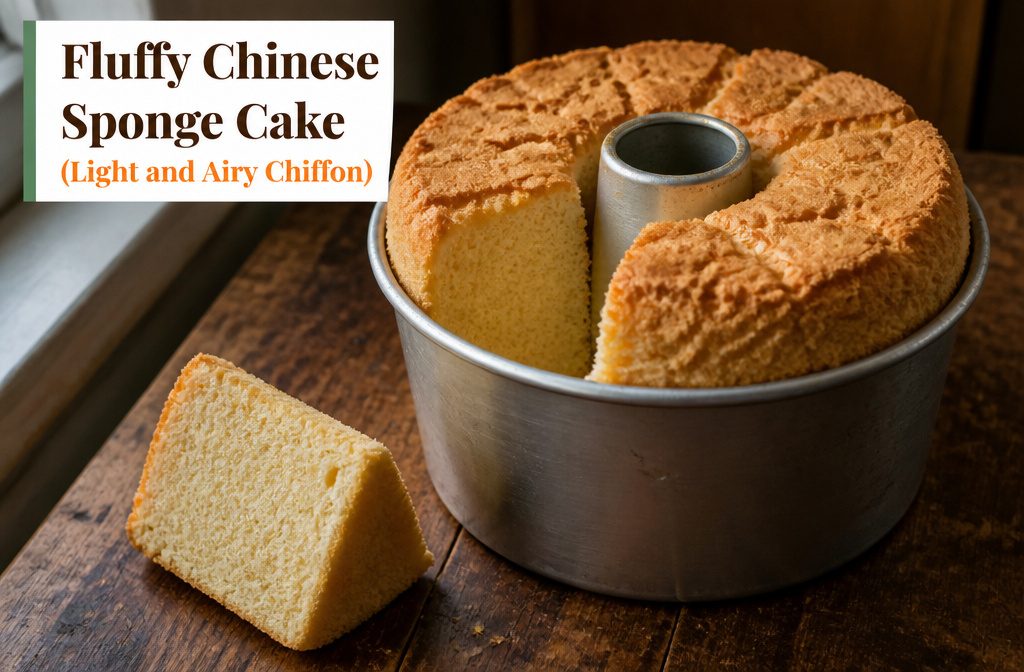
This baked chiffon-style cake is light, tender and only mildly sweet, springing back when pressed, and it takes about 1 hour.
Eggs are the only leavening, so the 10-inch tube pan stays ungreased so the batter can cling to the sides as it rises. Overfold the 7 whites and the cake turns dense.
Ingredients for a 10-Inch Cake
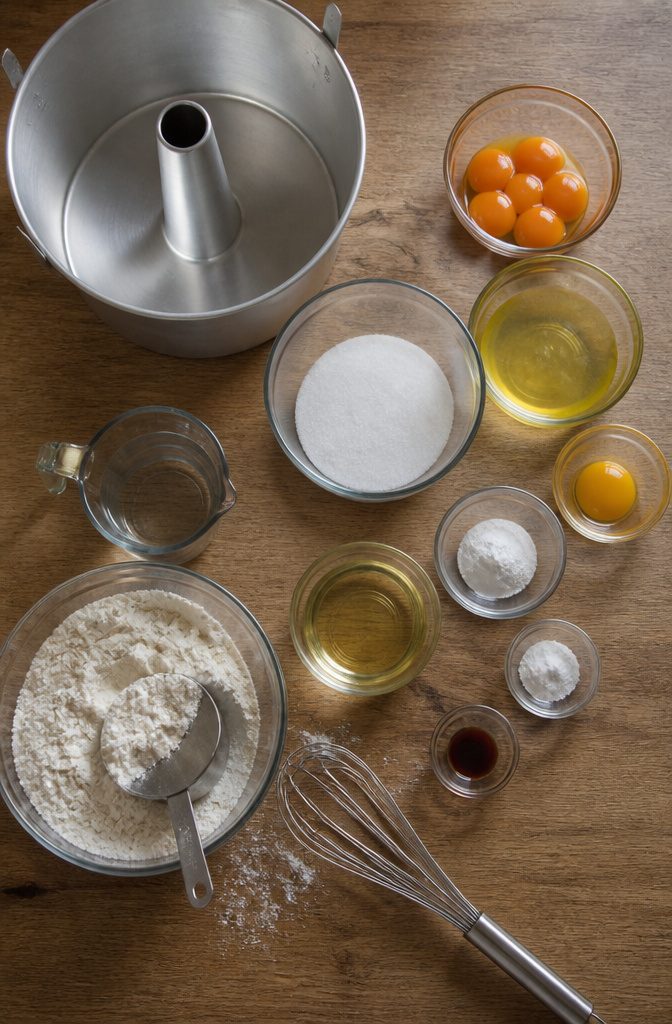
This recipe makes one 10-inch cake that serves 8, with 15 minutes of prep and 45 minutes of baking.
- 7 eggs, separated
- 1 teaspoon cream of tartar
- 1½ cups sugar
- ½ cup water
- 1 teaspoon vanilla extract
- 1 teaspoon baking powder
- ½ cup vegetable oil
- 1½ cups cake flour or all-purpose flour
- Equipment: a 10-inch angel-food (tube) pan, left ungreased so the light batter can cling to the sides as it rises. Skip nonstick pans for the same reason.
Cake flour and all-purpose flour are interchangeable here at the same 1½ cups. If your pantry only has all-purpose, use it and change nothing else.
How to Make Fluffy Chinese Cake
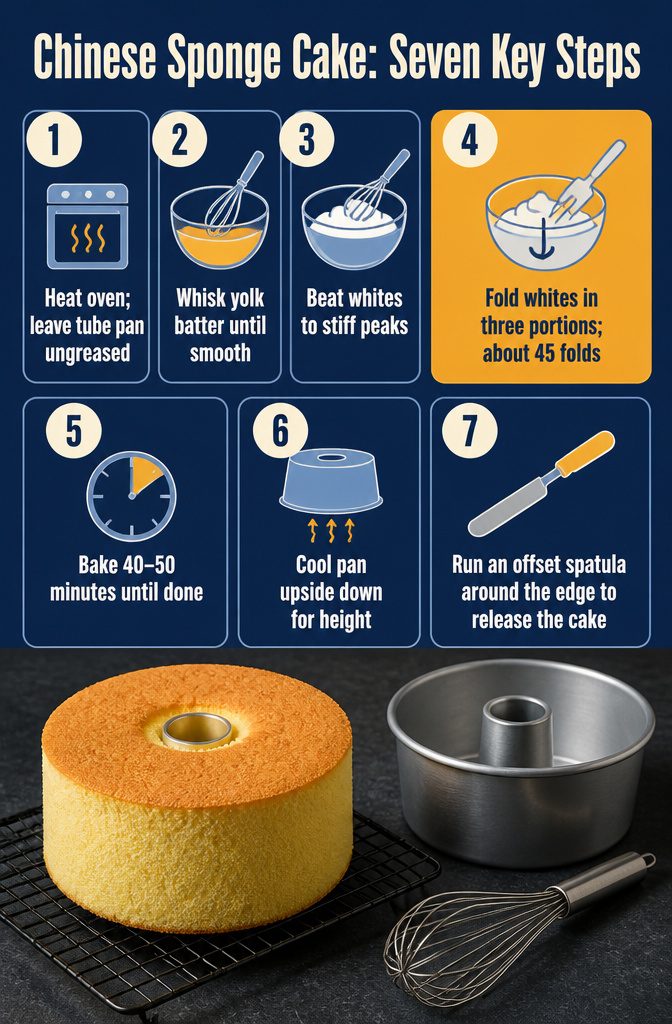
- Heat the oven to 350°F. Leave the 10-inch tube pan ungreased.
- Whisk the yolks with the water, oil, vanilla and remaining sugar. Add the flour and baking powder and mix until smooth.
- In a clean metal or glass bowl, beat the whites until frothy. Add the cream of tartar and 1/2 cup sugar gradually, then beat to stiff peaks. Keep every speck of yolk out.
- Fold the whites in three portions, using a J-shaped sweep. About 45 folds is a fair cue. Overmixing deflates the foam and gives a dense cake.
- Pour into the pan and bake 40–50 minutes, until a tester comes out clean, the top is golden and the cake springs back.
- For the most height, cool the pan upside down, and watch that the cake doesn’t slip out. If the pan can’t be flipped safely, cool it upright.
- Run an offset spatula around the edge to release the cake.
What Chinese Sponge Cake Is
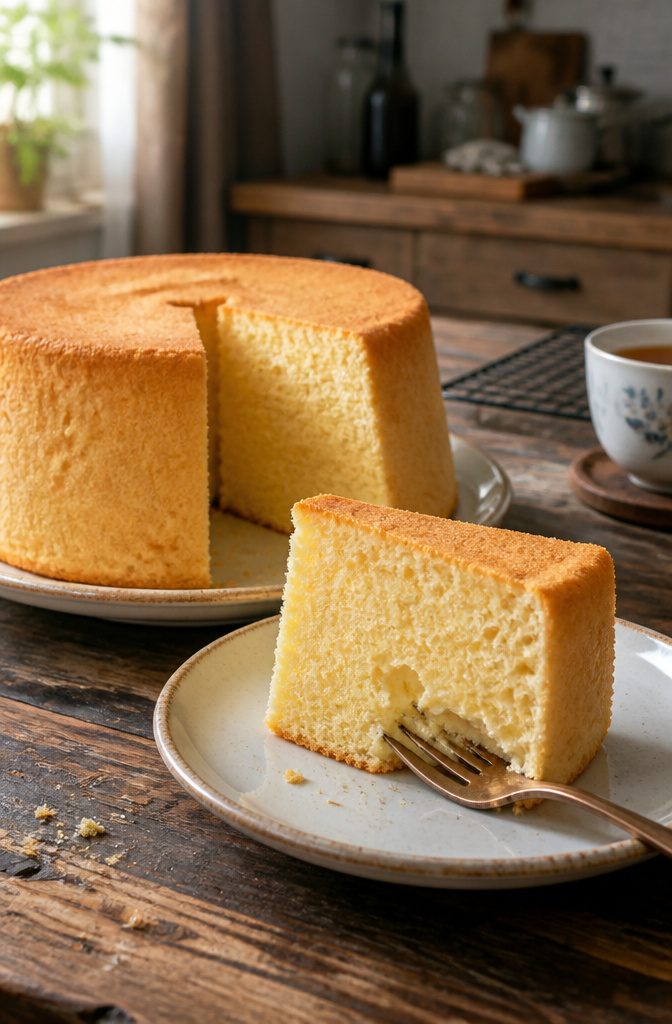
Chinese sponge cake is light, soft, airy and fluffy, with a tender crumb that springs back when you press it. It goes by several names: Chinese sponge cake, chiffon, egg cake, paper-wrapped sponge cake and fruit sponge cake.
Most of them describe the same kind of cake. The difference is usually the pan and what goes on top, whether that’s small paper-wrapped cakes or a tall bakery-style cake layered with cream and fruit.
Traditional versions were steamed. Modern bakery versions are baked, and this recipe is the baked style, so you need an oven and no steamer.
Make it for birthdays, a weekend tea, or any night you want a dessert that finishes the meal without weighing it down.
How the Eggs Make It Rise
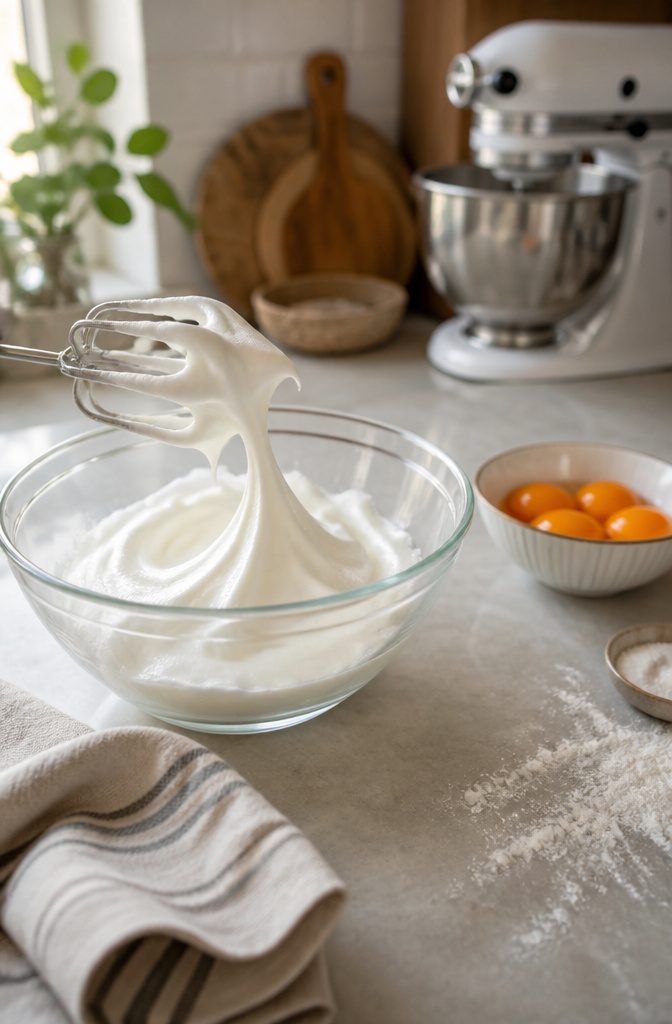
Eggs are the only leavening here, so the lift depends on how much air you whip in and how much you keep. Separate carefully: a speck of yolk or any grease on the bowl keeps whites from building volume.
Most recipes call for stiff peaks, where the meringue holds firm on the whisk with just a slight bend at the tip.
Some bakers stop at medium-soft to medium-firm, because fully stiff meringue is harder to fold in and can crack the top.
The whole-egg method skips separating. Beat the eggs and sugar to ribbon stage, which takes 12–15 minutes with a hand mixer or about 4–5 with a stand mixer.
Overmixing after whipping is the usual reason for a dense cake.
Pan Choice and Bake Time
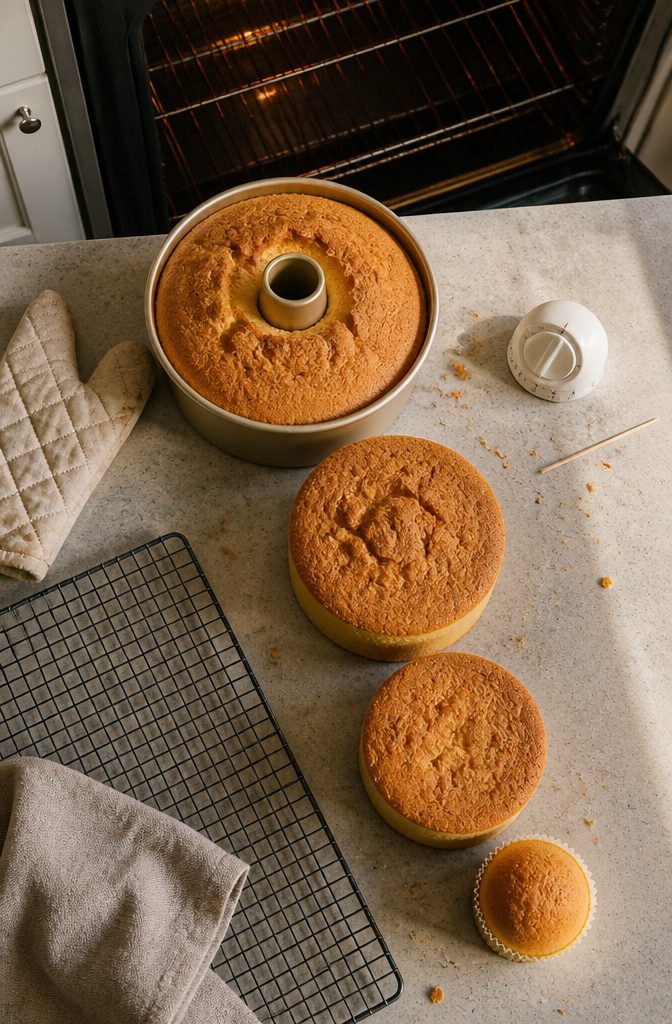
Every format here bakes at 350°F, so pan size changes only the time. The 10-inch tube pan gives the tall, classic cake, while layers and minis finish in a fraction of the time.
| Format | Pan | Oven temperature | Time |
|---|---|---|---|
| Tall cake | 10-inch tube pan | 350°F | 40–50 minutes |
| Layers | 8-inch round or 7-inch square | 350°F | 15–20 minutes |
| Large individual cakes | 6-cup popover or jumbo muffin pan | 350°F | 20–25 minutes |
| Cupcakes (9) | Cupcake pan | about 350°F | 15–18 minutes |
If you switch pans, adjust the bake time to match instead of keeping the original number. Start checking early with the smaller formats.
Greasing rules differ by recipe: one bakes in an ungreased tin, another in an oiled pan. Follow whichever your batter calls for.
Serving and Toppings
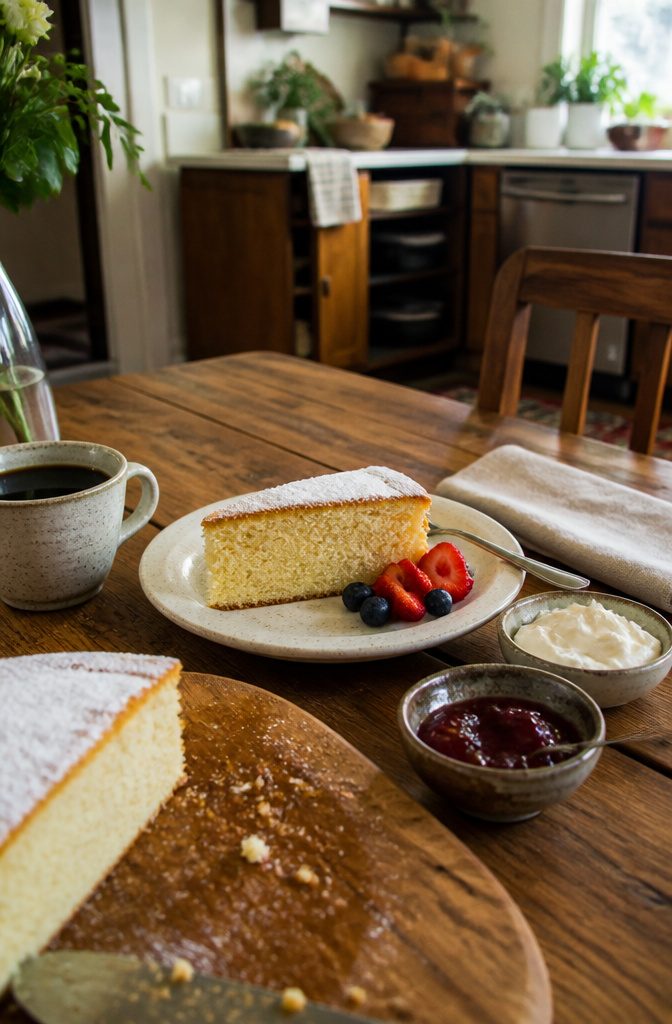
This cake is light and only mildly sweet, so it holds up plain, cut into wedges with nothing on top.
For the least effort on a weeknight, dust it with powdered sugar and set fresh fruit beside it. Whipped cream is the other easy pairing, and a spoonful of jam does a similar job.
Cupcake-size cakes suit an afternoon tea table with jam and a cup of coffee.
Dunking a piece in the coffee isn’t traditional, but it works. If you want something closer to dessert, red bean soup or a scoop of ice cream goes well with the airy crumb.
For a cake layered and frosted with cream and fruit, follow the full assembly in the Fruit Cake With Whipped Cream section.
Storing and Freezing
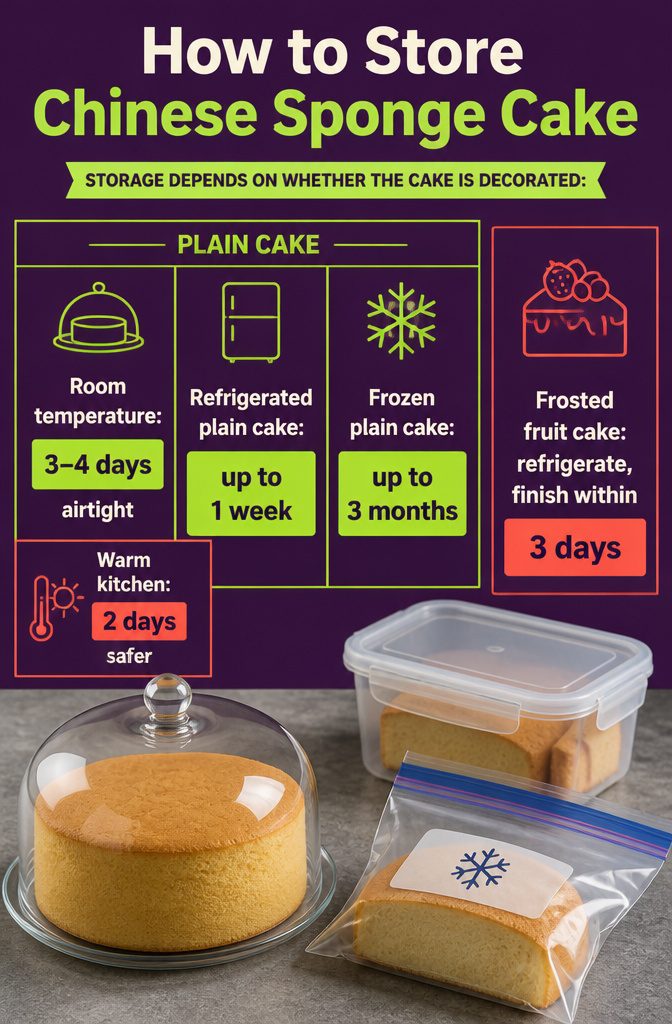
Storage depends on whether the cake is decorated:
- Plain cake at room temperature: Keep it in an airtight container for 3–4 days. In a warm kitchen, 2 days is the safer plan.
- Plain cake in the refrigerator: It holds up to a week in an airtight container, but it dries out the longer it sits. Let it come to room temperature before serving.
- Plain cake in the freezer: Cool it completely, seal it in a freezer bag, and freeze it for up to 3 months. Thaw on the counter for 2–3 hours.
- Frosted fruit cake: Refrigerate it and finish it within 3 days if you can. It dries out over time, so this is not a cake to stretch across the week.
Tang Mian and Water Baths
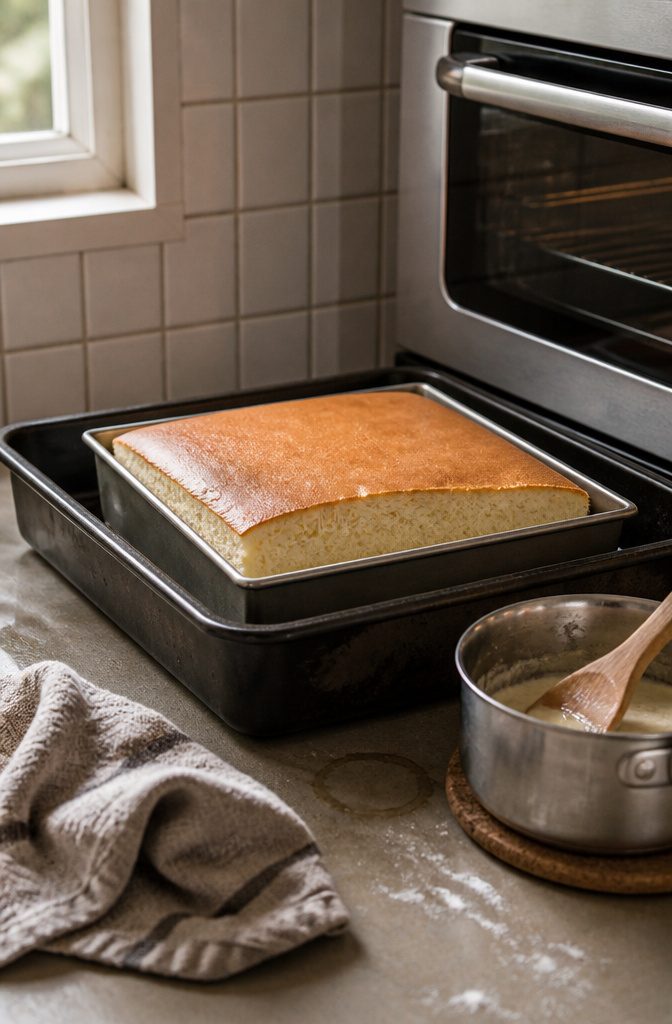
Tang mian is a cooked paste. Flour and cornstarch go into warm oil and get stirred over heat until they form a thick roux, which then goes into the batter.
The cake bakes in a warm water bath, with the oven temperature raised in stages: 325°F for 45 minutes, then 25–45 minutes at 340°F. Total time runs 70–90 minutes in an 8 × 8 × 3-inch pan.
The water bath is doing most of the work.
It bakes the cake gently, and that slow, moist heat gives a smooth, cottony crumb. Tang mian helps, but the cake doesn’t depend on it.
Treat all of this as an optional upgrade, not part of the base recipe.
If you’re short on time on a weeknight, skip it. If you want an even softer texture, try it on a weekend, when a 90-minute bake won’t crowd dinner.
Paper-Wrapped Mini Cakes
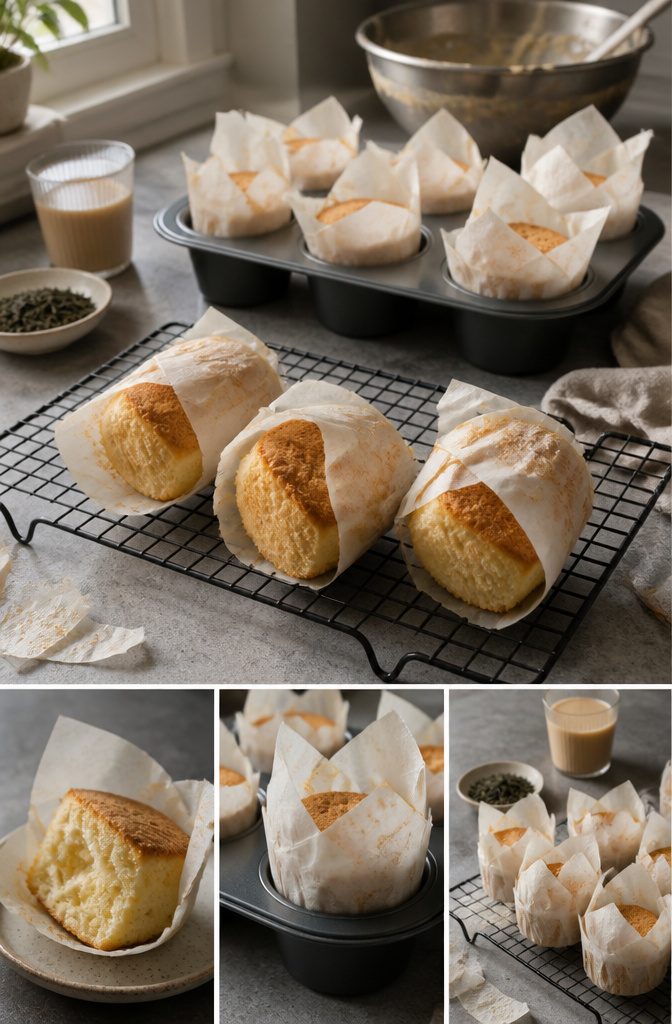
Use a 6-cup popover pan or a jumbo muffin pan, and press a 7.5-inch parchment square into each cup so the paper extends above the rim. Fill each cup about ¾ full.
The batter is 5 yolks, 5 whites, ¼ cup oil, ¼ cup milk, ¾ cup cake flour and ¼ teaspoon baking powder, enough for 6 cakes. Bake at 350°F for 20–25 minutes, then lift them out right away and cool them on their sides on a rack.
For milk tea cakes, steep 2 teaspoons of tea leaves in the milk for at least 15 minutes and heat the oil to about 176°F. Bake at 325°F for about 20 minutes.
Hojicha powder or butterfly pea flower stirred into the milk changes the flavor too.
Fruit Cake With Whipped Cream
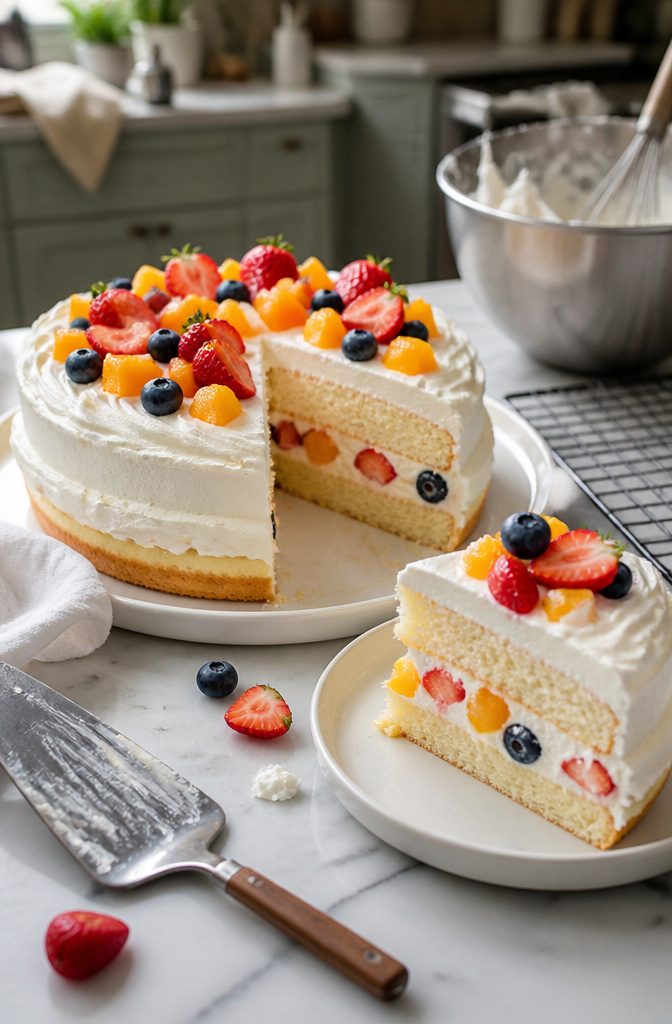
Bake two layers at 350°F for 15–20 minutes, in 8-inch round pans or 7-inch square ones.
Brush each layer with syrup, then spread on stabilized whipped cream, add fruit, stack the second layer, and frost the whole cake. Chill it at least 2–3 hours so the layers firm up and slice cleanly.
For 480 ml (about 2 cups) of heavy cream, stabilize with either 6 g gelatin softened in 2 tablespoons water or 4 teaspoons vanilla instant pudding mix. Pudding mix wins: the cream doesn’t sweat, and it holds up for hours at room temperature.
Chill the bowl and whisk for 15 minutes first. Use the cream right away, because both versions set as they sit, and set cream won’t frost smoothly.
Sponge Versus Chiffon
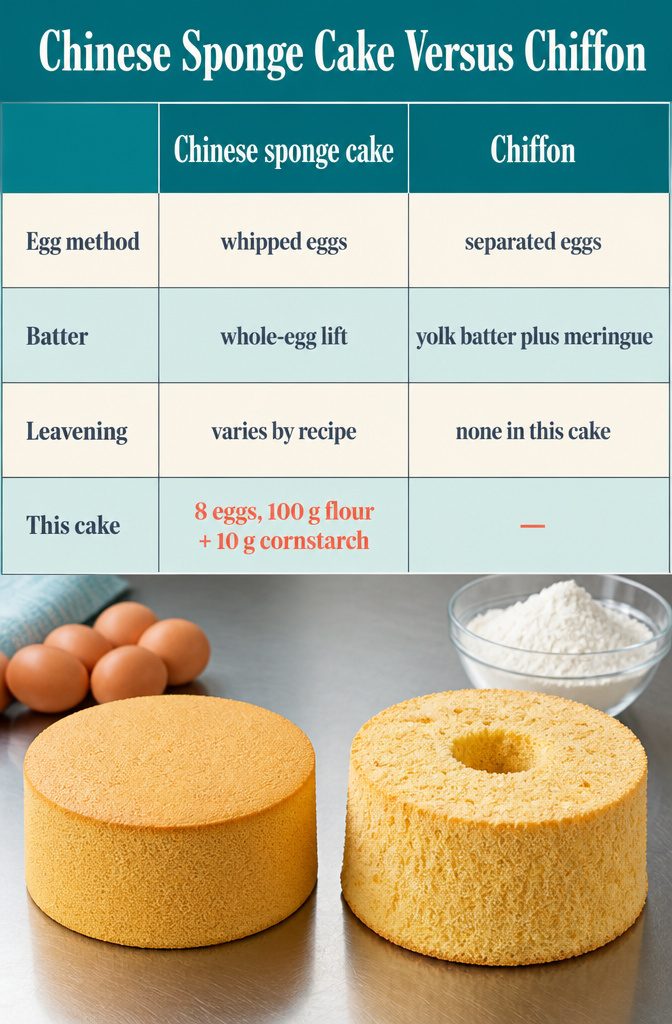
In North America, "sponge" covers any cake raised mainly by whipped eggs, including genoise, angel food and chiffon.
Chiffon is the separated-egg version: yolks go into a batter with oil, liquid and flour, then a meringue is folded in. Western recipes usually add baking powder; Asian ones often skip it.
Recipes vary a lot inside that label.
A cream-cheese chiffon uses 8 large eggs and 175 g cake flour in a 10-inch tube pan for 50–60 minutes. A cracked-surface egg cake uses about 150 g flour and bakes denser.
This cake sits at the airy end: 8 eggs, 100 g cake flour with 10 g cornstarch, oil and milk, and no baking powder, so the whipped whites do all the lifting.
Frequently Asked Questions
What is Chinese sponge cake called?
Chiffon is the closest Western name.
Bakeries also sell it as egg cake, paper-wrapped sponge cake or fruit sponge cake, and most of these are the same kind of light, tender cake. The pan and the topping are what usually change.
How are Chinese cakes so fluffy?
Air whipped into the egg whites does most of the lifting.
Keep every speck of yolk and any grease out of the whites, beat them to stiff peaks, and fold them into the batter in 3 portions. Overmixing after whipping is the usual reason a cake turns out dense.
What are the ingredients for a fluffy Chinese cake?
A 10-inch cake that serves 8 takes 7 separated eggs, 1 teaspoon cream of tartar, 1½ cups sugar, ½ cup water, 1 teaspoon vanilla extract, 1 teaspoon baking powder, ½ cup vegetable oil and 1½ cups cake flour or all-purpose flour.
You also need a 10-inch tube pan, left ungreased so the batter can cling to the sides as it rises.
What are paper-wrapped sponge cakes?
They are small Chinese bakery cakes with a light, airy crumb much like chiffon, baked in individual molds lined with parchment.
At home, a 6-cup popover pan or jumbo muffin pan works, with the paper standing above the rim. They bake at 350°F for 20–25 minutes.
How do you store Chinese sponge cake?
Keep a plain cake in an airtight container for 3–4 days at room temperature, or about 2 days in a warm kitchen.
The refrigerator stretches that to a week, but the cake dries out, so bring it to room temperature before serving. A frosted fruit cake belongs in the refrigerator and should be finished within 3 days.
Can you freeze Chinese sponge cake?
Yes, a plain cake freezes for up to 3 months.
Let it cool completely and seal it in a freezer bag. Thaw it on the counter for 2–3 hours before serving.
What do you serve with Chinese sponge cake?
A plain wedge is enough, since the cake is only mildly sweet.
A dusting of powdered sugar, fresh fruit, whipped cream or a spoonful of jam all work well. Cupcake-size cakes suit a tea table with jam and coffee, and ice cream or red bean soup turns a slice into dessert.
Can I make a small Chinese sponge cake with fewer eggs?
Yes. One egg-cake recipe uses 2 eggs for a small mini cake and 4 for a regular one, but that is a different batter from this 7-egg cake.
For this recipe, use the paper-wrapped mini batter, which makes 6 cakes, or bake two 8-inch round or 7-inch square layers. Smaller formats finish fast, so start checking early.
Can I add flavors like cocoa powder or pandan extract to Chinese sponge cake?
Cocoa and pandan extract have not been tested in this recipe, so try them in a small batch first.
The tested flavor changes are in the mini cakes: steep 2 teaspoons of tea leaves in the milk for at least 15 minutes for milk tea cakes, or stir hojicha powder or butterfly pea flower into the milk.