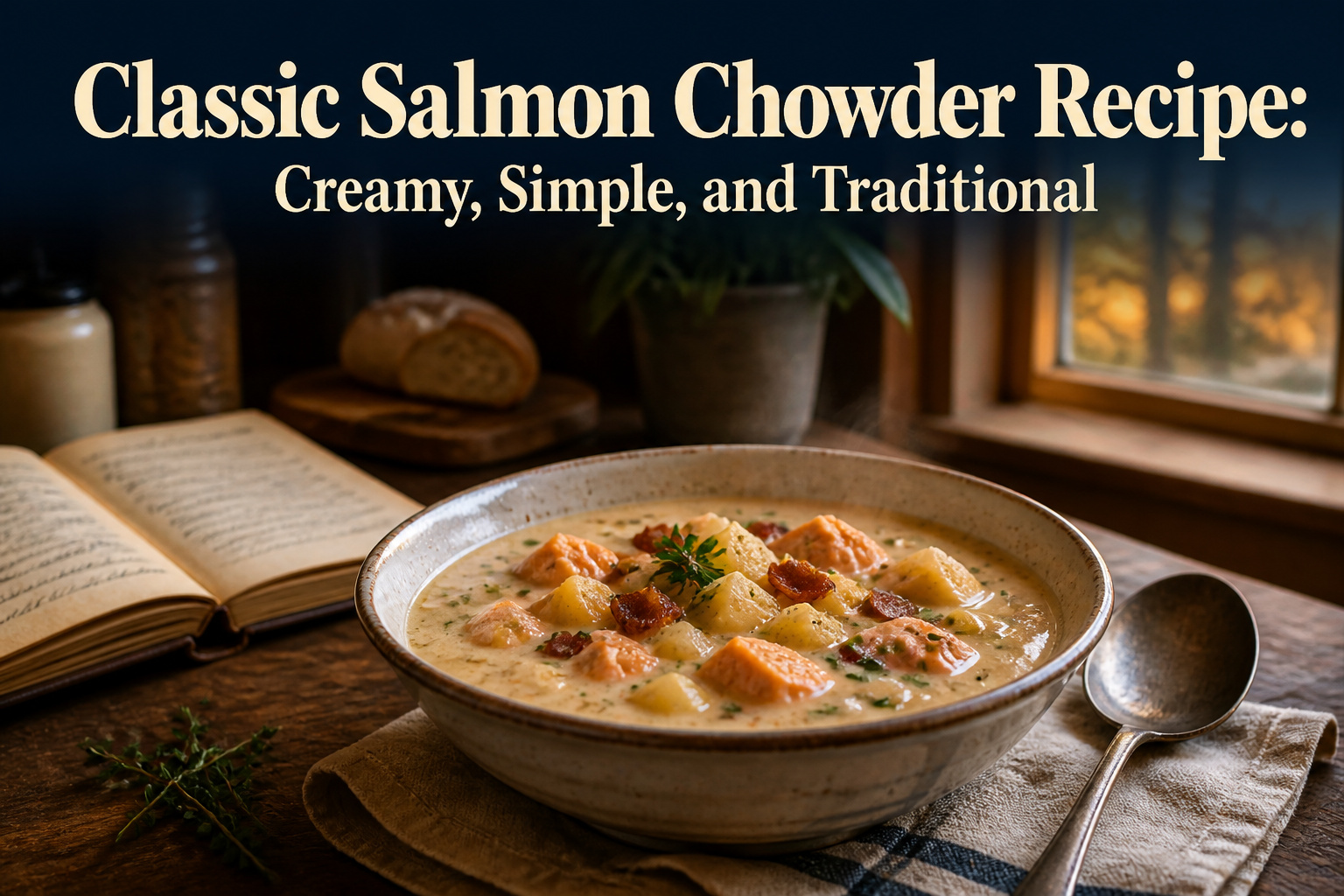
Classic salmon chowder lands on the table in 45 minutes with a depth that tastes like Saturday afternoon.
This one builds the base in bacon fat, not oil, and finishes with a minute of raw flour cooked out in the pot before any liquid hits.
Clam juice does the work: one cup, added right after the roux, gives the broth a salinity that plain chicken stock can’t match. Fresh cubes in at the end, cream off the heat.
Classic Salmon Chowder

Classic salmon chowder is the dinner you make when you want something that tastes like a weekend project but clocks in at about 45 minutes start to finish.
It’s a creamy, hearty soup built on salmon, potatoes, and bacon, and it yields 4 to 6 servings depending on how deep you fill the bowls.
Total time ranges from 40 to 70 minutes, so check your clock before you start; on a hurried weeknight, the lower end is achievable if your potatoes are small and your salmon is already cut.
The chowder works year-round, though it lands especially well in cooler months. Fresh salmon is the move when you can get it, but the recipe doesn’t fall apart with decent frozen fillets.
Bacon provides the fat base, Yukon Gold potatoes give it body, and the finished bowl is substantial enough to stand alone as dinner. Some versions call for seafood or fish stock for best results, while others keep it simpler.
Either way, you’re looking at one pot and ingredients you can find at any grocery store, no specialty equipment required.
Ingredients

You will need 4 to 8 strips of thick-cut bacon, diced, to build the base. Four slices covers the pot; eight gives extra to crumble on top.
- 1 medium or large yellow onion, diced
- 2 ribs celery, chopped
- 2 medium carrots, peeled and chopped small
- 2 to 4 cloves garlic, minced
- 2 to 3 tablespoons all-purpose flour
- 1 cup clam juice
- 3 to 4 cups chicken broth, or fish broth if you have it
- 1 to 2 pounds Yukon Gold or red potatoes, peeled and cut into 1/2-inch to 1-inch cubes
- 1 to 2 pounds salmon, skin removed, cut into 1-inch cubes
- 1 to 2 cups heavy cream or half-and-half
- 1 to 2 cups corn, fresh or frozen (not thawed)
- Fresh dill and thyme, plus salt and black pepper
For the dairy, half-and-half keeps the chowder lighter; milk works if you want it even leaner, though the body suffers. Fresh salmon is standard, but smoked salmon stirred in at the end adds a different, sharper chowder entirely.
Method
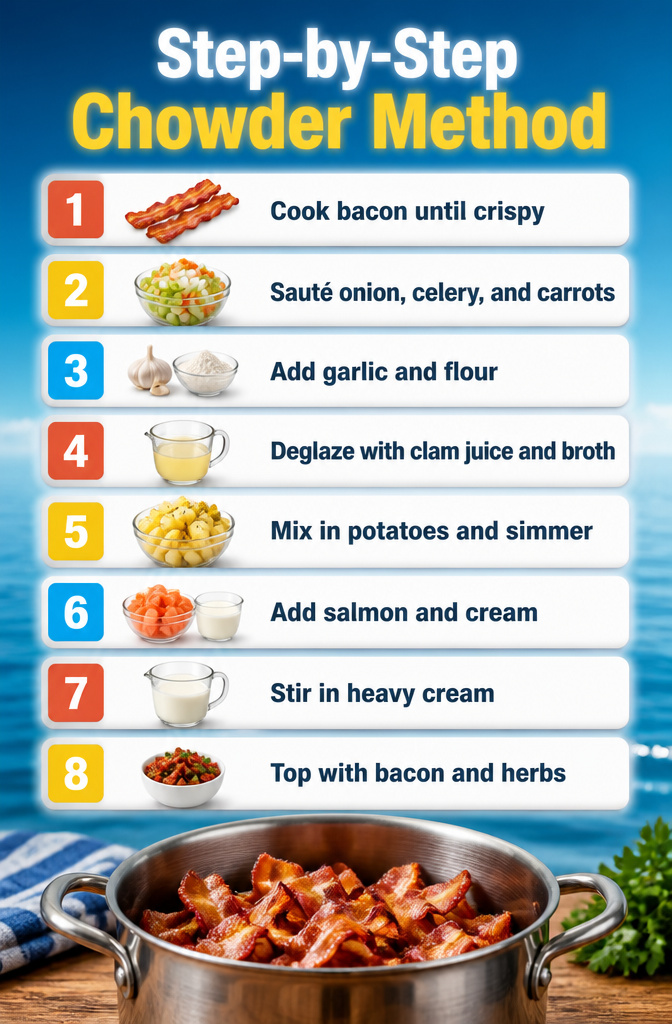
- Cook 4-8 strips of bacon in a heavy pot or Dutch oven over medium heat until browned and crispy, about 8 minutes. Remove with a slotted spoon to a paper towel-lined plate and set aside. Leave the fat in the pot; that is your cooking medium for the next step.
- Add diced onion, celery, and carrots to the bacon fat. Sauté over medium-high heat until the onions soften, 5-7 minutes. Stir often and scrape any browned bits off the bottom so they do not burn.
- Add minced garlic and 1/3 cup flour. Cook 1 minute, stirring constantly, until the raw flour smell is gone.
- Deglaze with 1 cup clam juice plus chicken broth, scraping the bottom to loosen every browned bit. Those bits carry flavor.
- Add 1-2 pounds of diced potatoes, salt, pepper, bay leaf, and dried herbs. Bring to a boil, then reduce to a simmer. Cook uncovered until the potatoes are fork-tender, 15-20 minutes, stirring occasionally so the bottom does not scorch.
- Once the potatoes give easily to a fork, gently stir in 1-2 pounds of cubed salmon. Keep the heat low and simmer just until the salmon turns opaque and flakes, 3-5 minutes. Overcooking here makes it tough.
- Turn off the heat. Stir in 1-2 cups heavy cream. Taste and adjust salt and pepper. The residual heat warms the cream without risking a break.
- Ladle into bowls and top with the reserved bacon and fresh herbs.
Yield and Timing

This recipe makes 4 to 6 servings, depending on how deep you fill the bowls and whether you add bread on the side. Prep takes 10 to 20 minutes, and the spread is real.
If you dice your potatoes and salmon small, you will move faster. If you leave them in bigger chunks, the knife work goes quicker but the pot takes longer.
Cook time runs 30 to 50 minutes, so total time lands between 40 and 70 minutes. The variable is the potatoes.
Small dice, like half-inch cubes, soften in 8 to 15 minutes of simmering. Larger pieces, 1-inch or more, need the full 25 minutes or longer.
The salmon goes in at the end and cooks through in just a few minutes, so the potatoes set the pace. Plan accordingly if you are trying to hit the table by a certain time.
Choosing Your Salmon

Fresh salmon gives you the cleanest flavor and the firm flakes that hold up through a long simmer, so buy it when you can.
The fillet turns opaque and separates into layers with gentle pressure from a fork; that is your signal it is cooked through.
Smoked salmon brings a deeper, more complex base and works well cut into strips and combined with fresh, or on its own if you want the chowder to lean savory and intense.
It only needs warming through, so add it near the end and pull the pot off the heat once the strips curl slightly.
Canned salmon is acceptable and keeps the recipe weeknight-friendly, though the texture softens into the broth rather than staying in distinct pieces.
Drain it well and fold it in at the very end after the chowder comes off the burner, since it is already fully cooked and will fall apart if it simmers.
Thickening the Chowder

Most classic salmon chowder recipes build the body right into the sauté. You stir flour in with the garlic and let it cook for about a minute before the liquids go in.
That raw edge has to disappear or the chowder tastes pasty, so don’t rush that minute.
Some cooks prefer a cornstarch slurry instead, especially for a lighter bowl. Whisk 1 to 2 tablespoons of cornstarch into a quarter cup of broth or water, then stream it in near the end and simmer a few minutes.
It thickens fast and you can repeat if needed, though it never gives quite the same richness as flour cooked in fat.
For a third route, mash some of the cooked potatoes against the side of the pot with the back of your spoon. The natural starch does the work, no extra powder needed.
Heavy cream also brings its own weight: 2 cups stirred in after the broth sets a substantial base before any thickener even enters the picture.
The flour method wins for a traditional, velvety texture, but the potato trick keeps things gluten-free and still honest.
Ingredient Substitutions

Most of the swaps in this chowder are straightforward, but a couple carry real trade-offs worth knowing before you start.
- Half-and-half or whole milk can replace heavy cream if you want a lighter bowl. The risk is curdling: milk proteins tighten under a hard boil, so keep the heat gentle once the dairy goes in. You lose some richness, too; the soup finishes thinner and less velvety.
- Coconut milk is the go-to for dairy-free. Use the full-fat kind, not the drinking carton, or the chowder ends up watery and flat.
- Yukon Gold or red potatoes hold their shape better than Russets. Waxy varieties keep a clean cube instead of crumbling into the broth.
- Chicken broth or seafood stock both work as the base. Chicken broth is easier to find; seafood stock deepens the chowder’s salinity. If you only have chicken, a splash of clam juice from the canned-fish aisle rounds it out.
- Gluten-free flour thickens the roux just like all-purpose. Measure it the same, but stir a little longer; rice-based blends take extra time to lose their raw taste.
Storage and Leftovers

Leftover salmon chowder keeps for up to 3 days in the refrigerator, stored in an airtight container. Skip the freezer.
The cream will separate and the potatoes will turn mealy once thawed, a texture shift that no amount of stirring fixes. Reheat gently over low heat, stirring as it warms, so the dairy stays smooth and does not break.
If the chowder thickened too much overnight, loosen it with a splash of fresh broth until it returns to the right consistency.
Frequently Asked Questions
Can I use canned salmon instead of fresh?
Yes. Canned salmon works fine, but the texture softens into the broth instead of staying in firm pieces.
Drain it well and fold it in at the very end after the pot comes off the heat, since it is already fully cooked and will fall apart if it simmers.
How do I thicken salmon chowder?
The classic method is stirring flour into the bacon fat with the garlic and cooking it for about a minute before adding liquids.
You can also whisk cornstarch into broth and stream it in near the end, or mash some cooked potatoes against the pot wall and let their natural starch do the work.
Can I freeze salmon chowder?
No. The cream separates and the potatoes turn mealy once thawed, a texture shift that no amount of stirring fixes. Leftovers keep up to 3 days in the refrigerator instead.
What type of potatoes are best for chowder?
Yukon Gold or red potatoes. Waxy varieties like these hold their shape through simmering and keep a clean cube, whereas Russets tend to crumble into the broth.
What are common mistakes when making chowder?
Overcooking the salmon is the big one; it only needs 3 to 5 minutes of gentle simmering to turn opaque and flake. Another is rushing the flour cook time, which leaves a raw, pasty taste.
Adding dairy over high heat can also make it break or curdle.
What is the secret to a great fish chowder?
Building flavor in layers. Start with bacon fat, scrape up every browned bit when you deglaze, and use clam juice or seafood stock to deepen the salinity.
The potatoes set the pace, so cut them small for a faster, more controlled cook.