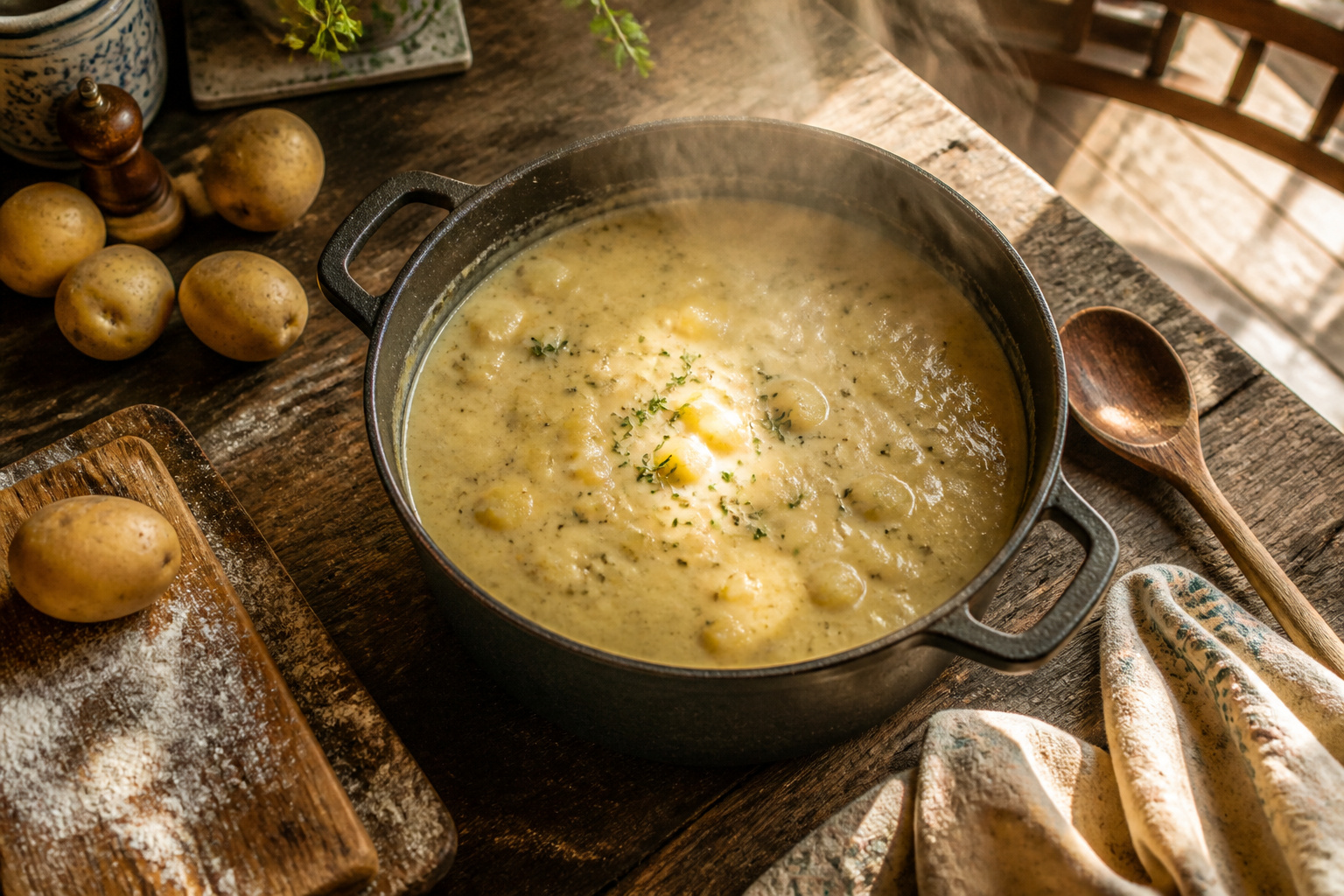
This potato soup tastes like actual potatoes first, cream second, and it comes together in 30 minutes with one pot and no blender.
The thing that usually ruins quick potato soups is thin, brothy liquid; this one thickens because the potatoes break down on their own, plus a small roux built before the broth goes in.
Yukon Gold or Russet both work, and you probably have the rest already.
Why This Potato Soup Works on Weeknights

You walk through the door at 6:15 with no plan and hungry people expecting dinner in half an hour. This soup is built for that exact moment.
It pulls from pantry staples you probably have now: potatoes, onion, broth, a little butter and milk. Total time from cutting board to bowl runs about 30 minutes, with only 15 minutes of active work.
The rest is simmering you can ignore while you handle backpacks or mail.
Everything happens in one pot. You will not chop toppings for twenty minutes or wash a blender afterward.
The potatoes break down enough on their own to thicken the broth into something creamy and coherent, not thin or brothy. The dairy stays modest, so the flavor stays potato-forward rather than reading as heavy cream soup.
That balance matters when you need something comforting but not so rich it puts people to sleep on a Tuesday.
Ingredients

You probably have most of this already. The potatoes are the only thing you might need to grab, and either Yukon Gold or Russet work here.
Yukon Gold breaks down a little creamier; Russet gets you a lighter, fluffier texture. Both taste good, so buy what looks decent at the store.
- 2 pounds potatoes, diced, no need to peel unless you want to
- 1 medium yellow onion, diced
- 4 cups chicken broth (use vegetable broth if you want this meatless)
- 2 cups whole milk
- 1/4 cup all-purpose flour
- 4 tablespoons butter
- 1 teaspoon salt
- 1/2 teaspoon black pepper
- 1 cup shredded sharp cheddar
- 6 slices bacon, cooked crisp and crumbled (skip this for the vegetarian version)
- 3 green onions, sliced
The sharp cheddar matters more than the brand. Mild cheese disappears into the soup; sharp still tastes like something after it melts.
Whole milk is worth it here. Skim or 2% works in a pinch, but the soup will be thinner and less forgiving if you simmer it hard.
Method

- Melt butter in a large pot or Dutch oven over medium heat. Add diced onion and cook about 5 minutes, stirring once or twice, until it softens and turns translucent. Let the bacon soften without browning.
- Stir in flour and cook 1 minute. This step removes the raw taste and builds the base for a smooth soup; the mixture will look pasty and that is correct.
- Add potatoes, broth, salt, and pepper. Bring to a boil, then reduce to a simmer, cover, and cook 20 to 25 minutes until potatoes split when poked with a fork or the edge of a spoon. Russets will be ready closer to 20 minutes; waxier potatoes often need the full 25.
- Mash some potatoes against the side of the pot with your spoon. This thickens the soup without a blender and gives you control over how chunky it stays. Roughly a third is usually enough.
- Stir in milk and let it simmer gently 5 minutes to heat through and meld the flavors. Do not let it boil hard or the milk can separate.
- Remove the pot from heat. Stir in shredded cheese until it melts completely off the residual warmth.
- Ladle into bowls and top with crumbled bacon and sliced green onions. The bacon adds salt and crunch; add it at the table if anyone in the house keeps vegetarian.
Yield and Timing

This recipe fills six bowls with enough depth that no one is fishing for the last spoonful.
Prep runs about 15 minutes if you dice as the butter melts; the cook time is 35 minutes, so the pot goes from raw onion to finished soup in roughly 50 minutes start to finish.
That puts dinner on the table before homework meltdowns or second-guessing takeout.
Leftovers hold four days in the refrigerator. Reheat them low and slow; a hard boil will break the dairy and leave you with a thin, grainy puddle.
A gentle simmer, stirred once or twice, brings the texture back to where it started.
The Potatoes to Use

Yukon Gold potatoes give you a waxy, creamy texture that holds its shape through simmering. Their yellow flesh means less mashing to get that smooth, pale color most people expect from potato soup.
Russets fall apart instead, which sounds like a flaw until you want a thicker, more absorbent base without adding cream or flour. The starch they release thickens the broth naturally, and their drier flesh soaks up seasonings more aggressively.
Either variety works for an easy potato soup recipe; the choice depends on whether you prefer distinct chunks or a porridge-like bowl. Red potatoes are the ones to skip.
They stay too firm, never breaking down enough to thicken the liquid, and their waxy coating resists the softening that makes potato soup comforting rather than crunchy.
Thickening Without a Blender

The flour-butter roux you build in step 2 gives the soup its first layer of body, but the real thickening power comes from the potatoes themselves.
Once they are tender, you have two ways to finish the texture without hauling out a standing blender.
For a rustic bowl with visible chunks, press the cooked potatoes against the side of the pot with a wooden spoon. A potato masher works too.
About a third of the potatoes broken down will thicken the broth around the remaining cubes. This is the faster path and the one to take if you like soup that eats like a meal.
If you own an immersion blender, you can blend roughly one-third of the soup right in the pot for a smoother, more uniform creaminess. Pull the blender up before everything disappears; you want some intact pieces left behind.
Do not add raw flour after the liquid is in the pot. It clumps instantly and you will spend ten minutes chasing lumps with a whisk.
The roux stage is your only chance to bind flour into fat cleanly.
Slow Cooker Variation

If you own a slow cooker, you can skip the stovetop entirely and still get a creamy potato soup. The same ingredients go in: potatoes, onion, broth, salt, and pepper.
Set it on low for eight hours. The long cooking breaks down enough starch that you will not need a roux; the soup thickens on its own.
Once the potatoes are tender, mash some of them against the side of the pot with a spoon. Stir in milk and shredded cheese, then cover for ten minutes so the cheese melts fully.
Add bacon and green onions at the end, after you have ladled it into bowls, so they stay crisp.
This takes longer. Eight hours is not a weeknight solution unless you start it at breakfast.
But you get the same dinner from the same groceries, with less work and fewer dishes to wash.
Loaded Baked Potato Style

Stir in half a cup of sour cream with the milk for a tangier base, and bump the cheese up to one and a half cups so it tastes like the inside of a loaded baked potato.
This is the version to make when kids are at the table and everyone wants control over their own bowl. Set out a toppings bar with extra bacon crumbles, sliced green onions, and another bowl of sour cream.
They can pile it high or keep it plain, and you are not stuck negotiating who gets what. The soup underneath stays the same either way, so you are still only cooking once.
Storage and Freezing

Leftover potato soup keeps for up to 4 days in the fridge in an airtight container. It thickens as it sits, so splash in a little milk when you reheat it and stir until it loosens back up.
Freezing is possible but not ideal. The potatoes turn grainy once thawed, and the texture never quite bounces back.
If you do freeze it, slightly undercook the potatoes on the front end, and hold the dairy out entirely. Freeze the base, then stir in milk and cheese while it warms on the stove.
Skip freezing bacon mixed into the soup; it goes soggy and never crisps again. Better to fry up fresh bacon for the top when you serve.
Frequently Asked Questions
How do I make potato soup?
Melt butter in a large pot, soften diced onion for five minutes, then stir in flour for one minute. Add diced potatoes, broth, salt, and pepper; simmer covered for 20 to 25 minutes until the potatoes split with a fork.
Mash about a third of them against the pot side to thicken, stir in milk and simmer five minutes more, then remove from heat and melt in sharp cheddar.
What are the four ingredients in potato soup?
There is no standard four-ingredient version, but the core of this soup comes down to potatoes, broth, onion, and dairy.
This recipe builds from those with butter, flour, cheese, and toppings, though you could strip it to potatoes, broth, milk, and salt for the absolute minimum.
What is the secret to the best potato soup?
Sharp cheddar keeps its flavor after melting, and mashing some cooked potatoes against the pot thickens the broth without a blender. Simmer the milk gently rather than boiling hard, which prevents the dairy from separating into a thin, grainy mess.
What are the ingredients in a 3-ingredient potato soup?
A minimal potato soup would need potatoes, broth, and some form of dairy such as milk or cream, though the result would be thinner and less complex than the recipe here.
What can I add to potato soup for flavor?
Crisp bacon and sliced green onions on top add salt, crunch, and freshness.
For a loaded baked potato style, stir in sour cream with the milk and increase the cheddar to one and a half cups, then set out a toppings bar so everyone builds their own bowl.
Can I freeze potato soup?
Freezing is possible but not ideal. The potatoes turn grainy after thawing and the texture never fully recovers.
If you must freeze it, slightly undercook the potatoes, hold out all dairy, and freeze only the base. Add milk and cheese while reheating on the stove, and fry fresh bacon for topping rather than freezing it in.