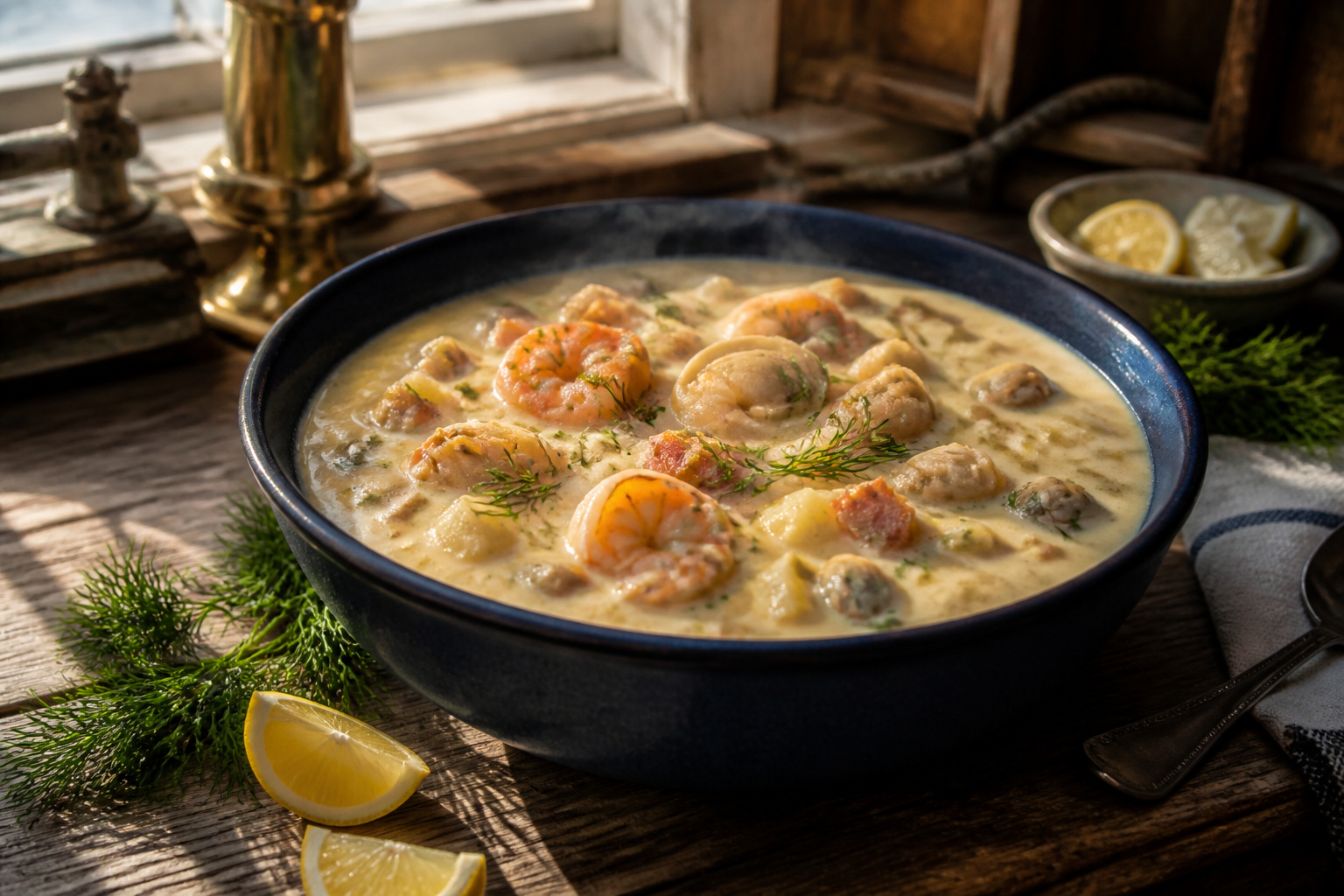
Seafood chowder tastes like a coastal kitchen in a bowl: briny, smoky from bacon fat, and thick enough to coat the spoon.
This version lands between 30 and 60 minutes, start to finish, because the roux and the bacon do the depth-building for you.
The seafood itself is what trips people up: add it at the very end and pull the pot the moment shrimp curl into a loose C, or you will eat rubber.
Frozen marinara mix works fine here, and runs about $10 to feed four or five.
What Seafood Chowder Is and When to Make It

Seafood chowder is a creamy soup built from a mix of seafood, vegetables, and a rich broth.
The construction runs in layers: bacon fat renders into the pot first, then aromatics soften, a roux thickens everything, broth and potatoes go in to simmer, and the seafood plus cream finish it at the end so nothing overcooks.
Most versions land between 30 and 60 minutes total, with yields from 4 to 8 servings depending on how heavy you are with the potatoes and cream.
That timeline puts it firmly in weeknight territory, not just the holiday tradition some people save it for. You can start after work and still have bowls on the table before anyone gets too hungry to be reasonable about it.
The bacon does more than flavor here; it gives you a cooking fat with smoke already in it, which means less work later building depth.
The roux step sounds technical, but it is just butter and flour cooked together for a minute, and it keeps the cream from breaking into something thin and disappointing.
The chowder fills you up enough that you will not be back at the pantry an hour later. That matters on a Tuesday when the point of cooking was to actually solve dinner, not just delay it.
Ingredients
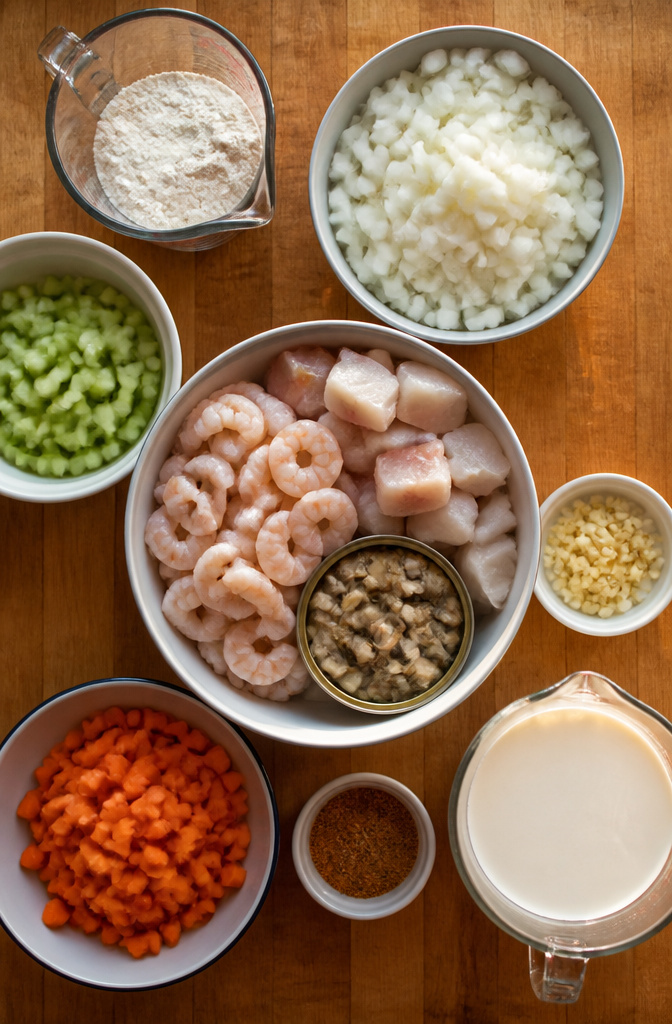
You probably have most of this already. The seafood is the only part that demands a trip to the store, and even there, frozen works fine.
- 4 slices bacon, chopped, or about ½ pound if you want a meatier base
- 1 medium onion, diced; 2 cloves garlic, minced; 1 rib celery, sliced; 1 carrot, sliced or diced
- ¼ cup all-purpose flour for the roux
- 4 to 5 cups chicken broth or seafood broth; low-sodium if you have it
- 1 pound potatoes, peeled and cubed
- About 1 pound shrimp, peeled and deveined, as your reference weight; add 8 ounces white fish (cod, haddock, halibut), 8 ounces scallops, and 1 can (6.5 ounces) chopped clams, drained, or fresh if your fish counter has them
- 2 cups heavy cream, or half-and-half, or milk for a lighter pot
- 1 teaspoon Old Bay seasoning, or a similar seafood blend; ¼ teaspoon dried thyme if you want it
Optional: ½ to 2 cups corn, frozen or canned; peas; crab meat; calamari; lobster; mussels. Corn goes in with the potatoes; the rest, treat as extra seafood and add late.
How to Make It

- Set a heavy pot over medium heat and lay in four or five strips of bacon. Cook until the fat renders and the meat turns properly crisp, about 8 minutes. Lift the bacon out with a slotted spoon and park it on a paper towel. Leave the fat in the pot; you need every spoonful.
- Add diced onion, two celery stalks, one carrot, and a couple of garlic cloves to the hot bacon fat. Stir occasionally until the vegetables soften and the onion goes translucent, 6 to 7 minutes. Do not let the garlic brown; it turns bitter fast.
- Sprinkle flour over the vegetables and stir constantly for 2 minutes. The mixture should look smooth and smell like toasted nuts, not raw flour. This is your roux; it thickens the chowder later.
- Pour in broth slowly, half a cup at a time, stirring out lumps as you go. Once all the liquid is in, raise the heat and bring the pot to a gentle simmer. The base will look thin now; that is correct.
- Add potatoes cut into half-inch cubes. Simmer until a knife slides through easily, 10 to 15 minutes. Test at 10; carryover cooking continues in the next steps.
- Lower the heat to medium-low. Add seafood in order of cooking time: firm fish first, then shellfish, delicate fish last. The moment shrimp curl and turn pink, or scallops go opaque at the center, pull the pot off the heat. Two minutes of overcooking turns seafood rubbery.
- Stir in cream, a few grinds of black pepper, and a pinch of salt. Crumble the reserved bacon and fold it in. Simmer 1 minute more, just to heat the cream through. Taste for salt; the bacon and broth have already done some of the work.
Seafood That Works

You have more options than you think, and most of them do not require a fish counter.
A bag of frozen marinara mix runs about $16 per kilogram at standard grocery stores. That puts you at roughly $10 in seafood to feed four or five people, which is the cheapest entry point that still tastes like chowder.
Thaw it fully and pat it dry before it hits the pot; wet seafood steams instead of searing and turns rubbery.
If you are buying piece by piece, build around at least one firm white fish. Cod, haddock, or halibut hold their shape through a simmer and break into clean flakes.
From there, mix textures so the bowl stays interesting:
- Shrimp and bay scallops cook fast and add sweetness; add them in the last few minutes or they tighten up
- Calamari tubes and tentacles stay chewy against softer fish; they need either a very brief cook or a long braise, nothing in between
- Clams are the one ingredient worth insisting on, fresh or canned; they carry the briny base that reads as classic chowder
- Mussels in the shell deepen the broth if you have the patience to clean them; frozen mussels work and do not need advance thawing
- Crab or lobster tail push the chowder toward special-occasion territory; use them with restraint or the cost balloons fast
Fresh versus frozen is not the choice it used to be. Frozen seafood, properly thawed, performs nearly identically in a creamy broth where the dairy does half the work.
The better move is mixing species: a combination of fish, shellfish, and mollusk gives you the layered flavor that separates chowder from fish soup.
Thickening the Chowder

A classic seafood chowder gets its body from a roux of unsalted butter and all-purpose flour, cooked until it loses its raw taste before the liquid goes in.
That base, plus the starch from Yukon Gold potatoes simmered until they just hold their shape, gives you a spoon-coating thickness without turning gluey.
If you need gluten-free, skip the flour step entirely.
Stir two and a half tablespoons of cornstarch into two and a half tablespoons of water, mix that slurry into your cream, and pour it in with the cream at the end. It thickens fast and stays smooth.
For the dairy, the difference between creamy and thin is the fat content. Heavy cream holds up best; it will not separate if you keep the heat low when you add it.
Half and half works in a pinch but gives a lighter, less clingy result. Milk alone tends to go watery against the seafood and potatoes, so save it for a bisque where you want that consistency.
Cooking Without Ruining the Seafood

The fastest way to ruin a creamy seafood chowder is overcooking the seafood into rubber. Add seafood at the very end and cook it just until it turns slightly underdone, then pull it.
The residual heat will finish the job while you fold it in.
Shrimp tell you when they are ready by turning pink and curling into a loose C. If they curl tight into an O, you have gone too far.
Fish fillets flake at the touch of a fork when they are done, and scallops go from soft and translucent to firm and opaque. No timer needed, just watch the texture.
Some recipes stir cream and seafood in together for the last few minutes of simmering. That works if you keep the heat low and move fast.
High heat will split the cream and toughen the seafood in the same breath, so dial it down before either hits the pot.
What to Serve With It

A bowl of seafood chowder is filling enough to stand alone, but the right pairing stretches it into a complete dinner and gives you something to do with the broth left at the bottom.
- Crusty bread is the move for soaking. A crusty baguette or a no-knead artisan loaf does the work of a spoon once the chowder gets low. Tear, don’t slice; the ragged edge holds more broth.
- Oyster crackers are the traditional choice, and they still work if you want crunch without committing to a bread course. Saltines are the backup, though they go soft faster than you want.
- A simple green salad with a tangy vinaigrette turns lunch into a real meal. Keep the dressing sharp; the acid cuts the cream and resets your palate between spoonfuls.
- If you are building a larger seafood spread, serve the chowder as an appetizer in small cups. It opens the meal without filling anyone before the main event arrives.
Storing and Reheating

Leftover chowder keeps in the refrigerator for up to 3 days in an airtight container. Some cooks push it to 2 days to play it safer with the seafood, but 3 days is the standard window if your fridge runs cold.
Freezing is possible, though the texture will likely change. The cream can separate and turn grainy, and the seafood may toughen.
If you do freeze it, expect 2 to 3 months of safe storage, then thaw overnight in the refrigerator before reheating.
Reheat gently in a small pot over low or medium-low heat. Do not let it boil; that hard-cooks the seafood and can make the cream separate.
Stir now and then. If the chowder thickened in the fridge, loosen it with a splash of milk or broth.
The microwave works for single portions, but use 30-second intervals and stir between each one.
A bowl of this chowder runs roughly 400 to 700 calories depending on how heavy you went on the cream and potatoes.
That matters less for storage than for planning your week; portion it out before refrigerating if you want to keep track.
Variations and Substitutions

You can build this chowder around what you already have in the kitchen. Here is what works:
- Swap the flour for cornstarch to make it gluten-free. Mix 2 1/2 tablespoons of cornstarch with 2 1/2 tablespoons of water, stir it into the cream, then pour it in with the cream. Use 1 tablespoon of cornstarch for every 2 tablespoons of flour the recipe calls for.
- Add 1 cup of corn, frozen or canned and drained, right along with the seafood. It only needs a few minutes to cook through.
- Toss in fresh or frozen peas at the same time as the seafood. They heat through fast and add a little sweetness against the cream.
- Replace the heavy cream with canned full-fat coconut milk if you need a dairy-free pot. The broth will pick up a slight sweetness, but it still works with the seafood.
- Use half-and-half or whole milk instead of heavy cream for a lighter chowder. The trade is less richness in the bowl.
Frequently Asked Questions
What types of seafood can I use in seafood chowder?
Shrimp, scallops, white fish like cod or haddock, clams, crab, and lobster all work well. A frozen marinara mix is the cheapest entry point at roughly $10 to feed four or five people.
Mixing species, a fish plus a shellfish plus a mollusk, gives you the layered flavor that separates chowder from fish soup.
How do I thicken seafood chowder?
A roux of butter and flour cooked until it smells like toasted nuts is the classic base. The starch from simmered potatoes adds body too.
For gluten-free, stir two and a half tablespoons of cornstarch into two and a half tablespoons of water, mix that slurry into your cream, and pour it in at the end.
Can I freeze seafood chowder?
Yes, but expect the texture to change. The cream can separate and turn grainy, and the seafood may toughen.
It stores safely for 2 to 3 months frozen; thaw overnight in the refrigerator and reheat gently without letting it boil.
How long does seafood chowder last in the fridge?
Up to 3 days in an airtight container if your fridge runs cold. Some cooks prefer 2 days to play it safer with the seafood.
Reheat gently over low heat; boiling hard-cooks the seafood and can make the cream separate.
Can I add vegetables to seafood chowder?
Yes. Corn, peas, carrots, celery, mushrooms, and peppers all work.
Add corn with the potatoes since it needs more time; toss peas in with the seafood since they heat through fast. The onion, celery, and carrot in the base are already doing vegetable duty.
How to make simple chowder?
Render bacon, soften aromatics in the fat, make a quick roux with flour, add broth and potatoes to simmer, then finish with seafood and cream at the end. The whole process runs 30 to 60 minutes.
The bacon builds smoke flavor without extra work, and the roux keeps the cream from turning thin.
What are common mistakes when making chowder?
Overcooking the seafood into rubber is the big one; add it at the very end and pull the pot off heat when it is slightly underdone, since residual heat finishes it.
High heat after adding cream splits it and toughens seafood at the same time, so keep the heat low. Wet seafood steams instead of cooking properly, so pat it dry first.
What makes seafood chowder creamy?
Heavy cream holds up best and gives that spoon-coating thickness without separating, as long as you keep the heat low when you add it. The roux and potato starch provide the body underneath.
Half-and-half works but gives a lighter, less clingy result; milk alone tends to go watery.