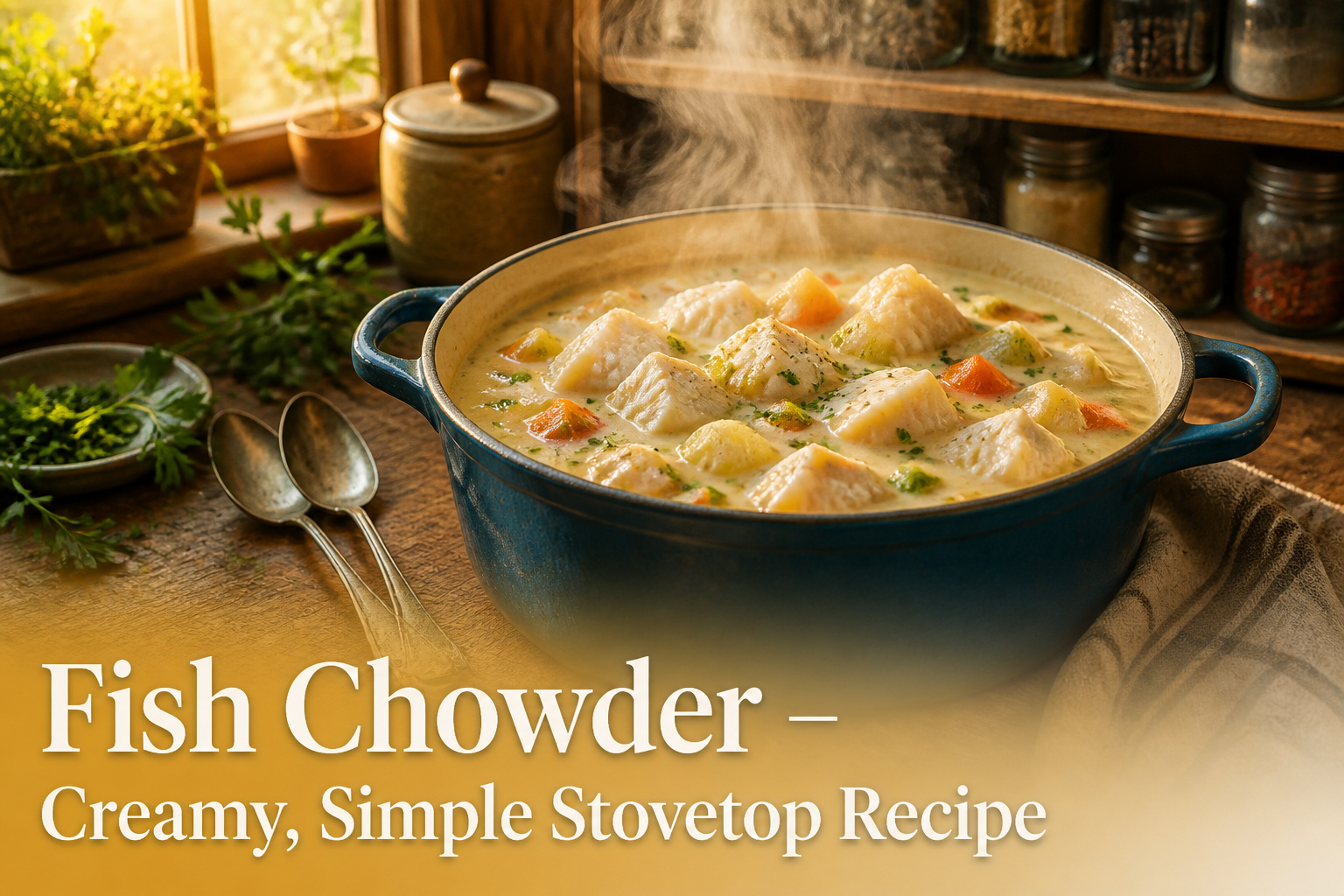
This fish chowder is creamy, mild, and built entirely on the stovetop in under an hour.
What sets it apart is that it skips the roux; the potatoes and heavy cream thicken the broth on their own, so you end up with one pot to wash instead of two.
Temperature control matters: let the cream boil and it turns grainy, so you pull the pot off the heat the moment it goes in.
What This Is and When to Make It
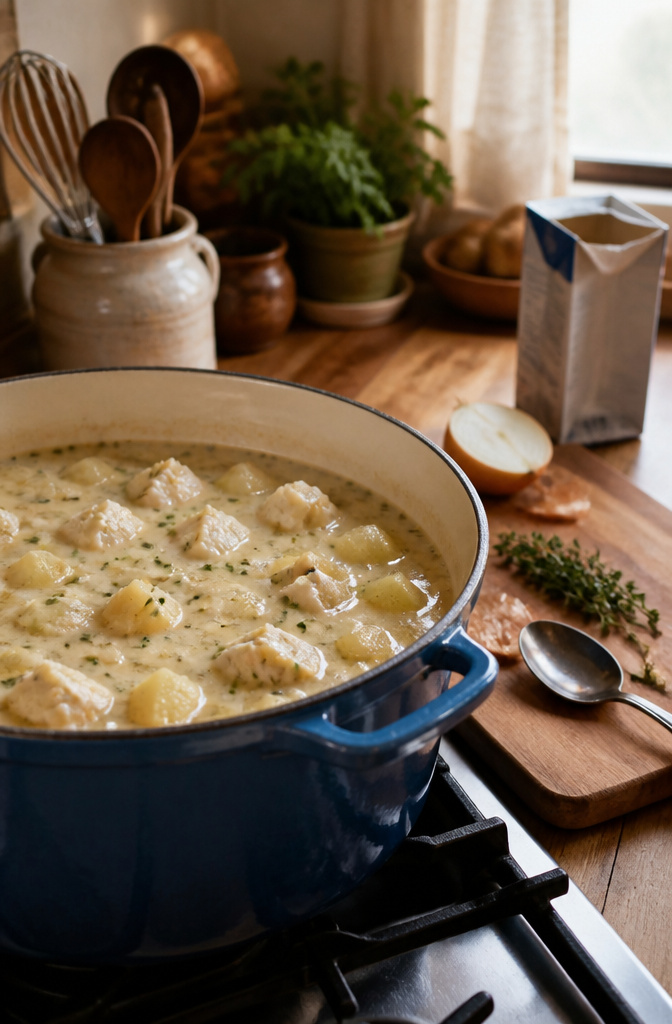
You know the feeling: it is Tuesday, the temperature dropped overnight, and there is a piece of fish in the refrigerator that will not last another day.
You want something creamy enough to feel like comfort food, but not so heavy that you regret it by eight o’clock. This chowder fits that exact gap.
It is a New England-style chowder, which means a milk or cream base, not the tomato broth you find in Manhattan.
Total active time runs 45 to 60 minutes, though you can shave that closer to 30 if your potatoes are small enough to cook fast. The yield is six to eight bowls, enough for dinner tonight and lunch tomorrow.
Cleanup stays honest: one pot, one cutting board, one knife. The chowder also holds well, so you can reheat it for two days without the cream breaking or the fish turning rubbery.
Ingredients
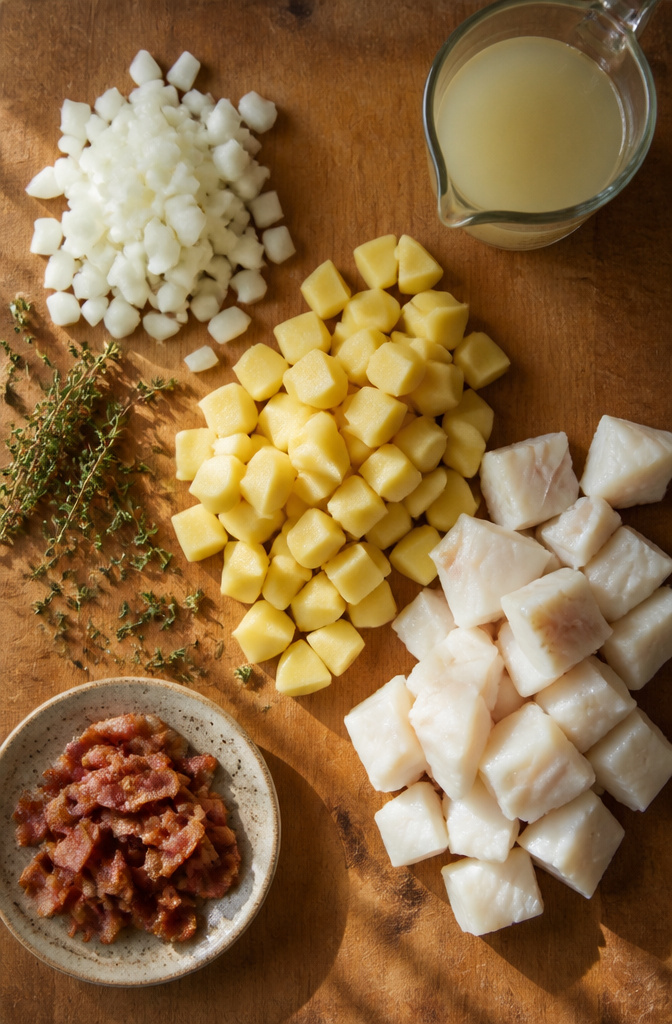
This chowder asks for ordinary ingredients. Most of the list is produce and dairy you already buy, plus one bottle of clam juice or a carton of fish stock.
- 1.5 pounds cod or haddock, skin removed and cut into 2-inch chunks; cod flakes more cleanly, haddock tastes a little sweeter
- 2 pounds Yukon Gold potatoes, diced to 1/2 inch; do not use russets, they fall apart
- 1 large yellow onion, diced
- 4 slices bacon, optional; skip it and use 2 tablespoons olive oil if you want the soup lighter or you keep kosher
- 4 cups fish stock or clam juice; clam juice comes in 8-ounce bottles near the canned tuna, so you need four of them
- 1 cup water
- 1.5 cups heavy cream; half-and-half works for a lighter soup but the broth will be thinner and less rich
- 2 tablespoons butter
- 1 teaspoon fresh thyme leaves, or 1/2 teaspoon dried
- 1 bay leaf
- Salt and black pepper
Method
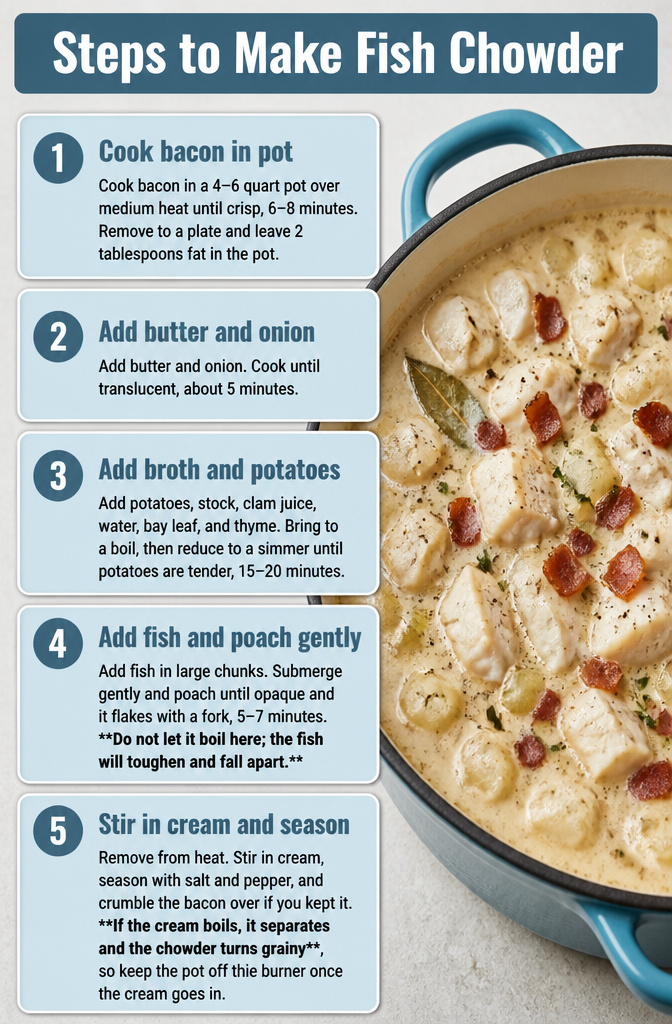
- Cook bacon in a 4–6 quart pot over medium heat until crisp, 6–8 minutes. Remove to a plate and leave 2 tablespoons fat in the pot.
- Add butter and onion. Cook until translucent, about 5 minutes.
- Add potatoes, stock, clam juice, water, bay leaf, and thyme. Bring to a boil, then reduce to a simmer until potatoes are tender, 15–20 minutes.
- Add fish in large chunks. Submerge gently and poach until opaque and it flakes with a fork, 5–7 minutes. Do not let it boil here; the fish will toughen and fall apart.
- Remove from heat. Stir in cream, season with salt and pepper, and crumble the bacon over if you kept it. If the cream boils, it separates and the chowder turns grainy, so keep the pot off the burner once the cream goes in.
Types of Fish That Work
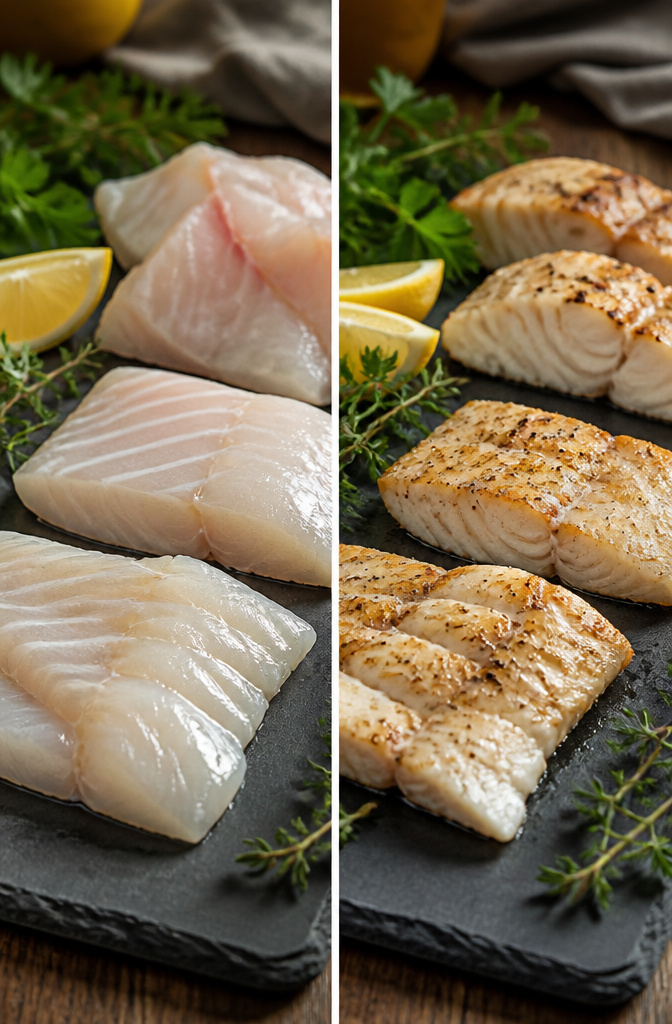
Cod and haddock are the standard choices for fish chowder, and for good reason. Both hold a firm, flaky texture after poaching and carry a mild flavor that lets the broth come through instead of fighting it.
You want one to two pounds total for a full pot, enough to give every bowl real substance without turning the soup into stew.
Lean fish like tuna and swordfish dry out fast in hot liquid. Their low fat content leaves no buffer, so the meat turns stringy and tough before the potatoes are even tender.
Delicate fish like flounder or sole go the opposite direction: they fall apart and nearly disintegrate into the broth, leaving you with flavor but no pieces to spear with a spoon.
Pollock, halibut, and monkfish also work if cod or haddock are not available. Monkfish in particular is dense enough to hold up like shellfish.
In coastal New England, a mix of two fish is common: maybe cod and pollock together, or haddock with a little halibut for variation.
The combination gives you different flake sizes in the same bowl, which is the kind of detail that makes a weeknight chowder taste like someone’s grandmother made it.
Thickening Without a Roux

This fish chowder recipe skips the roux entirely. Potato starch from the diced potatoes and a pour of heavy cream build the body instead.
You will still get a spoon-coating texture without standing at the stove whisking flour into fat.
If you want the chowder thicker than the base recipe delivers, make a quick slurry. Mix 1 tablespoon cornstarch with 2 tablespoons cold water and stir it in when you add the cream.
The cold water matters; hot liquid clumps the starch before it can disperse.
Heavy cream gives you more body than milk ever will, and the richness carries the mild fish. One to two cups is the range that works here.
Milk thins the broth and leaves it watery against the potatoes; cream keeps the texture unified.
Watch the pot once the cream goes in. A hard simmer or long reduction turns the starch and dairy gluey rather than silky.
Pull it off the heat while it still moves like loose gravy; it tightens as it sits.
Cooking the Fish Gently
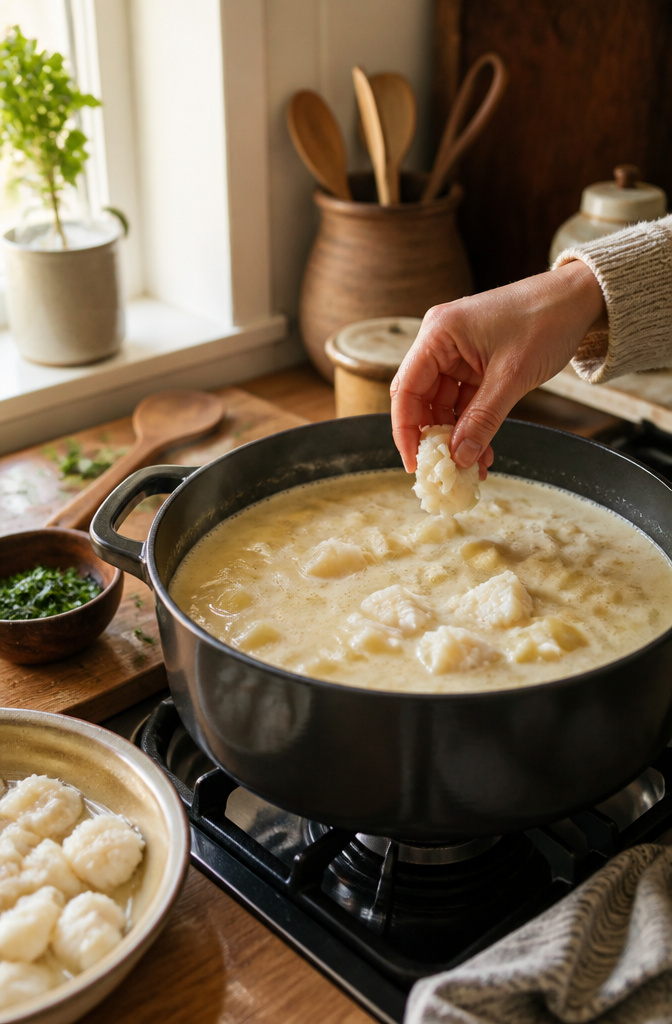
Wait until the potatoes are fully tender before you add the fish. Lower the heat so the liquid holds at a bare simmer, then slide the pieces in and leave them be.
Vigorous stirring is what turns fish into shreds, and boiling does the same thing faster.
The fish is done when it turns opaque and flakes under light pressure, usually five to seven minutes at that gentle heat.
Pull it early rather than late; carryover heat finishes the job even after you move the pot off the burner.
Cut your fillets into uneven pieces, some larger and some smaller. That variety gives you real texture in the finished bowl, and it means not every chunk crosses into overcooked at the same moment.
The bigger pieces stay moist while the smaller ones dissolve slightly into the broth, thickening it without any extra work.
Serving and What Goes With
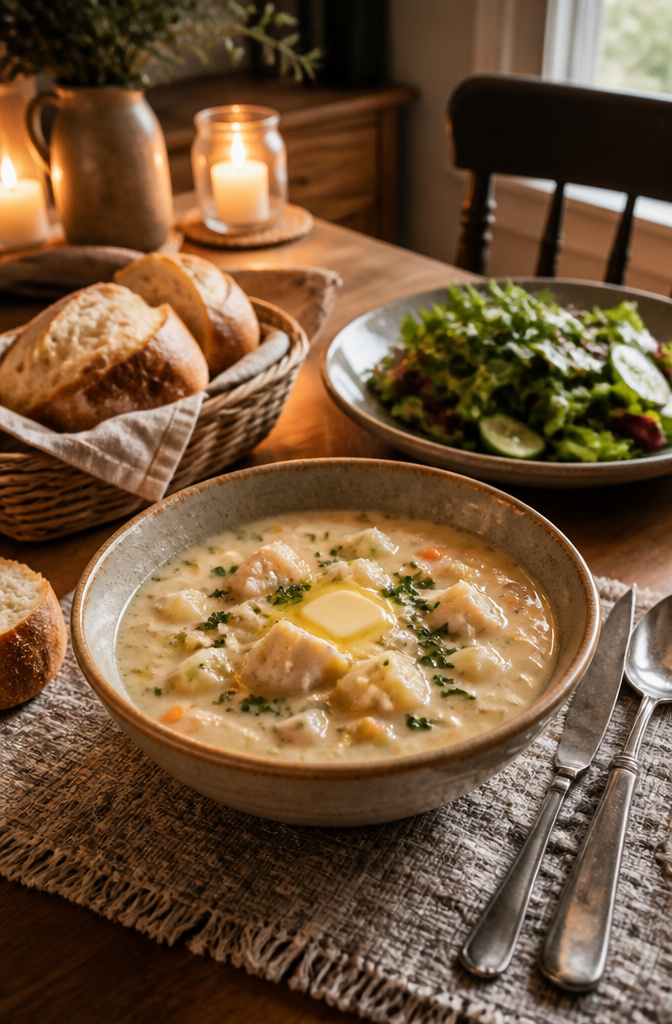
Serve the chowder hot, straight from the pot, and do not hold it at temperature for long periods; the cream can separate and the fish will toughen.
A pat of butter floated on top is the traditional finish, melting into a slick that carries the first spoonful.
Oyster crackers, saltines, or a torn piece of crusty bread all work for soaking up the broth, though the bread is the better choice if you want something to push through the bowl and catch the last of the potatoes.
Fresh parsley or chives on top add color and a sharp note that cuts the richness.
The chowder is substantial enough to stand alone as dinner, but a simple green salad with a tangy vinaigrette keeps the meal from feeling too heavy on the table.
If you are serving this as part of a larger spread, keep the portions small; it is filling, and you want room for what comes next.
Storage and Reheating
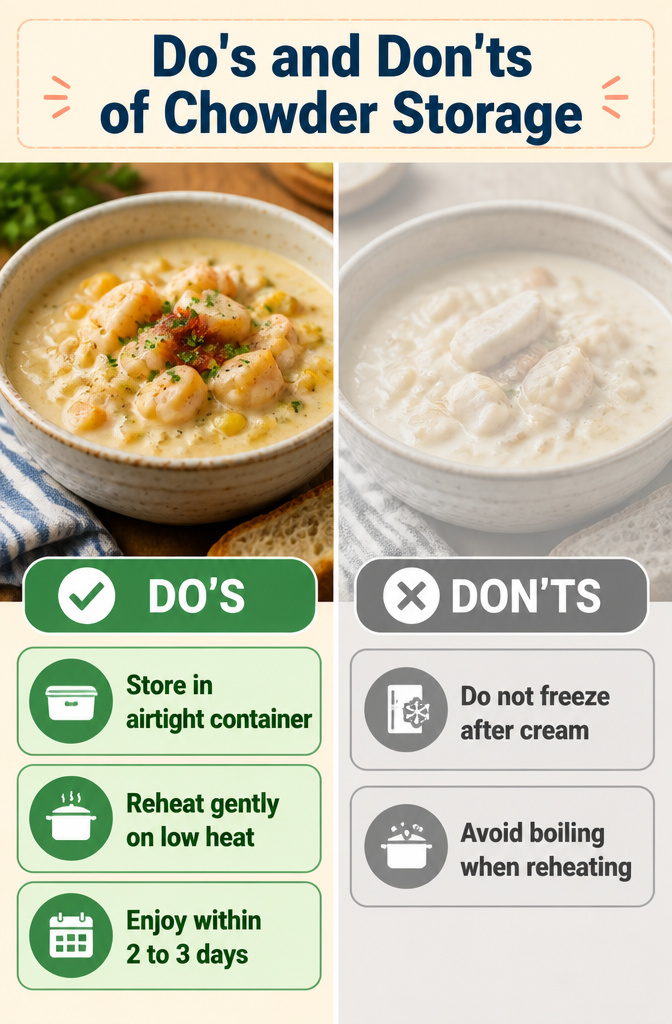
Leftover chowder keeps 2 to 3 days refrigerated in an airtight container, and it actually tastes better the next day once the flavors settle. Freezing is not recommended here: the dairy separates, the fish turns rubbery, and the potatoes go grainy.
If you absolutely must freeze, do it before adding the cream. Freeze the base, then thaw it overnight in the refrigerator and stir in the cream while reheating.
Reheat gently in a small pot over low heat.
Let it warm through slowly and pull it off the heat before it hits a boil, since boiling will toughen the seafood and can still split the cream even if you added it fresh.
Variations and Substitutions
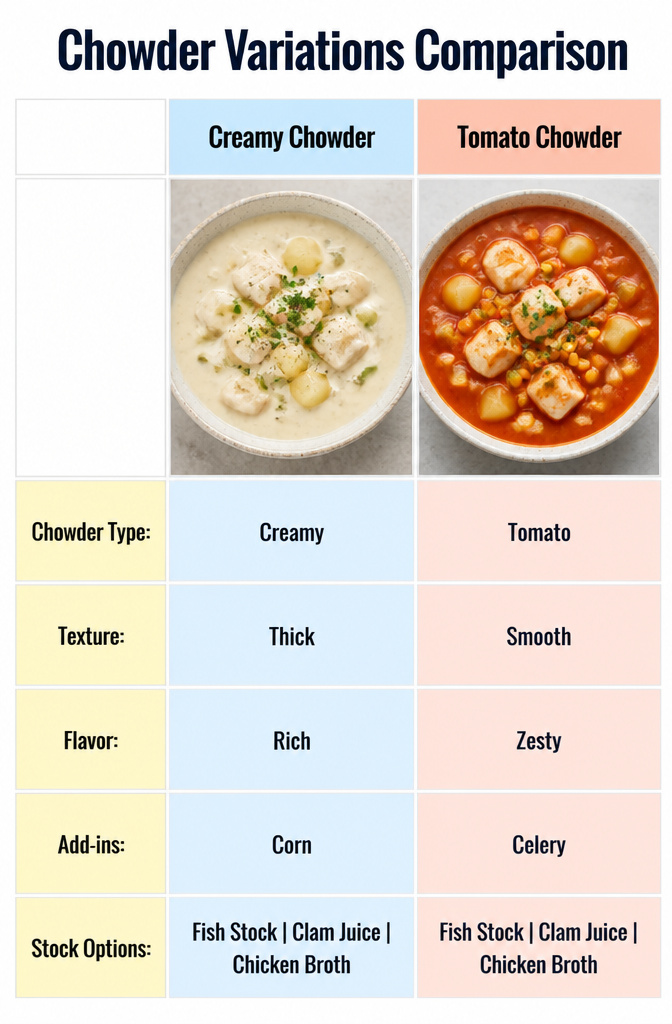
If you want a lighter, brighter chowder, swap the cream for a 28-ounce can of crushed tomatoes and use vegetable stock instead of milk.
That puts you in Manhattan-style territory: the tomatoes sharpen the broth, and a splash of lemon juice at the end keeps it from tasting flat.
It is not the same comfort as the creamy version, but it works on nights when dairy feels too heavy.
For a dairy-free creamy chowder, full-fat coconut milk is the straight substitution. It thickens like heavy cream and carries the same richness, though you will taste a faint coconut backdrop against the fish.
Skip the roux and the chowder is naturally gluten-free; the potatoes break down enough to give you body without flour.
Add-ins are flexible. Corn kernels, frozen or canned, go in with the onions so they have time to sweeten.
Celery does the same work, building the base alongside the usual aromatics.
Fish stock is worth buying when you see it, but bottled clam juice is the common fallback, and chicken broth will carry you if the fish counter is out of both.
The flavor shifts toward chicken soup with fish in it, which is not a failure, just a different dinner.
Frequently Asked Questions
What kind of fish can I use to make chowder?
Cod and haddock are the standard choices, but pollock, halibut, and monkfish also work well.
You want a firm, white fish that holds its shape during poaching; avoid lean fish like tuna and swordfish, which dry out, or delicate fish like flounder, which fall apart.
How do I thicken fish chowder?
This recipe skips the roux and relies on potato starch and heavy cream for body. If you want it thicker, stir in a slurry of 1 tablespoon cornstarch mixed with 2 tablespoons cold water when you add the cream.
Can I freeze fish chowder?
Freezing is not recommended. The dairy separates, the fish turns rubbery, and the potatoes go grainy.
If you must freeze, do it before adding the cream, then thaw overnight and stir in the cream while reheating.
What are the best potatoes for chowder?
Yukon Gold potatoes are the best choice here. They hold their shape and release enough starch to help thicken the broth without turning grainy or falling apart like russets would.
What is the secret to a great fish chowder?
The secret is gentle poaching. Wait until the potatoes are tender, then add the fish at a bare simmer and leave it alone; vigorous stirring or boiling toughens it and turns it to shreds.
Pull it when it just turns opaque, since carryover heat finishes the cooking.
What are common mistakes when making chowder?
Letting the chowder boil after adding the cream is the big one; it separates and turns grainy. Adding fish too early or stirring too much also ruins the texture, and boiling the fish instead of poaching makes it tough.
Do you cook fish before putting it in chowder?
No, you add raw fish directly to the simmering broth after the potatoes are fully cooked. It poaches in five to seven minutes right in the pot, which keeps it moist and lets it flavor the broth as it cooks.