
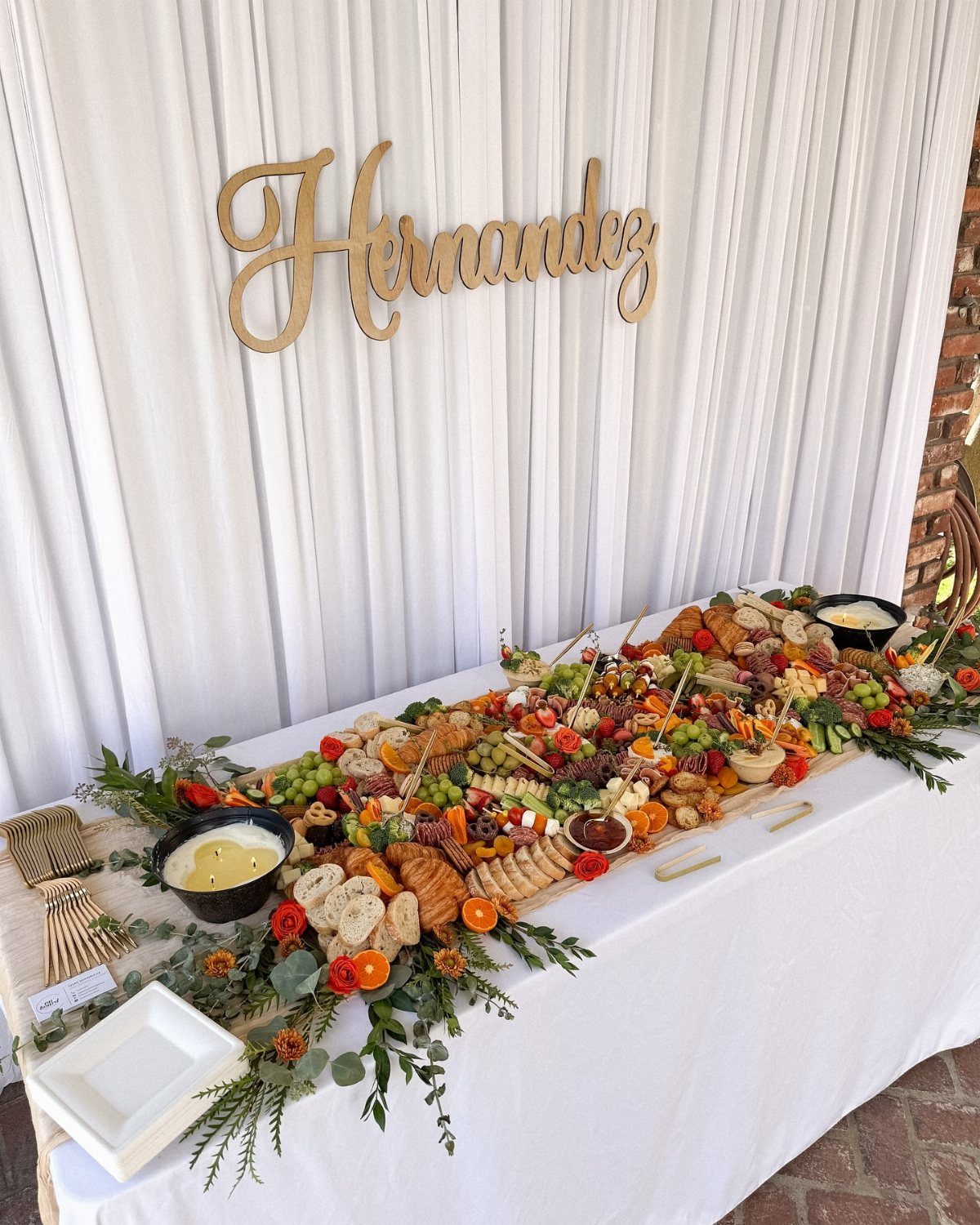
These boards run from a fruit spread that comes from one grocery run and never touches a stove to a Grilled Sausage Board or Kielbasa Pierogi Board that needs real cooking.
What picks yours is whether the food has to be hot.
Waffles, pancakes, and grilled sausages must go out right after cooking, so they suit a small group or a host who can stay near the kitchen. Cheese, fruit, and cured meat can be set out ahead of guests.
1. Grazing Table
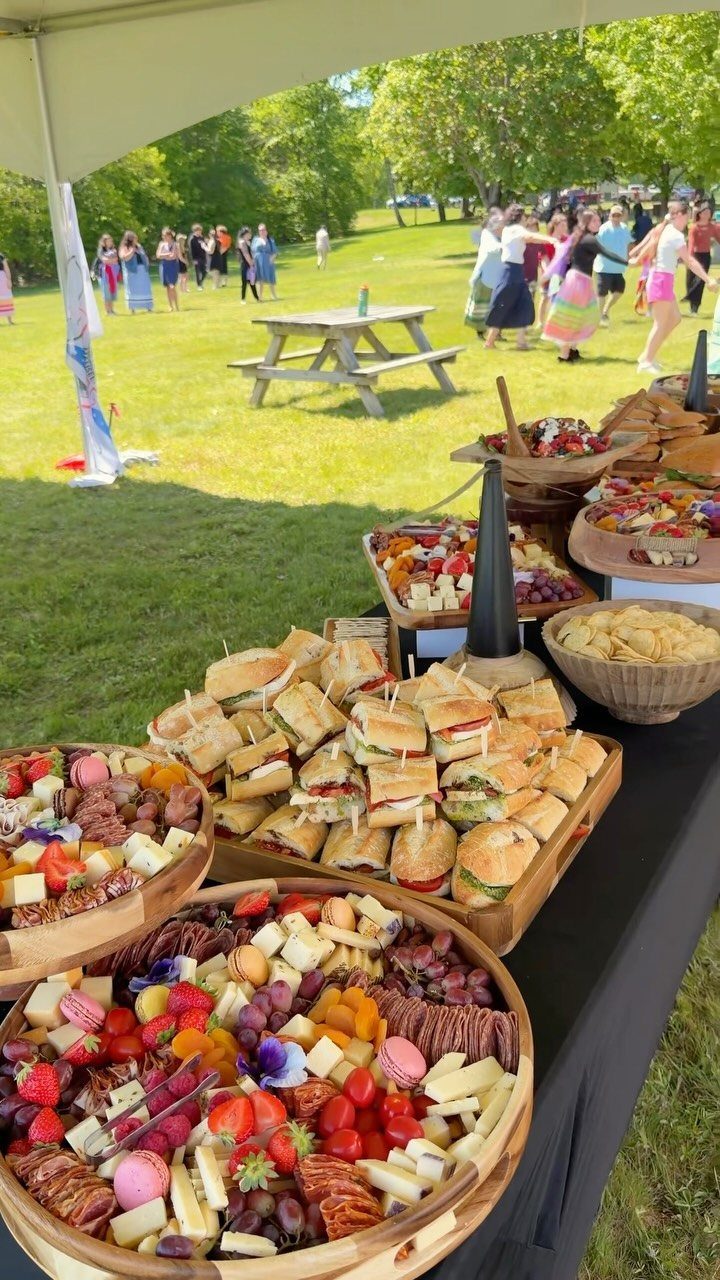
Sandwiches on trays change what this table is for. Add them next to the charcuterie and fruit, and guests can make a full plate instead of nibbling between songs.
Large bowls hold a lot and refill fast, so they suit a crowd spread across a lawn. A tent overhead keeps the whole setup in one spot.
2. Wedding Grazing Table
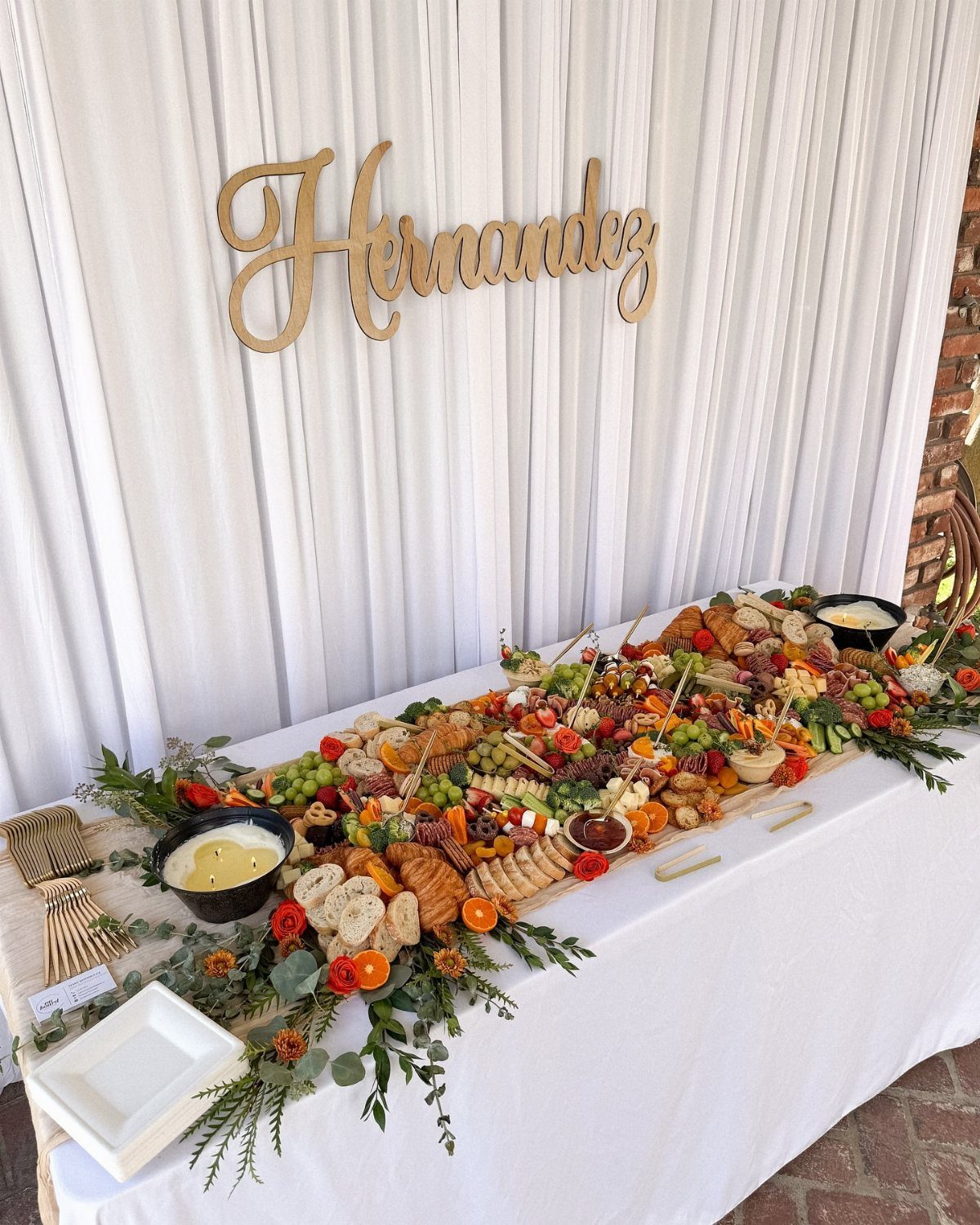
A name sign is the detail that makes a grazing table feel like a wedding table.
Set a wooden or gold-lettered sign with the couple’s surname at the back, and the spread reads as part of the day instead of a catering line.
Run greenery along a white cloth to soften the rows of meats and cheeses. A plain curtain behind keeps the eye on the food.
3. Holiday Grazing Table
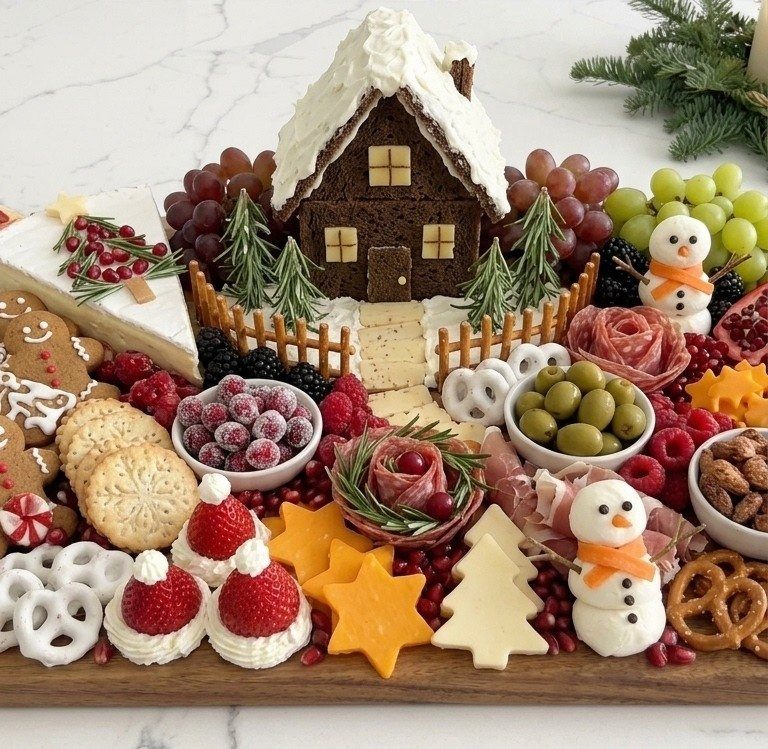
Make the centerpiece a gingerbread house, then build the rest of the board around it. Snowmen made from cheese and stars cut from sliced cheese bring the winter theme into the savory half, so the board isn’t only sweets.
Keep fruit, meats, and crackers in tight clusters around the house. Gaps look bare on a board this decorated.
4. Grilled Sausage Board
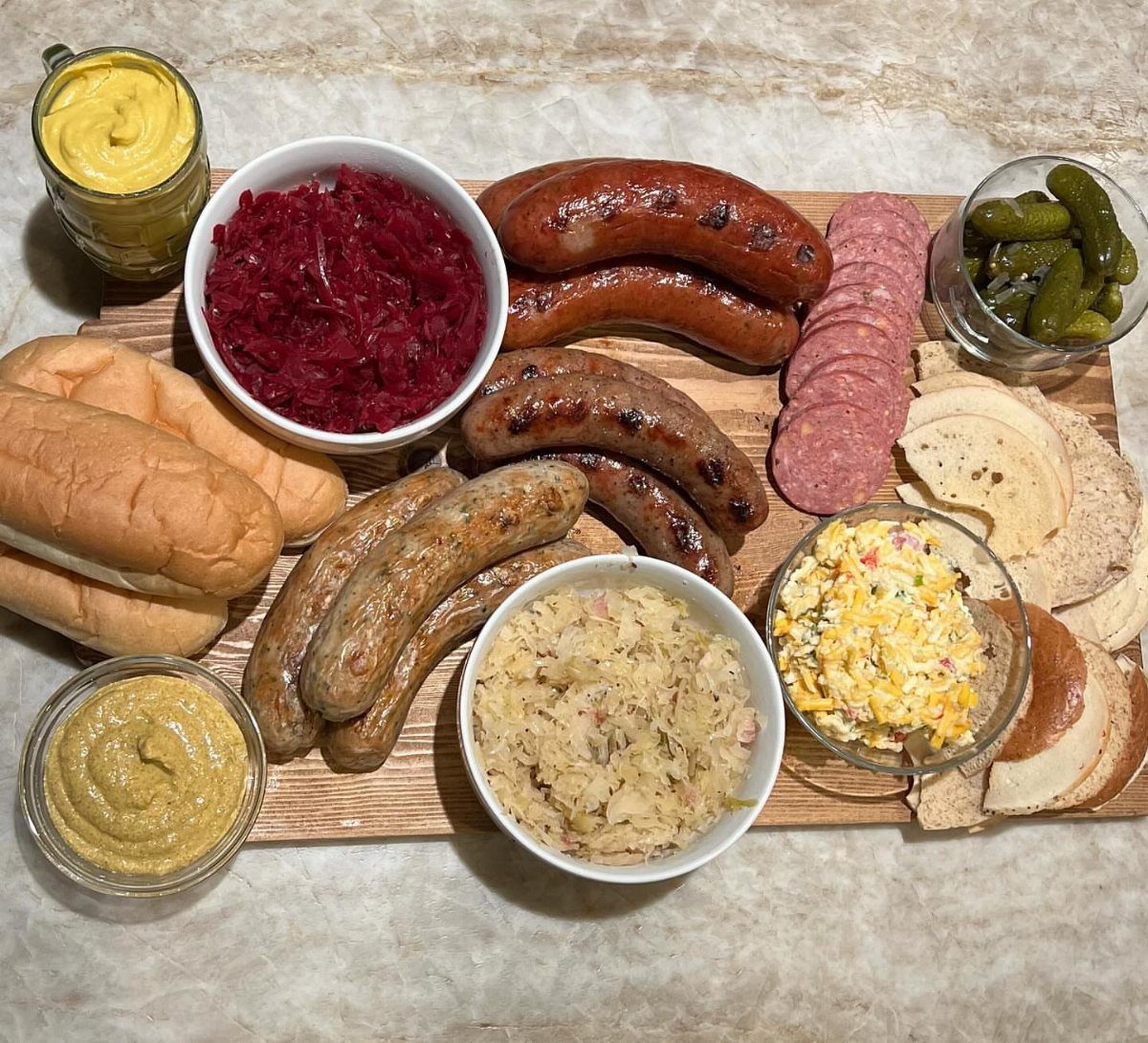
Grilled sausages bring the heat to a board that is otherwise cold, so serve them right after they come off the grill.
Grilled sausage is rich, so pack the board with sharp, tangy things: sauerkraut, pickles, red cabbage, and a couple of mustards to cut the fat. Sliced salami fits in alongside.
Egg salad is an unusual extra and worth copying. Put buns on the board too, so guests can build a sandwich or eat the sausage plain.
5. Cheese and Charcuterie
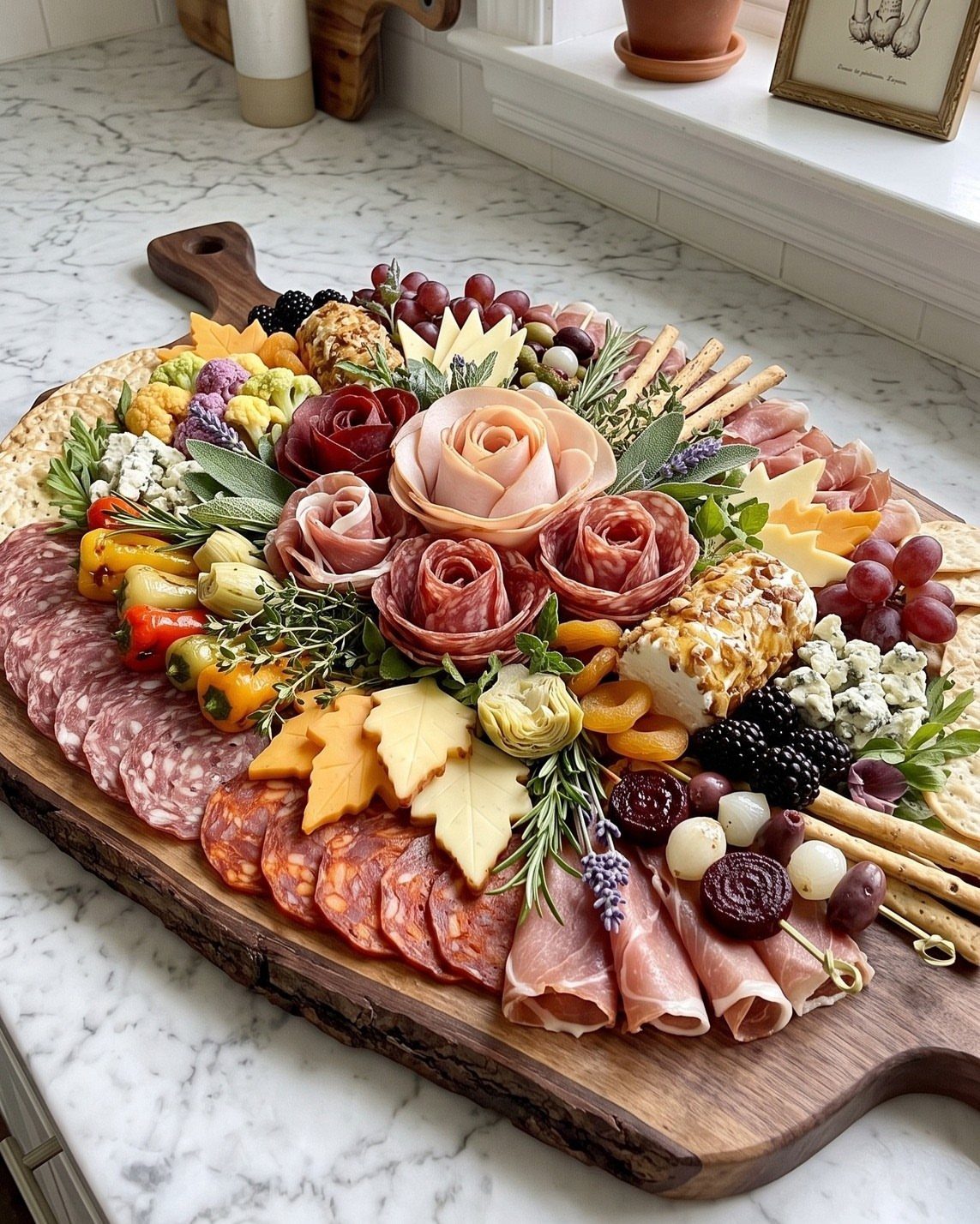
Cured meat rolled into roses is the one fussy step worth doing here. It makes a plain board look planned, and the rest is just arranging.
Anchor the board with several cheeses of different textures, then fill the gaps with grapes, berries, and crackers.
Use the board’s full surface so nothing looks sparse. Garnishes tucked into the corners finish it.
6. Brunch Board
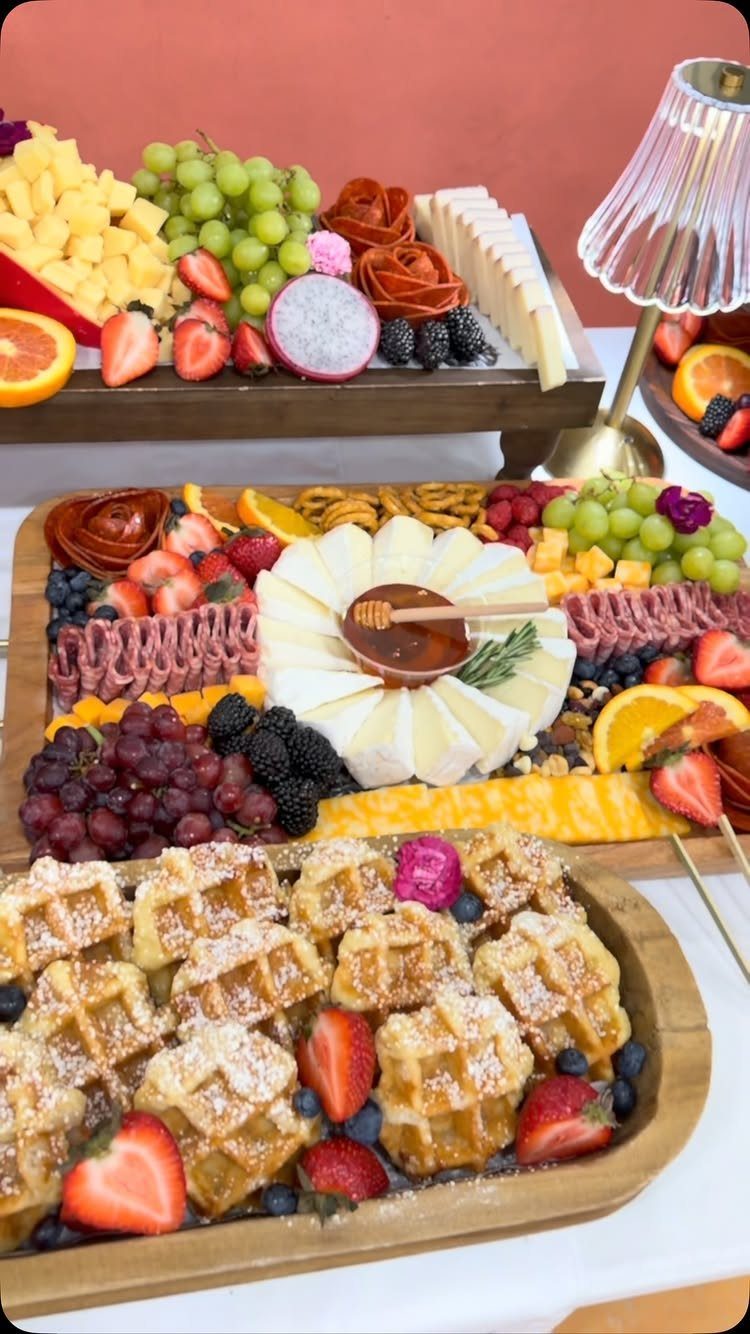
Brunch splits naturally into sweet and savory, so give each its own platter. Waffles and berries go on one; cheeses and meats go on another.
3 separate boards also keep syrupy hands away from the cheese knife and let guests reach from different sides of the table. Waffles are best warm, so refill that platter as the first batch disappears.
7. Southern Cheese Board
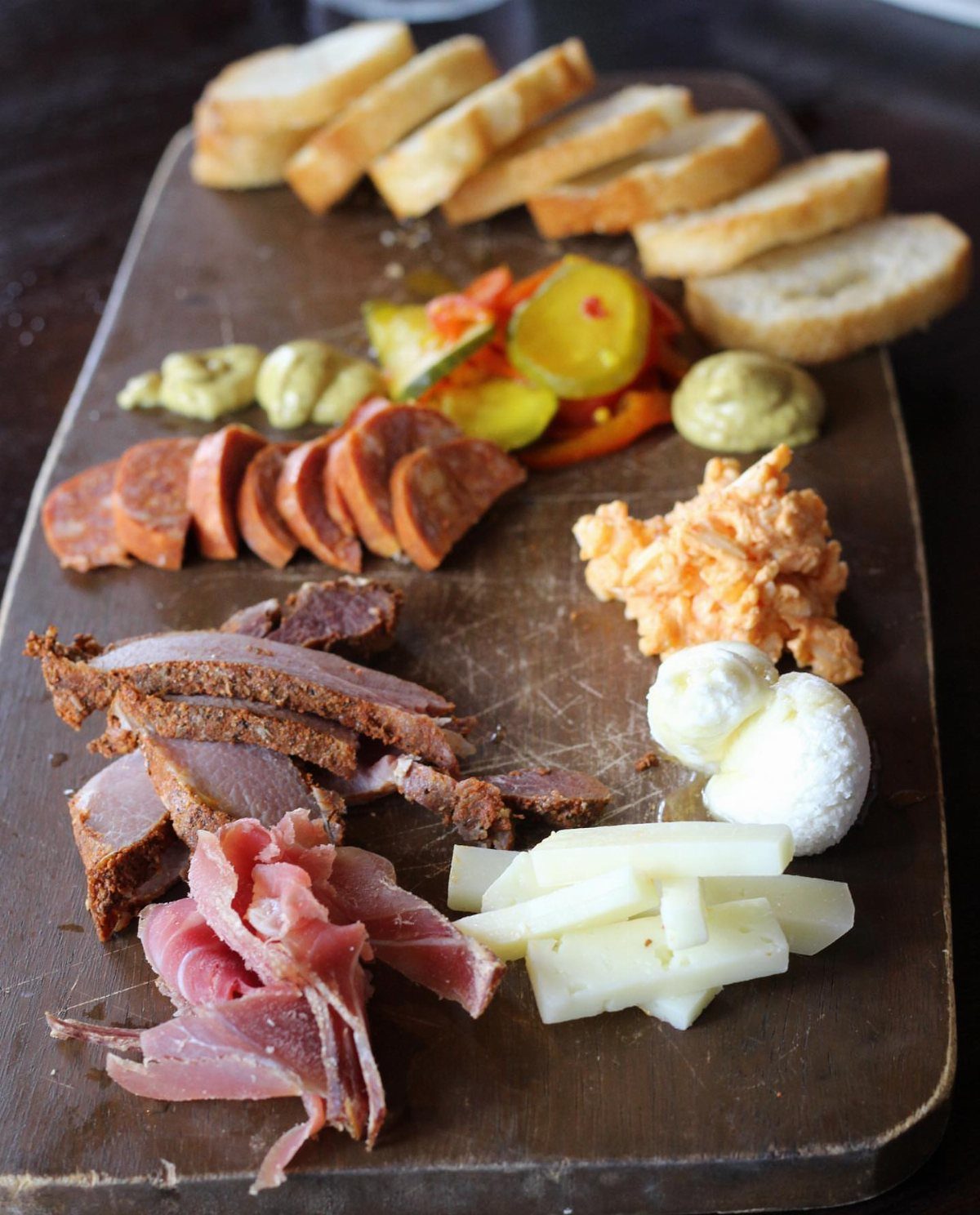
Pimento cheese is the Southern anchor on this board, and it needs a bread that can carry it. Toasted baguette slices work: they stay crisp under a thick scoop of spread.
Sliced sausage and pickles give you the salty, tangy side, with mustard nearby to bind them. Fresh mozzarella adds a mild counterpoint to the sharper items.
Toast the baguette last, right before it goes on the board, so it doesn’t go soft.
8. Meat Lovers Board
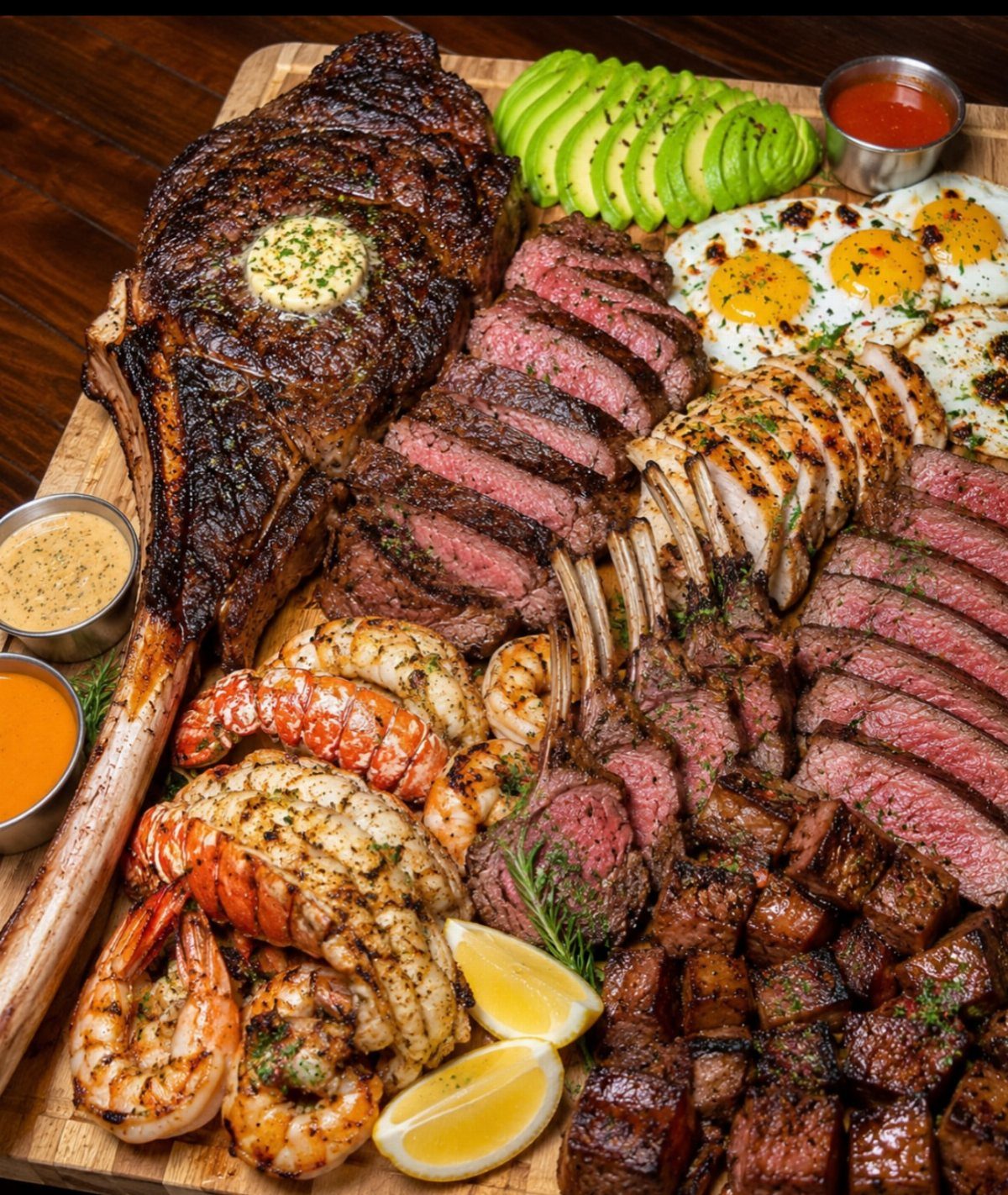
Skip the crackers and cheese here and treat the board like a steakhouse platter. A tomahawk steak at the center, sliced so guests can pick up pieces, sets the scale for everything else.
Build the surf-and-turf side with ribs, shrimp, and lobster, then add fried eggs for richness and avocado for something fresh. Set out two or three dipping sauces in small bowls.
This is a splurge board. Cooked meat and shellfish also need to go out hot, so serve it soon after cooking and to a small group.
9. Cheese Wheel Cake
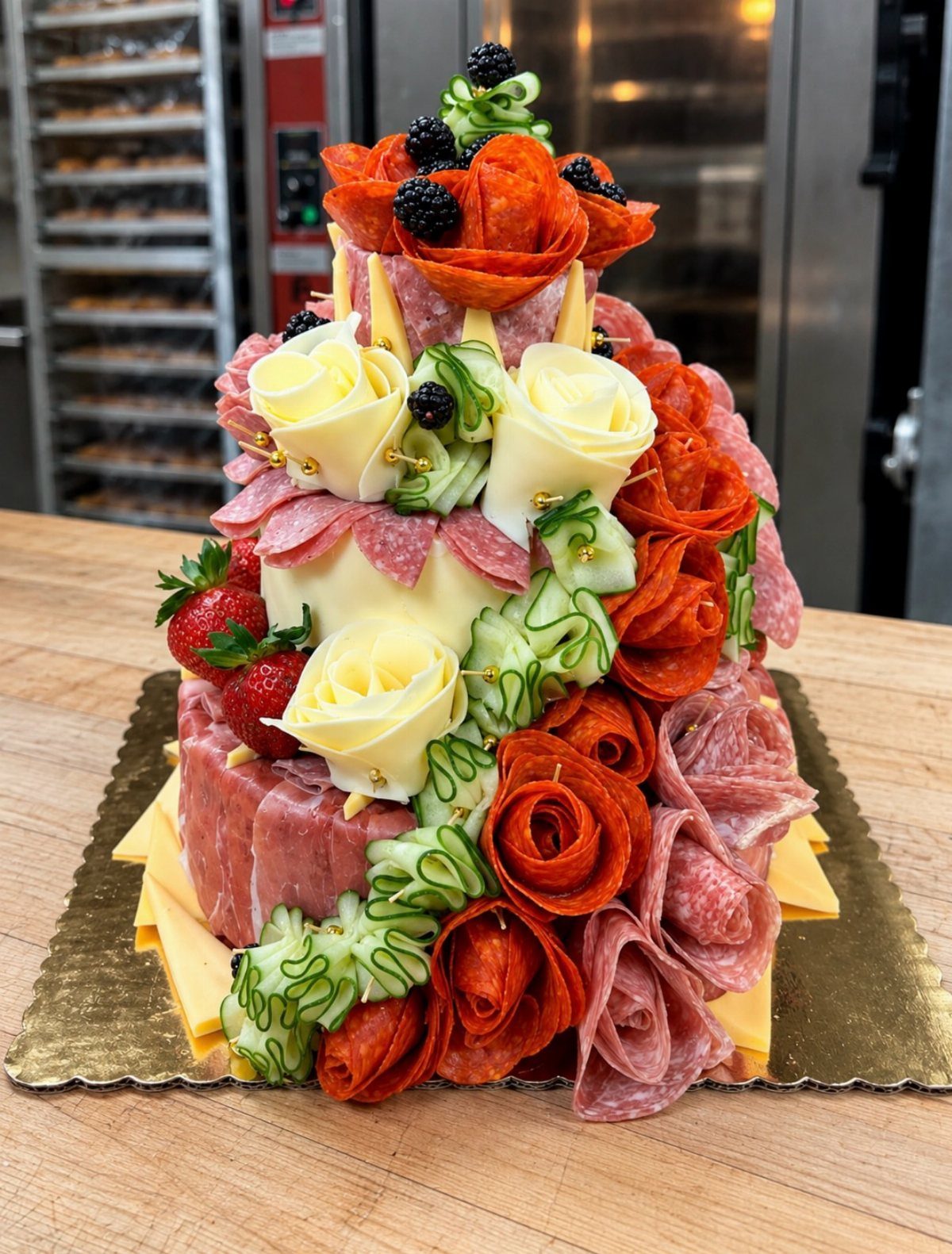
Stacked cheese wheels make a wedding "cake" that doubles as the food, and no one has to cut into frosting.
Build the tiers from the largest wheel down to the smallest, on a sturdy base such as a gold serving board.
Strawberries and blackberries add color against the pale rind.
Assemble it where it will be served, since a tiered stack of wheels is heavy and awkward to carry once built.
10. Seasonal Produce Board
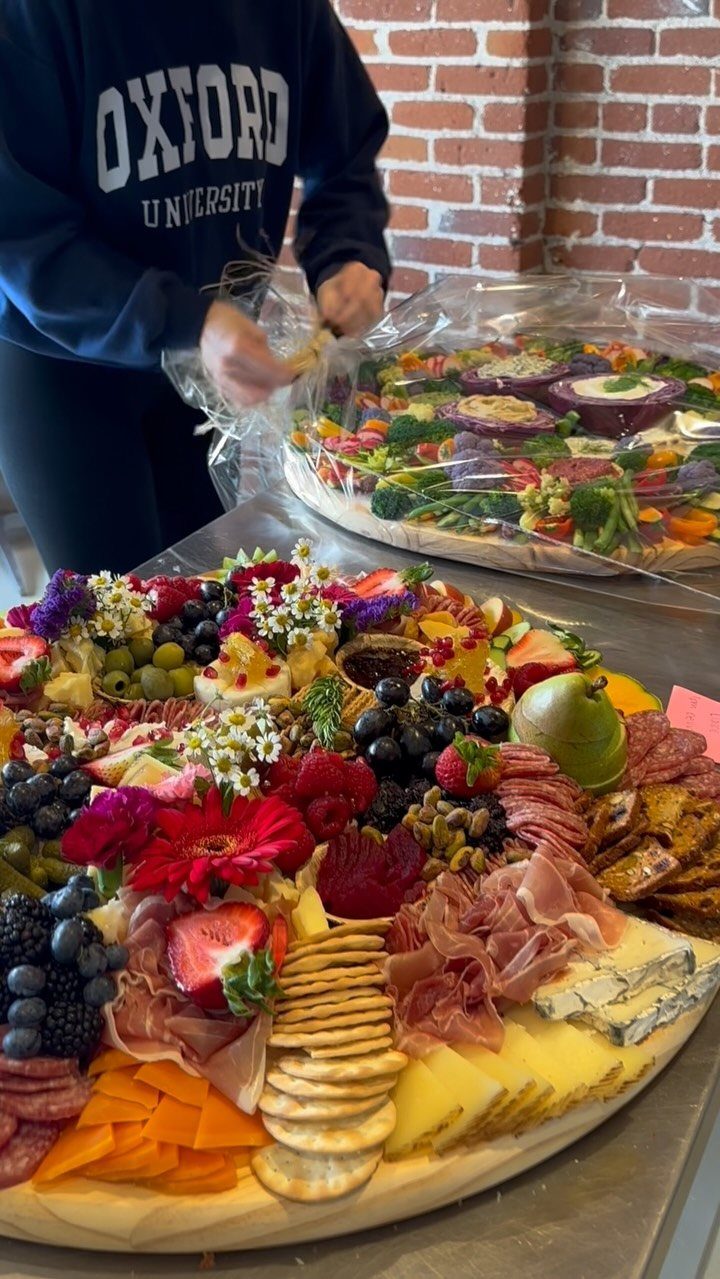
Build around whatever looks best at the market that week, and let the produce set the palette. Fresh berries and edible flowers add color to a board of meats and cheeses without extra cooking.
Pair this board with a vegetable platter when you’re feeding a bigger group. A vegetable platter next to the board gives guests more to choose from and keeps the meat from emptying first.
Wash and dry the produce well before it goes on the board, or juice will bleed into the cheese.
11. Christmas Charcuterie Board
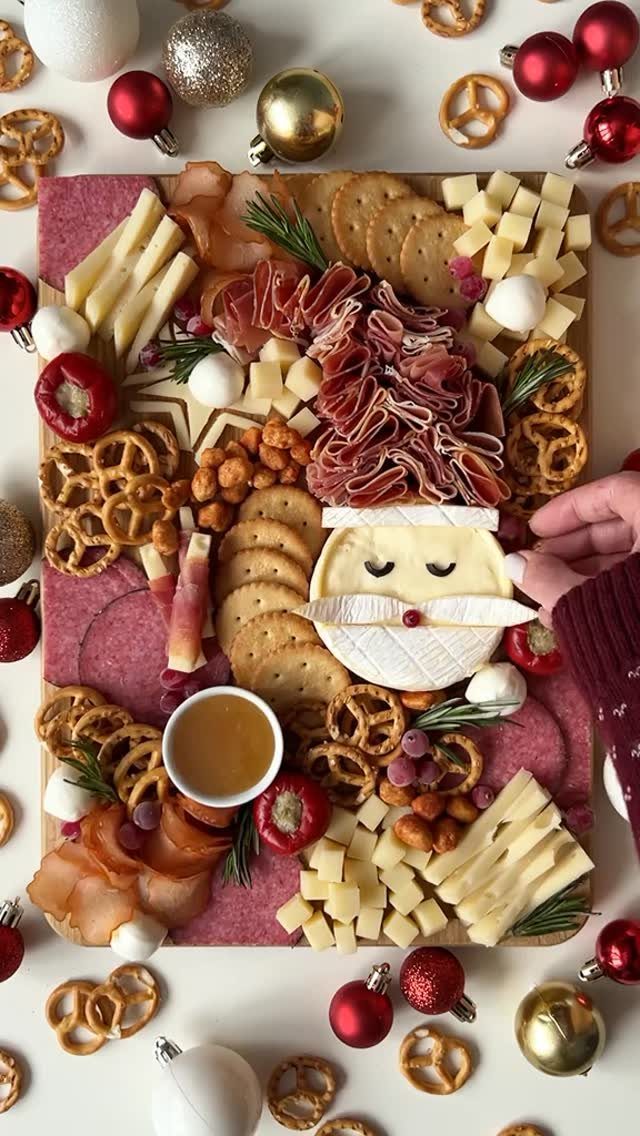
Shape the board into Santa and the whole thing becomes the centerpiece. Use cheese and meats for the face and beard, and let the red and white of the ingredients do the work.
Set Christmas ornaments and pretzels around the edge to frame it. Keep ornaments on the outside rim, away from the food, so no one picks up a decoration by mistake.
Guests will hesitate to break into a face, so cut the first few pieces of cheese yourself to get things started.
12. Game Day Board
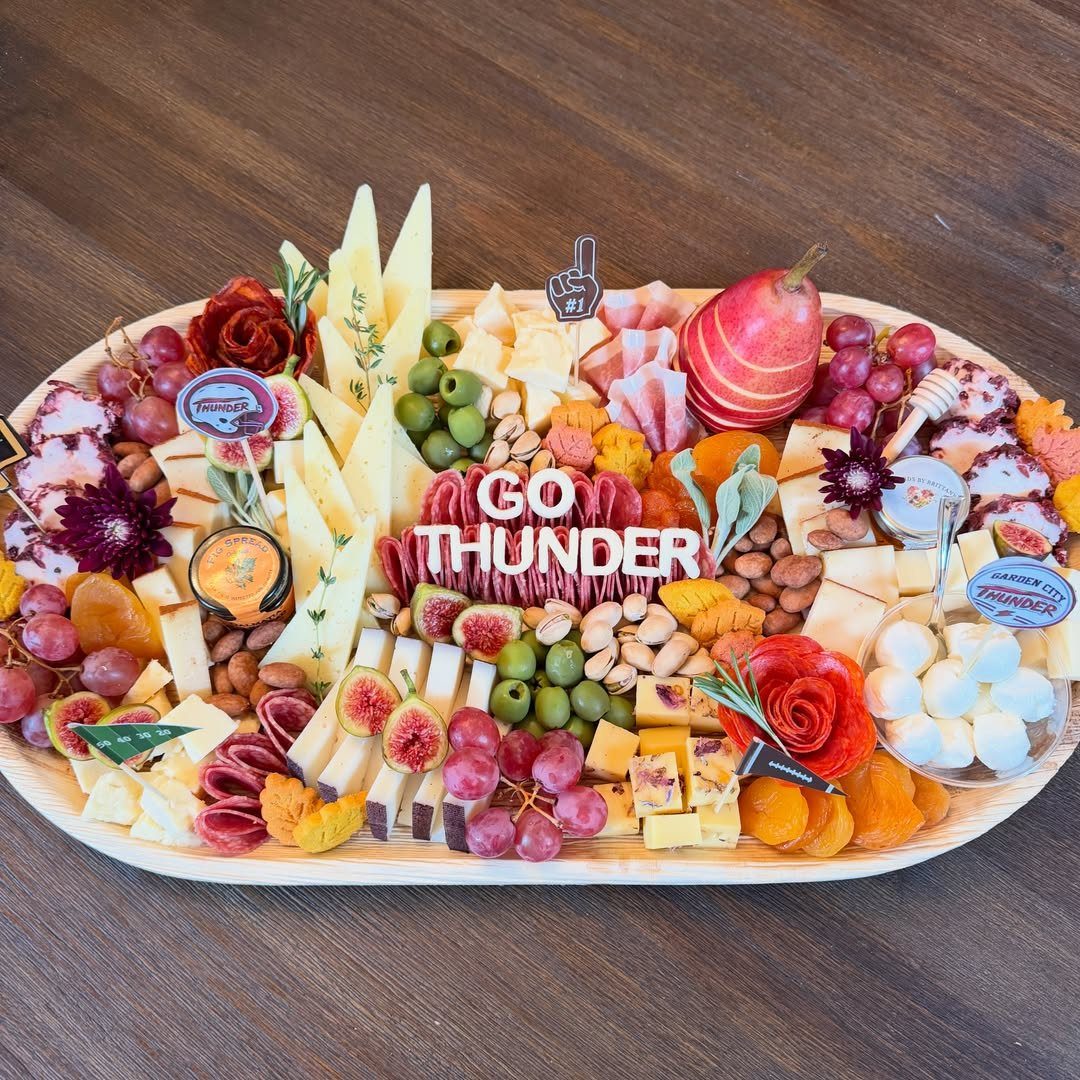
Team signs turn an ordinary snack board into a game-day table. Small hand-lettered or printed signs tucked among the cheeses, fruit, and nuts are enough, and they cost almost nothing.
Choose foods guests can eat standing up or holding a drink: cubed cheese, grapes, nuts, and folded meats. Skip anything that needs a knife and fork.
Put the board near the screen but off the main walkway so people can graze without blocking the view.
13. Kids’ Birthday Table
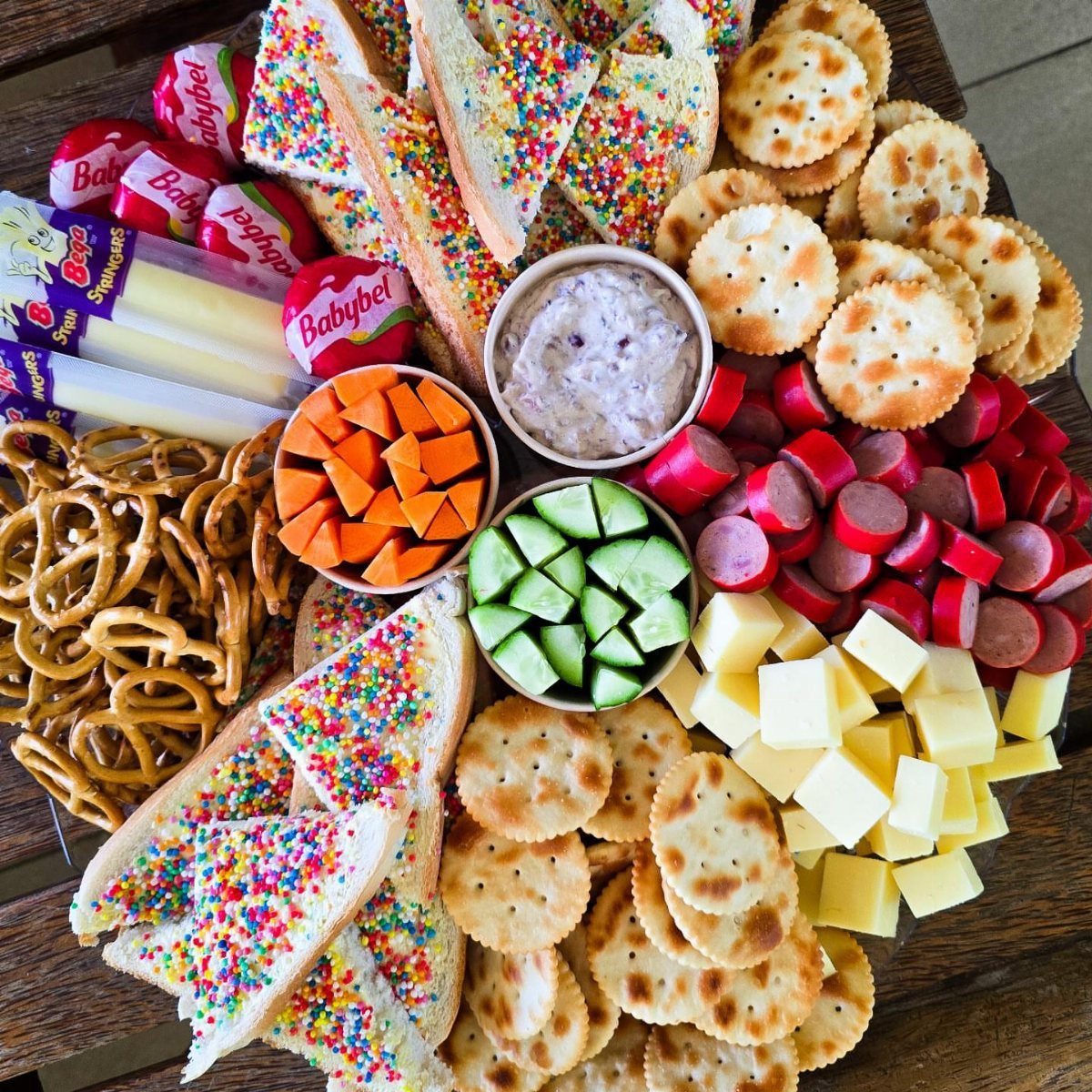
Sprinkle-topped baguette slices are the detail that makes this table feel like a party. Spread them with a soft topping, shake on rainbow sprinkles, and kids will go for them first.
Add a few items the adults will eat too, like cheese cubes, sliced sausage, and a dip for the carrots and cucumbers, so one board feeds the whole table. Parents can graze alongside the kids without a second platter.
Add the sprinkles right before serving so the colors stay bright.
14. Patriotic Charcuterie Board
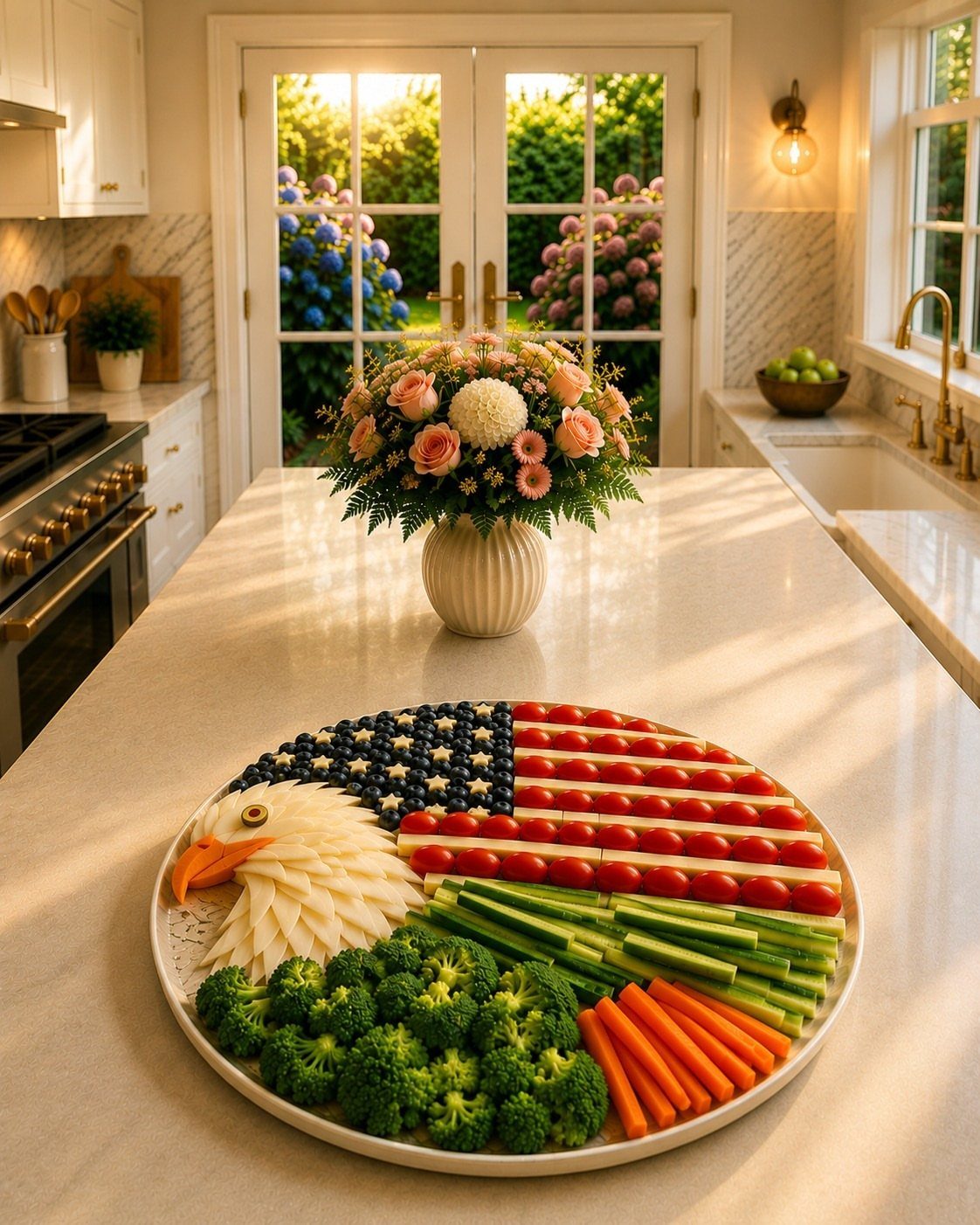
A flag built from vegetables does the work of a centerpiece, so you can skip the red, white, and blue napkins. An eagle shape beside it gives the counter a second focal point.
Choose produce that is already the right color: red on one side, white on the other, with a blue-toned item for the field of stars. Sturdy vegetables hold the lines of the flag better than soft ones.
Cut everything in the same size so the stripes stay straight.
15. Halloween Charcuterie Board
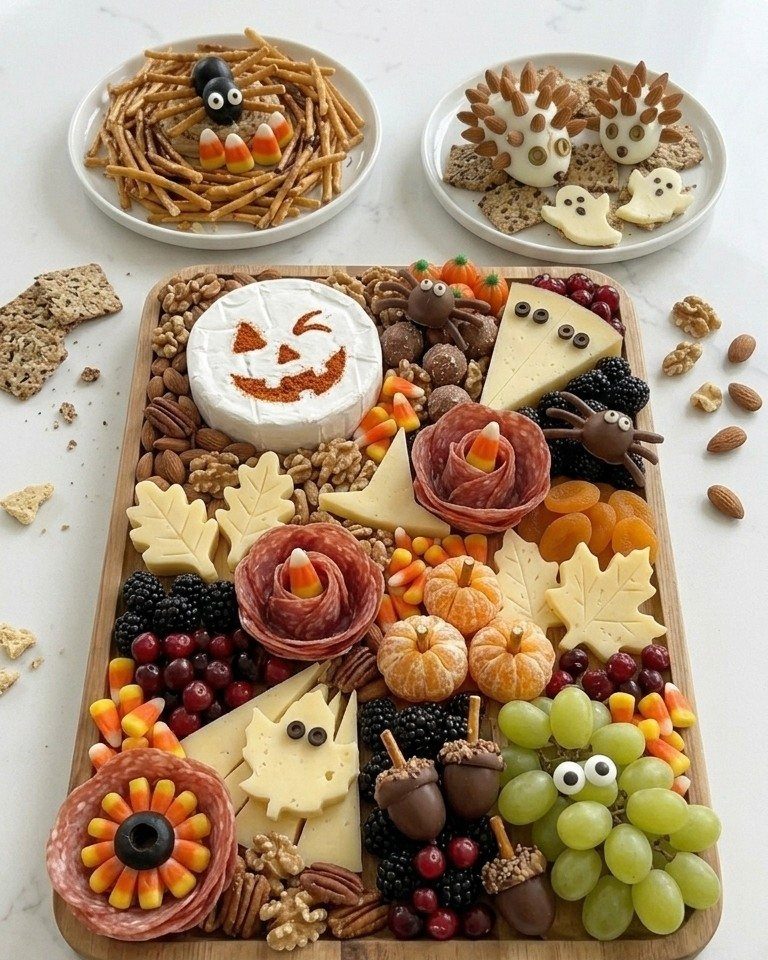
A cheese wheel carved with a pumpkin face gives you a Halloween centerpiece with no baking and no candy. Orange-colored cheese suits it, and salami rolled into roses fills in the dark, savory side.
Cut crackers into leaf shapes with a small cutter, or buy a themed box. Grapes fill the gaps between the larger pieces.
Split the spread across a board and a couple of small plates. Guests then have more places to reach, and the main board stays intact longer.
16. Thanksgiving Charcuterie Board
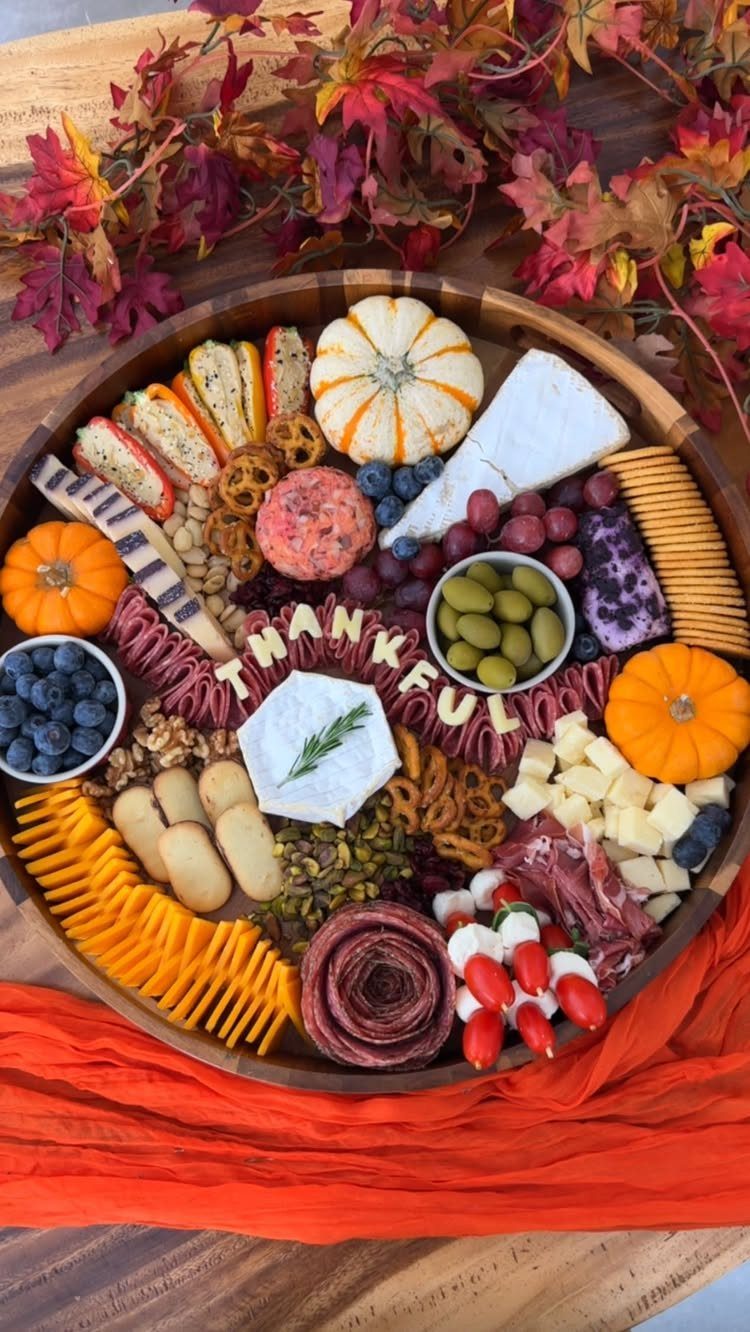
Spell out THANKFUL with letter-shaped pieces and the board says its theme before anyone sits down. Cheese cut into letters is the easiest route, and a small cutter set keeps them even.
Set the board on a table with autumn leaves and an orange runner so the colors carry past the food. A small pumpkin tucked beside the meats and fruit adds height.
Cut the letters from a firm cheese, since soft cheese tears at the edges. Place them last so they stay crisp and readable.
17. Turkey Charcuterie Board
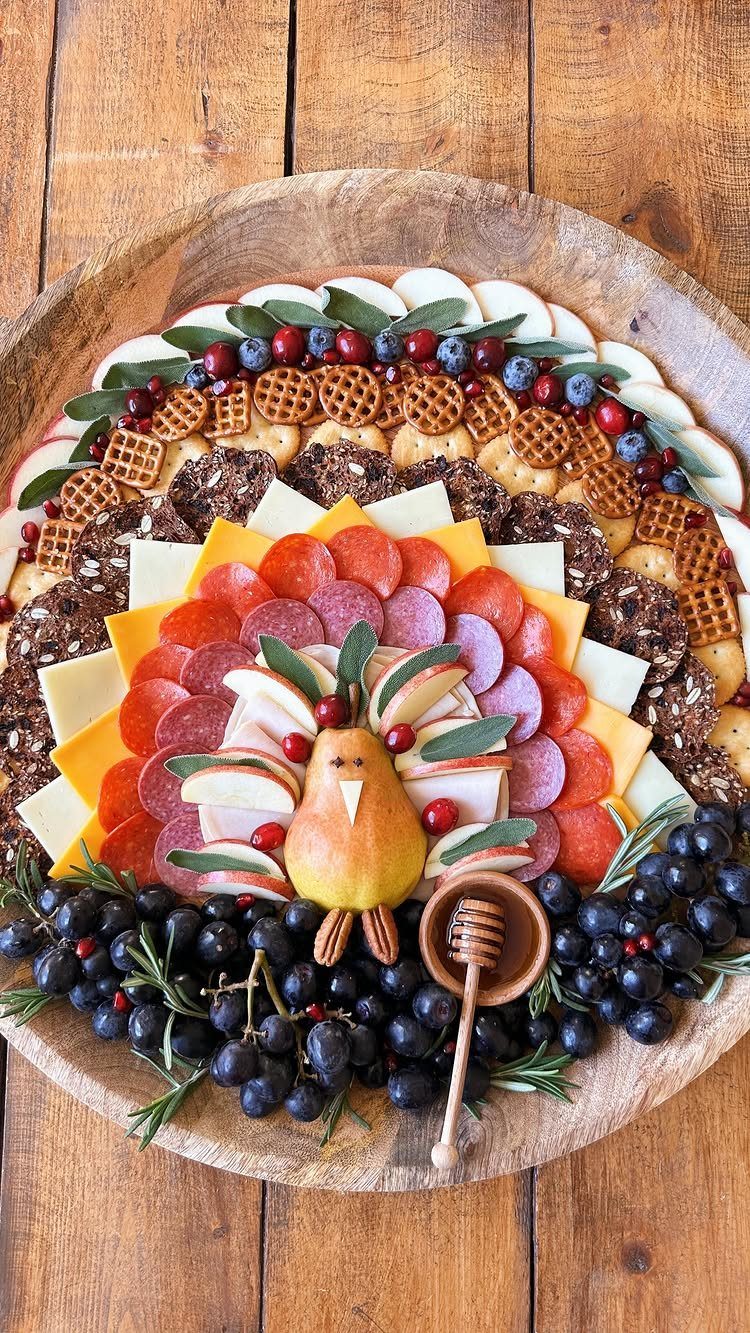
A pear makes a fine turkey body, and salami fanned behind it reads as tail feathers. That is the whole trick of this board, and it takes about the same effort as any other spread.
A small dish of honey on the board gives guests something to drizzle over the cheese.
Cut the pear last, right before you set the board out, since sliced fruit browns as it sits.
18. Kids’ Christmas Board
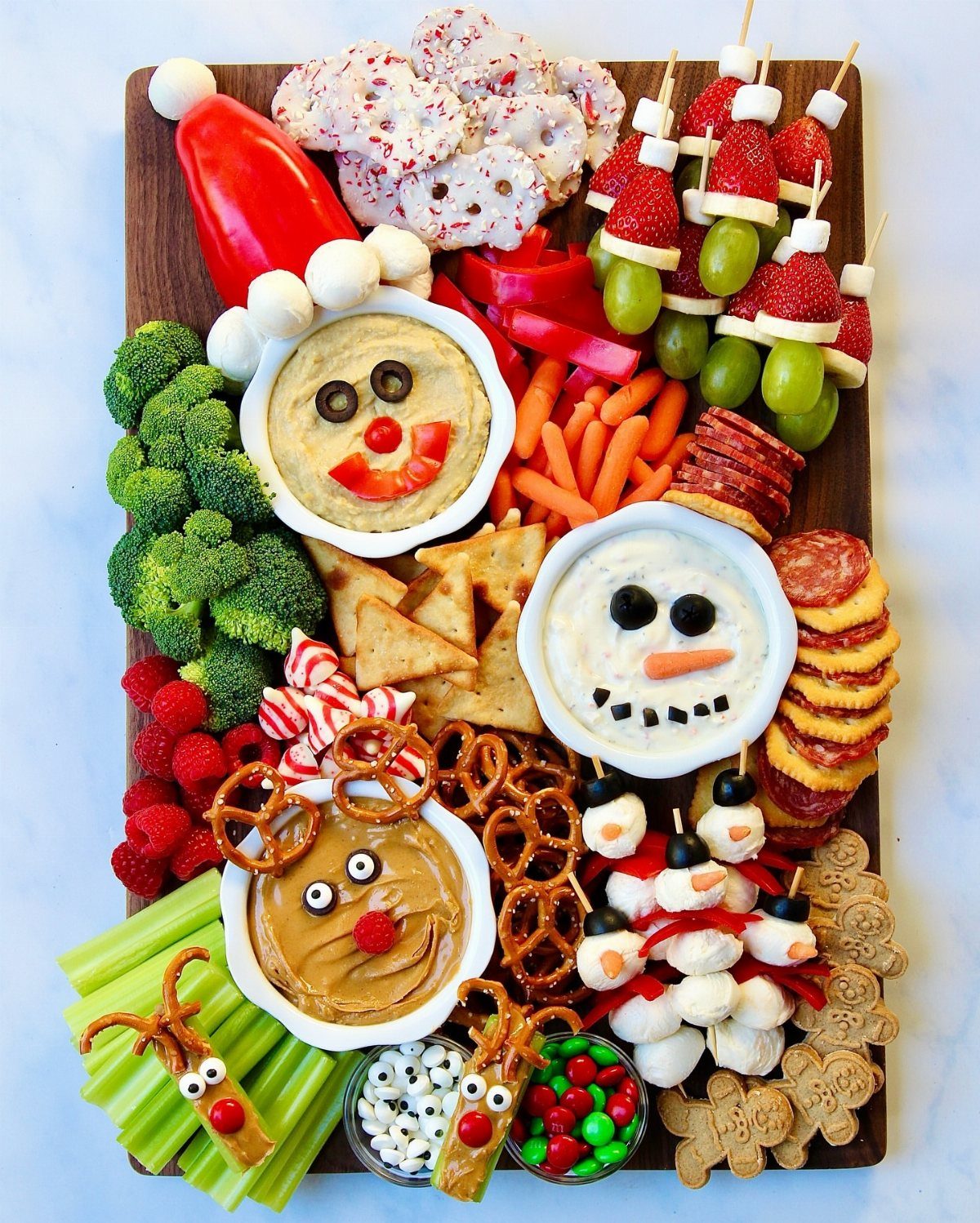
Snowmen made from dips are the clever move here. Hummus works as a white base, and vegetable and candy details turn it into a face, which gets kids eating vegetables without being told to.
Reindeer can come from pretzels for antlers and a candy nose. Mozzarella skewers add a mild, easy-to-hold option, and fruit fills in the color around them.
Put the candy on last and keep it to a few pieces, so the vegetables stay the main event.
19. Easter Charcuterie Board
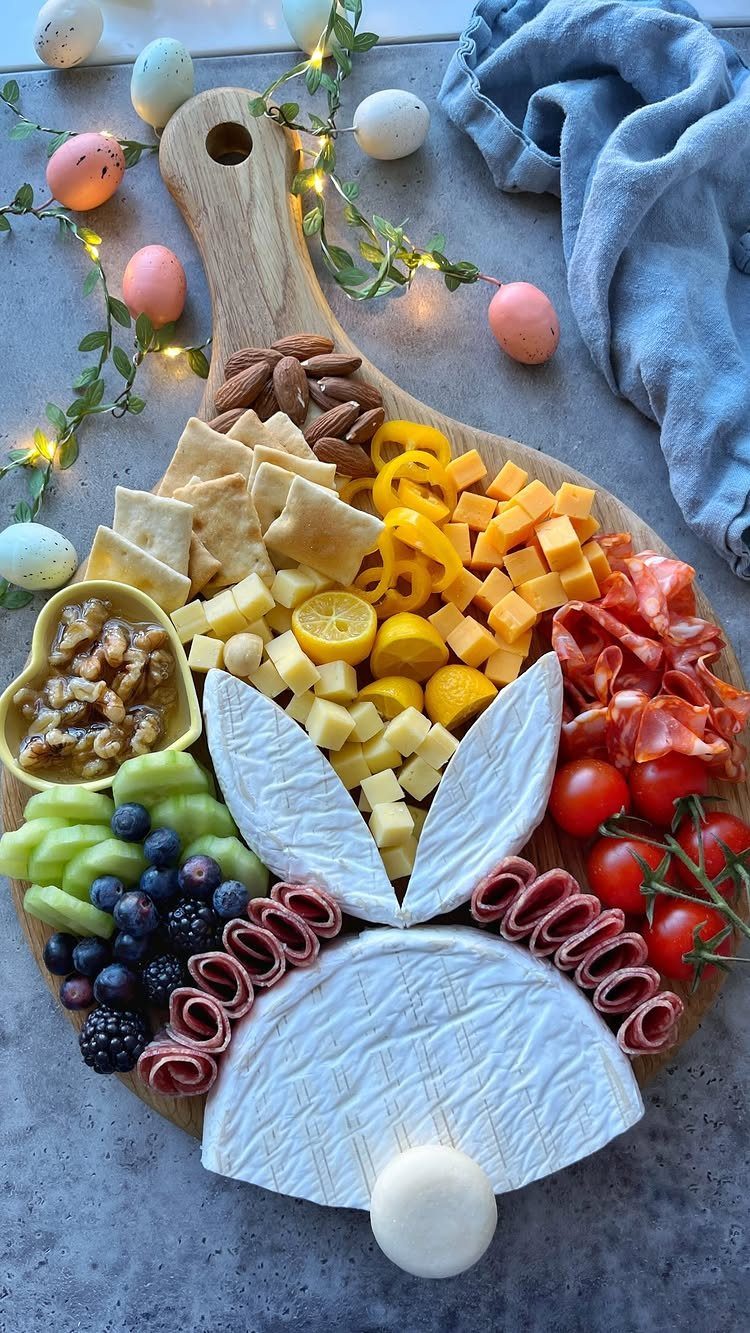
A bunny shaped from cheese is the whole concept here, and it makes the board read as Easter before anyone looks at the food. Pastel eggs scattered around the edge carry the theme to the rest of the board.
Fill the space around the bunny with crackers, fruit, meats, and vegetables, so the savory and sweet sit side by side. Set the fairy lights along the back, away from the food.
20. Hot Dog Board
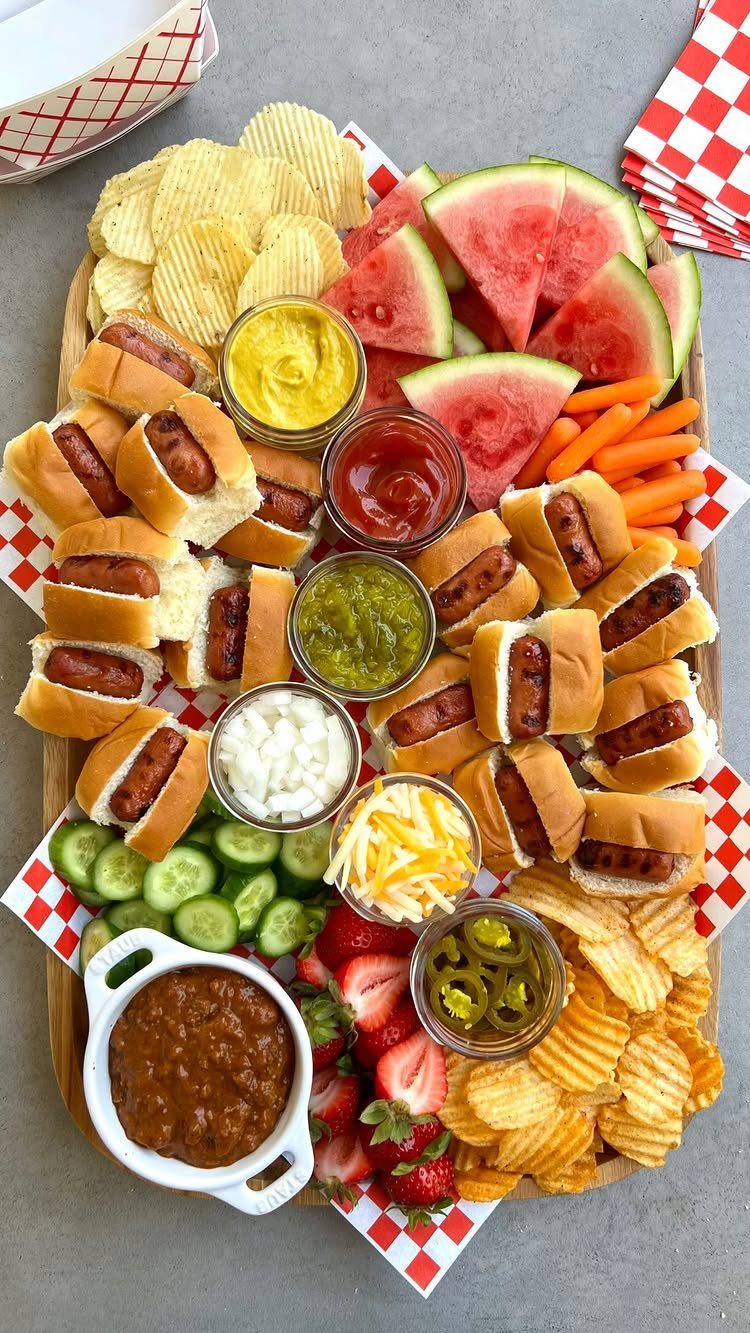
Mini hot dogs make this a board people can eat in 2 bites, which suits a crowd better than full-size dogs on buns. Grill them and serve them warm.
Put the toppings in small bowls: mustard, ketchup, relish, onions, shredded cheese, and chili. Chili is the messy one, so give it a spoon of its own.
21. Waffle Breakfast Board
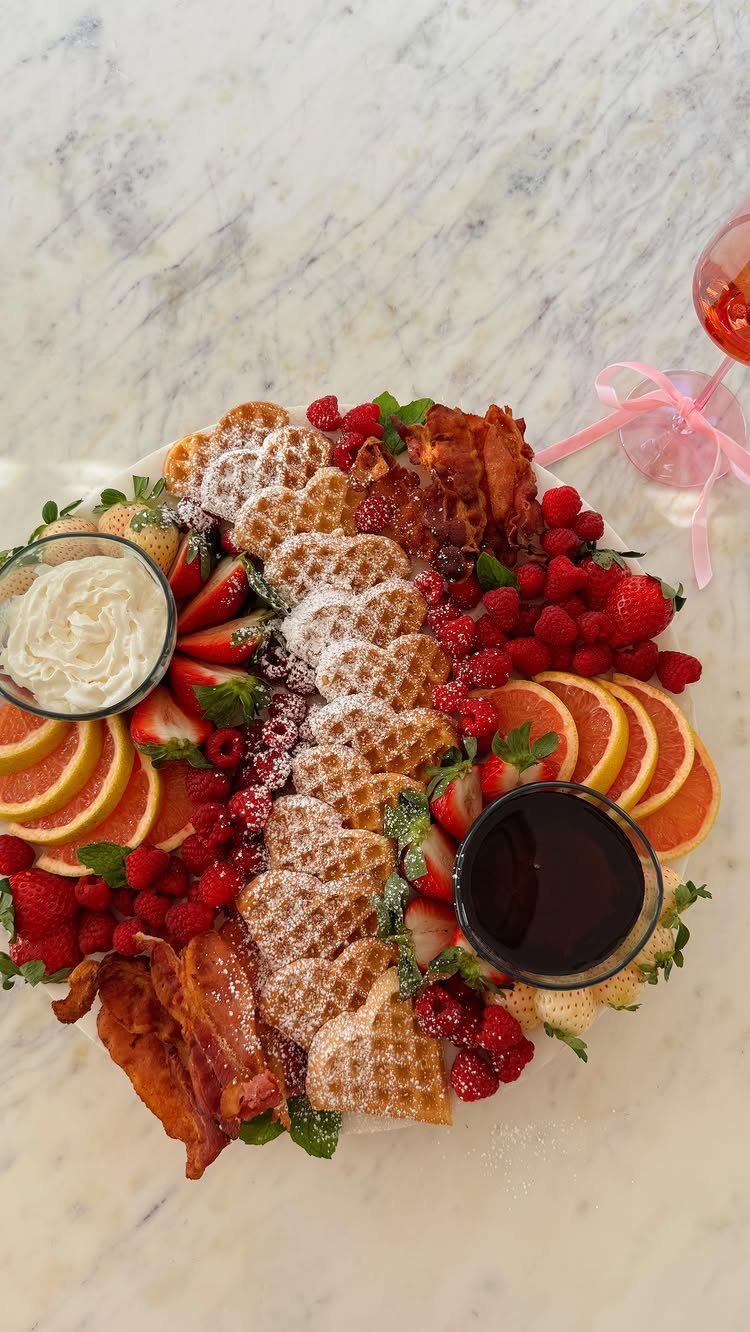
Heart-shaped waffles turn a plain breakfast into something you’d serve on Valentine’s Day or Mother’s Day. A waffle iron with a heart pattern is the one piece of gear the idea depends on.
Grapefruit adds a tart note against the sweet toppings.
Cook the waffles in batches and bring them out warm. Keep the syrup in a small pitcher so it doesn’t pool on the board.
22. Pancake Breakfast Board
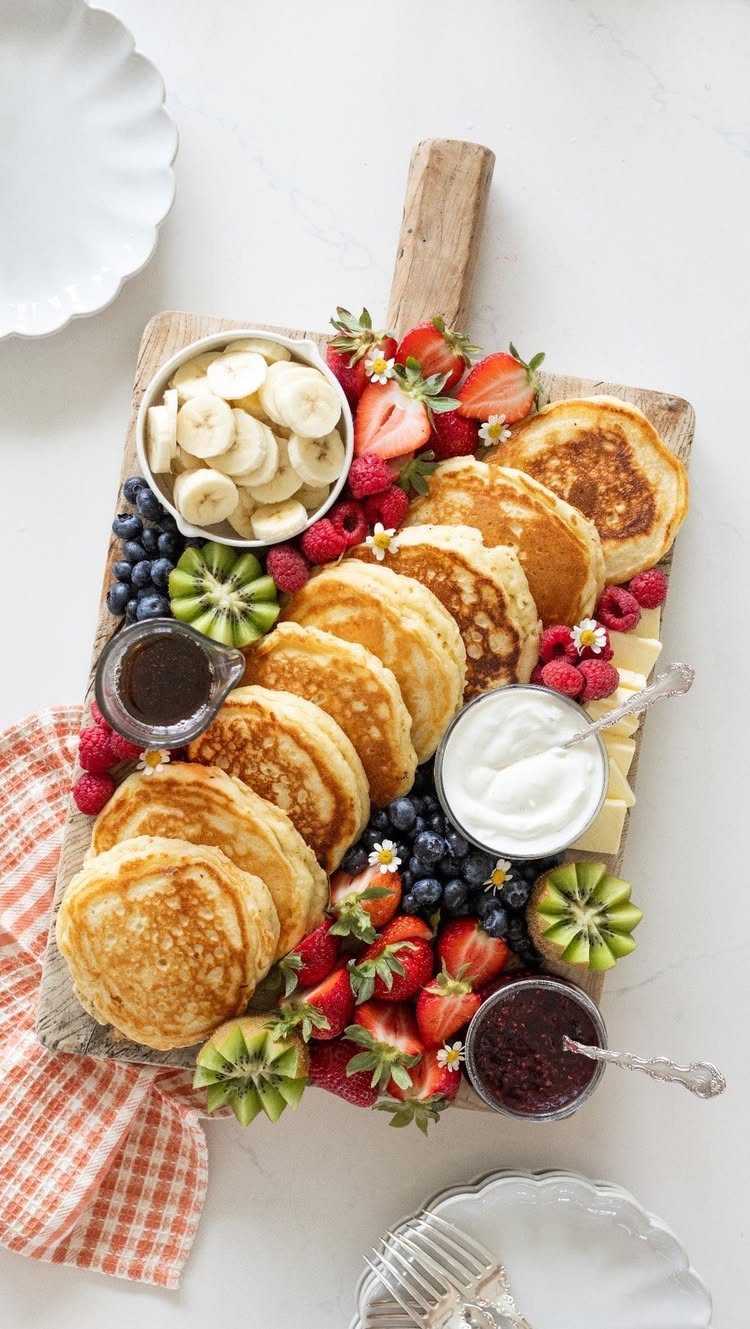
Lay a row of pancakes down the middle of the board, then ring them with sliced bananas, strawberries, blueberries, and kiwi. Fruit this colorful makes the pancakes the obvious starting point.
Add syrup and a bowl of cream or yogurt, and a single board feeds a family at the table with no stacking and no plates passed back and forth.
Slice the bananas last so they stay pale. Keep the pancakes warm in a low oven until the board is ready.
23. Smoked Salmon Platter
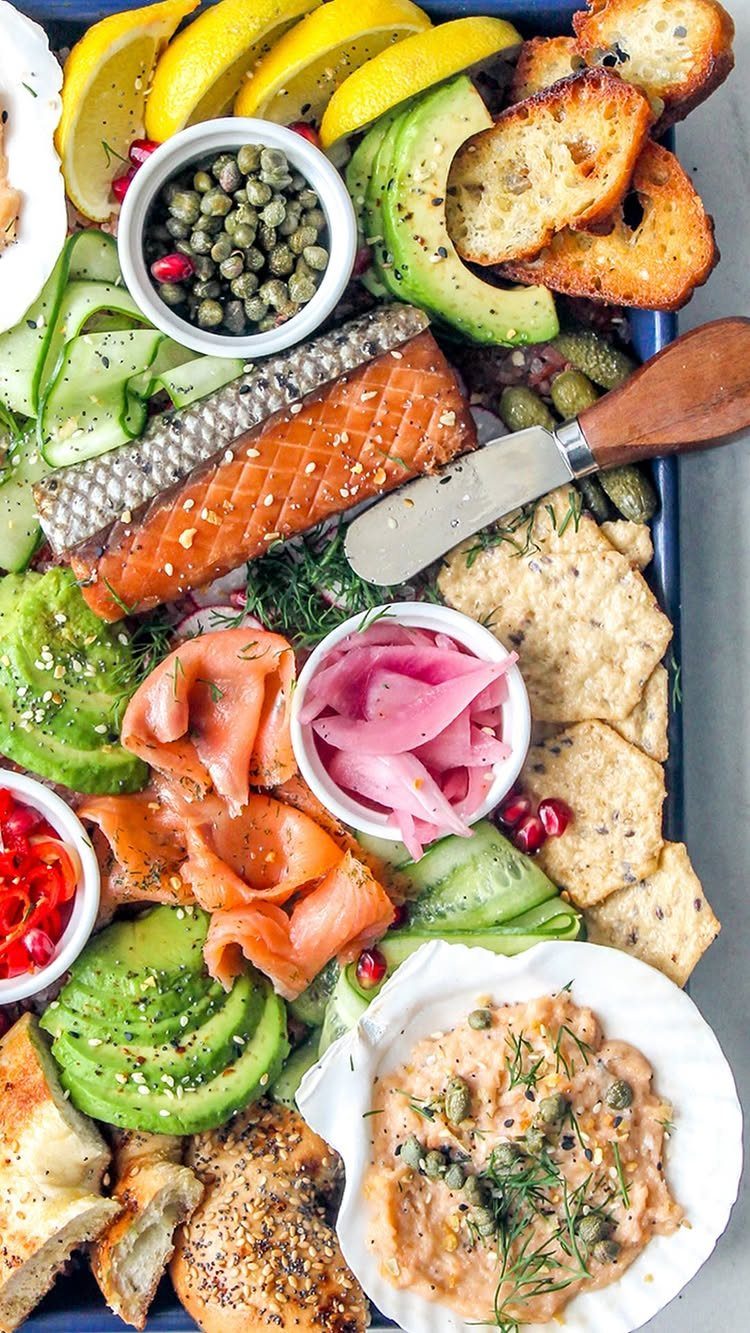
Smoked salmon does best when it’s the only rich thing on the platter, so build everything else around it with sharp, clean flavors.
Avocado and cucumber add cool, mild bites, and crackers or toasted bread give guests something sturdy to stack it all on. Set out a creamy dip in a ramekin to tie the pieces together.
Toast the bread at the last minute so it stays crisp under the toppings.
24. Crepe Breakfast Platter
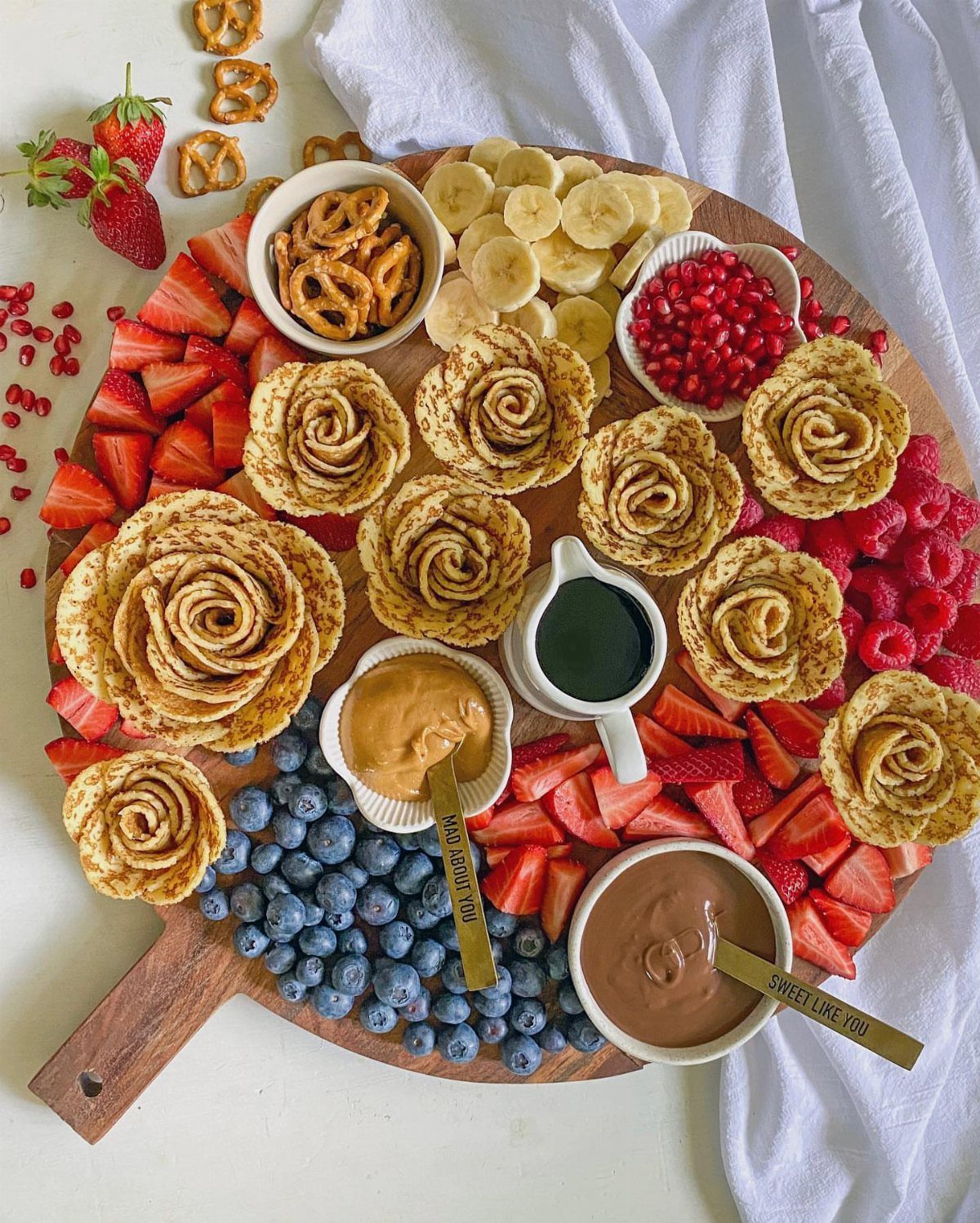
Rolled crepes folded into roses are the detail that makes this platter look special, and they take nothing more than a thin crepe and a gentle hand.
The pretzels add a salty crunch against the soft sweetness. Gold spoons with a short message, like the ones on this board, make it a good fit for Valentine’s Day or an anniversary breakfast.
Make the crepes thin so they curl without cracking.
25. Kielbasa Pierogi Board
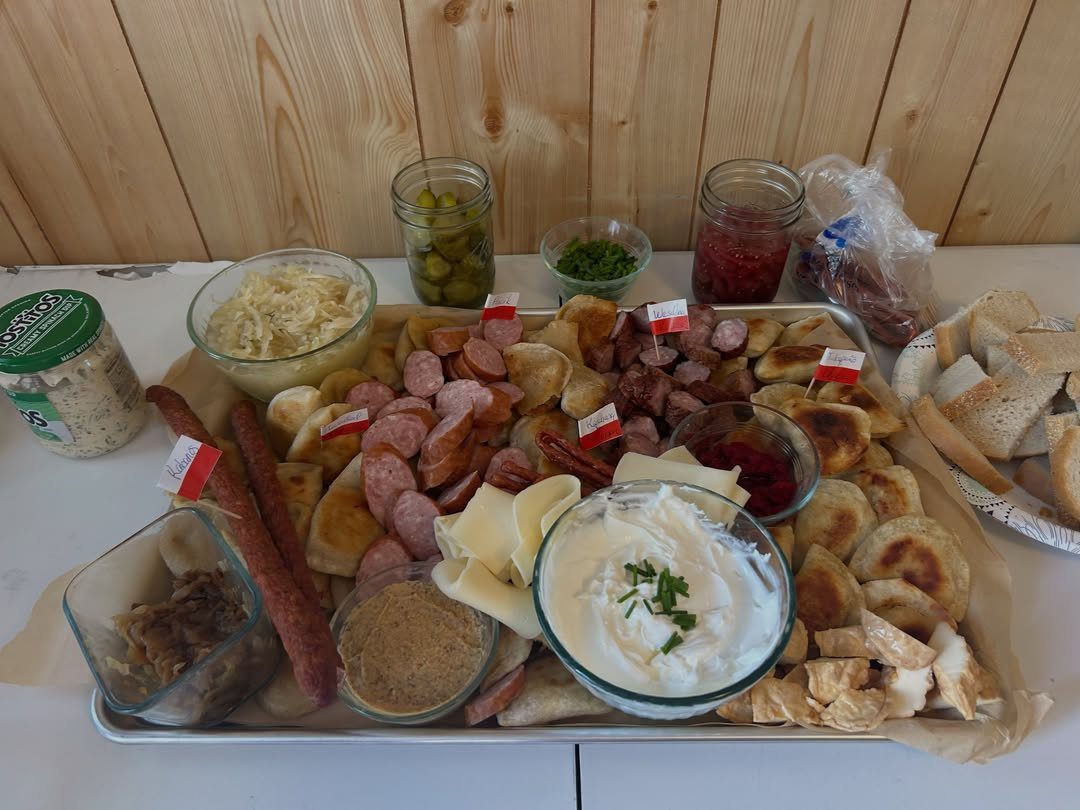
Kielbasa and pierogi make this a snack board that can stand in for dinner. Slice the sausage into coins and set the pierogi alongside, with cheeses, pickles, and a couple of dips for scooping and dunking.
Serve both warm and keep the cold items on the other side, so the heat doesn’t soften the cheese. Chips like the ones beside the tray give guests something to grab for the dips.
26. Italian Charcuterie Board
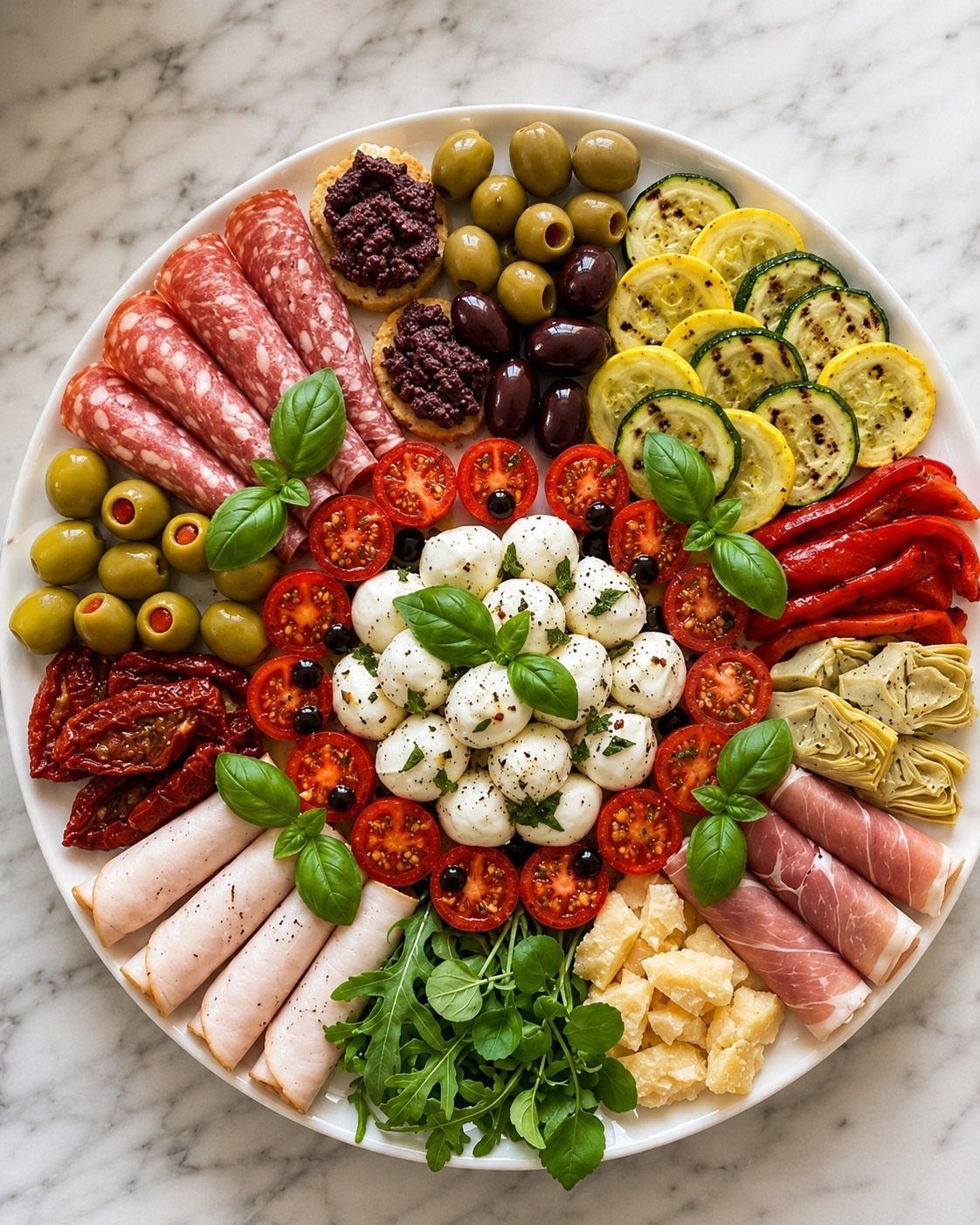
Fresh mozzarella and cherry tomatoes bring the cool, juicy side, and olives add salt.
Pile the arugula in one spot instead of scattering it, so the peppery leaves stay crisp and guests can tuck a handful into each bite.
Add a drizzle of olive oil at the last minute if you want the mozzarella to shine.
27. Banh Mi Board
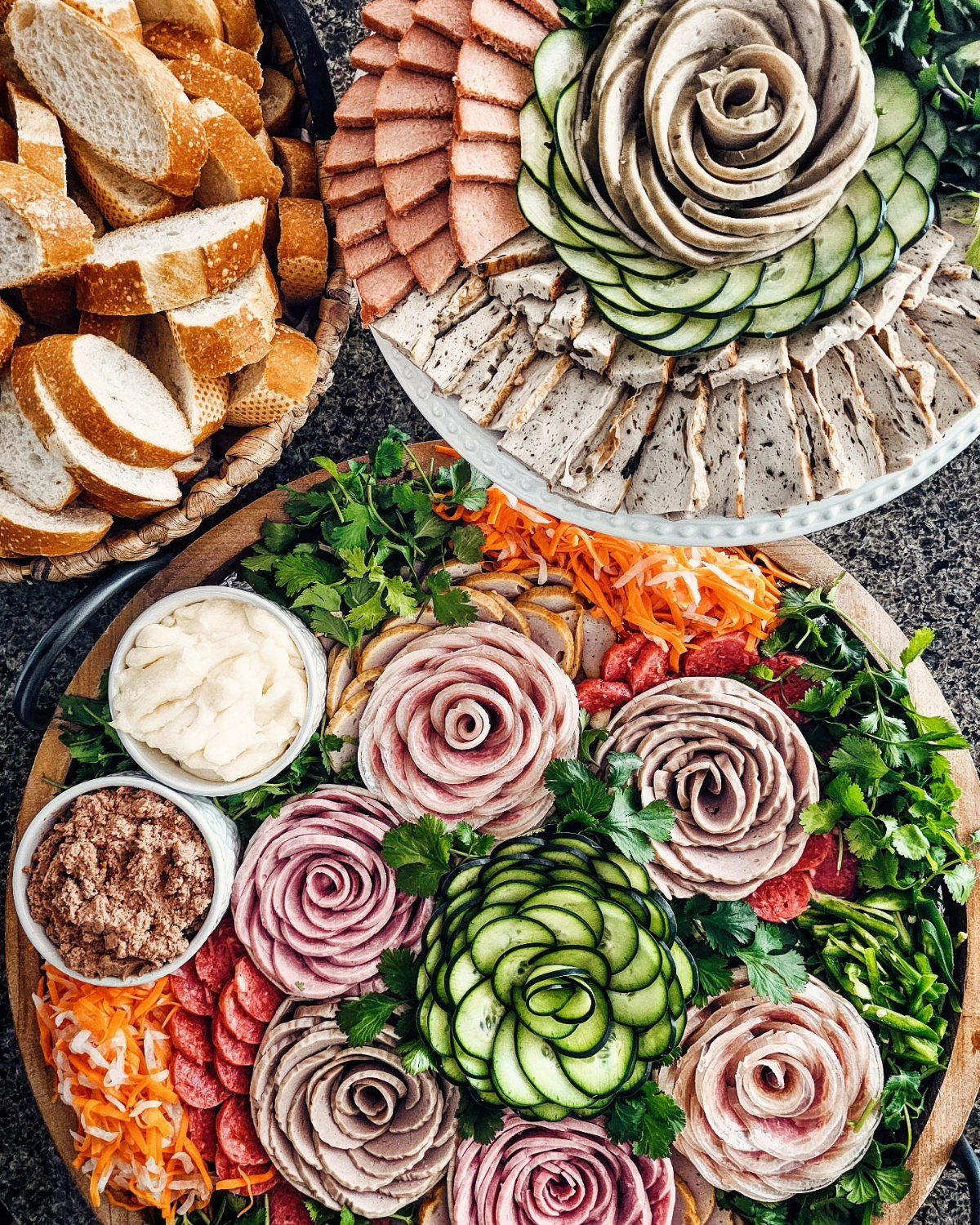
Rolling the meats into roses turns a sandwich filling into a centerpiece. Set them in the middle of the board, then surround them with baguette slices, cucumber, pickled carrots, and cilantro so guests can build small open-faced bites.
Two dipping sauces cover different tastes: one creamy, one sharper is a sensible pairing. Slice the baguette thin so each piece holds a rose without crumbling.
Keep the cilantro in a loose bunch, not chopped, so it stays fresh.
28. Banh Hoi Platter
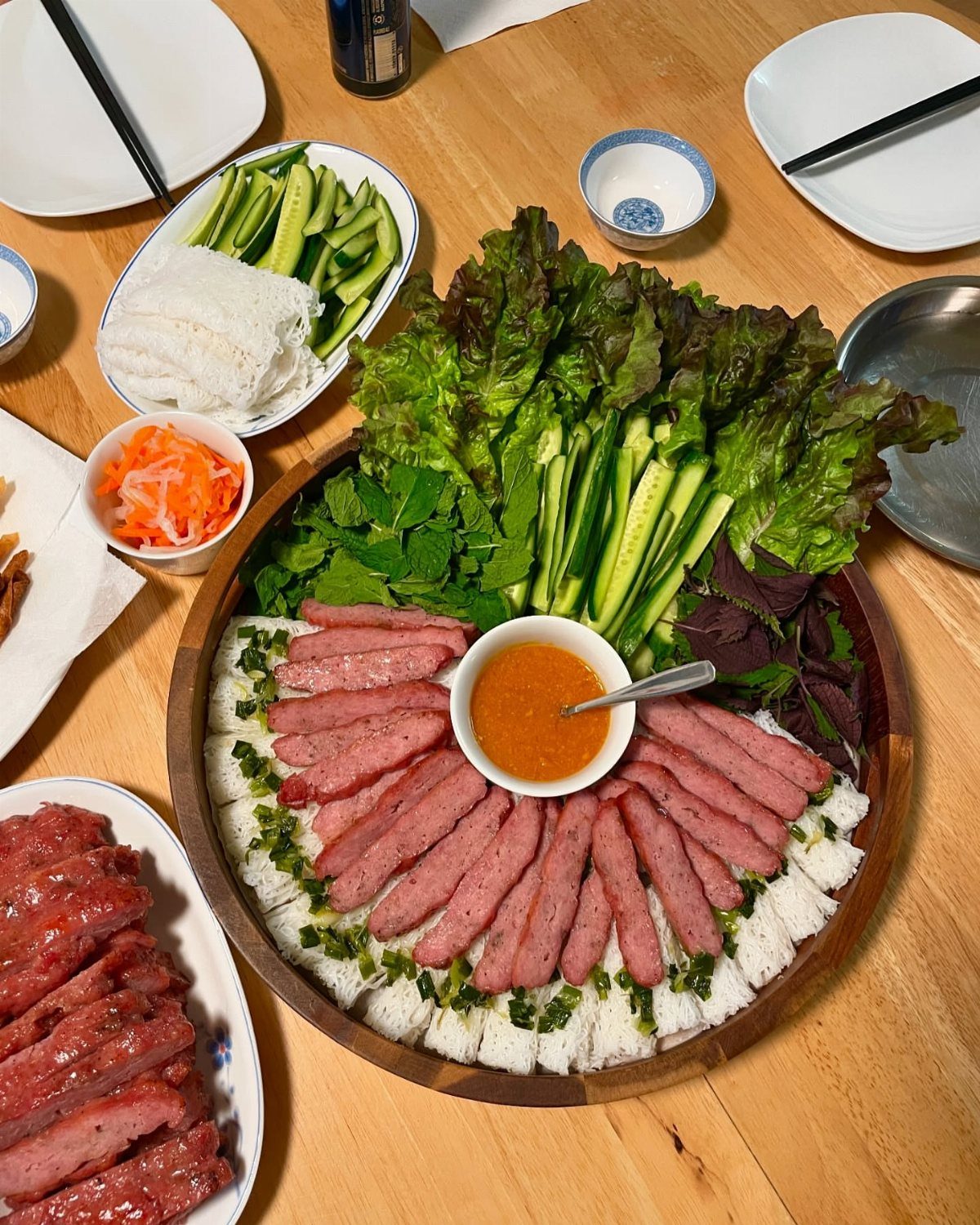
Rice noodles, sliced sausage, cucumber, and lettuce add up to a platter guests assemble themselves.
Pile the noodles in small bundles so they’re easy to lift, and let each person wrap noodles, sausage, and greens in a lettuce leaf before dipping.
Put the sauce in a bowl or two at the center so everyone can reach it. Chopsticks on the table suit the noodles, but set out forks for anyone who prefers them.
Wash and dry the lettuce well, or the water will pool under the noodles.
29. Middle Eastern Platter
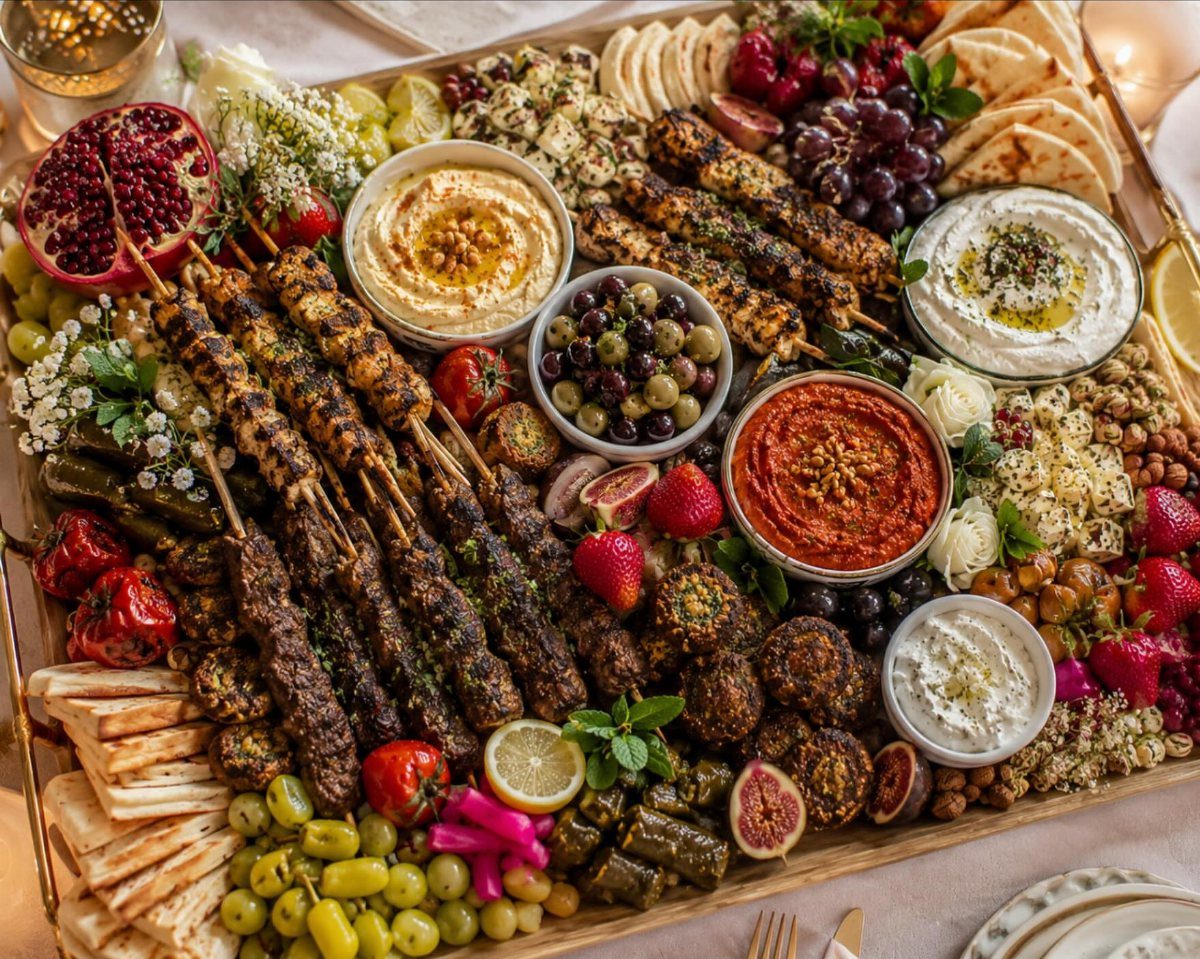
Grilled skewers give this platter its heft, so you can serve it as a light meal for a crowd. Hummus and a second dip, plus pita for scooping, make the base, and olives, fruit, and raw vegetables fill the gaps.
Because the skewers are the only hot item, grill them last and bring them out just before guests arrive at the table. Cut the vegetables and fruit ahead and keep them chilled.
A large platter lets everything sit within reach, so pick one wide enough that nothing stacks.
30. Mexican Charcuterie Board
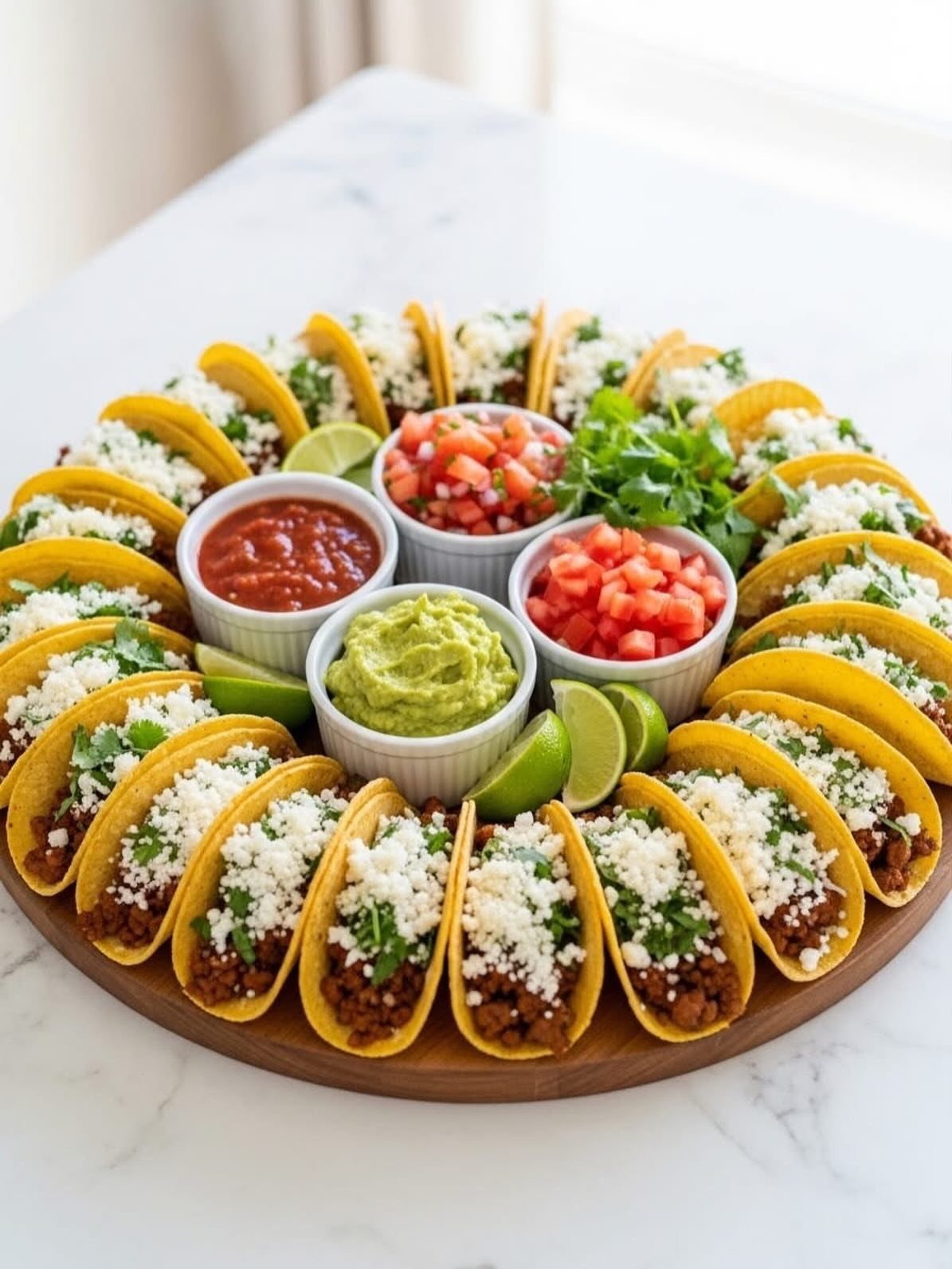
Mini tacos shrink a full dinner into a hand-held snack, which suits a party where people are standing.
Fill them with beef, then ring the board with guacamole, salsa, pico de gallo, and lime wedges so each guest dresses their own.
Make the fillings ahead and assemble the tacos shortly before serving, since the shells soften as they sit. Squeeze the limes over the guacamole at the last minute to keep its color.
Set out small spoons so the dips stay separate.
31. Russian Charcuterie Board
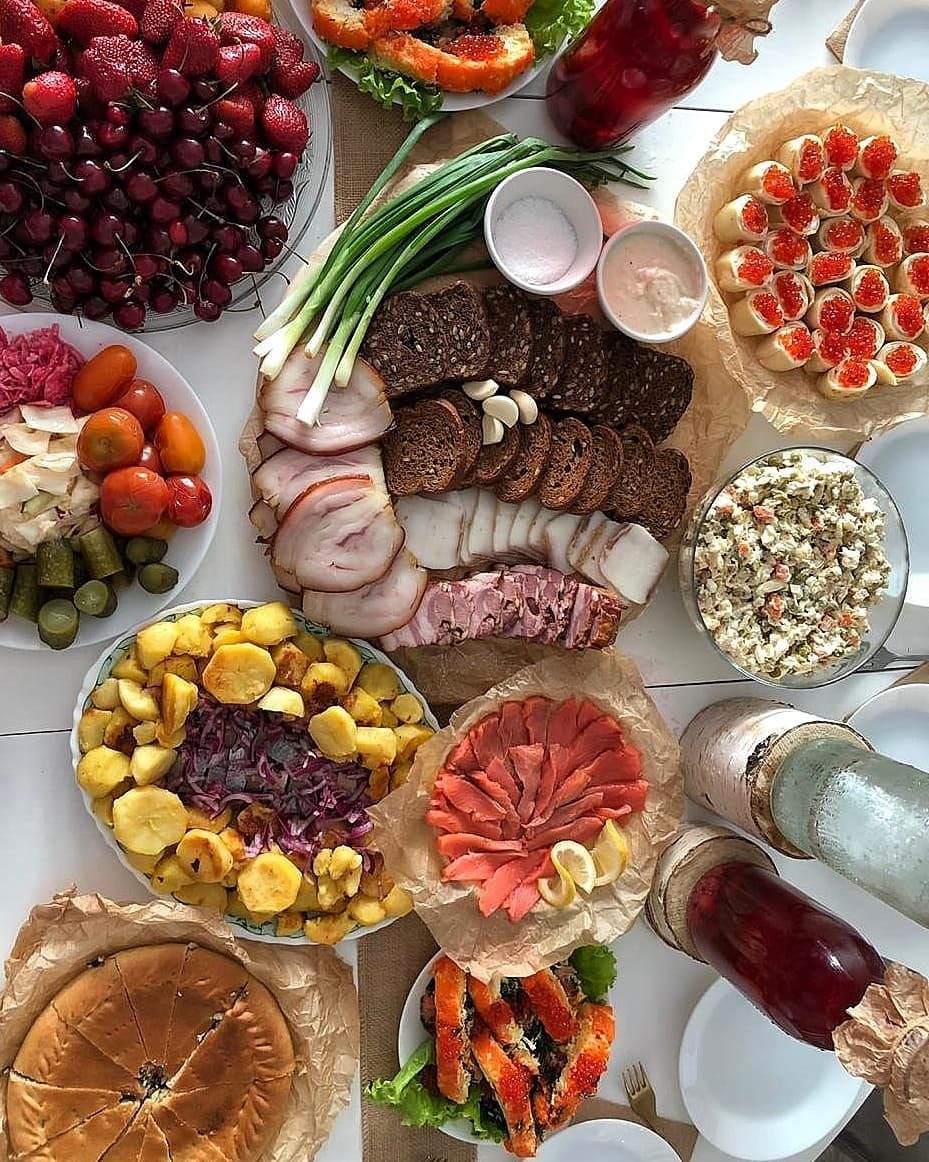
Black bread is the anchor here, and it deserves a spot right in the center. Slice it thin so each piece can hold a small bite of cured meat, a pickle, or a spoonful of caviar.
Keep the pickled vegetables and potatoes in separate piles so their brine doesn’t run into the bread. Berries add a sweet break between the salty pieces.
Set the caviar blinis out last, just before guests arrive.
32. Vegan Charcuterie Board
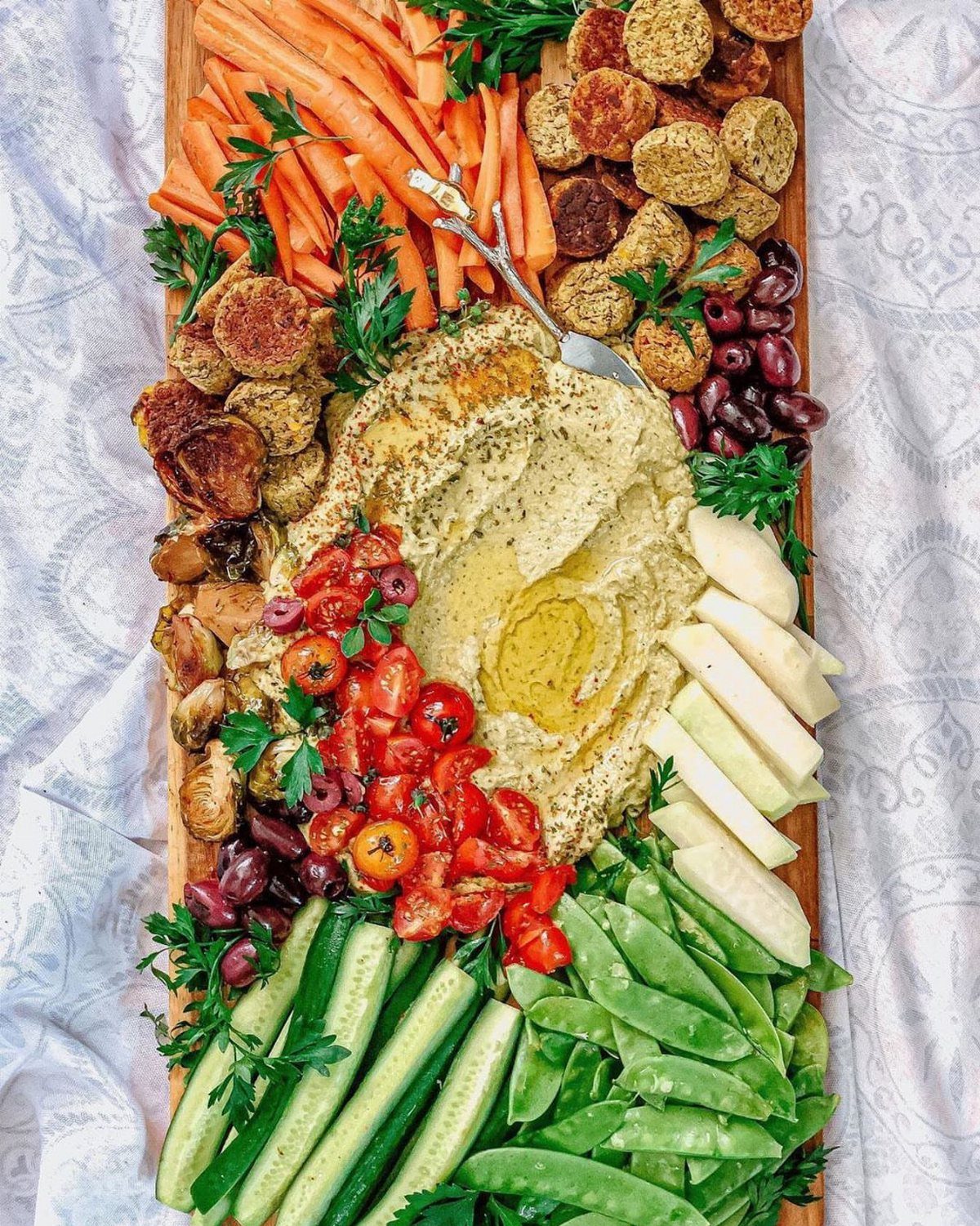
Falafel is what turns a plate of raw vegetables into a board people treat as a meal.
Olives add salt and keep the board from tasting like a crudité tray. Read the labels on any store-bought falafel and dip, since some products contain egg or dairy.
Heat the falafel after everything else is arranged, so it lands on the board warm.
33. Fruit Charcuterie Board
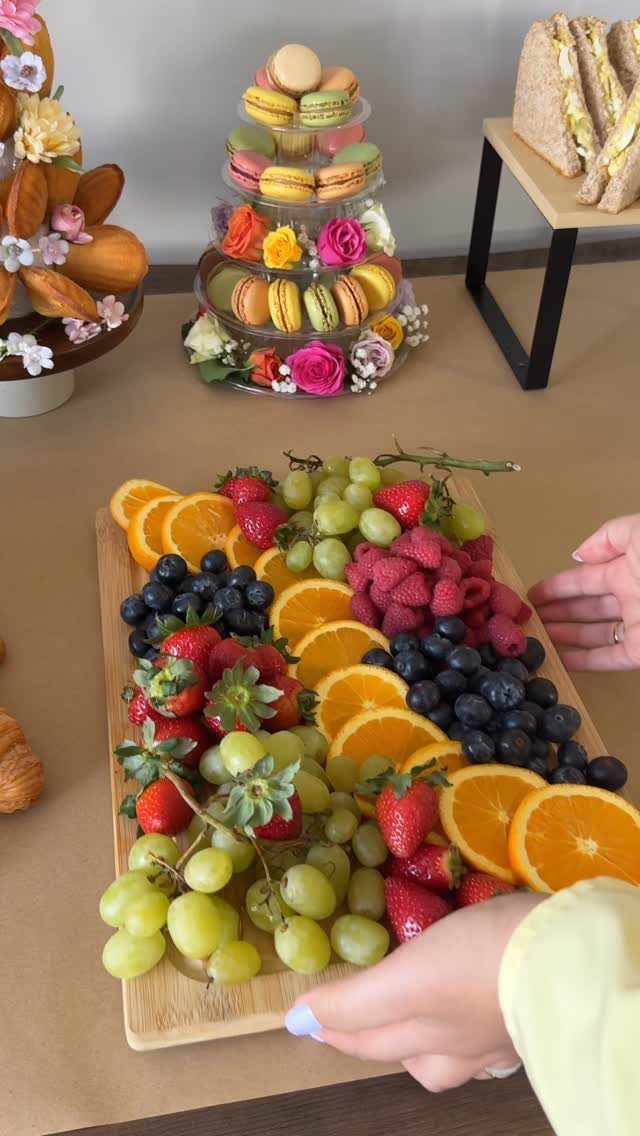
With no meat or cheese to pad it out, a fruit board lives or dies on how much you buy. Grapes, strawberries, blueberries, raspberries, and orange slices all come from one grocery run, and nothing needs a stove.
Pat the berries completely dry after rinsing, since leftover water leaves streaks on the board and turns the fruit mushy. Peel and slice the oranges so guests can grab a piece with one hand.
This is the cheapest board on the list to assemble, and it pairs well with a plate of sandwiches or cookies.
34. Breakfast Charcuterie Board
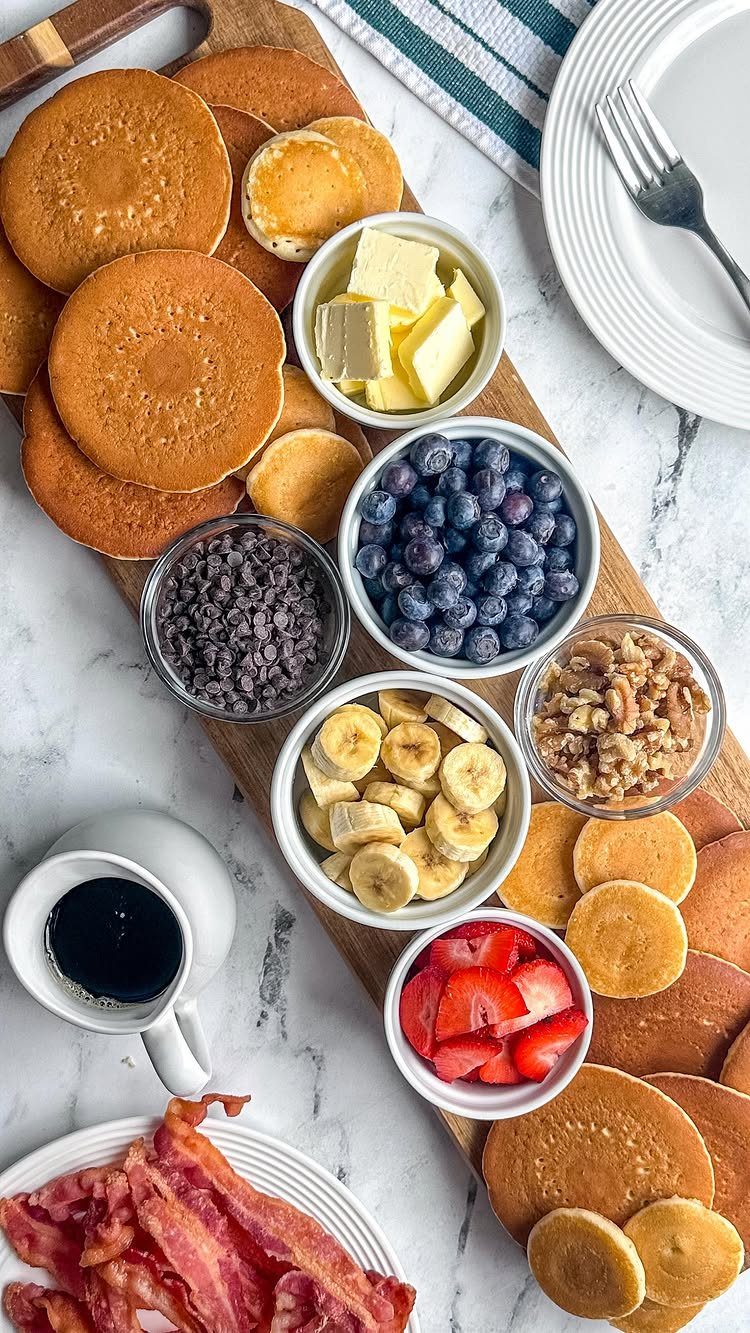
Pancakes stacked right on the board turn breakfast into something people can build as they like.
Bacon is the savory counterweight, and set out on a plate next to the board, it keeps the spread from tipping into dessert.
Cook the pancakes last so they’re still warm when the board hits the table.
35. Gourmet S’mores Board
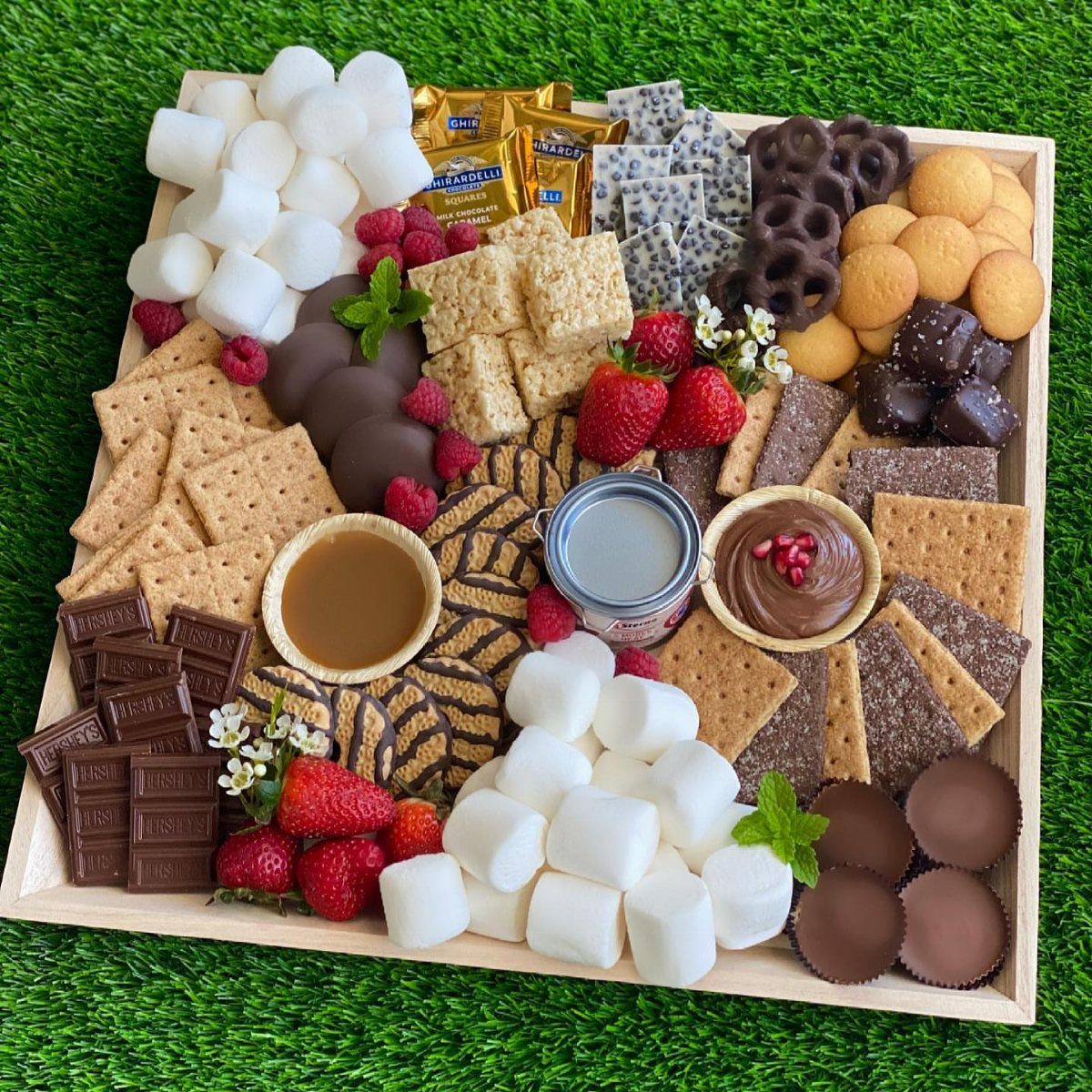
A s’mores board puts everything for the campfire treat on one tray, so you can serve it indoors with no fire at all. Strawberries and a few dips give guests a way to mix things up.
Mix chocolate brands so guests can compare, such as a Hershey’s bar next to a Ghirardelli square. Marshmallows are best toasted with a kitchen torch or over a small flame, and an adult should handle that step.
Keep the strawberries cold until serving.
36. Christmas Charcuterie Wreath
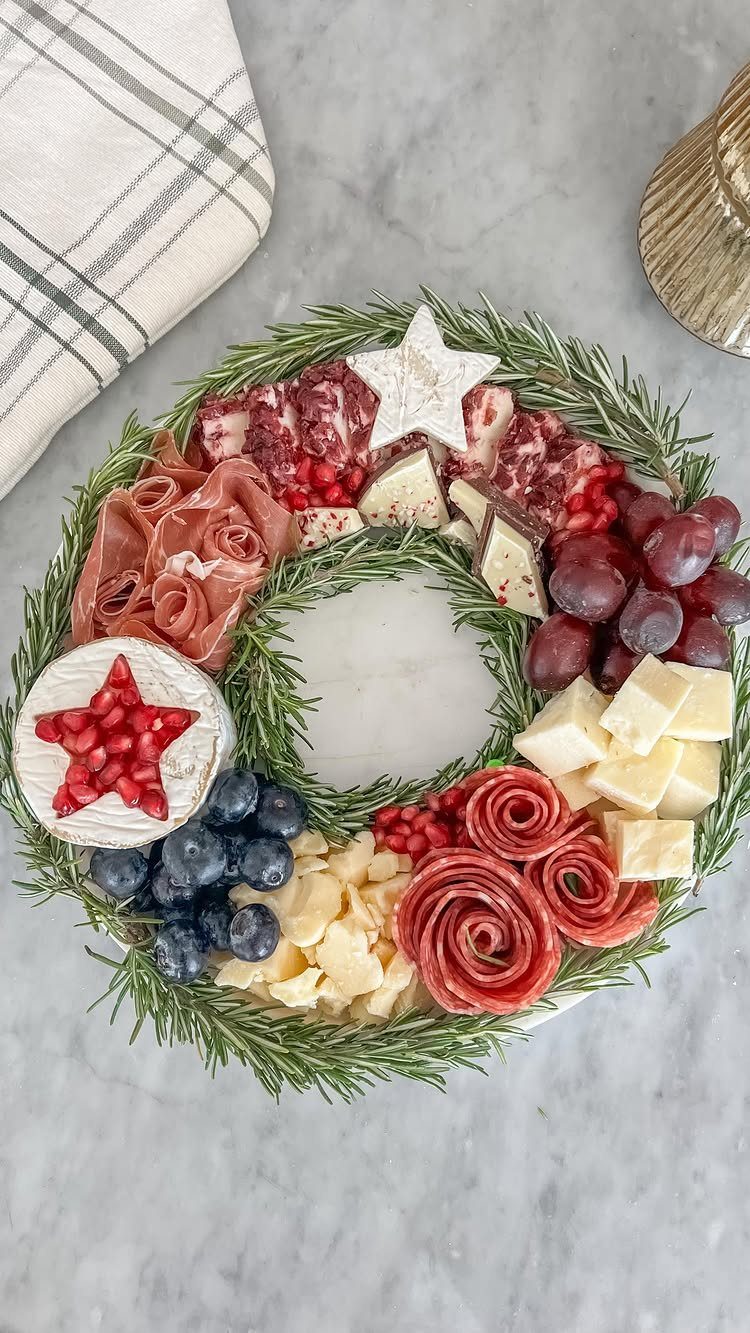
A wreath is just a board with a hole in the middle, and that shape makes it easy to build. Lay a ring of evergreen branches first, then tuck in cheeses, meats, grapes, and berries along the curve.
Rosemary sprigs add a piney scent and stay green through a long party. Cut a few cheeses into stars to give the wreath an obvious holiday signal.
For a fuller look, one maker suggests lining both the inside and outside of round boards with greenery. Add the meat and cheese last so they stay cold.
37. Christmas Tree Board
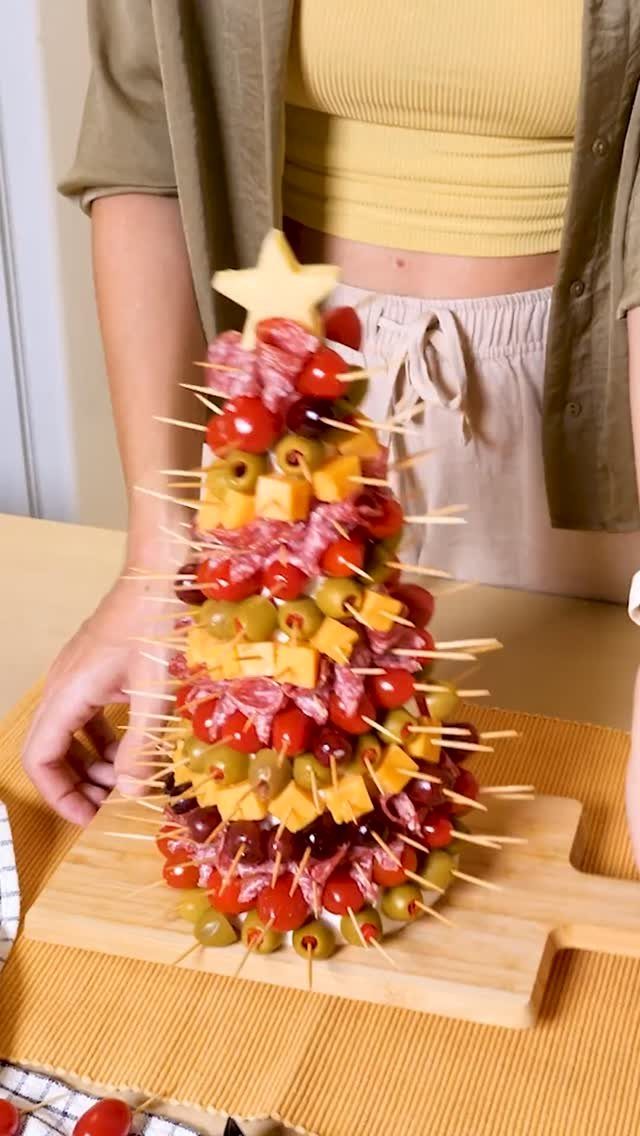
Salami, cheese cubes, and olives can be laid out in tiers that narrow toward the top, and a star at the peak finishes the tree shape.
Start at the top with the star and work down, widening each row so the triangle stays even.
Alternate colors by row: a line of salami, then cheese, then olives, so the stripes read clearly from across the room.
A tree board needs a lot of small pieces, so cut the cheese into uniform cubes before you start. Keep the tray chilled until guests arrive.
38. Charcuterie Roses
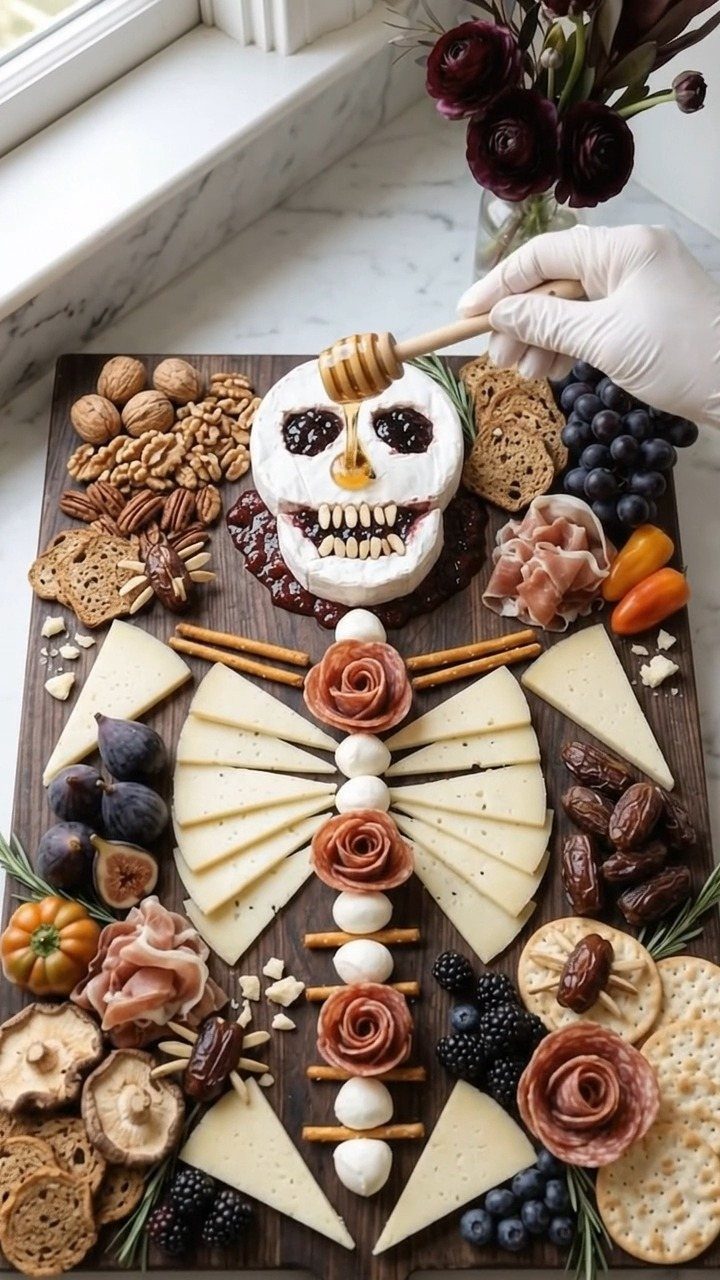
Folded salami slices, wound into a tight spiral, become roses that look far fancier than the effort they take.
Fold each slice in half, line the folded slices up in an overlapping row, then roll the row from one end. Set the roll upright and fan the outer layers open like petals.
A drinking glass or a ramekin can hold the roses in shape while you build them, so you can lift them onto the board once they’re set. Make them ahead and keep them chilled until you set out the board.
A drizzle of honey over cheese and fruit gives the savory roses a sweet counterpoint.
Balance and Food Variety
Use a 3-3-3-3 guideline as a starting point: 3 meats, 3 cheeses, 3 carbohydrates such as crackers or bread, and 3 accompaniments. You can skip a category and still end up with a balanced board.
Vary the cheese by texture.
Pick one soft bloomy cheese such as brie or camembert, one hard cheese such as Parmesan or Swiss, and one crumbly cheese such as feta; a spoonful of cherry jam next to the bloomy one makes the best pairing on the board.
For meat, prosciutto, Genoa salami, sopressata, pepperoni, and ham are all easy to find.
Add something briny, such as capers, pickles, or olives, and something sweet, such as grapes, thin apple or pear slices, strawberries, blueberries, dried fruit, or chocolate. Nuts add crunch, and mustard, hummus, or baba ganoush gives guests a spread.
Leave off very strong-smelling cheeses, which overpower everything beside them, and drippy items that are hard to eat by hand. For vegetarians, skip the meat and lean on more cheese, spreads, and fruit.
Serving and Food Safety
Take chilled items out of the fridge about 15 minutes before serving so the cheese loses its chill. Then set a timer.
Guidance on time out of the fridge varies by source, but a common range is up to about 4 hours for cheese and no more than 2 hours for most cured meats.
On a mixed board, follow the 2-hour limit for everything perishable, since the meat, cheese, and cut fruit all share the same surface. Refill from the fridge in small batches instead of loading everything out at once.
Most of the work can happen the day before. Prep the meats, cheeses, fruits, and vegetables, and store them in the fridge in airtight containers overnight, then assemble on the day.
Store crackers and bread in a zip-top bag at room temperature until you set them out, so they stay crisp and fresh.
Give yourself about 1 hour to put together a full grazing table.
Planning Portions and Budget
3 things move the numbers: how long the event runs, how much your guests tend to eat, and what else is on the menu. A 2-hour open house and a 5-hour party need very different amounts.
Another counts cheese by variety: 1–2 ounces of each cheese per person as an appetizer, and about 3 ounces of each if the board is the main course. A single ounce of cheese is about the size of a pair of dice.
If dinner follows, halve those amounts. If you’re building a shopping list for a larger group, such as 40 people, multiply the quantities across the whole list instead of cutting them.
Fruit, crackers, and nuts fill a board for less than meat and cheese do, so shift the balance toward them if the budget is tight.
Frequently Asked Questions
What is the 3-3-3 rule for charcuterie board?
The rule is a shopping formula, usually stretched to four groups of 3: 3 meats, 3 cheeses, 3 starches like crackers or bread, and 3 extras like olives, pickles, mustard, or honey. The pattern keeps a board balanced and good-looking without much planning.
What are some ideas for a charcuterie grazing table?
Small sandwiches on a tray beside the meats, cheeses, and fruit turn the spread into a full meal. For the holidays, build around a gingerbread house, with cheese snowmen and star-cut cheese for the savory side.
Any version works best with a mix of cheeses, cured meats like salami or prosciutto, and fillers such as crackers, pretzels, and sliced bread.
What not to put on a charcuterie board?
Skip extremely pungent or strong-smelling cheeses, since they overpower everything near them. Cut fruit that browns, like pear, right before the board goes out.
What is a grazing table?
A grazing table stretches the same idea across a whole table, with enough cheese, meat, and extras to feed a big crowd.
It spreads meats, cheeses, fruit, and breads across a long surface, so a crowd can reach the food from several sides instead of lining up at one small board.
How do you calculate how many people a grazing table will serve?
4 things decide it: who is attending, whether the table is an appetizer or stands in for a meal, whether other food is served, and how long the gathering lasts.
As one real-world reference, a store-bought table from Costco cost about $250 and served 25–40 people.
What is a charcuterie board?
The word is French and first meant preparing cured meats, sausages, terrines, and pâtés; on a modern board it covers almost anything arranged for grazing.
Classic versions hold salami, prosciutto, cheese, crackers or bread, vegetables, spreads, and fruit. Some boards skip the meat altogether and are vegan or entirely sweet.