The trays here run from a platter arranged in color groups, which takes little more than washing and cutting, to a watermelon basket or a turkey-shaped fruit platter, which need extra assembly time.
How much prep time you have sets which of these trays suits your day.
Plastic-wrapped, a finished platter keeps in the refrigerator for up to 1 day, and cut fruit sorted by kind into airtight containers lasts up to 3 days, which lets you chop over a few evenings and arrange only on party day.
1. Mint and Rosemary Sprigs
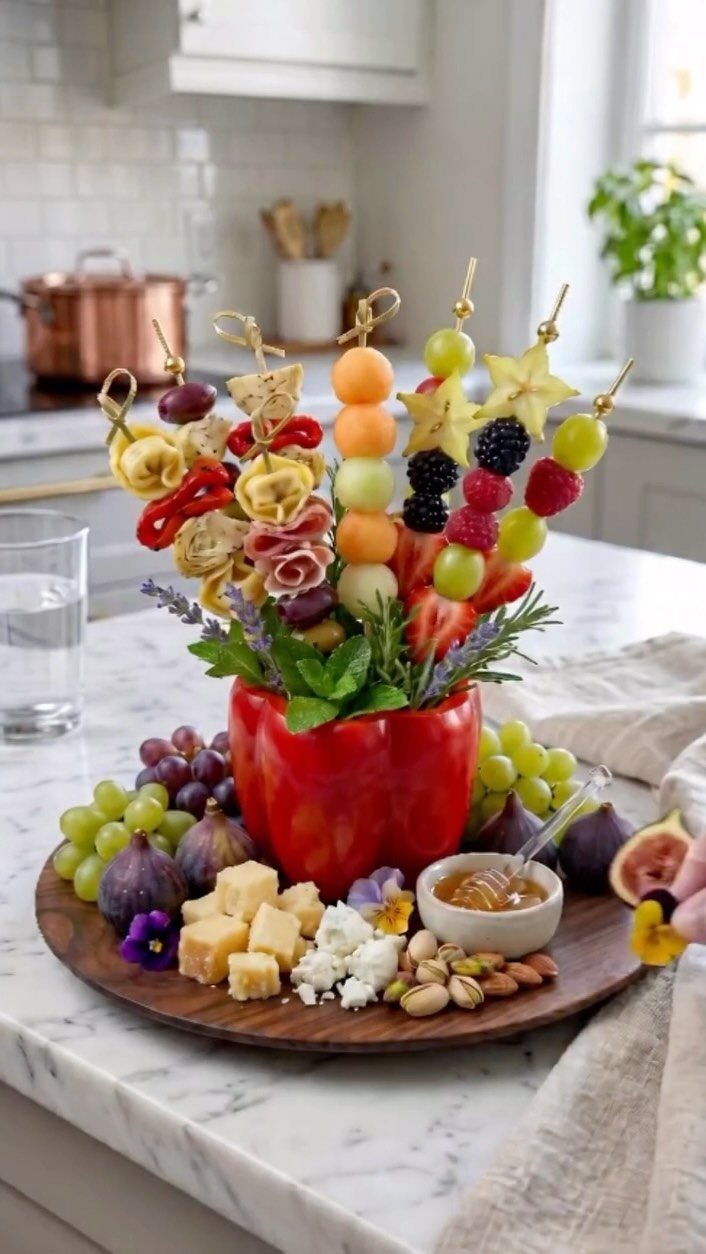
A hollowed red bell pepper works as a vase, and it’s the easiest way to give skewers some height on a board.
Stand the skewers upright inside, then tuck mint and rosemary sprigs between them so the greens read as a leafy bouquet.
Rosemary also has stiff stems, so a few sprigs wedged in will help hold the skewers steady.
Mint wilts faster than rosemary, so add it last if you’re prepping ahead.
2. Fruit in Separate Sections
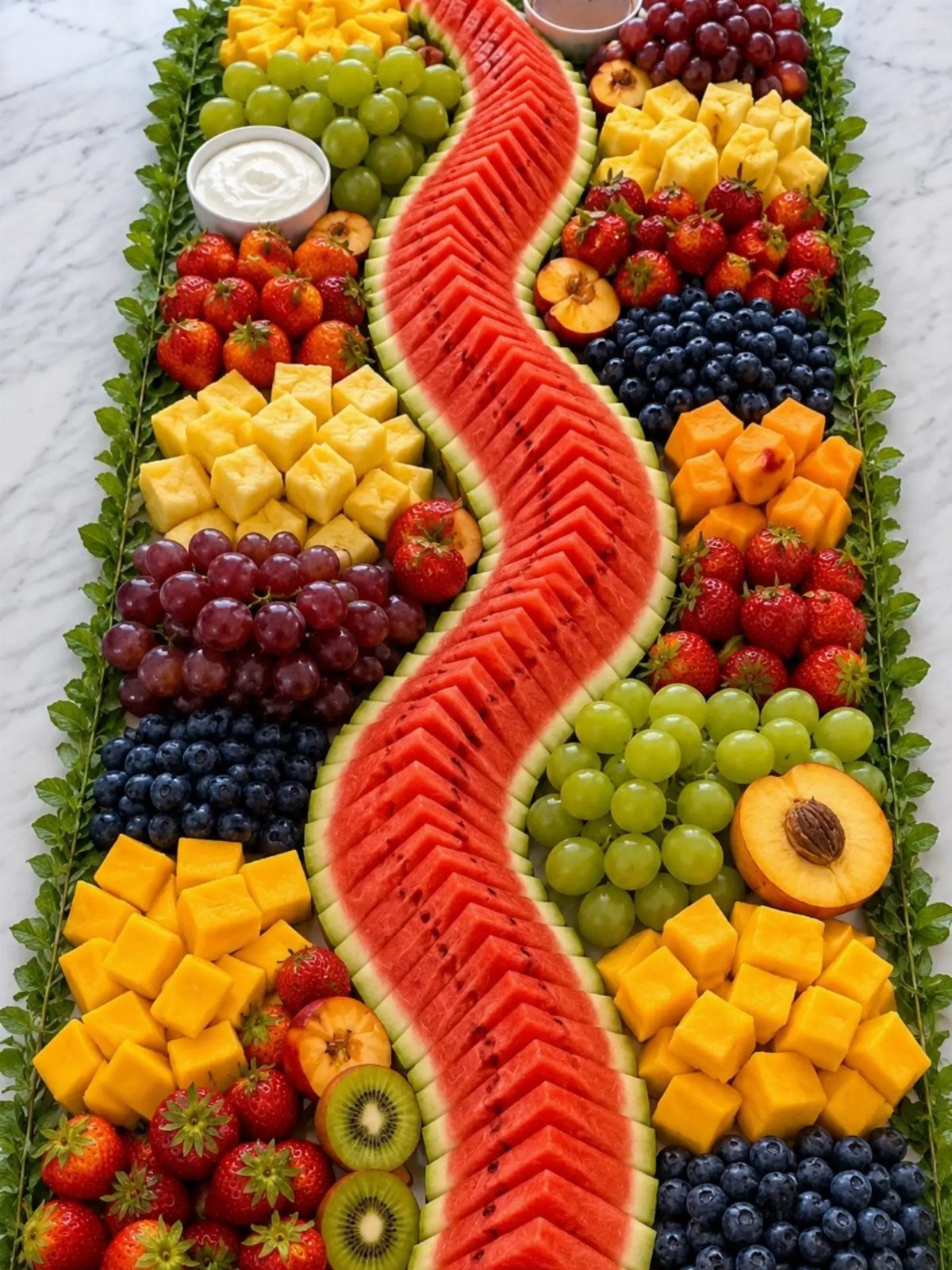
Sorting fruit into separate sections keeps flavors and juices from running together, which matters when pineapple and berries share a platter. Each fruit gets its own zone, and guests can see at a glance what’s there.
A band of watermelon slices running down the middle, curved into a wave, gives the tray a focal point and divides the other fruits without any extra work.
Line the platter with green leaves first so the sections have a clean backdrop.
Pick fruits with different textures and colors for neighboring sections. Grapes next to berries blur together; grapes next to mango do not.
3. Fruit in Fun Shapes
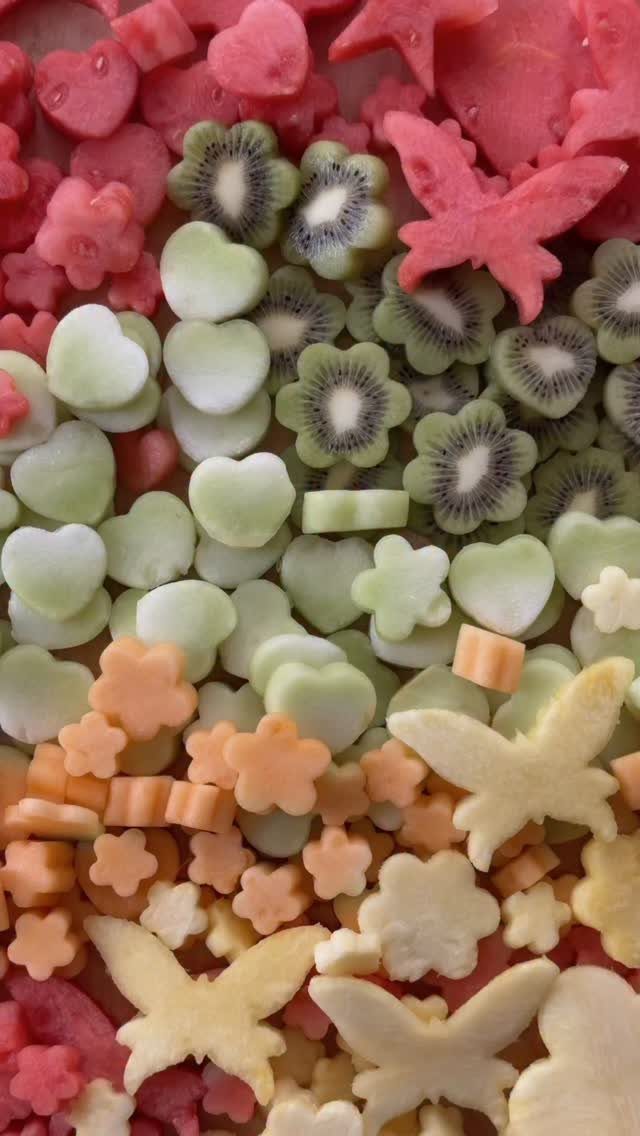
Hearts, flowers and butterflies turn ordinary fruit into something kids will reach for first.
Small cookie or fruit cutters do most of the work. Press them into firm slices, and decorative knife cuts can handle the rest.
Firm fruit holds a shape best, so cut from watermelon, melon or similar slices rather than soft berries. Cut thick enough that the shape doesn’t flop when lifted.
Save the trimmings for a fruit salad or a snack for the cook. Cutting shapes takes longer than slicing, so plan it as the one fussy step and keep every other part of the tray simple.
4. Fruit in Colour Groups
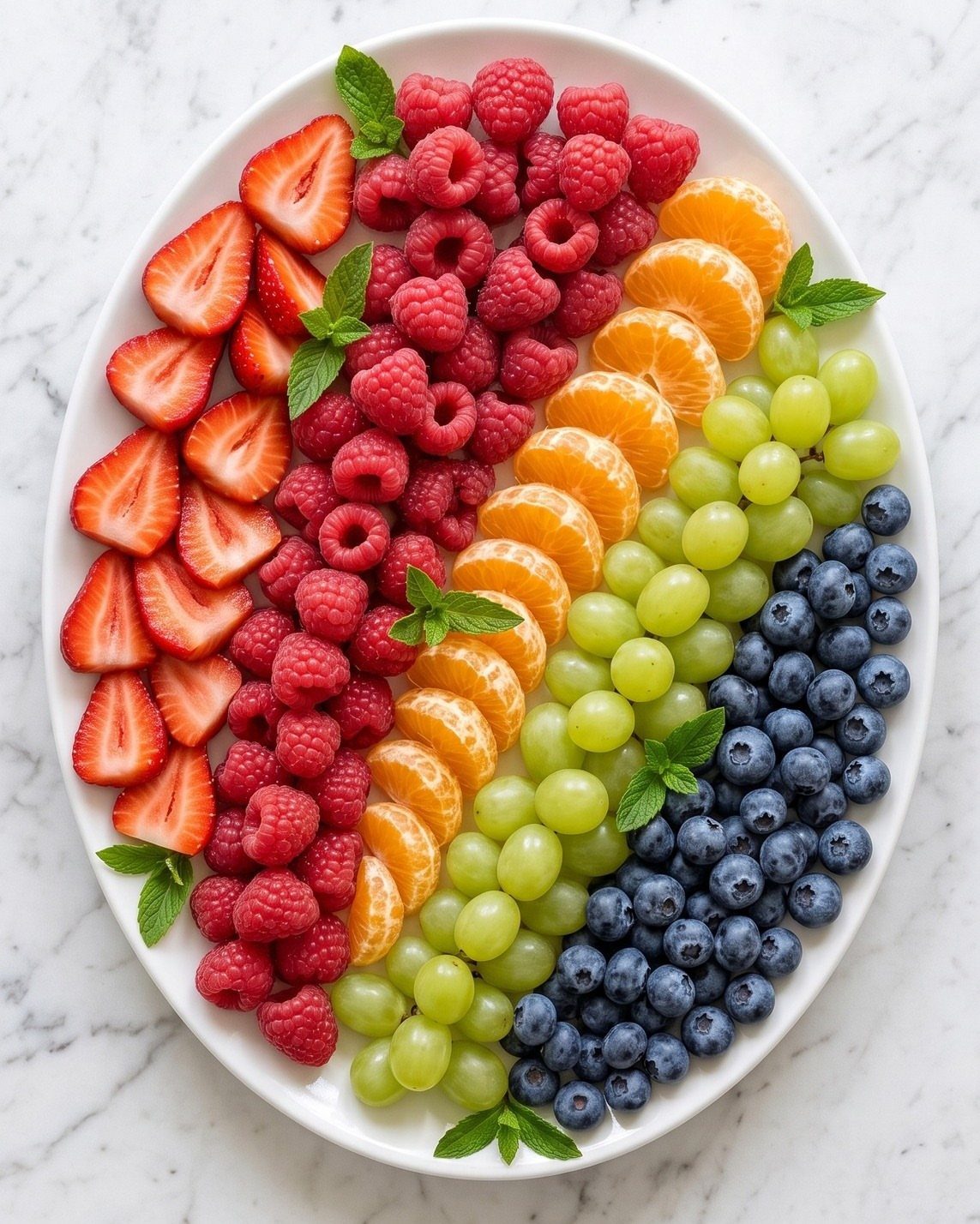
Rows of color make a tray look planned even when the fruit is all store-bought.
Place colors that contrast next to each other: red beside green, orange beside blue. Soft pink and pale green rows blend into one another and the stripes disappear.
A white platter lets the colors carry the display. A scatter of mint leaves over the top adds a bit of green without extra cost, and you can set the rows hours ahead, keeping the tray covered in the fridge.
5. Fruit Wedges with Rind
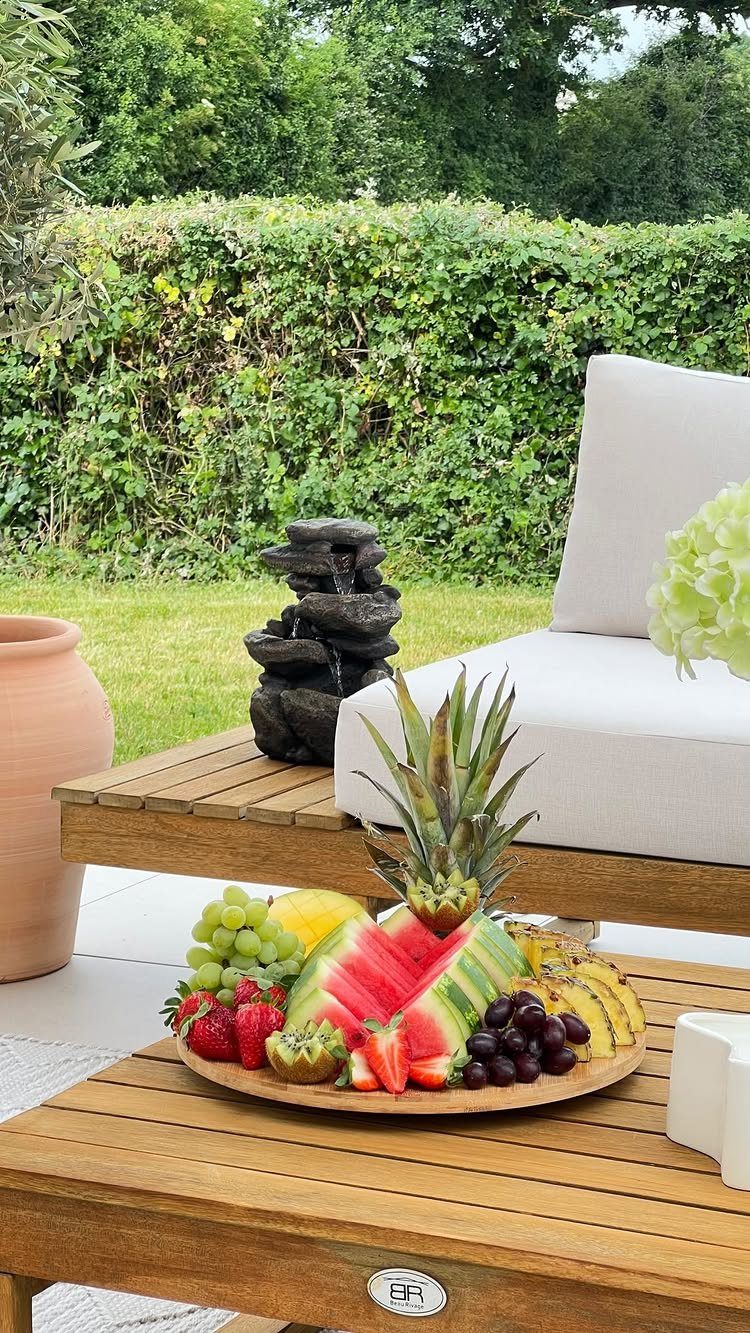
Leave the rind on, and a wedge becomes its own handle. Watermelon is the obvious pick, since the firm green skin gives guests something to hold while they eat, and no one needs a fork or a plate.
Cut the wedges thick enough to stand up to a grab, then fan them around the edge of the tray with pineapple, grapes and berries filling the middle.
This suits an outdoor table, where people tend to graze with one hand free.
Rinse and dry the fruit before cutting so the knife doesn’t drag skin residue through the flesh. Expect rinds to pile up, so set out a bowl for them.
6. Autumn Fruit Tray
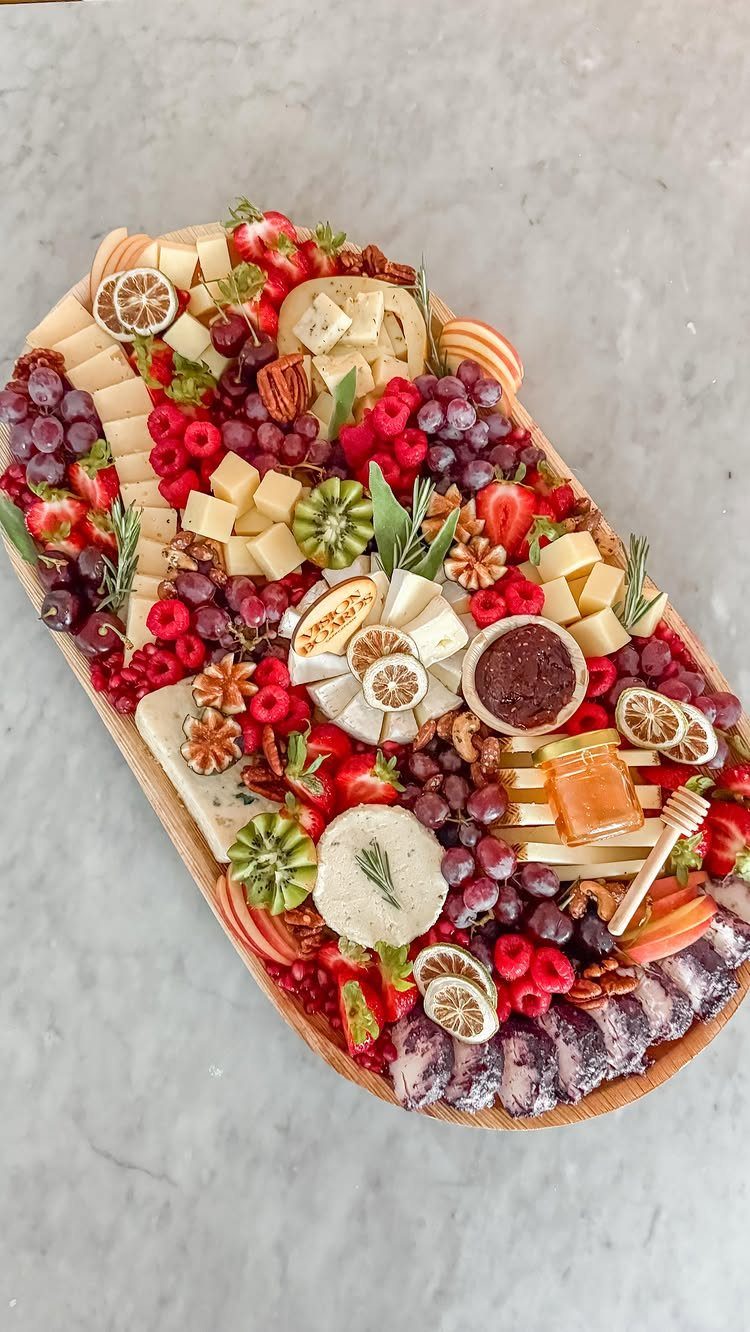
A fall tray built on fruit and cheese gives a party table something more filling than fruit alone.
On this wooden platter, grapes, berries and sliced apples sit among cheeses, dried citrus, nuts, honey and jam, finished with fresh rosemary sprigs.
The maker of this board notes it contains no meat, which makes it a good fit when a guest list includes vegetarians. Nuts and cheese cover the protein, so nobody needs a side dish.
Slice the apples last, since cut apples brown. Rosemary adds a pine-like scent, and it keeps its look on the board far longer than softer herbs.
7. Edible Flowers
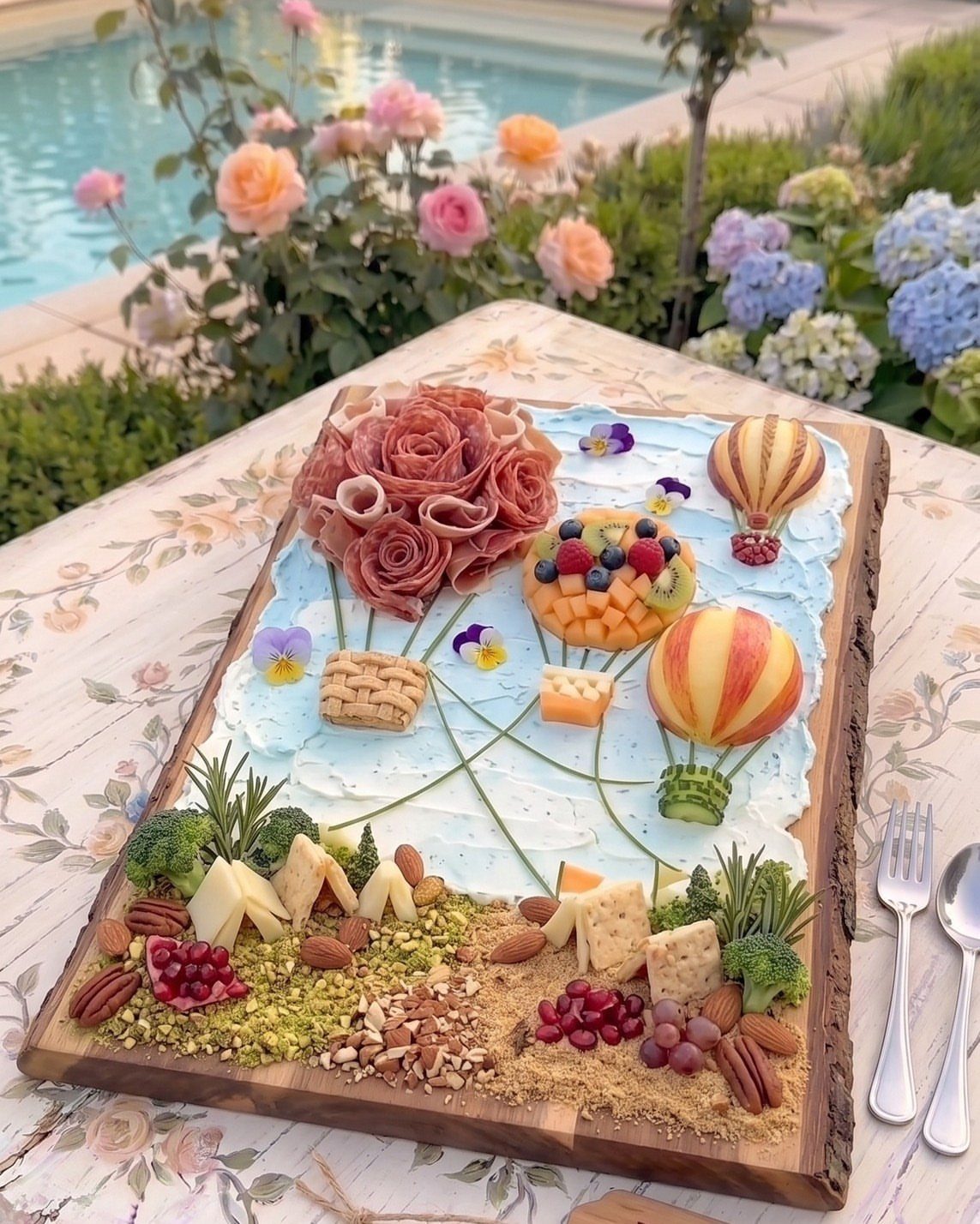
Small purple and yellow blooms scattered over a fruit board add color for almost no cost. Press them into the gaps between fruit and meat so they read as part of the design rather than a garnish dropped on top.
Use only flowers sold as edible, usually in the produce section or from a grocer’s herb case. Skip anything from a florist, since those are often treated with chemicals.
Add them just before guests arrive; petals droop in the fridge.
8. Fruit and Nuts in Little Pots
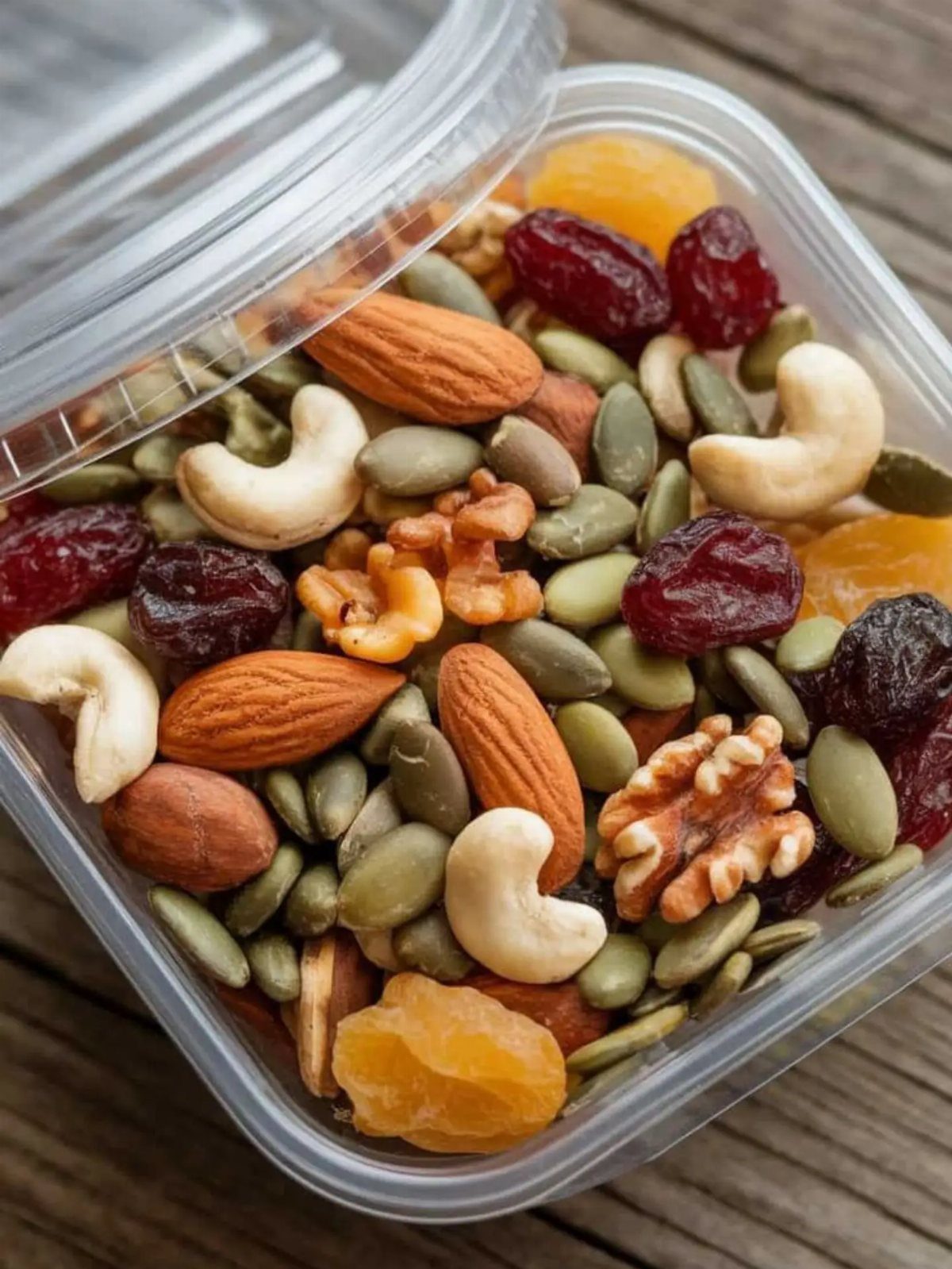
Nuts and dried fruit in a small lidded container give a fruit tray something to crunch on.
Almonds, cashews, walnuts and pumpkin seeds sit well beside dried cranberries and apricots, and the mix keeps the tray from being all juicy and soft.
Fill a few small pots and set them around the platter so guests don’t have to reach across it. Because the mix is dry, you can fill the pots days ahead and only place them on the day.
Check for nut allergies before the party, and label the pots if the guest list is mixed.
9. Fruit Skewers
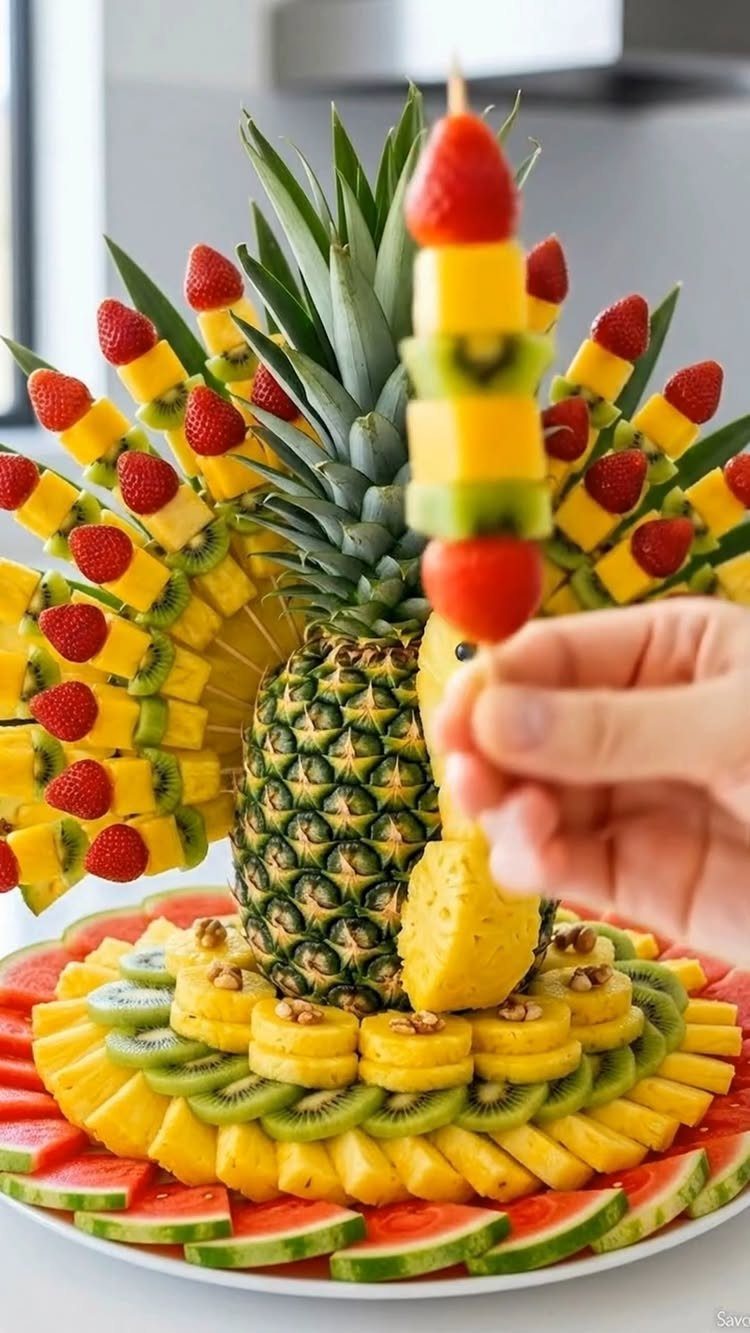
Skewers make fruit easy to eat with one hand, and alternating types gives each stick a pattern. Strawberry, kiwi and pineapple chunks stack well because their colors contrast.
Fan a batch of fruit skewers across a pineapple-shaped platter, and the tray looks styled before you add anything else. You can copy the idea on a smaller scale with a handful of sticks pushed into a pineapple half.
Cut chunks about the same size so every skewer looks even. Thread the soft fruit, such as strawberries, last so it doesn’t slide down the stick.
10. Hollowed Coconut Bowl
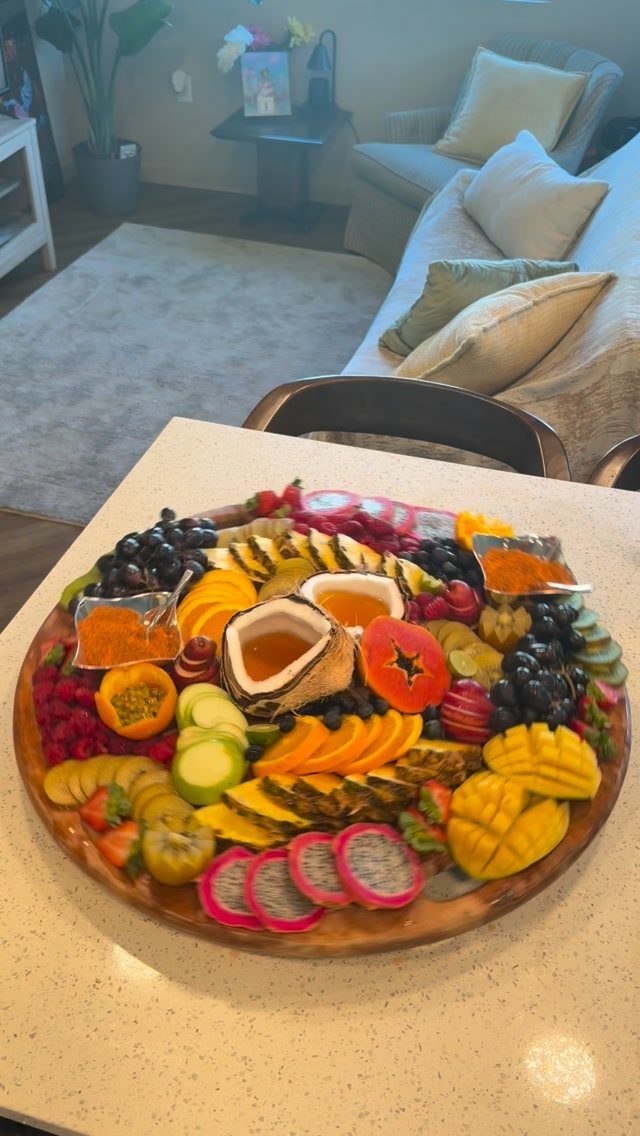
A hollowed coconut shell holds honey or another dip right in the middle of the tray, and it looks like part of the display.
Dragon fruit and mango slices fan out around it, and the brown shell stands out against the bright fruit.
Set the shell on a small ring of folded foil or a cup so it doesn’t tip. Pour the honey in right as the tray goes to the table, so the coconut stays dry and the honey stays pourable.
Buying a coconut that’s already halved saves the awkward work of cracking one open. Wash the shell well before filling it.
11. Fruit with Pretzels
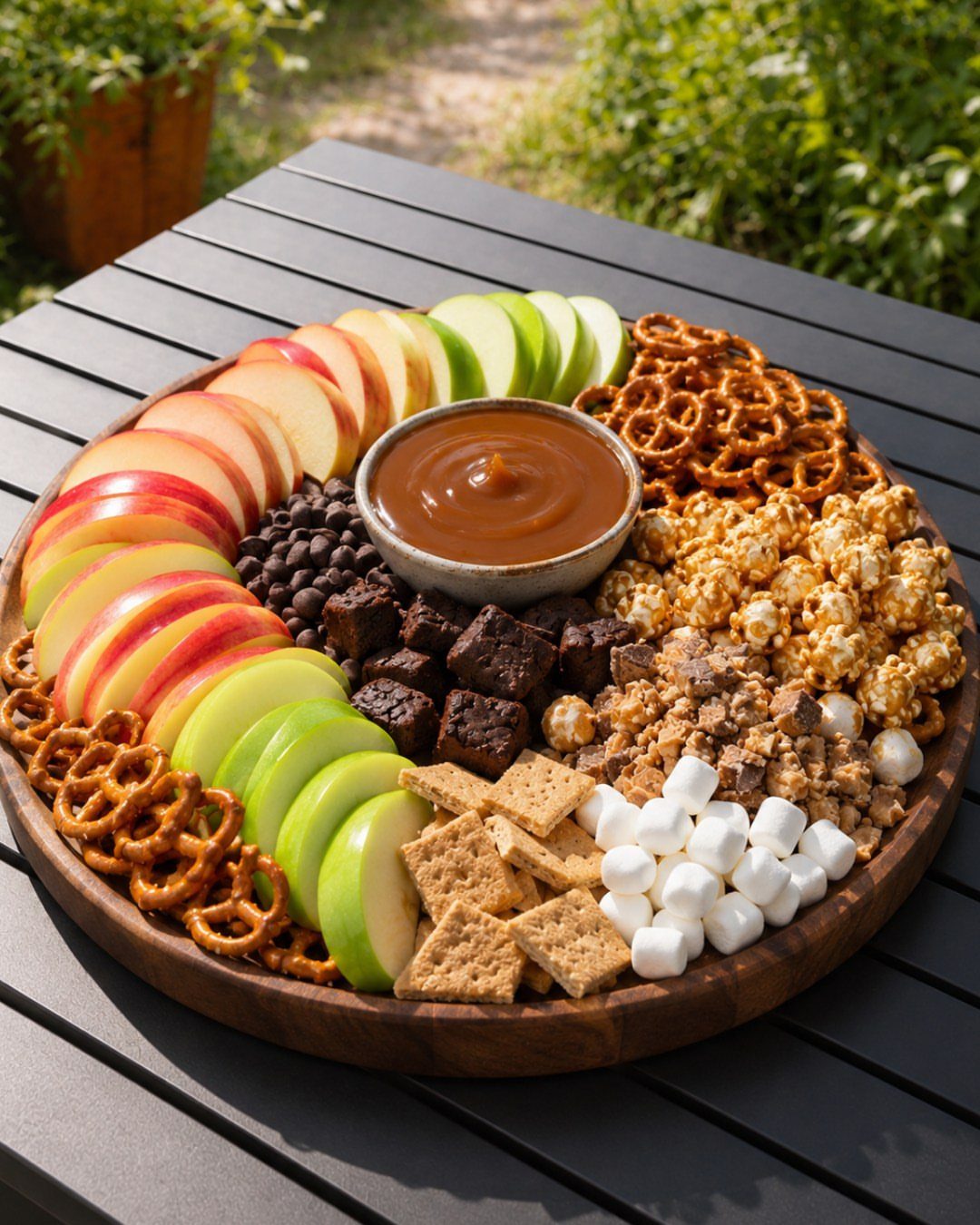
Salty pretzels give sliced apples a crunchy partner, and a bowl of caramel dip ties the two together.
I’d keep it simpler for a crowd with kids: apples, pretzels and caramel cover most tastes, and the extras are optional.
Slice the apples last so they don’t brown, and keep the pretzels in their own corner so they stay crisp.
12. Fruit with Chocolate Sauce
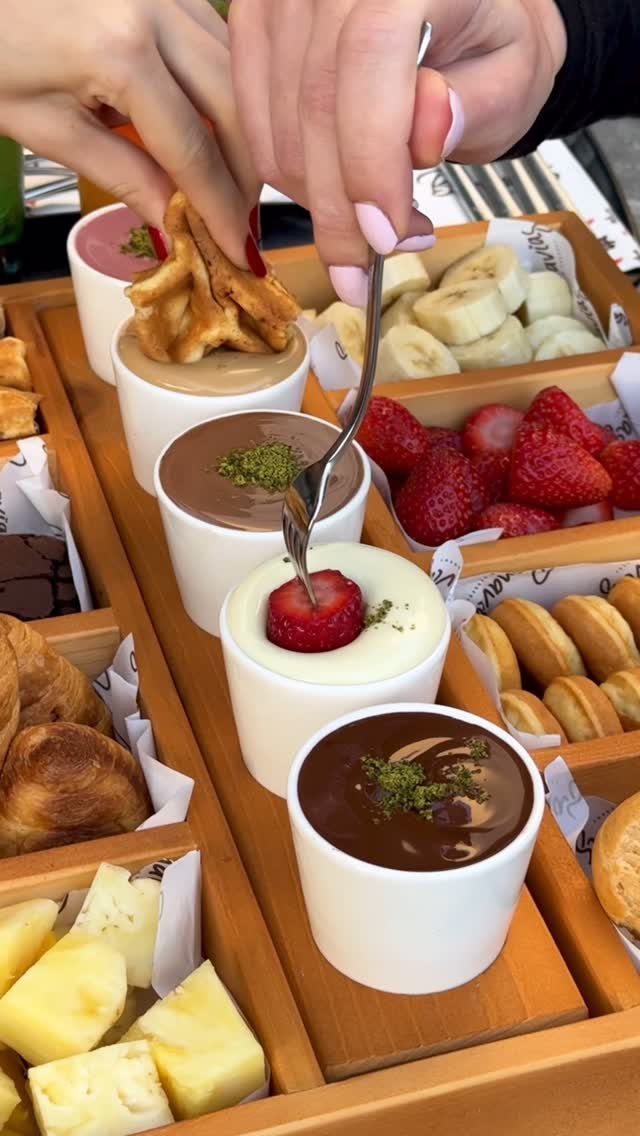
Chocolate sauce makes plain strawberries, bananas and pineapple feel like dessert. Small cups of dark and white sauce let guests dip as they like, and a few waffle pieces or pastries on the side make the tray more filling.
Serve the sauces in separate cups, one per pair of guests, to cut down on crowding. Dry the fruit well first, since wet fruit makes the chocolate slide off.
A fondue pot keeps the sauce warm and runny, but small cups need no equipment and almost no cleanup.
13. Fruit in a Festive Wreath
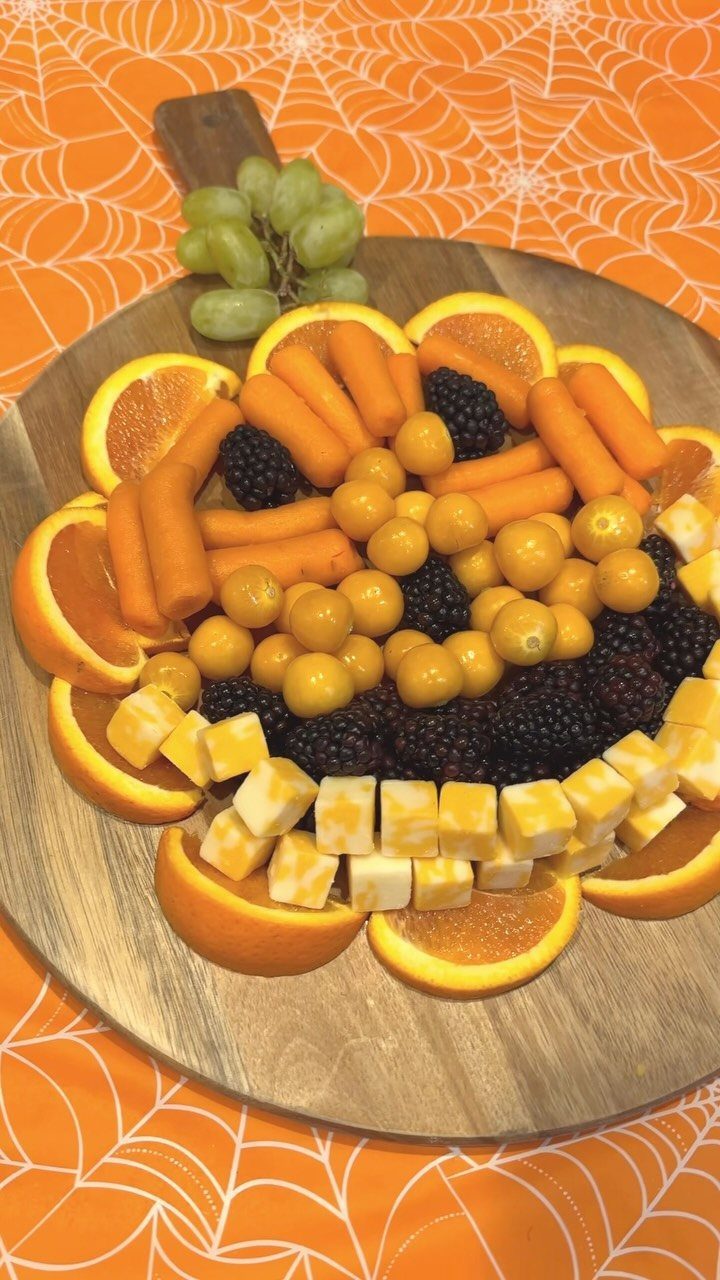
A wreath layout puts everything on one ring, so guests reach in from any side and no one has to wait for a turn.
Alternate colors and shapes as you go, so no 2 similar pieces sit side by side. Leave the center open for a dip cup or ramekin, or fill it with a few extra pieces.
Build the ring on the board it will be served on. Moving a finished circle is how it falls apart.
14. Watermelon Basket
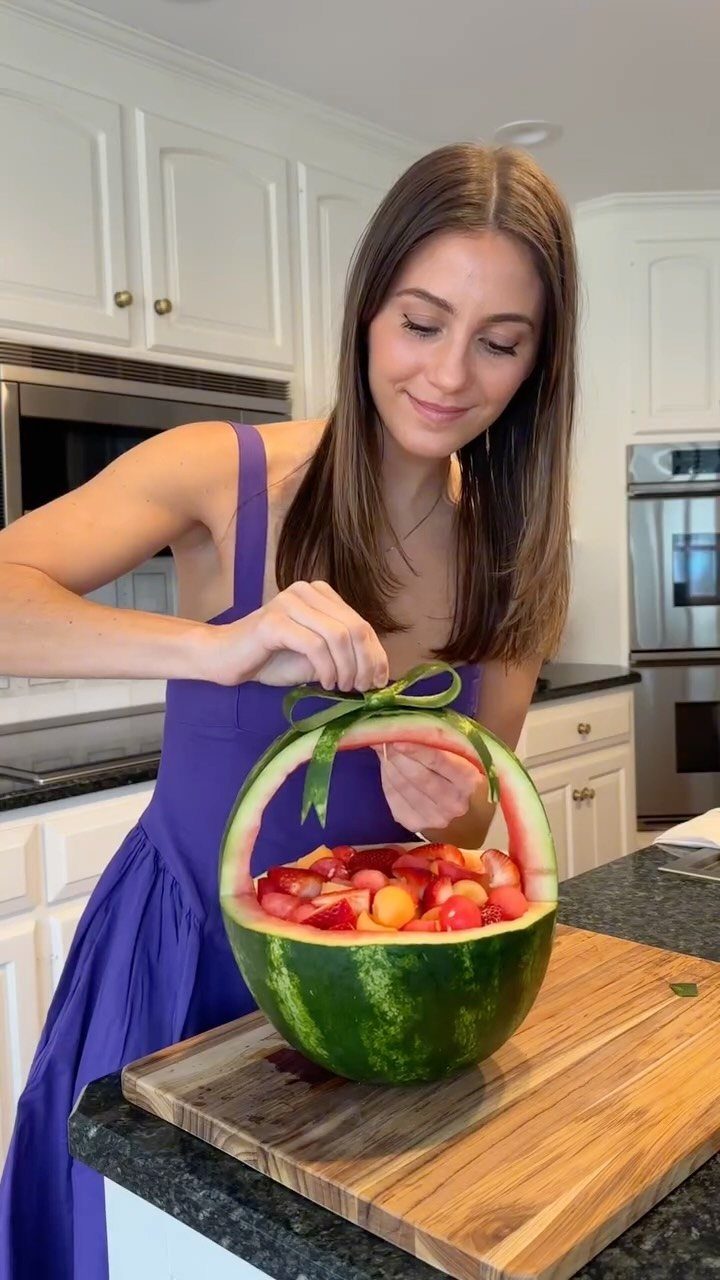
A carved watermelon basket is both the container and the centerpiece, and it holds a lot of fruit for one dish. Scoop or cube the flesh, then pile it back in with other fruit so the basket looks full.
A ribbon tied around the rim gives it a finished, gift-like look. Green suits the rind.
Carving takes patience and a sharp knife, so give yourself extra time and cut on a stable board. Set the basket on a tray to catch drips, and save the scooped-out watermelon for the filling so nothing goes to waste.
15. Halloween Cauldron Fruit Platter
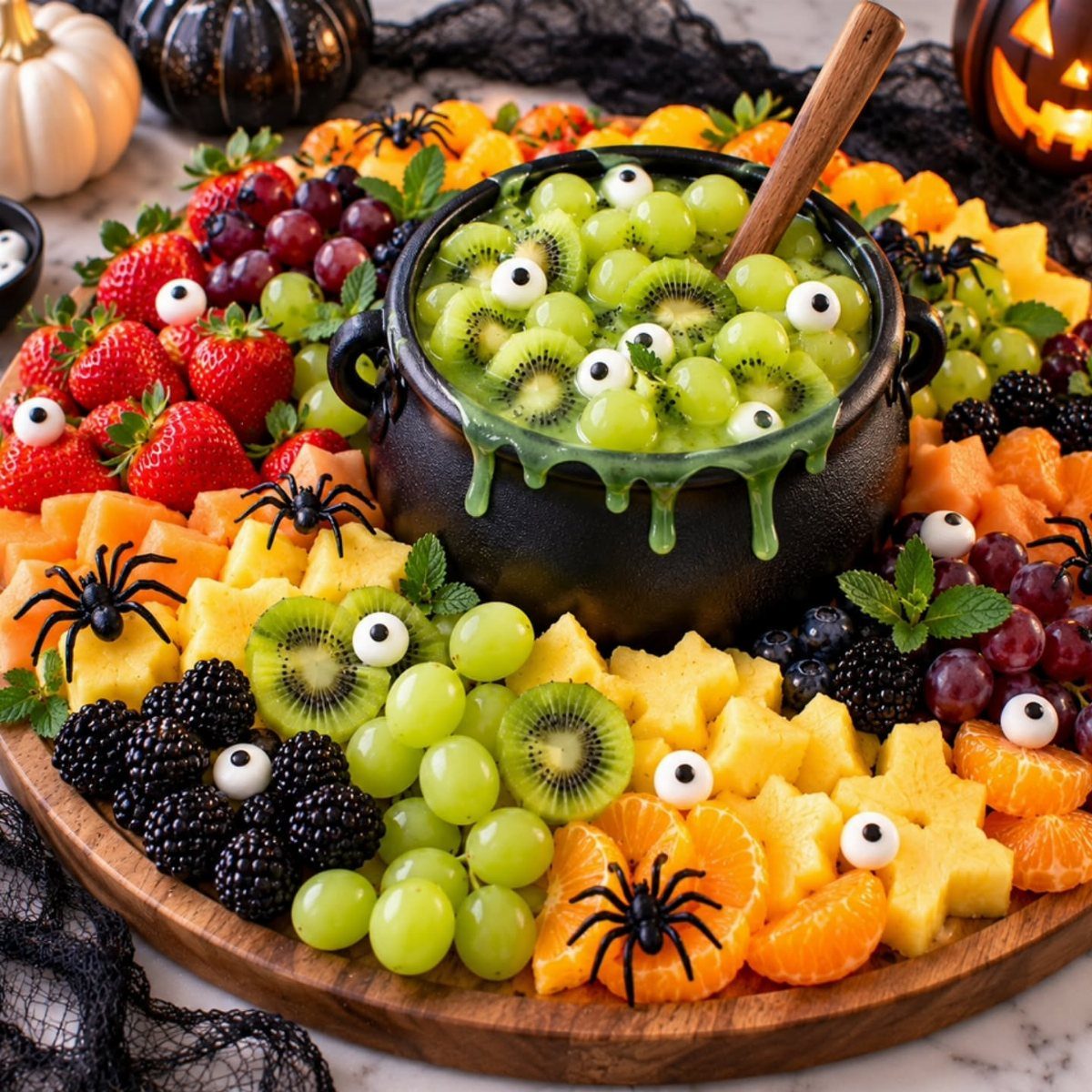
Fill a black cauldron with green grapes, add edible eyeballs on top, and the whole tray reads as a Halloween centerpiece with almost no cutting. Star-shaped pineapple and other fruit sit around it on a wooden tray.
Plastic spiders are the cheapest way to add spookiness, but keep them off any piece of fruit guests will eat. Set them on the tray and the cauldron rim instead, and warn younger kids that they’re decoration.
A cookie cutter handles the pineapple stars. Cut from firm slices so the points hold.
16. Turkey-shaped Fruit Platter
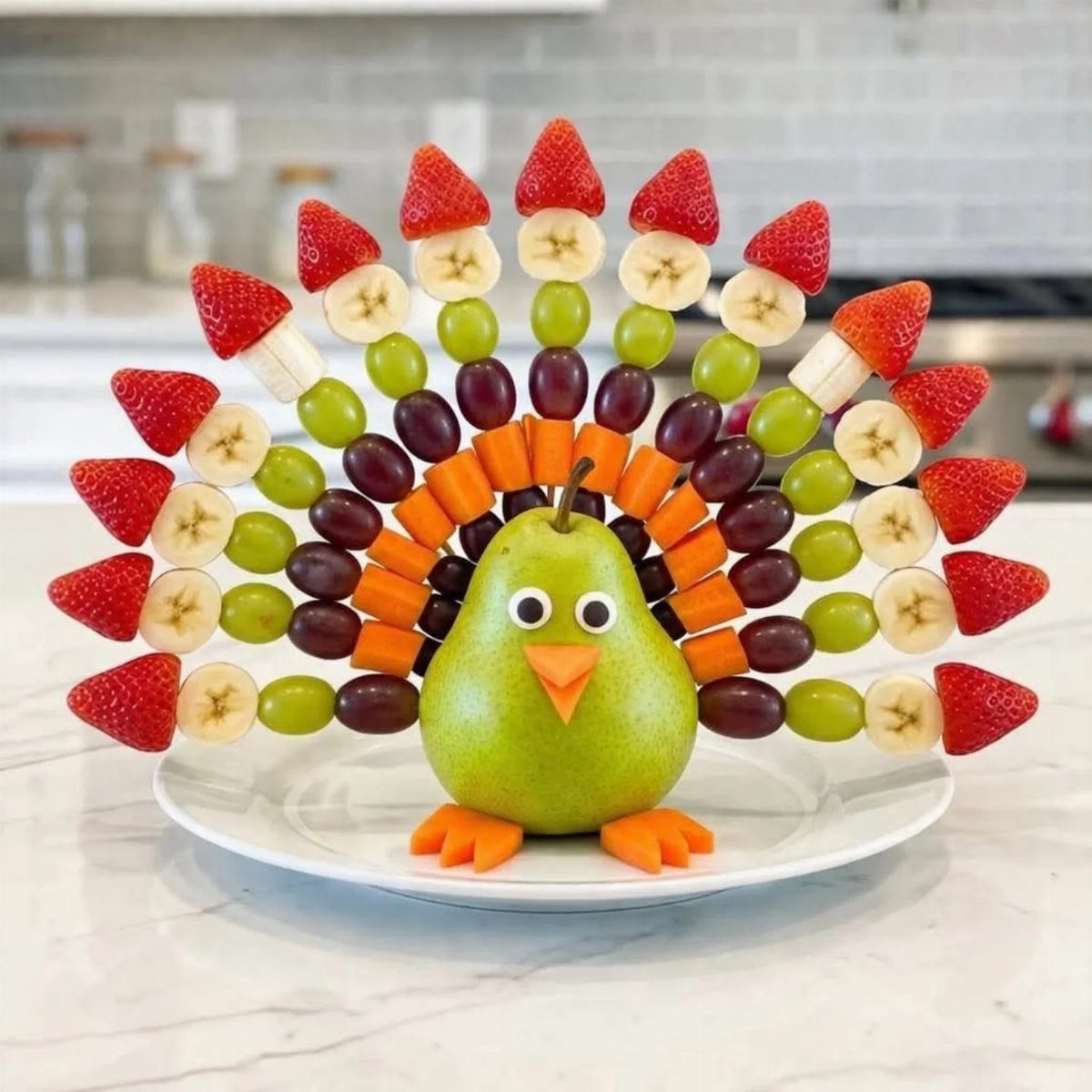
Build the turkey on a white plate so the colors stand out. A pear forms the body, carrot pieces add the details, and rows of grapes, banana slices and strawberries fan out behind it as the tail feathers.
Set the pear first, upright and steady, then lay the feathers in rows from the outside in. Choose fruits with distinct colors so each row shows.
Cut the bananas right before serving; a quick brush of lemon juice slows the browning. This one takes more assembly than a plain tray, but kids can help place the fruit.
17. Halloween Fruit Snack Platter
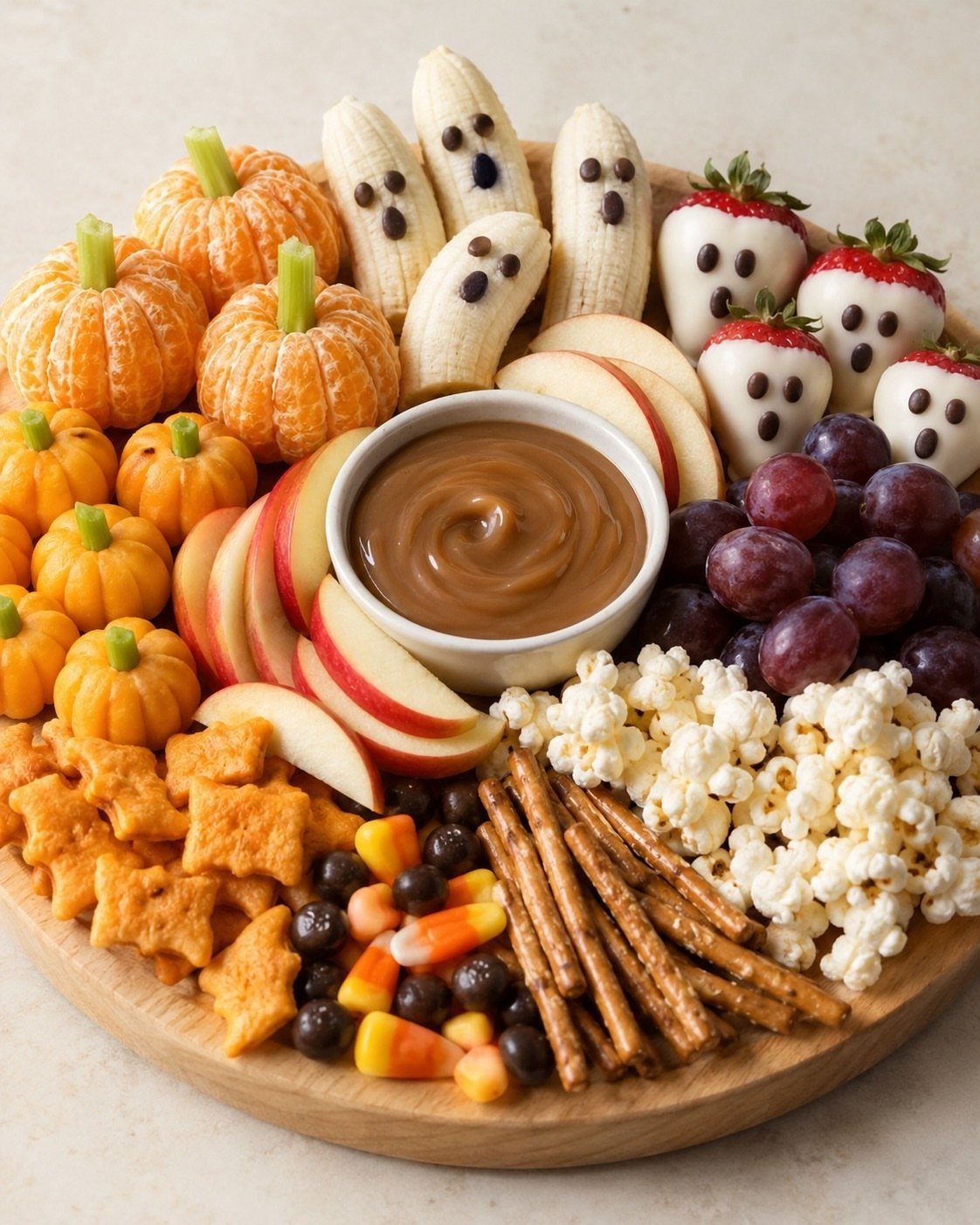
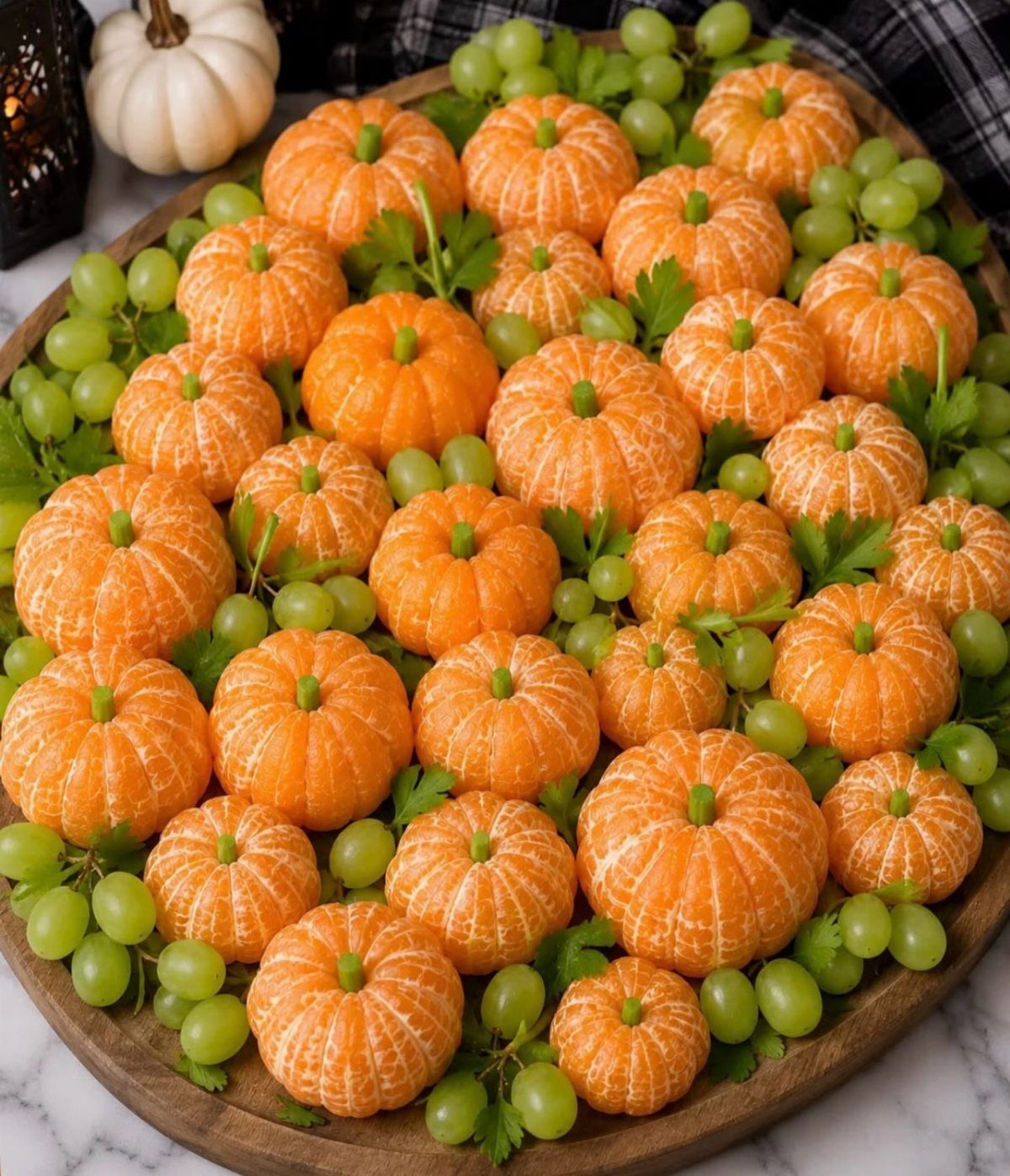
Peeled clementines become pumpkins when you press a small green stem piece into the top, and banana pieces with dotted eyes make ghosts.
Keep the themed pieces to a couple of spots and let apple slices and grapes fill the rest of the platter.
Popcorn, pretzels and candy corn make this a snack board rather than a fruit tray, so it suits a party where kids graze.
Set the dip in the middle, and give the pretzels and popcorn separate corners so juice from the fruit does not soften them.
Add the banana ghosts last, since banana browns fast.
18. Seasonal Fruit and Dip Tray
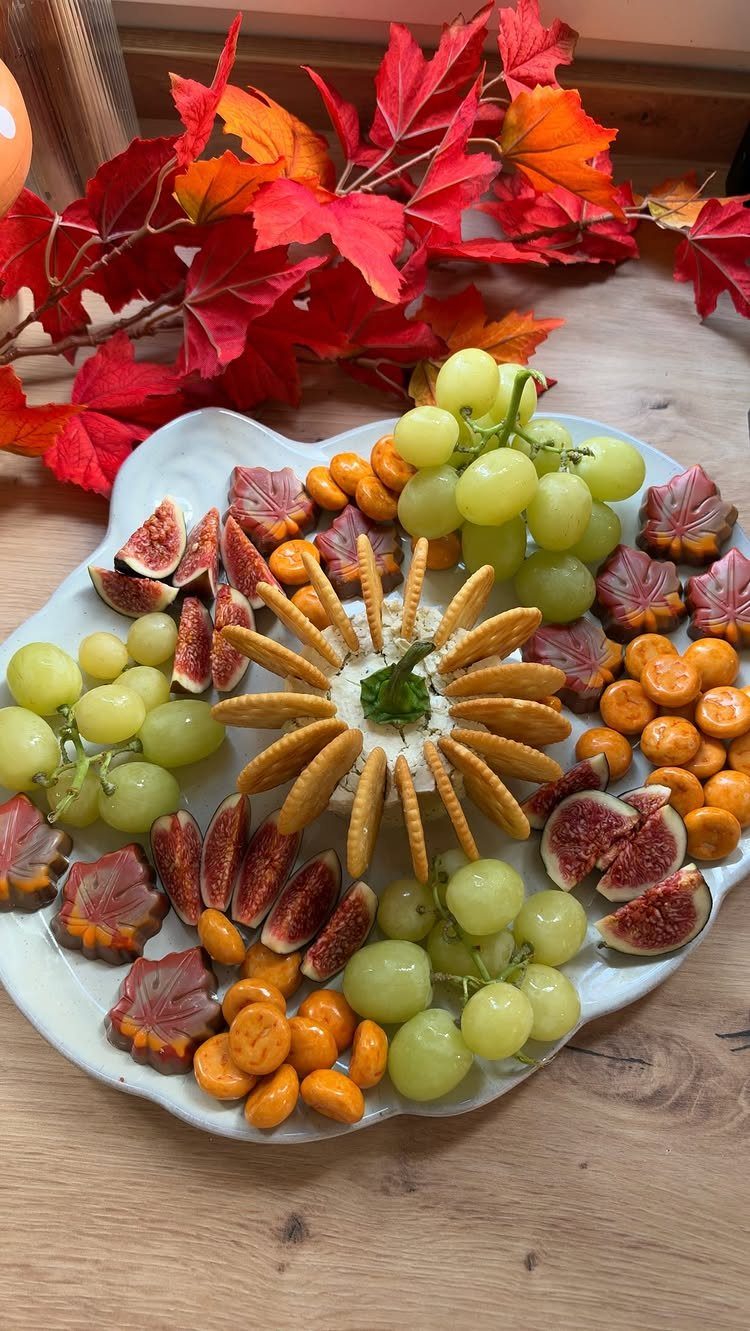
Grapes, figs and cape gooseberries on a white platter look like autumn without much effort. The papery husk on the gooseberries can be peeled back for a decorative touch, and the figs add a deeper color against the green grapes.
A central bowl of dip and a handful of crackers turn the platter into something closer to an appetizer. Pick a dip that works with both fruit and crackers, so guests can mix freely.
Red maple leaves around the edge add a seasonal backdrop. Wash and dry them well, and keep them under the platter, not touching the food.
19. Persimmon and Pomegranate Tray
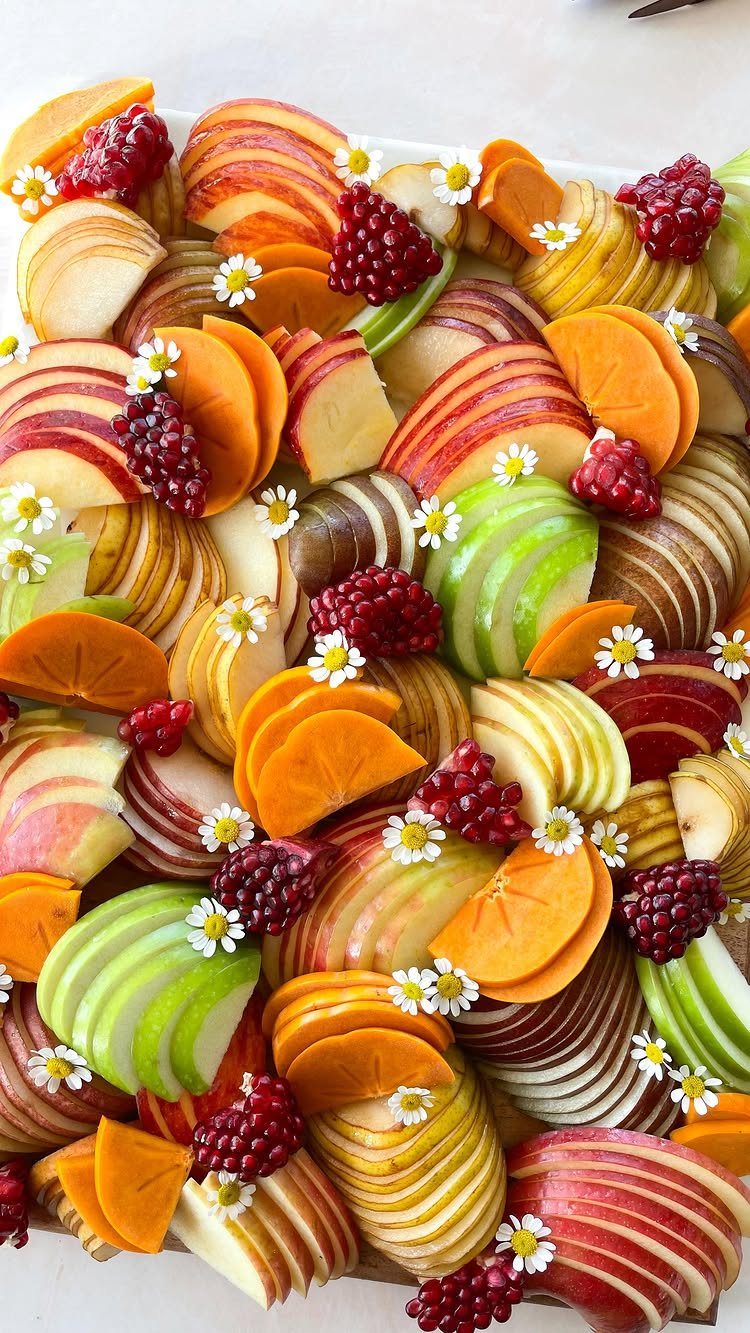
Persimmons bring a deep orange that red and green apple slices can’t, and pomegranate seeds scattered between them add small bright red clusters. Keep the apples in one section and the persimmons in another so each color reads clearly.
Tuck the seeds into the gaps rather than piling them in one spot, and finish with a few small white flowers if you can find ones sold as edible.
20. Caramel Apple Snack Tray
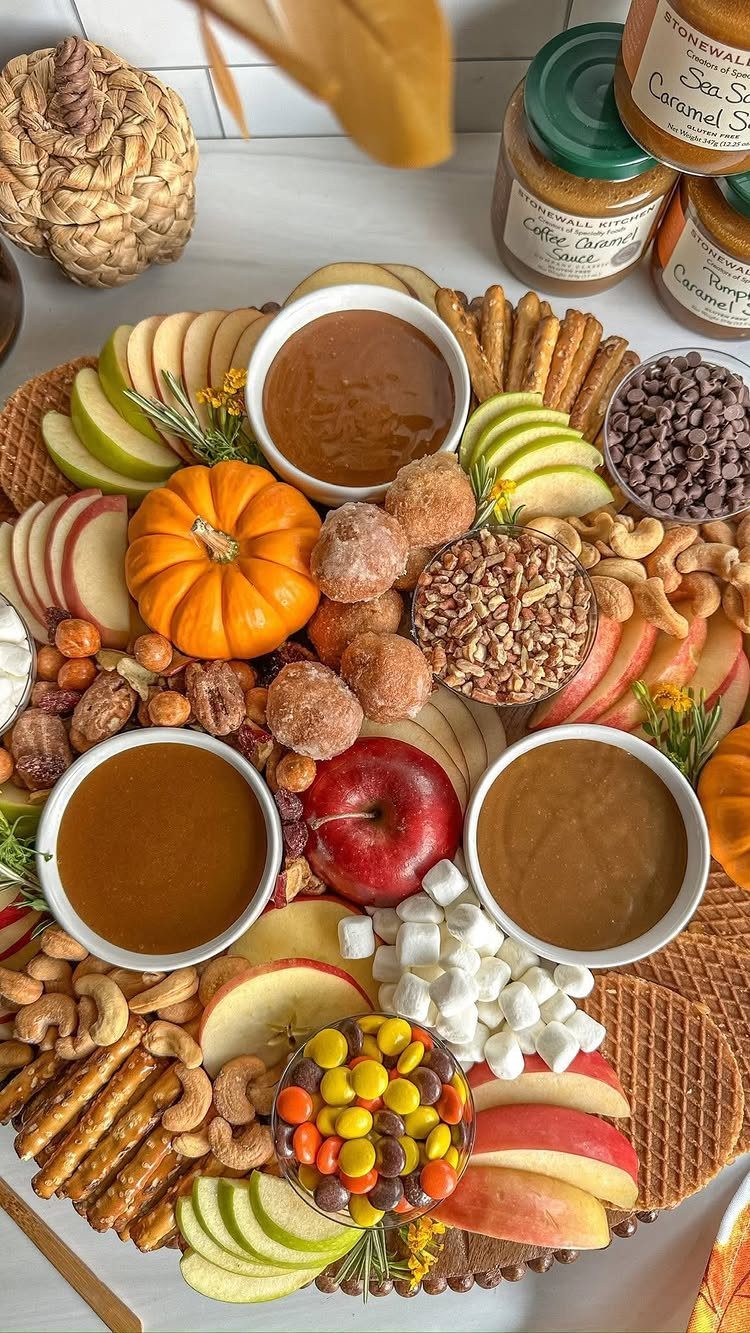
Set out 3 small bowls of caramel dip and arrange red and green apple slices around them, then fill the gaps with marshmallows, nuts and chocolate chips so every bowl has something to scoop and sprinkle.
Toss the slices in a little lemon juice or lemon-lime soda to keep them from browning for an hour or two. Guests build their own bite, so you skip the slicing-and-arranging fuss of a fancier tray.
Slice the apples right before serving and keep the nuts in their own spot, with a note if the guest list is mixed. A small pumpkin at the edge costs little and makes the platter look like fall.
Make-ahead and Storage
You have 2 workable routes, and they save different amounts of work. Wrap the finished platter in plastic and refrigerate it for up to 1 day, and that’s one less job waiting on party day.
Washing and cutting the fruit early, then storing each kind in its own airtight container, stretches the window to 3 days. Flavors and juices stay apart, and you only arrange the tray on the day.
Pick the first route for a tray you want finished the night before. Pick the second if you’d rather spread the chopping over several evenings.
Either way, slice apples and pears at the last minute so they stay pale. A platter built in advance should come out of the refrigerator roughly 1 hour before anyone starts eating.
Leftover fruit can go into the freezer, each kind in its own bag, for smoothies later.
Choosing and Preparing Fruit
Buy fruit that is ripe and in season, since flavor and texture are better and the tray looks fuller. Go organic if you can, especially for fruit people eat with the skin on.
Bananas are the one fruit to skip on a tray made ahead, because they turn brown and mushy fast.
Buy seedless grapes and snip them into small clusters, since loose ones tend to roll off the tray. Scoop the seeds out of melon halves before cutting, or pick a seedless type.
Mix textures and flavors as well as colors: something juicy, something crisp, something tart next to something sweet.
Set out an empty bowl for stems, peels and stones so they don’t pile up on the platter.
Amount of Fruit Per Guest
A good starting point is 150 grams of fruit per person, a little over 5 ounces. If you’d rather measure by the cup, these totals keep you from running short or ending up with a mountain of leftovers:
- 10 guests: 8 cups
- 15 guests: 10 cups
- 20 guests: 15 cups
- 30 guests: 20 cups
- 40 guests: 25 cups
Adjust for the rest of the menu. If the tray sits beside a full meal, lean toward the lower end; if it’s the main snack, buy a bit more.
Pick a board sized for your head count, then pile the fruit high so it looks generous.
Frequently Asked Questions
How to present a fruit platter?
Give each fruit its own section and set contrasting colors side by side, such as red next to green or orange next to blue.
Start with a bed of green leaves on the platter, then set small bowls of dip in the middle or at 2 opposite sides.
Snip grapes into small clusters so they don’t roll off, and scatter a few mint leaves over the top for extra green.
What fruits are in season in autumn?
Apples, pears, grapes, figs, persimmons, pomegranate seeds and cape gooseberries are the fruits that give a fall tray its look.
Persimmons give you deep orange, figs add a darker note next to green grapes, and pomegranate seeds scatter small bright red pops across the tray.
Is it cheaper to buy or make a fruit tray?
Making your own is the better choice. A store tray, such as one from Costco, can be expensive, and it comes in a plastic box you’ll probably want to move to a nicer dish anyway.
At home you pick fresh, ripe, seasonal fruit and decide exactly what goes on it.
Can you give me a recipe for a fruit dip?
2 easy options are a mascarpone dip and a Greek yogurt dip.
Let the mascarpone soften on the counter for about 10 minutes, then beat it with the remaining ingredients using a hand mixer until it’s smooth. If it feels stiff, loosen it with a splash of milk.
For the yogurt version, stir the ingredients together until smooth and chill it until serving. A drizzle of honey or maple syrup on top finishes either one.
What is the best fruit to use?
Pick ripe, seasonal fruit in several kinds and colors.
It tastes better, has better texture, and makes the tray look full. Leave bananas off a tray you’re building ahead, since they go brown and soft quickly.
How much fruit do I need?
Plan on about 5 ounces of fruit per person.
In cups, that’s 8 for 10 guests, 10 for 15 guests, 15 for 20 guests, 20 for 30 guests and 25 for 40 guests. Plan on less fruit when the tray sits alongside a full meal, and a bit more when it’s the main snack.
Can I make a fruit tray the day before?
Yes. An assembled platter keeps in the refrigerator under plastic wrap for up to 1 day.
You can also wash and cut the fruit as much as 3 days early, keep each type in its own airtight container, and build the tray on party day.
Cut apples and pears right before serving so the flesh stays pale, and keep bananas out of any tray made early.
What fruit goes with a cheese platter?
For fall, apples, pears and plums are the best matches, with grapes and berries filling the gaps. Wait to cut the apples until just before serving, or they’ll turn brown on the board.
What is a fruit charcuterie board?
It’s a board of sweet, ripe fruit chosen for a mix of tastes, textures and colors, usually served with a dip. Citrus, berries and tropical fruit such as pineapple and papaya all work, and in-season fruit gives the best flavor.
What is the best material for a charcuterie board?
Wood, marble and slate all work, and the choice mostly comes down to personal preference. Choose a white platter if you want the fruit colors to stand out; wood fits an autumn board with cheese, nuts and rosemary.