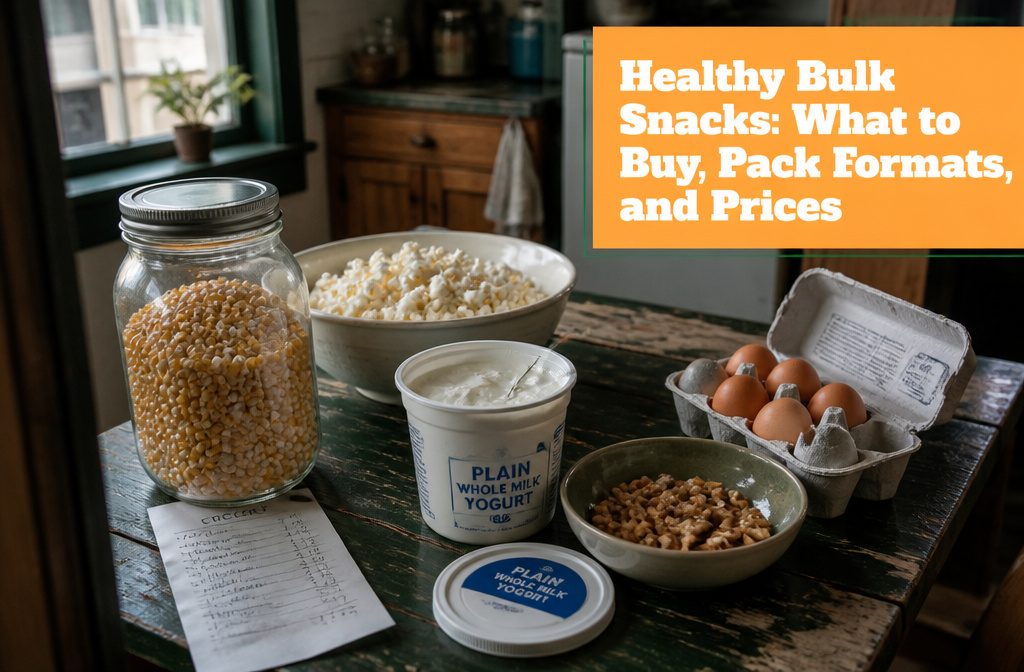
Most healthy snacks worth buying in bulk are plain foods you portion yourself: popcorn kernels, family-size yogurt tubs, nuts, eggs.
Individually wrapped packs cost more, and packaged options run from $1.38 a pack to $36 a box, where a protein claim doesn’t make a snack healthy.
Fruit With Nut Butter
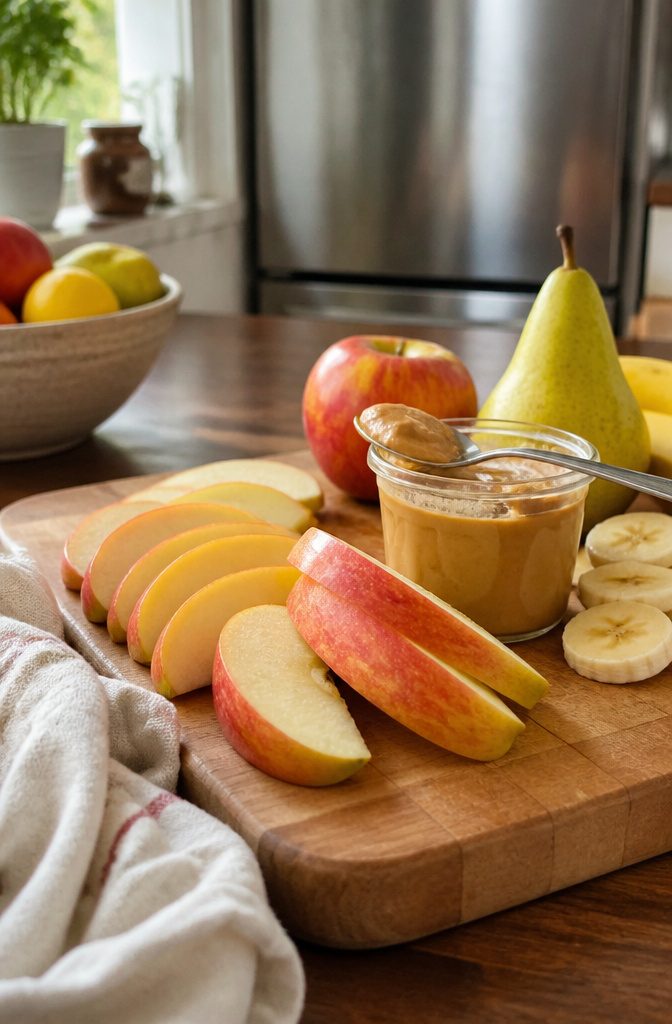
An apple with 2 tablespoons of peanut butter keeps the snack under 250 calories and gives you about 3 grams of fiber from the apple plus protein and healthy fats from the nut butter.
You can swap almond butter or another nut or seed butter for peanut butter if you prefer the taste or need to avoid peanuts.
Buy a big jar of natural nut butter instead of single-serve packs.
Scoop out the portion you need at home, pack it in a small container, and slice the apple fresh or toss the slices in a little lemon juice to keep them from browning if you’re packing ahead.
If portioning feels like too much work in the morning, prep a few servings at once and refrigerate them in small jars or silicone cups.
Pair with any crisp fruit you have on hand: pears, banana slices, or even celery sticks work the same way.
Vegetables With Hummus
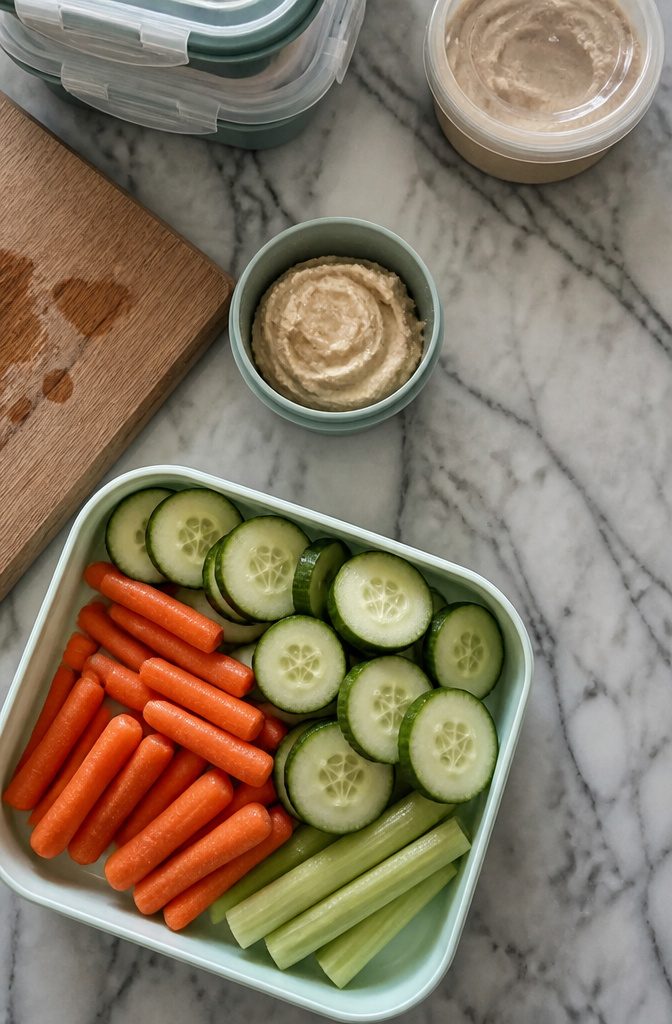
Baby carrots and cucumber slices give you the crunch of chips for few calories, plus vitamin A and vitamin K. The vegetables aren’t the problem; the dip is.
A tablespoon of Sabra hummus is 35 calories, so 2 tablespoons keeps the whole snack under 100 calories. Scoop 4 oz next to a sliced cucumber and you’re at about 180, nearly all of it from the hummus.
Spoon the dip into small containers when you pack the week’s snacks, so nobody eats straight from the tub.
Tzatziki is a good swap with carrot and celery sticks when you want something low in sodium and fat, though brands vary, so read the label. Guacamole works the same way, with the same small-container rule.
Yogurt or Cottage Cheese With Fruit
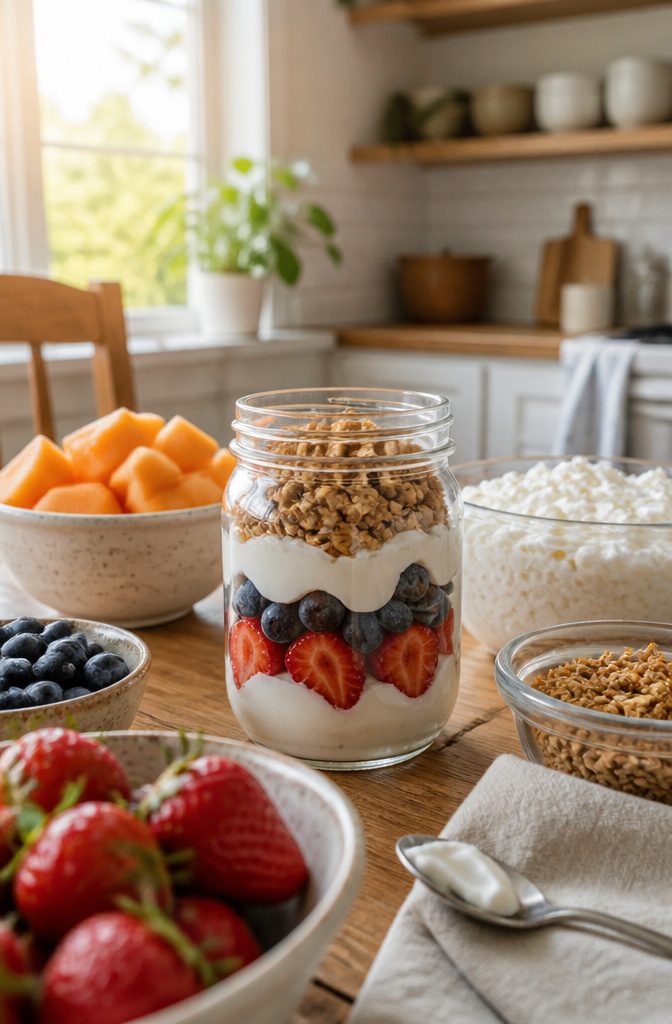
Cottage cheese edges out yogurt on protein: 1/2 cup of low-fat 2% has 12–14 g, while 1/2 cup of plain nonfat Greek yogurt has about 12 g. Strawberries or blueberries add the fiber the dairy lacks.
Buy plain, family-size tubs and add the fruit yourself. You control the sweetness, and one big tub portions into small containers for the week in a few minutes.
Yogurt is the better base for a parfait.
Layer it with fresh berries and a low-sugar granola, and pack the granola separately so it stays crisp. Cottage cheese suits you better if you want something less sweet, and it pairs well with cantaloupe as well as berries.
Popcorn
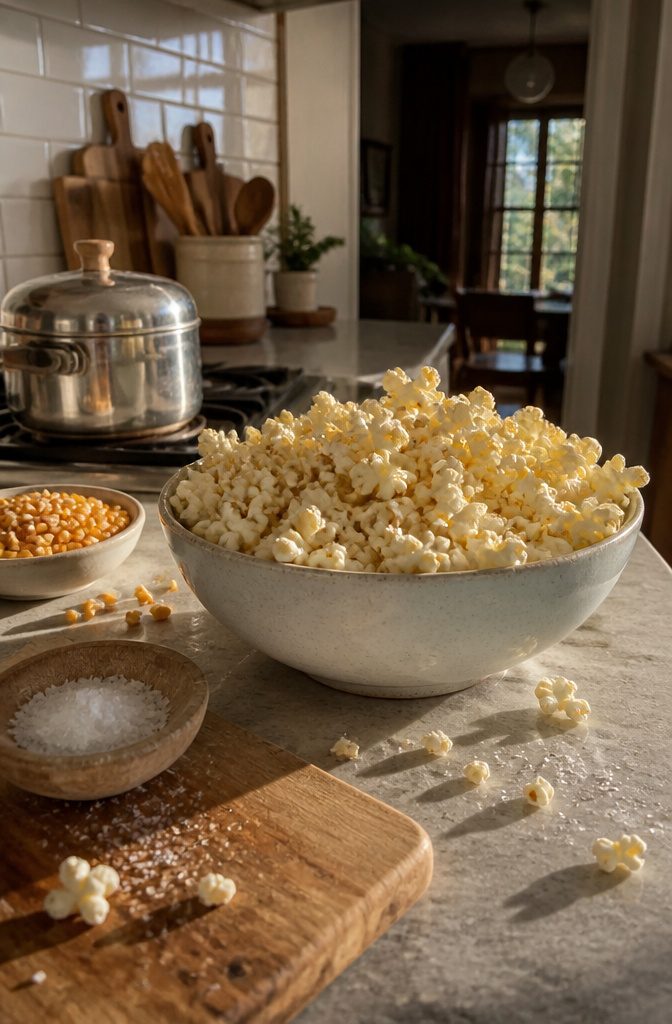
Air-popped popcorn is about 40 calories per cup and comes with plenty of fiber, which makes it one of the few snacks where you can actually eat a lot without racking up much calorie debt.
Three cups lands you under 100 calories and delivers around 4 grams of fiber. The volume is real: you get to chew through a big bowl, and your mouth or your stomach will register fullness before you’ve done any real damage.
Kernels bought in bulk are absurdly cheap compared to the pre-packaged microwavable bags, and you skip the oils and additives those tend to carry. Skip butter and go easy on salt.
If plain popcorn bores you, toss it with a small amount of extra virgin olive oil, nutritional yeast, or grated Parmesan after it pops. The base stays light, and you control exactly what goes on top.
Nuts, Seeds, and Trail Mix
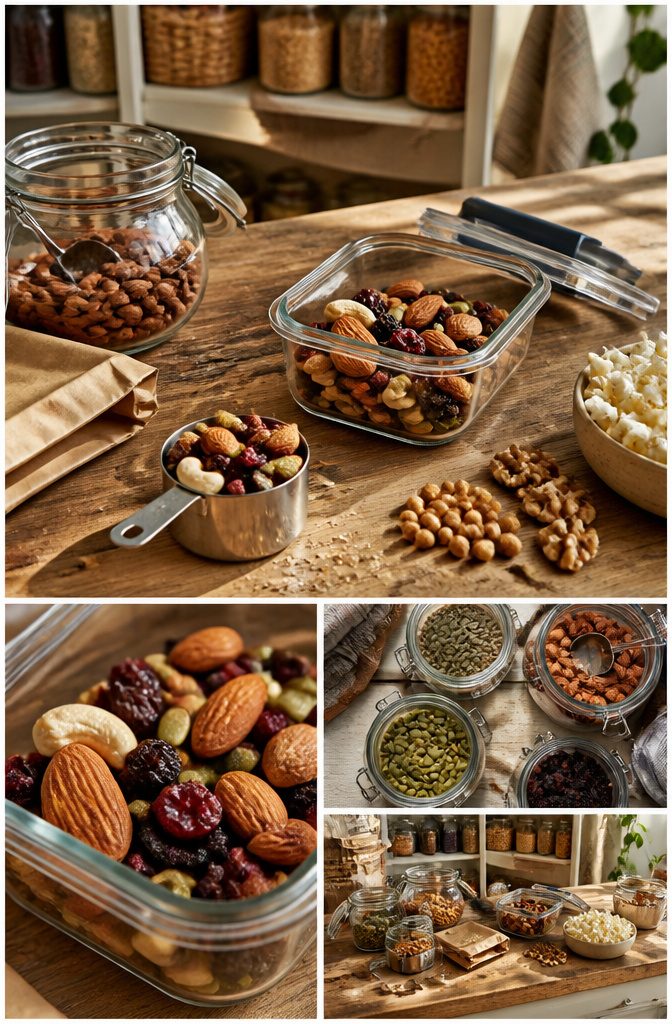
Mixed nuts run about 175 calories per ounce, so a casual handful adds up fast.
Buy plain nuts and seeds in bulk, then portion them into small containers or bags in one sitting. After that, every grab-and-go snack is already measured.
Trail mix is where buying in bulk saves the most effort.
Store-bought versions can be loaded with extra fat and sugar, and your own takes two ingredients: cashews and almonds with dried fruit. Keep a serving to about 1/4 cup, because the mix is dense in calories.
For a lighter version, toss air-popped popcorn with roasted chickpeas and walnuts. The popcorn stretches the nuts further, so each scoop has more to chew and less to regret.
Hard-Boiled Eggs
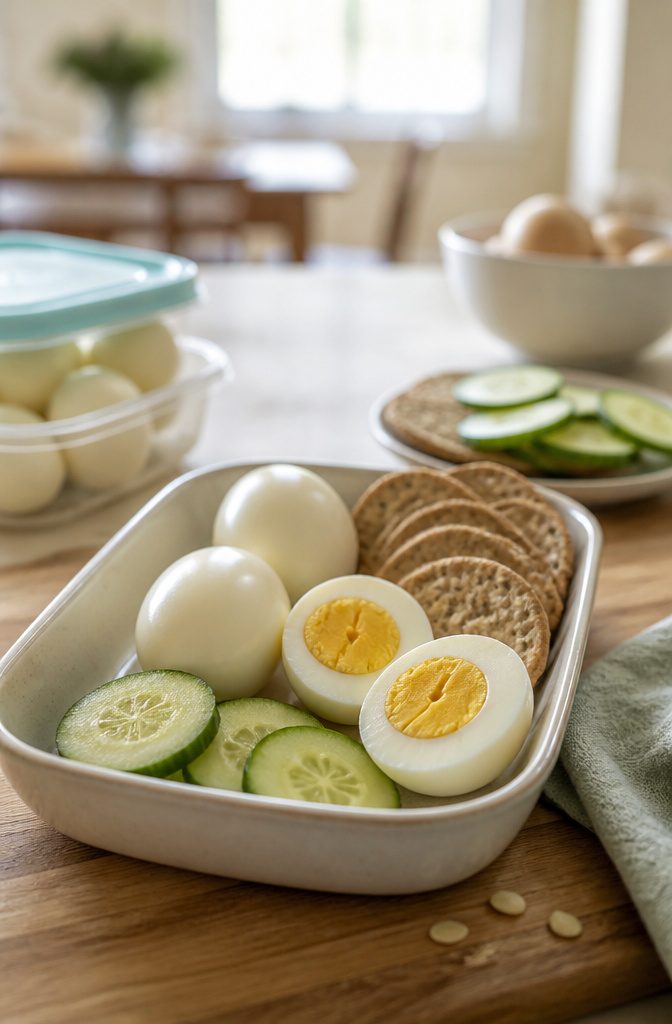
One hard-boiled egg has about 6 g of protein, so two eggs bring you to about 12 g, enough to hold off a hungry kid or adult until dinner.
Eat them plain, or add fiber: whole-grain crackers are the easy pairing, and cucumber slices with a pinch of salt give you crunch and volume for almost no work.
Eggs are the snack to prep first. Boil a full batch at the start of the week and keep them in the fridge, so a snack takes seconds on a rushed afternoon.
One egg with a handful of crackers or a plate of cucumber stays well inside a 150–300 calorie snack, which is why this pairing works better than piling on more food.
Cheese With Fruit or Crackers
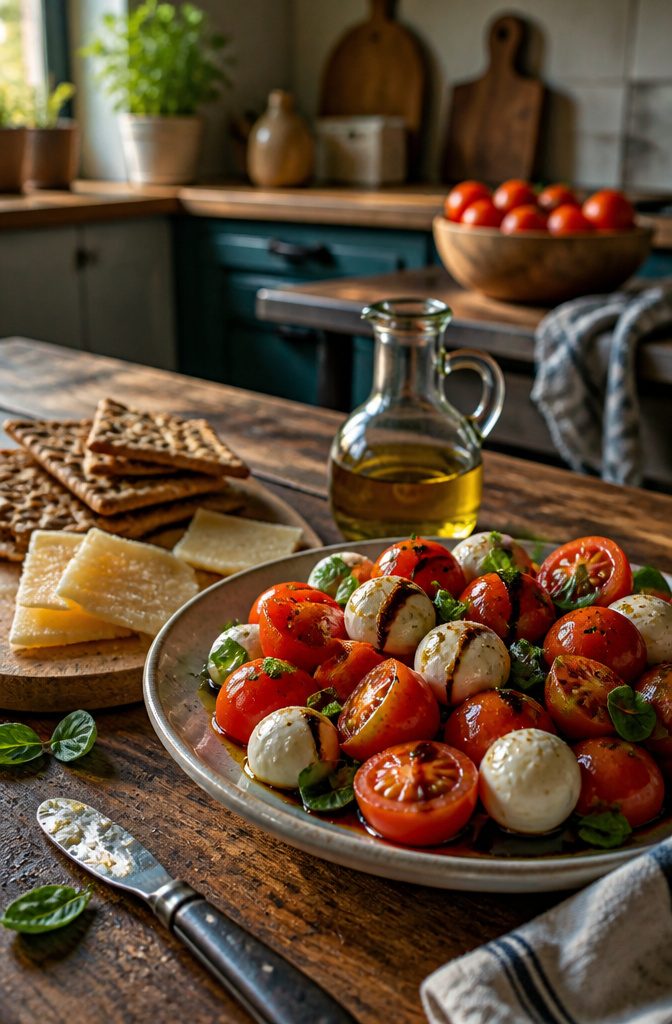
Cherry tomatoes and mozzarella are the simpler pairing. 1 cup of cherry tomatoes with 1 ounce of mozzarella gives you about 8 grams of protein from the cheese, plus the fiber and antioxidants in the tomatoes.
A drizzle of balsamic vinegar or extra virgin olive oil, or a few torn basil leaves, makes it taste like more than a snack.
Parmesan packs more protein into the same ounce: 10–11 grams. Any cheese works with crackers, but Parmesan is the one to reach for when you want the protein, and a small amount goes a long way.
Pair it with whole-grain crackers and read the label for at least 3 grams of fiber per serving. That number is what separates a filling snack from a salty vehicle for cheese.
Edamame and Roasted Chickpeas
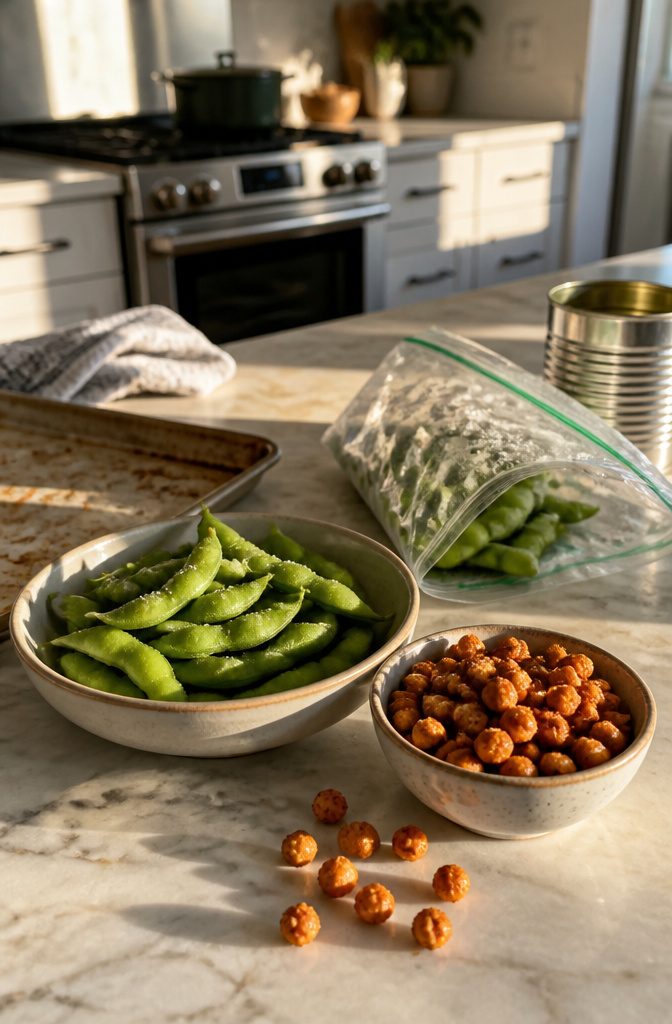
Frozen edamame is the better bulk buy of the two. A cup has about 18 g of protein and 8 g of fiber for 188 calories cooked, and the bag keeps in the freezer until you want it.
Microwave it in the pods, then add a pinch of salt or another seasoning, and you have a snack in a few minutes with almost nothing to wash.
Roasted chickpeas take more effort, but canned ones are cheap and easy to stock.
Drain a can, roast the chickpeas in the oven until crunchy, and season them with smoked paprika, cumin, dried oregano or rosemary. A half cup gives about 10 g of protein and 6 g of fiber.
On a busy weeknight, edamame wins on speed. Chickpeas win on crunch.
Whole-Grain Crackers or Toast
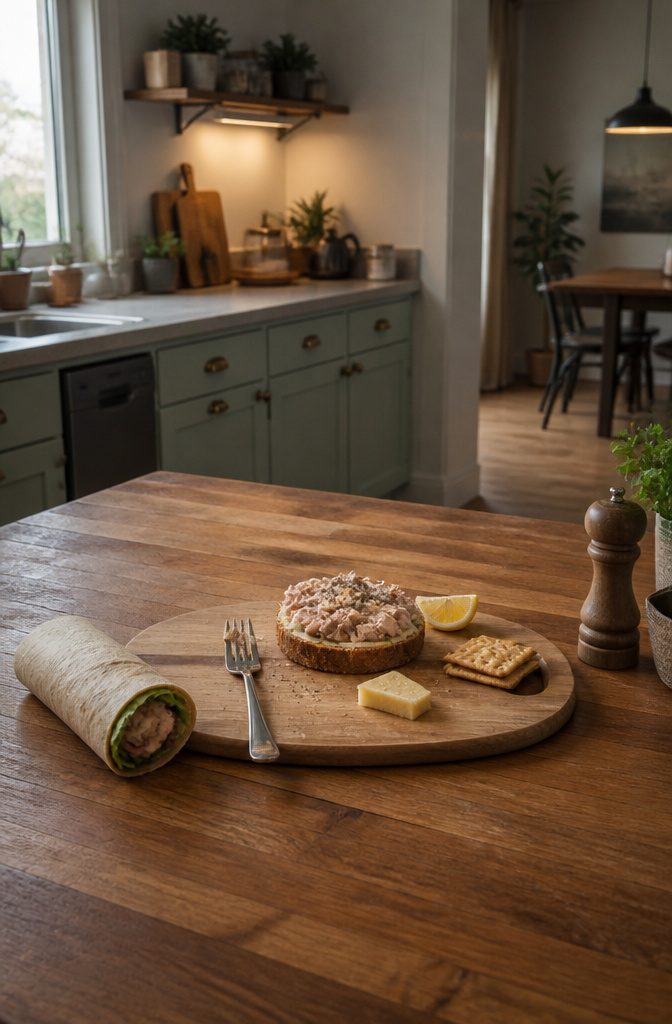
Whole-grain crackers work well with any protein topping you have on hand.
Parmesan brings about 10 to 11 grams of protein per ounce, and checking the label for at least 3 grams of fiber per serving keeps the cracker base substantial enough to hold you between meals.
Canned tuna on whole-wheat toast delivers lean protein and healthy fats in a format you can throw together on a weeknight. Season with lemon and pepper, or swap the toast for a whole-wheat wrap if you need something that travels.
Smoked salmon with one tablespoon of cream cheese comes in around 70 calories, making it a lighter pairing when you want the same savory hit without the heavier feeling.
For a plant-based option, refried beans on a corn tortilla with a sprinkle of melted cheddar cheese hits the protein and fiber combination that actually satisfies.
Turkey or any nut butter without added salt or sugar rounds out the list of toppings that turn a cracker or slice of bread into a snack you can buy and pack in bulk without special storage.
Dried Fruit and Dates
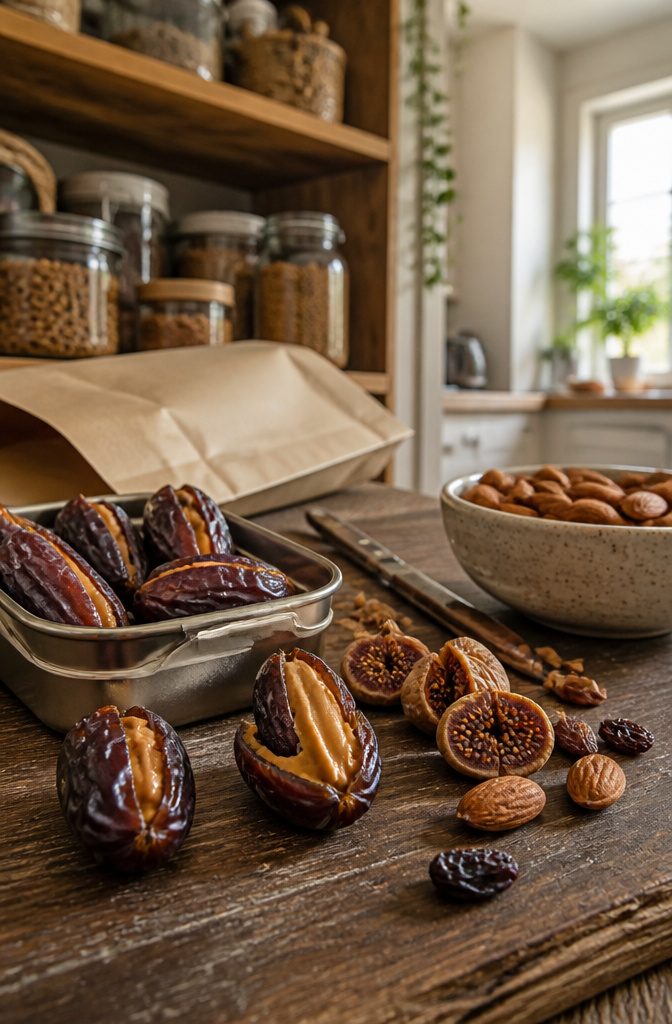
Dates are the best buy in the dried fruit aisle: sweet enough without added sugar, and no prep beyond pitting.
Fill them with nut butter and two dates with about 1 tablespoon of nut butter give you about 4 grams of fiber and protein. You can stuff a batch ahead of the week and carry them anywhere.
Dried figs with almonds work the same way, and crunchy peanut butter on a dried date is another easy pairing.
Raisins and other plain dried fruit are fine on their own, but they leave you hungry sooner than fruit with a nut or nut butter.
Flip the bag over before you buy. Pick fruit with no added sugar, check the serving size, and compare the added sugars line on the Nutrition Facts label.
Dried fruit packs a lot into a small piece, so stick to a few pieces rather than a handful from the tub.
Packaged Protein Snacks
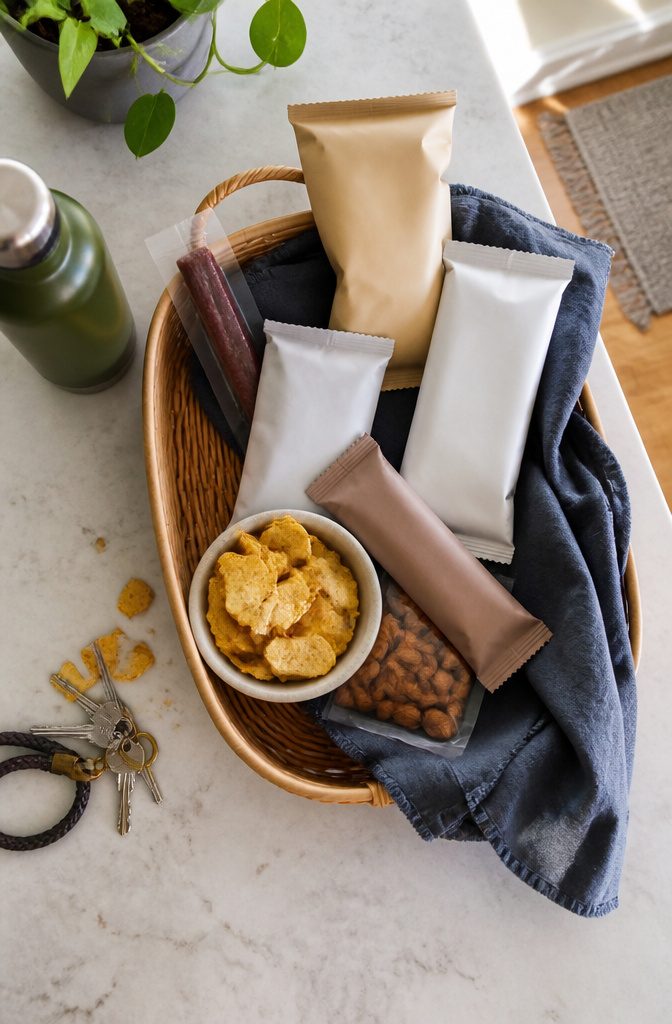
Packaged protein snacks pack a surprising amount of filling power into a single-serve format, and buying them in bulk means you’ll always have something ready to grab on the way out the door.
Wilde Chips deliver 10 grams of protein per serving from chicken breast, egg whites, and bone broth, which sounds unusual but tastes like a deeply savory, ultra-crunchy chip that beats a standard bag of potato chips for staying power.
Chomps beef jerky sticks also hit 10 grams of protein each, while Spirit Almond packs bring 7 grams of protein and 3 grams of fiber per serving.
Quest Bars come in packs of 12 and are easy to find at most grocery stores and nutrition retailers.
Apple paste, melon, mango, and pineapple are dotted with almonds, chia seeds, and puffed quinoa for a chewy, fruity bite with a surprising crunch. The most impressive part, besides the taste: each bar packs 15 grams of fiber.
That fiber count matters if you’re trying to close the gap between what you’re eating and what nutritionists recommend most Americans need.
Check labels before you buy, since products in the same category can vary widely in protein, fiber, sugar, and sodium.
Chia Pudding and Bites
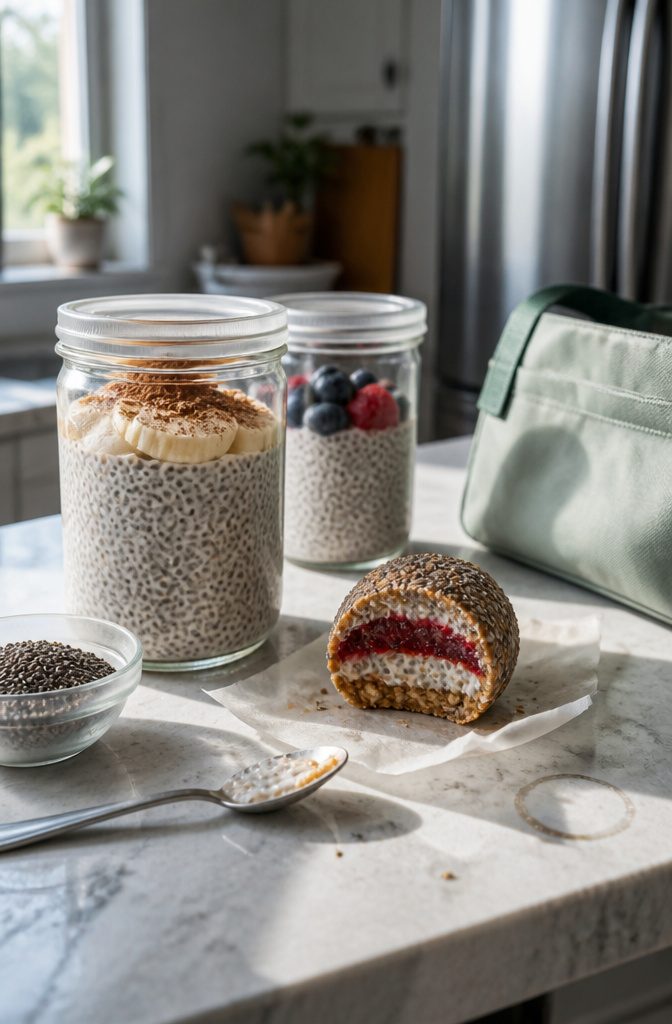
Chia pudding is the easiest place to start: mix 2 tablespoons of chia seeds with 1/2 cup of milk, cover it, and refrigerate for about two hours.
Cocoa powder, vanilla, half a mashed banana, or a touch of honey adds flavor. Mixed in covered jars the night before, it is ready when the kids ask for a snack.
If you would rather buy than stir, chia-and-fruit bites are sold ready-made. The Smash Foods variety pack runs $28 on Amazon.
It comes in bags of five, with 7–9 grams of protein per pack, and pairs chia fruit jam sweetened with date syrup and lemon juice with a nut butter. Peanut butter with grape is one flavor.
Treat this as the least proven idea here.
There is a simple recipe and a few products, and not much more behind it. Try one jar before you buy a large bag of seeds.
What Makes a Snack Healthy
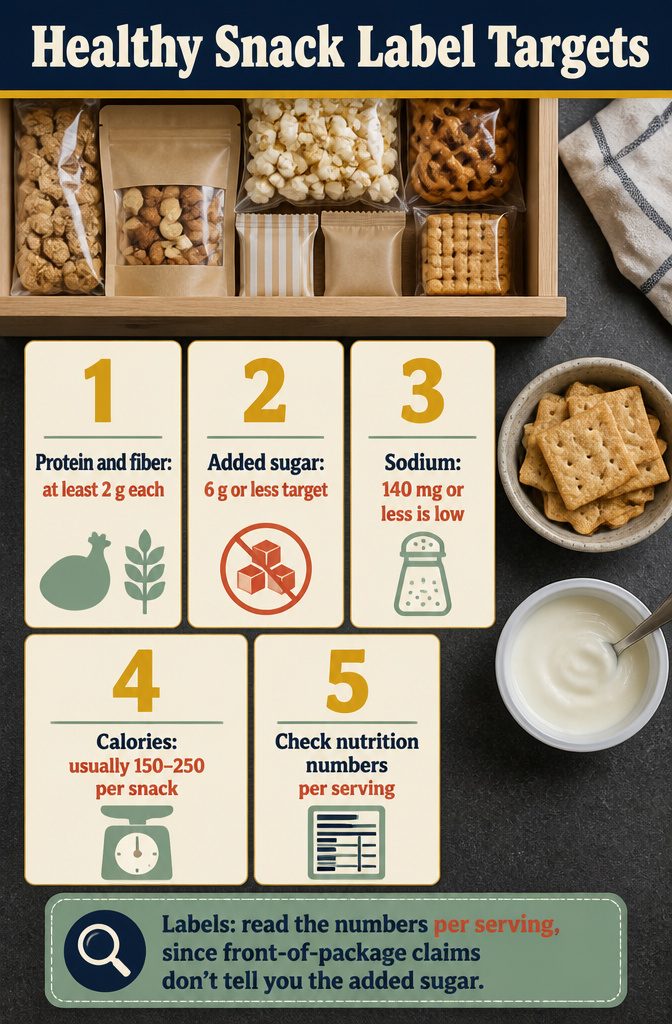
Check the label against these numbers before a big pack goes in the cart:
- Protein and fiber: aim for at least 2 g of each per serving. 6 g of protein or more counts as protein-rich.
- Added sugar: 6 g or less is the target. 7–8 g is fine occasionally, and 9 g or more is a treat, not a snack.
- Sodium: 140 mg or less per serving is low. It’s worth a glance, but it shouldn’t veto a snack that scores well elsewhere.
- Calories: 150–300 per snack, depending on your needs. Most snacks land between 150 and 250.
- Fullness: protein and fiber together keep you satisfied longer, so you graze less. Crackers or cereal on their own fall short, so pair them with something like yogurt or turkey.
- Labels: read the numbers per serving, since front-of-package claims don’t tell you the added sugar.
Pick the Package Format
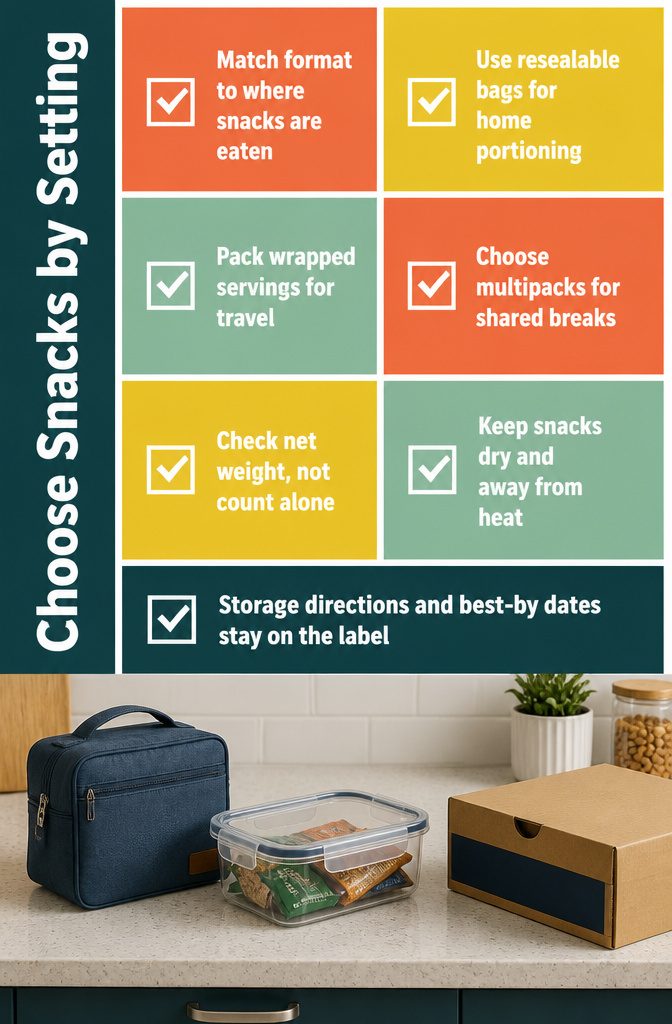
The format that wins depends on where the snacks get eaten. Individually wrapped portions fit a backpack pocket, a lunch bag, or a desk drawer without exposing the rest of the package to air or crumbs.
Multipacks with single-serve bags make sense for school lunch rotation or an office break room where different people reach for different flavors.
Larger bags portioned at home cost less per ounce but require clean containers, a few minutes of dividing, and fridge or pantry space for the original package between uses.
Consider these settings and their best-fit formats:
- Home snacking and meal prep: Larger resealable bags work when you portion into reusable containers for the week. Check the net weight, not just the package count. A 40-count box of Pirate’s Booty at 0.5 oz per pouch delivers 20 oz total; a 45-count Cheez-It multipack at 1.5 oz per pouch gives 67.5 oz.
- Work and commuting: Single-serve wrappers travel without crushing and fit a tote or briefcase side pocket. Protein bars in 12-count boxes and tortilla-style protein chips in 8-bag packs suit a desk drawer or locker.
- Travel and road trips: Avoid loose seasoning and soft coatings that melt in a warm car. Wrapped servings stay cleaner than an open bag passed around.
- Gatherings: Set out a few portions of each variety, keep extras in the carton. Variety packs show what’s available without opening every bag.
Storage directions and best-by dates stay on the label. Keep snacks dry, away from heat and strong-smelling supplies.
Buy in Bulk on a Budget
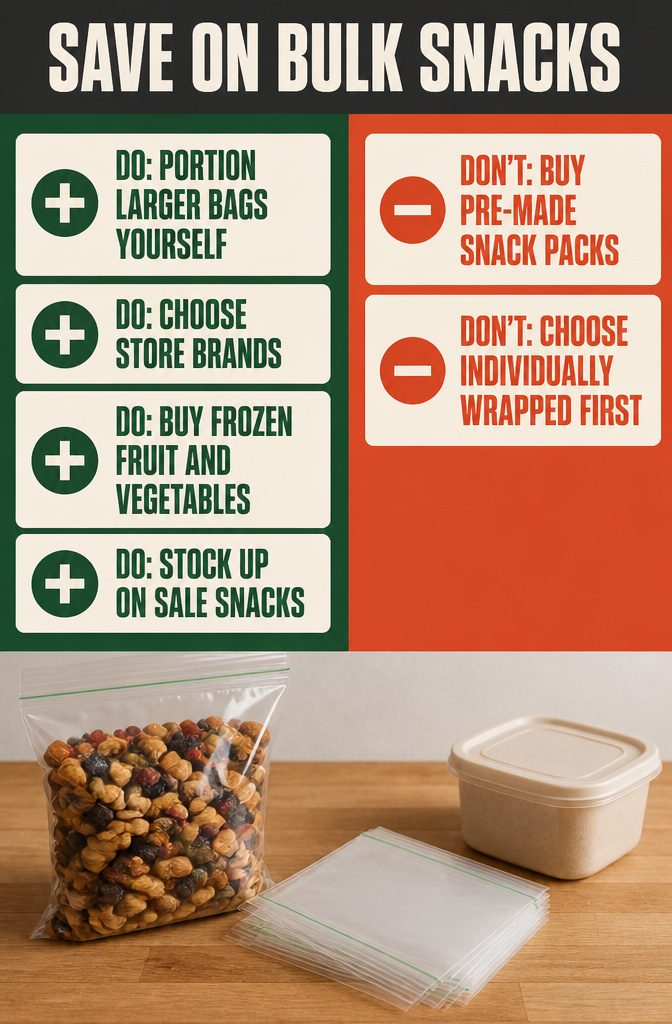
Individually wrapped snacks cost more than the same food in a bigger package, so most of the savings come from doing the portioning yourself.
- Buy the larger bag and portion it into snack-sized bags yourself. Individually packaged snacks are the first thing to drop from the cart.
- Choose store brands. They usually undercut name brands, and Walmart’s Great Value line is a good example.
- Buy frozen vegetables and fruit.
- Get family-size tubs of yogurt or hummus, then spoon out single servings.
- Buy produce that’s in season, and nuts and seeds from the bulk bin.
- Stock up on non-perishable snacks when they go on sale.
- Prep once. Boil a batch of eggs, cut vegetables, and portion trail mix.
- Skip pre-made snack packs. Cheese cubes, nuts, dried fruit, crackers, and lunch meat rebuild them for much less.
Snacks for Bigger Portions
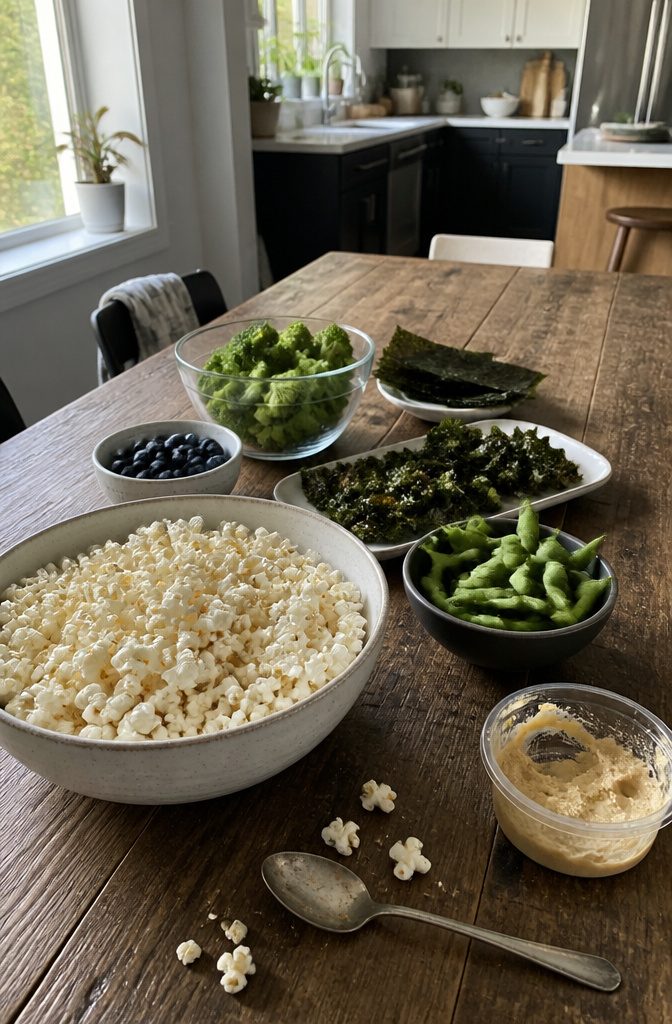
Snacks that are mostly air, water, or shell let you eat a bigger portion for fewer calories.
| Snack | Serving | Calories | Notes |
|---|---|---|---|
| Broccoli | 1 cup | about 30 | Lowest on the list |
| Air-popped popcorn | 1 cup | about 40 | No oil; high in fiber |
| Dried seaweed | 1 cup | about 50 | Big sushi sheets trimmed to size use less packaging |
| Baked kale chips | 1/2 cup | about 50 | Little added fat |
| Blueberries | 1 cup | 84 | n/a |
| Edamame, cooked | 1 cup | 188 | Slower to eat in the shell |
Dips are where the count gets away from you. One tablespoon of hummus is 35 calories, which adds up fast if you work through the container.
Popcorn and broccoli give you the most volume per calorie. Edamame costs the most per cup, but shelling it slows you down.
Dietary Needs and Restrictions
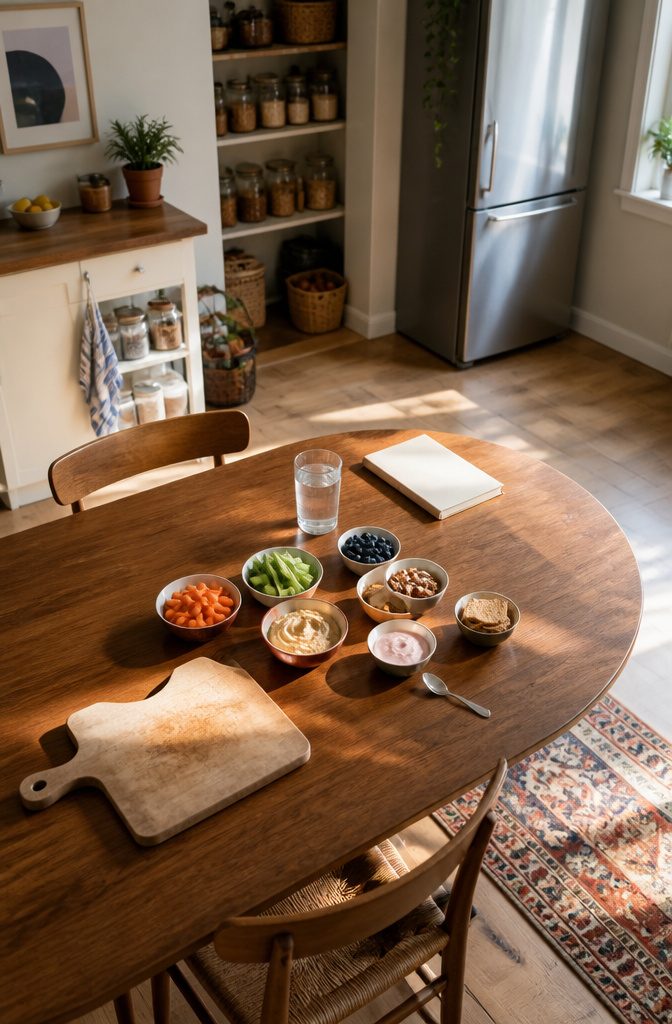
If you manage diabetes, kidney disease, or high blood pressure, have food allergies, or are pregnant, ask your provider which snacks fit your plan before you buy a big bag.
A large pack is a poor bet on a snack that turns out to be wrong for you.
For gluten-free households, Simple Mills crackers, Quinn peanut butter filled pretzels, Chex cereal, and The Only Bean crunchy roasted edamame are packaged picks.
Cheese, yogurt, fruit, vegetables, hummus, and nuts are naturally gluten-free, and they usually cost less, so start there.
For dairy-free snacking, begin with foods that never contained dairy.
Then try substitutes from Daiya, So Delicious, Silk, or Follow Your Heart. Check the label on a small pack first, and buy the large one only after it passes.
Bulk Packs and Prices
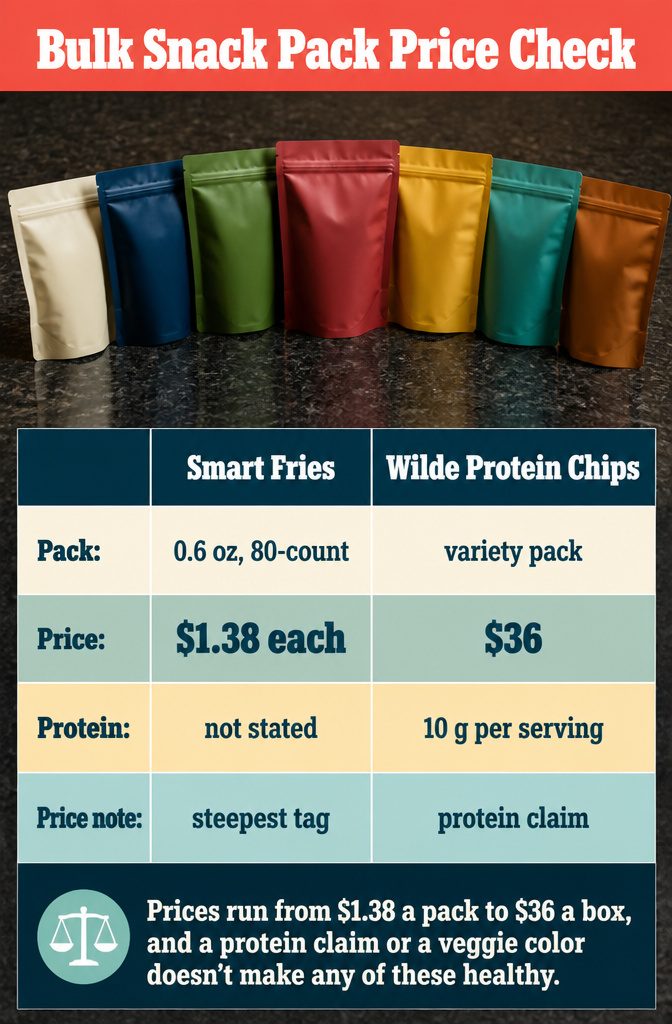
Prices run from $1.38 a pack to $36 a box, and a protein claim or a veggie color doesn’t make any of these healthy.
| Product | Pack | Price |
|---|---|---|
| Smart Fries | 0.6 oz, pack of 80 | $1.38 each |
| Skippy Protein | 1.58 oz bag | $2.27 |
| Ranch Veggie Straws | 5.5 oz bag | $8.16 |
| Chomps | 10-pack | $25 ($18 on sale) |
| Wilde Protein Chips | variety pack | $36 |
| Seven Sundays PB Puffs | variety pack | $16 ($9 at Target) |
| Spirit Almond | 6-pack | $15 |
Wilde’s $36 is the steepest tag, though each serving carries 10 grams of protein. Costco’s Lay’s (1 oz, 50-count) and Cheez-It (1.5 oz, 45-count) are chips and crackers, so compare labels before you load the cart.
Frequently Asked Questions
What are some healthy snacks I can eat when I have munchies?
Air-popped popcorn, edamame, vegetables with hummus, fruit with nut butter, and hard-boiled eggs are all filling options that keep you satisfied without loading up on calories.
Popcorn gives you volume and fiber for about 40 calories per cup, while edamame delivers 18 g of protein and 8 g of fiber per cup. Pair any of these with a source of protein or fiber to avoid grazing an hour later.
Where can I buy snacks in bulk?
Costco, Sam’s Club, Amazon, and Walmart all carry multipacks and large bags of nuts, crackers, protein bars, and chips.
Buy the larger bag and portion it into snack-sized containers at home to save the most money. Store brands like Walmart’s Great Value line usually cost less than name brands for the same product.
What are some high calorie snacks for bulking?
Mixed nuts run about 175 calories per ounce, trail mix is similarly dense, and dates stuffed with nut butter pack around 4 g of fiber and protein into 2 dates plus 1 tablespoon of nut butter.
Cheese with whole-grain crackers, cottage cheese with fruit, and hummus with pita also deliver more calories per serving than vegetables or air-popped snacks. Watch your portions if weight management is the goal, since these add up fast.