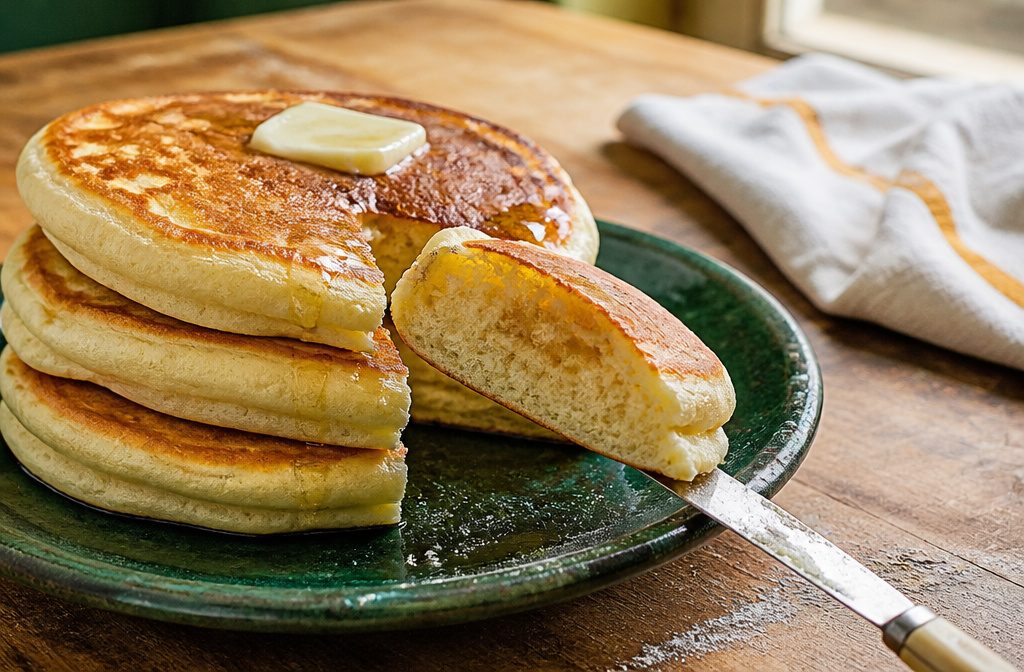
These pancakes are soft and fluffy, ready in 13 minutes from five pantry staples, with no baking powder or baking soda to measure.
The condition: the flour must be self-rising. Plain all-purpose turns out flat, closer to crepes than stacks, unless you whisk in 1½ teaspoons of baking powder per cup.
Ingredients for 12 Pancakes
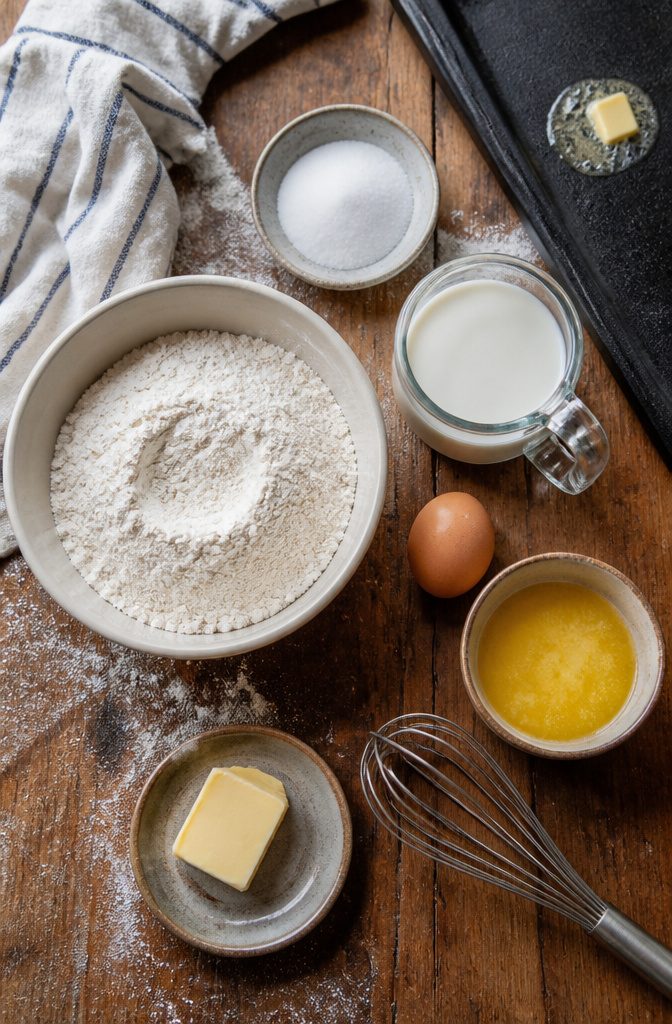
Five pantry staples make 12 pancakes, with no baking powder or baking soda to measure.
- 2 cups self-rising flour (it must be self-rising, not all-purpose)
- 1 tablespoon sugar
- 1¾ cups whole milk
- 1 egg
- 3 tablespoons butter, melted
- 1 tablespoon butter for the griddle
Time and equipment:
- Yield: 12 pancakes
- Prep: 5 minutes
- Cook: 8 minutes
- Total: 13 minutes
- Tools: griddle or skillet, whisk, spatula
How to Make the Pancakes
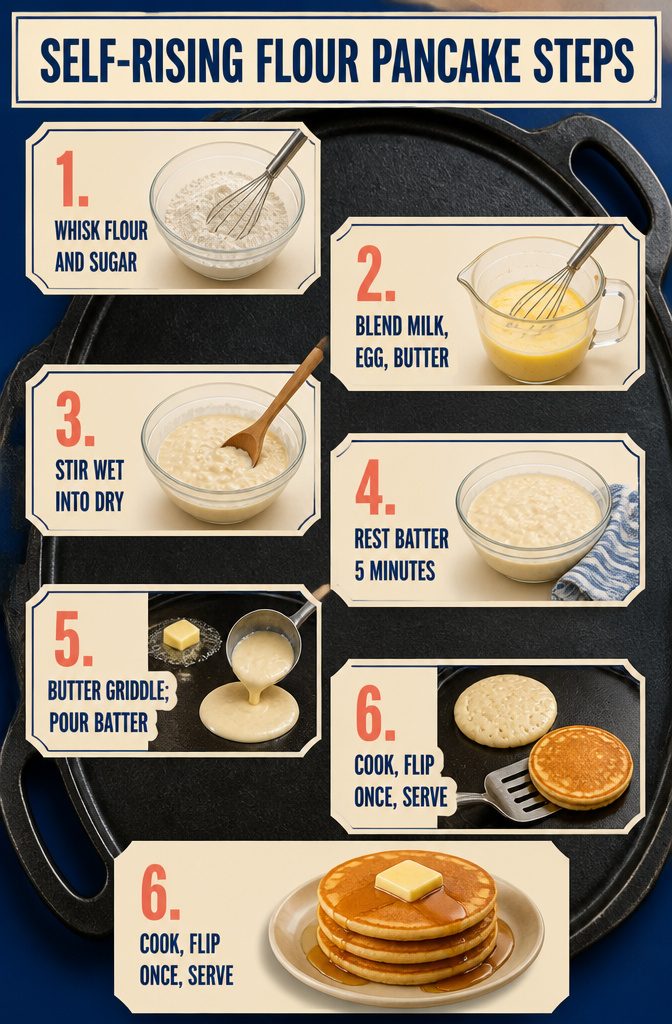
- Whisk the self-rising flour and sugar together in a large bowl.
- In a second bowl or liquid measuring cup, whisk the milk, egg and melted butter until fully blended.
- Pour the wet mixture into the dry and stir just until combined. Small lumps should still show.
- Let the batter rest about 5 minutes while the griddle heats to medium.
- Butter the griddle. Pour ¼ cup of batter for small pancakes or ½ cup for large, leaving space between them.
- Cook 2–3 minutes, until bubbles rise through the top and the edges look dry.
- Flip once, without pressing down, and cook until the second side is golden.
- Serve hot, or hold finished pancakes on a baking sheet in a low oven while you cook the rest.
Why Self-Rising Flour Works
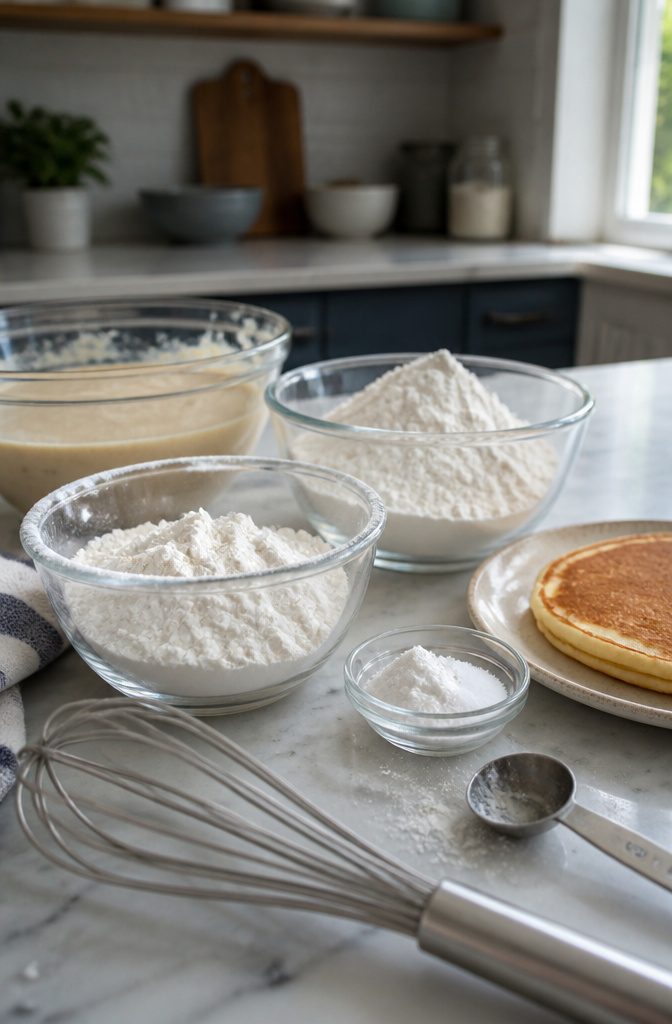
Self-rising flour is all-purpose flour with baking powder and a little salt already mixed in, so the base batter needs no separate leavening.
That is why a pancake batter built on it can get by with flour, sugar, milk and eggs.
Plain flour is not a 1:1 swap.
Use all-purpose flour with nothing added and the pancakes come out flat, closer to crepes than stacks. If all-purpose is what you have, whisk in 1½ teaspoons of baking powder per cup of flour.
Baking soda shows up only where buttermilk does.
The recipe with 1½ cups of self-rising flour adds ¼ teaspoon of baking soda to react with the buttermilk, yogurt, or the milk-and-vinegar stand-in. A plain-milk batter doesn’t need it.
Mix Just Until Combined
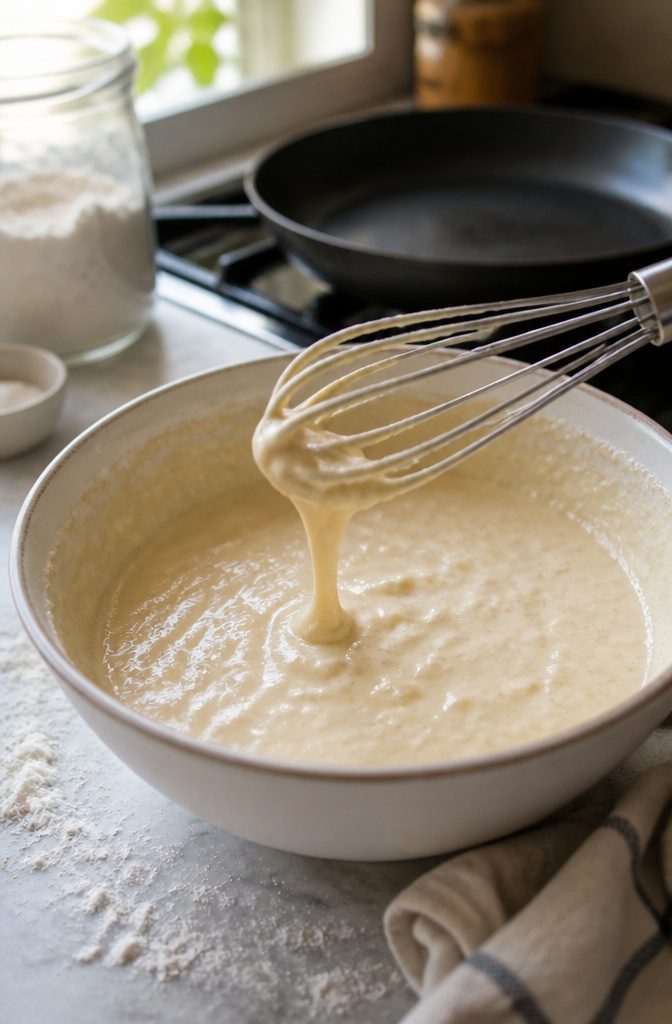
Pour the wet ingredients into the dry and stir only until no dry flour shows.
A few small lumps are fine, and they cook out on the griddle. Overmixing is what makes pancakes tough, dense and firm, so stop sooner than feels tidy.
Some recipes whisk the batter smooth.
Skip that here. A smooth batter takes more stirring, and the extra stirring is what costs you the soft, fluffy crumb.
If the batter is too thick to spread, add 1 tablespoon of milk at a time.
If it runs thin, add 1 tablespoon of flour. Stir just a few strokes after each addition and check the batter before you add more, so the fix doesn’t turn into another round of overmixing.
Rest the Batter 5 Minutes
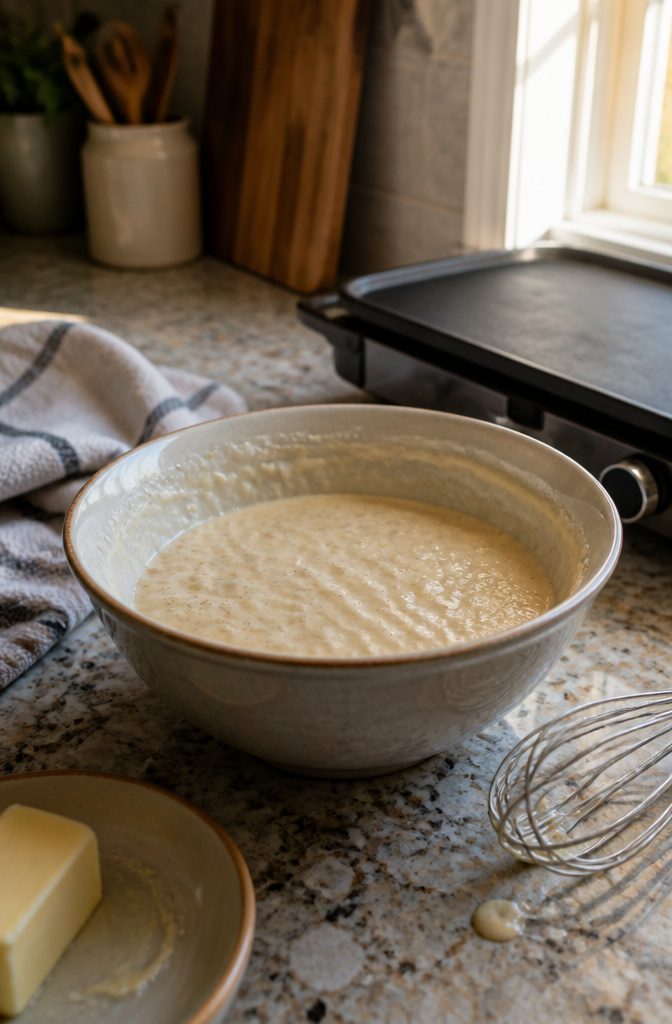
Once you’ve stirred the batter, let it rest for about 5 minutes before you start cooking. That pause gives the leavening in the self-rising flour time to activate and form the air bubbles that make the pancakes fluffy.
It also lets the dry and wet ingredients fully come together without any extra stirring that would toughen the texture.
The 5-minute window fits neatly into the time you need to heat your griddle to the right temperature, so nothing goes to waste.
Some recipes call for resting as long as 10 minutes, but keeping it closer to 5 strikes the right balance.
Wait too long and the leavening can start to lose its power before the batter even hits the pan, leaving you with flatter pancakes than you planned for.
When to Flip
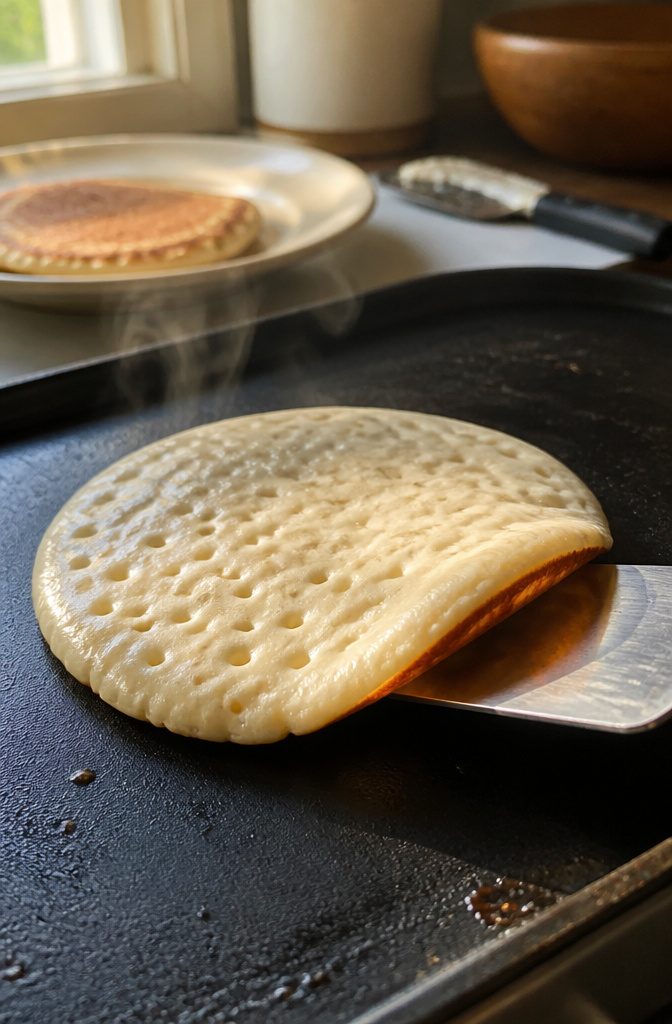
Watch the surface, not the timer.
In the base recipe, flip when bubbles have risen across the top and the edges look dry and set, which usually takes 2–3 minutes at medium heat. Lift a corner to check: the underside should be golden.
Other recipes call for 1–2 minutes per side, or for griddles set to 350°F, 375°F or 375°F–400°F. Heat, pan material and pancake size all shift the timing, so the clock is only a rough guide.
The second side usually goes faster, sometimes in as little as 1 minute.
Leave the pancake alone after it flips. Pressing it with the spatula pushes out the air that makes it fluffy and leaves a dense, flat disk.
Flour and Milk Substitutions
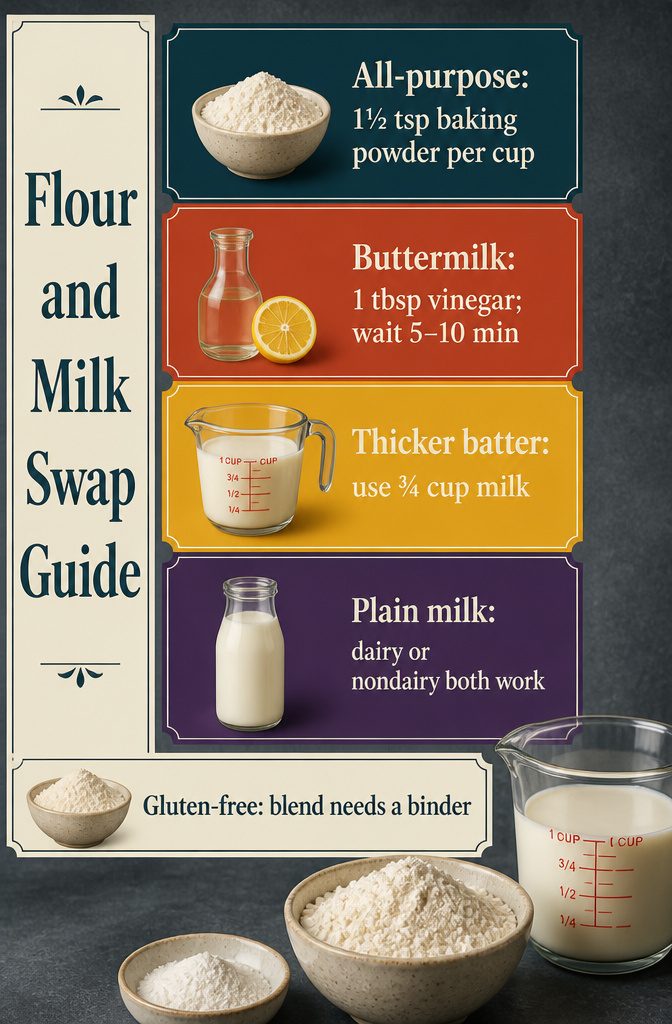
Each swap changes the batter differently, so adjust per recipe.
- All-purpose flour: add 1 or 1½ teaspoons baking powder plus ¼ teaspoon salt per cup. For 2 cups, that’s 3 teaspoons baking powder and ½ teaspoon salt. Whisk well so the leavening spreads evenly.
- Buttermilk: stir 1 tablespoon white vinegar or lemon juice into a measuring cup, add milk to reach 1 cup, and let it sit 5–10 minutes until it thickens and curdles.
- Thickness: buttermilk is thicker than milk, so a full cup of plain milk makes runny batter. Use about ¾ cup milk plus 1 tablespoon vinegar or lemon juice instead.
- Plain milk: dairy or nondairy both work.
- Gluten-free: combine 1 cup gluten-free blend that includes a binder (xanthan or guar gum), 1½ teaspoons baking powder, and ½ teaspoon salt. Double it for a full batch. Bob’s Red Mill 1-to-1 works well.
Add-Ins and Toppings
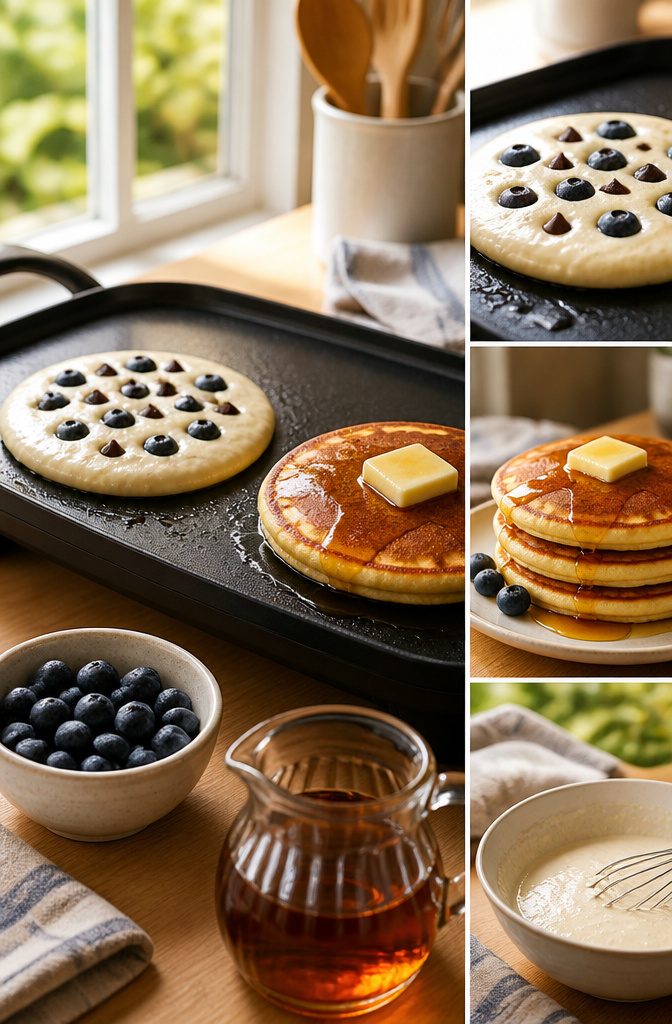
For a batch of 12 pancakes, ⅓ cup of chocolate chips or ½ cup of berries stirred into the batter is plenty.
You can go up to 1 cup of chips or blueberries for loaded pancakes, but expect more of them to pop loose when you flip.
Fresh or frozen berries both work. For spice, use 1 teaspoon of cinnamon, nutmeg or pumpkin spice, or ½ to 1 teaspoon of vanilla.
Better yet, skip the bowl.
Pour the batter onto the griddle, then press chips or about 5 blueberries into each pancake before you flip it. Everyone gets the add-in they want, and a plain pancake or two is easy to keep for picky eaters.
Butter and maple syrup are the default for good reason. Honey, jam, whipped cream or sliced banana work if you want a change.
Storing and Freezing Leftovers
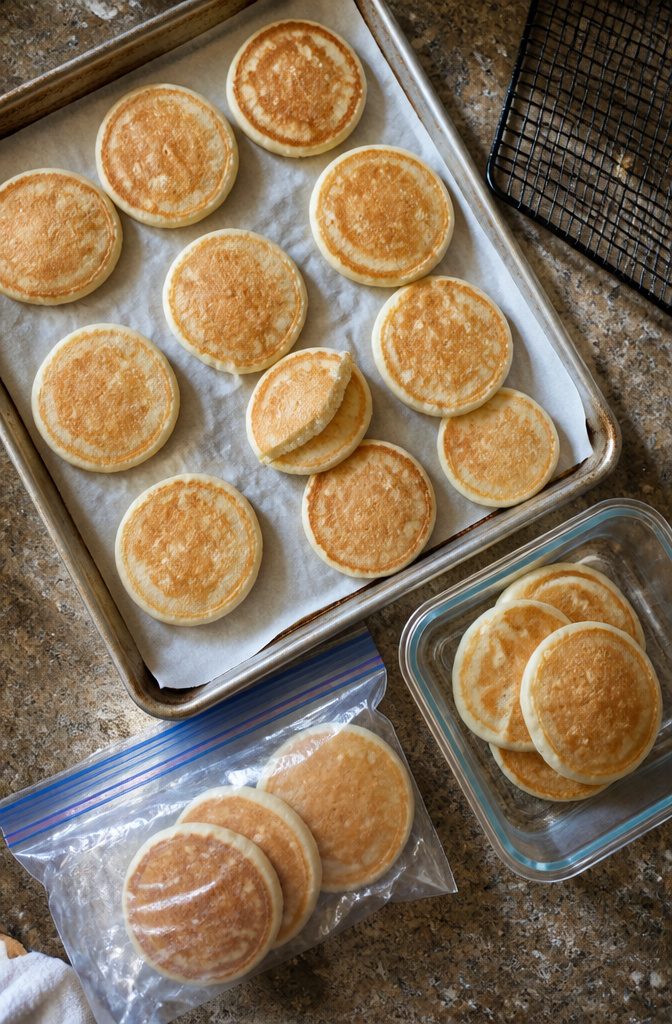
Cool the pancakes completely before packing, then pick your storage:
- Fridge: Stack them in an airtight container for 3–4 days. Treat day 5 as the outer limit.
- Freezer, step one: Spread the pancakes in a single layer on a parchment-lined baking sheet. Freeze for 30 minutes to 1 hour, until firm, so they don’t fuse into one block.
- Freezer, step two: Move them to a freezer bag with the air pressed out. They keep up to 3 months.
- Reheating from the fridge: Microwave in 30-second bursts until hot.
- Reheating from frozen: Microwave for 1 minute, then continue in 30-second bursts. A toaster oven also works if you want slightly crisper edges.
Fixing Flat or Tough Pancakes
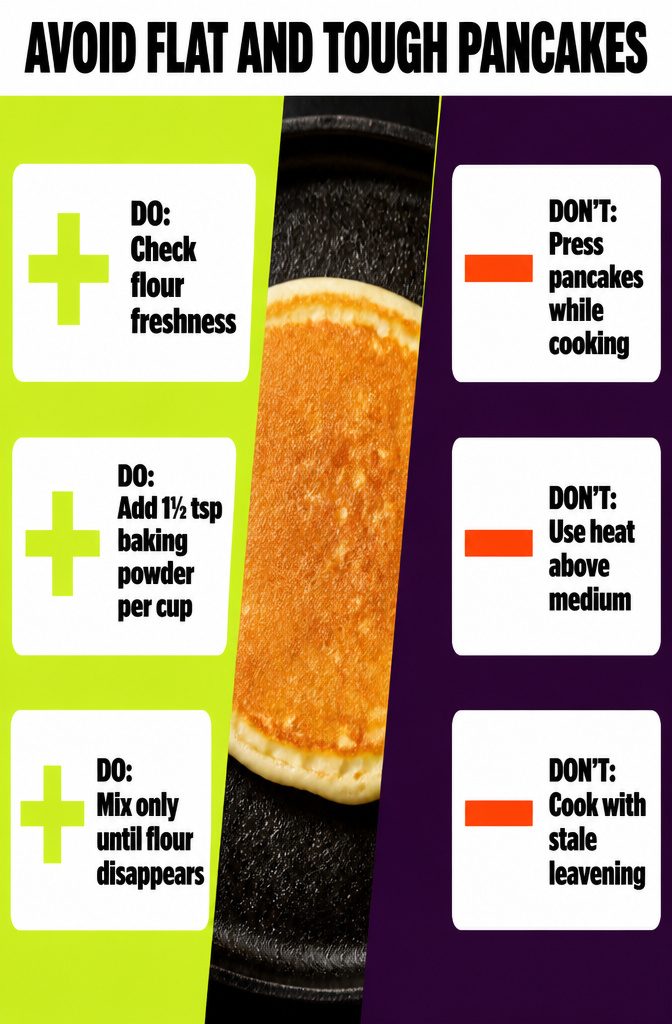
Most flat pancakes come from expired self-rising flour or baking powder that has lost its power.
Check the date on the bag before you mix, and if the flour has been open for more than six months, replace it. When the leavening agent is stale, you lose the air pockets that give pancakes their lift.
Using plain all-purpose flour without adding baking powder will also give you flat, crepe-like pancakes. If you only have all-purpose flour on hand, add 1½ teaspoons baking powder per cup of flour to replace what self-rising flour already contains.
A few cooking habits flatten good batter:
- Overmixing develops gluten and turns light pancakes tough and dense. Mix just until the flour disappears, lumps and all.
- Pressing down on pancakes with your spatula while they cook squeezes out all the air you just created.
- Heat that is too high browns the outside before the center cooks through, leaving you with burnt edges and a raw middle. Keep your skillet between medium-low and medium.
Frequently Asked Questions
What is the best easy pancake recipe with self-rising flour?
It makes 12 pancakes in about 13 minutes, with no baking powder or baking soda to measure. Stir just until combined and rest the batter for 5 minutes for the fluffiest stack.
Can you make pancakes with self-rising flour?
Yes. Self-rising flour (also sold as self-raising flour) is all-purpose flour with baking powder and a little salt already mixed in, and that baking powder creates the air pockets that make pancakes rise.
The flour alone won’t make a batter, though. This recipe adds milk, an egg, sugar and butter.
Why are my pancakes not fluffy?
The most common cause is old self-rising flour or baking powder that has lost its lift, so replace flour that has been open for more than 6 months.
Overmixing, pressing the pancakes with the spatula, and heat set too high will also flatten or toughen them. Stir only until the dry flour disappears, flip once without pressing, and keep the heat between medium-low and medium.
What if my pancake batter is too thick or too runny?
For thick batter, stir in 1 tablespoon of milk at a time.
For thin batter, add 1 tablespoon of flour. Use only a few strokes after each addition so the fix doesn’t turn into overmixing.
A runny batter can also come from using a full cup of plain milk in a recipe written for buttermilk; use about ¾ cup milk plus 1 tablespoon vinegar or lemon juice instead.
Can I double this pancake recipe?
Yes. Double every amount: 4 cups self-rising flour, 2 tablespoons sugar, 3½ cups whole milk, 2 eggs and 6 tablespoons melted butter.
That makes 24 pancakes. Cook them in batches and keep the finished ones on a baking sheet in a low oven.
How do I make perfectly round pancakes?
Pour the batter into a squeeze bottle and dispense it from one spot on the heated pan, so it spreads outward evenly. Measuring the same amount for each pancake, such as ¼ cup, keeps the sizes consistent.
What can I use if I don’t have eggs?
Readers of one pancake recipe suggest bananas or applesauce in place of the egg. This recipe was written and tested with the egg, so the texture may come out different.
What toppings go on pancakes?
Butter and maple syrup are the classic pair.
Honey, jam, whipped cream, sliced banana, berries and chocolate chips all work too. For add-ins cooked into the pancake, press chips or about 5 blueberries onto each one right after pouring.
How long do pancakes last in the fridge?
Cooled pancakes keep 3–4 days in an airtight container, and day 5 is the outer limit. Let them cool completely before stacking so steam doesn’t make them soggy.
Can you freeze pancakes?
Yes, for up to 3 months.
Cool them completely, spread them in a single layer on a parchment-lined baking sheet, and freeze 30 minutes to 1 hour until firm. Then move them to a freezer bag with the air pressed out.
How do you reheat pancakes?
From the fridge, microwave them in 30-second bursts until hot.
From frozen, microwave for 1 minute, then continue in 30-second bursts. A toaster oven also works if you want slightly crisper edges.