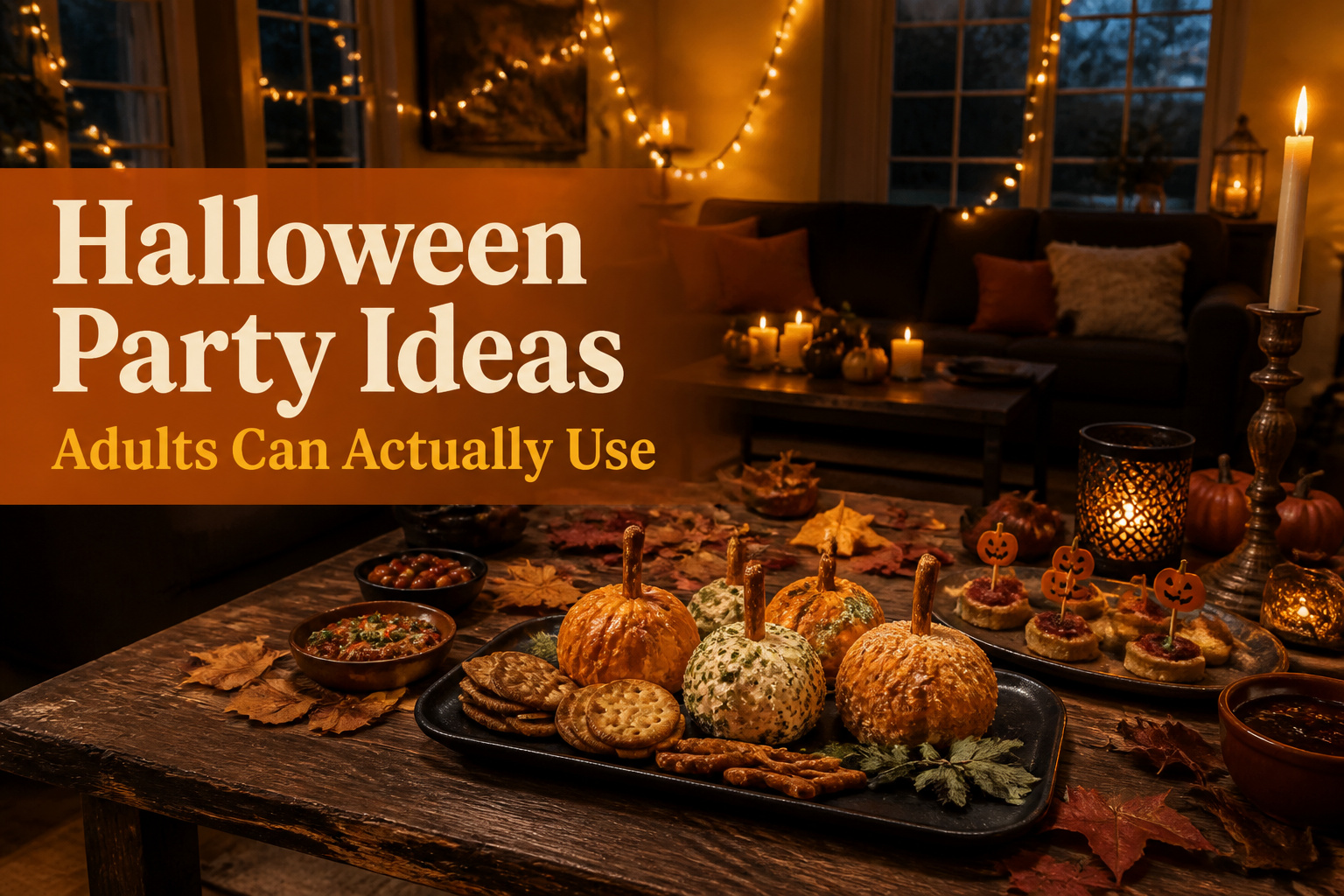
The difference between a Halloween party adults remember and one they endure comes down to a single decision: whether you choose a theme and actually follow it through the drinks, the light, and the volume of the music.
Most hosts skip this, and the room goes flat by nine.
The ones who don’t, the ones who hand out ballots for five costume categories and let guests vote as the night unfolds, are the ones who get the repeat guests.
1. Themed Parties
A theme turns a Halloween party from a costume obligation into an evening that makes sense. Pick one thread and run it through every decision, from the invitation to the last drink, and your guests feel the difference.
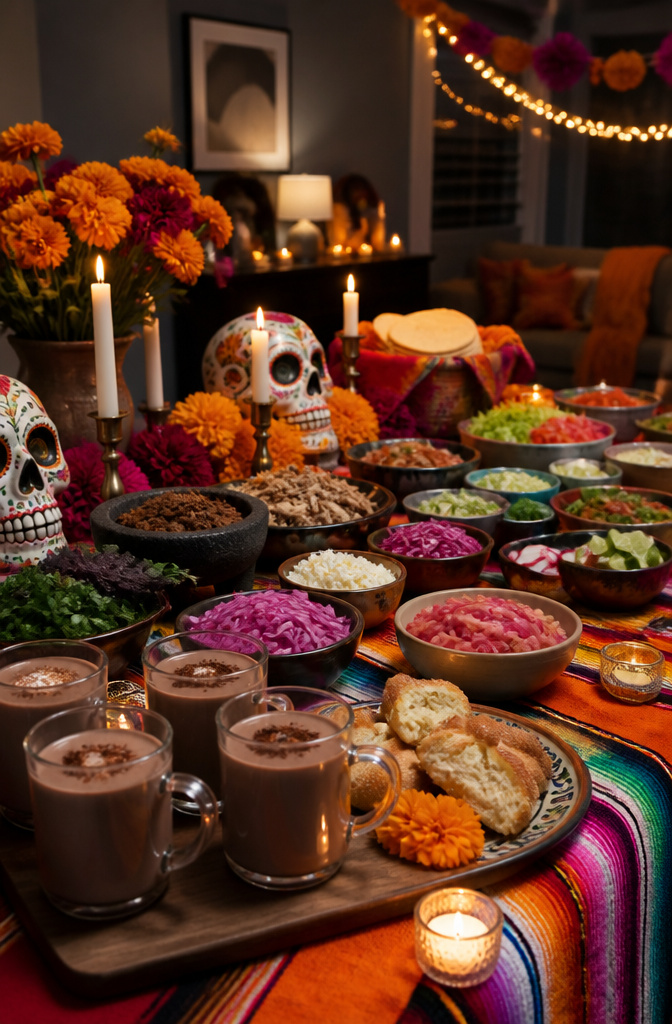
A Día de los Muertos gathering builds on marigolds, sugar skulls, and candles.
You set out a taco bar with pickled vegetables and smoky meats, offer Mexican hot chocolate and pan de muerto, and skip the macabre for something celebratory.
A Haunted Masquerade goes the other direction: guests arrive in masks, you dim the lamps, and the music stays elegant and slightly off, old standards mixed with something unexpected like traditional Turkish music.
Pop Culture Halloween lets everyone come as a favorite character from a show or a meme, and the conversation starts itself.
"When you’re throwing a party, if you want to make it memorable, you need to consider all of the senses… Consider sight, sound, smell, touch, and taste."
That means the candle you light, the texture of the napkins, the playlist volume at arrival, all of it belongs to the theme you chose.
Veteran event designer Douglas Little recommends keeping the thread tight: one signature drink, one white and one red if you serve wine, or a single cocktail so guests are not paralyzed by choice.
Cheese and preserves bridge savory and sweet without the candy bowl, and you can pull the whole spread together from a standard grocery run.
2. Costume Contests
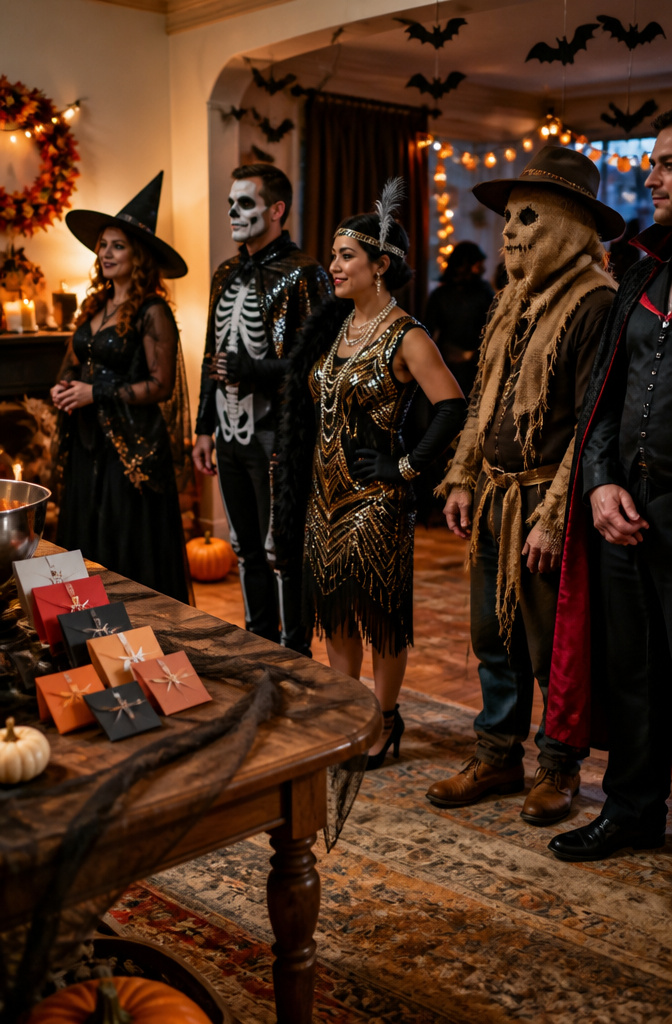
A costume contest only works if people know what they are actually competing for.
Set five categories upfront: "Scariest," "Funniest," "Best Couple Costume," "Most Creative," and "Best DIY."
Spreading the prizes this way means the guest who threw on a store-bought superhero suit is not competing against someone who spent three weeks building a functioning puppet.
The categories themselves shape what walks through your door.
Prizes do not need to be elaborate. Themed gift cards work, or something tied to the category: a craft-store card for Best DIY, a movie pass for Best Couple.
A prize on the line keeps the energy up.
For judging, skip the panel of whispering friends in a corner. Hand out ballots at the door and let guests vote as the night goes on, or run a quick parade once most people have arrived.
Close the voting window after thirty minutes so nobody is standing around waiting. Announce winners fast, hand over the prizes, and get back to the party.
The contest is a ten-minute burst of energy, not a production that halts the evening.
3. Themed Food and Drinks
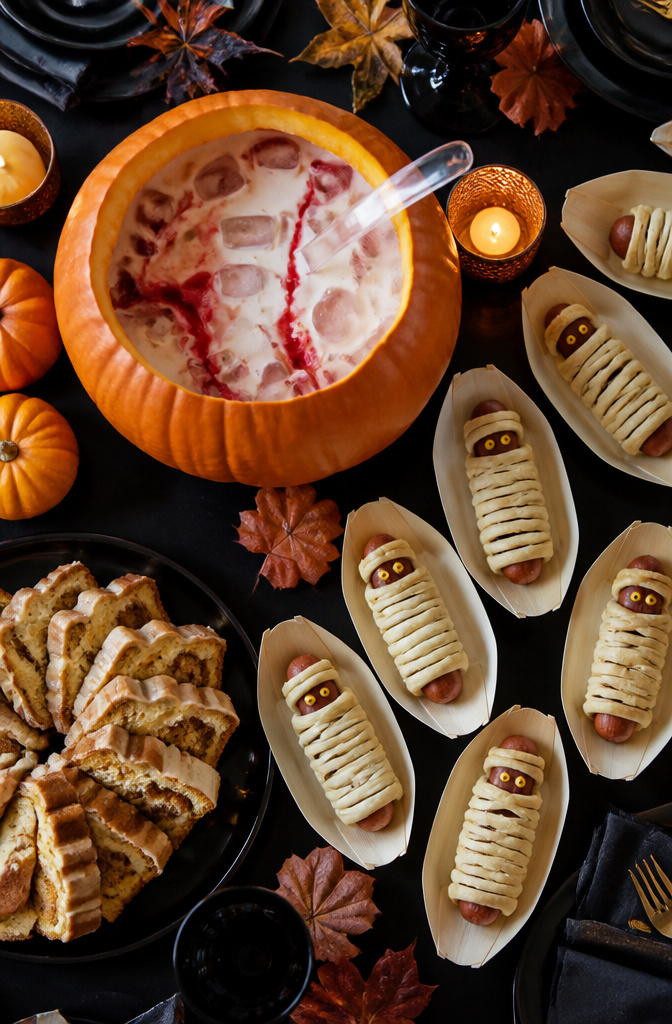
Food is where a Halloween party for adults either commits to the bit or feels like a kids’ table with better lighting.
You want options that read as seasonal without requiring a pastry chef or a run to a specialty market.
For drinks, set out a Witches’ Brew Punch that works as a mocktail or a base for spirits. Mix one quart lemon-lime soda, one quart ginger ale, two cups orange juice, one cup pineapple juice, and one cup grenadine.
The grenadine sinks and streaks red through the pale mix, which does the visual work for you. Serve it from a hollowed pumpkin if you want the effect without buying a prop cauldron.
On the food side, balance the inevitable sugar rush. A Milk Bar Pumpkin Coffee-Cake Cake covers the sweet end with something more interesting than frosted cupcakes, and it gives guests a talking point if they know the brand.
Pair it with something savory: mummy-wrapped hot dogs get mentioned because they actually work as grab-and-go fuel, not because anyone thinks they look elegant. Food that takes effort to photograph gives people a reason to linger.
Skip the floating eyeball ice cubes unless you genuinely want to prep them. Most adults will forgive a drink that just tastes good.
4. Interactive Games
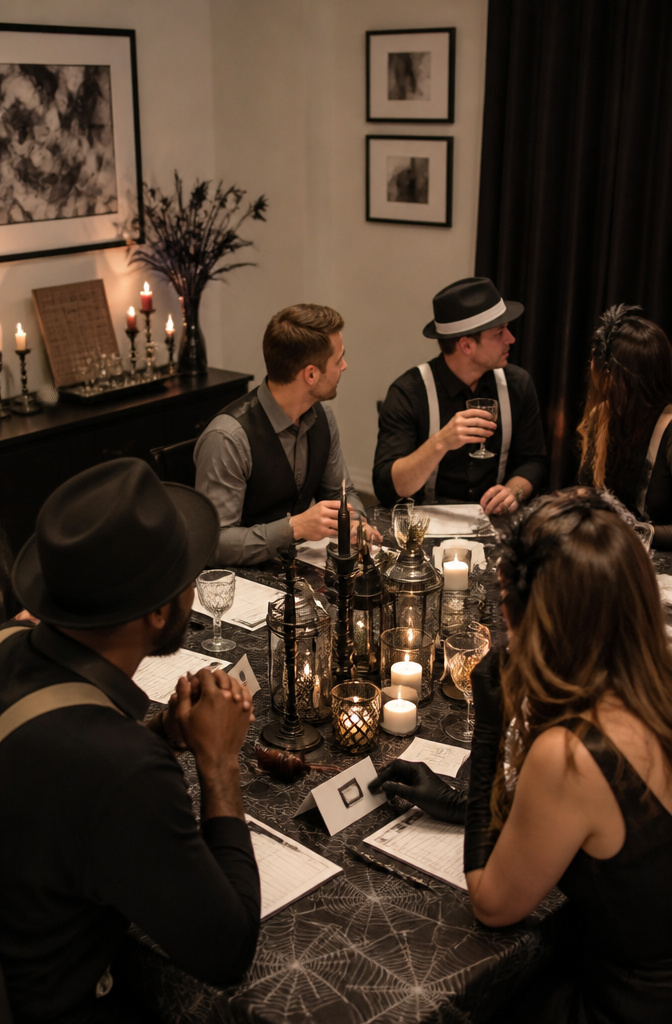
Murder mystery dinners work because they give every guest a job. Each person gets a secret role with its own objectives, and the whole table spends the evening talking through clues, alibis, and red herrings to solve a fictional murder.
You can run it with printed character sheets and handwritten note cards, or use a shared digital board where players post evidence and track suspects in real time.
Either way, the game starts the moment people sit down, so there is no awkward waiting for the energy to build.
A Halloween trivia challenge pulls the same trick on a faster clock. Split guests into teams and have them answer questions about horror films, folklore, and holiday history.
For a competitive edge, keep a running scoreboard everyone can see.
Movie-specific trivia cards work well as a side activity: write questions about classic Halloween films on one side and answers on the other, then scatter them on tables or turn them into a head-to-head exchange where guests quiz each other.
Scavenger hunts get people moving without leaving the party. Hide small Halloween trinkets around your space and let guests hunt in teams or alone.
The search gives strangers something to talk about and keeps the room from clustering into static groups.
Combine it with costume contests or photo areas and you have a night where guests are doing something every twenty minutes, not just standing near the snack table.
5. DIY Decorations and Crafts
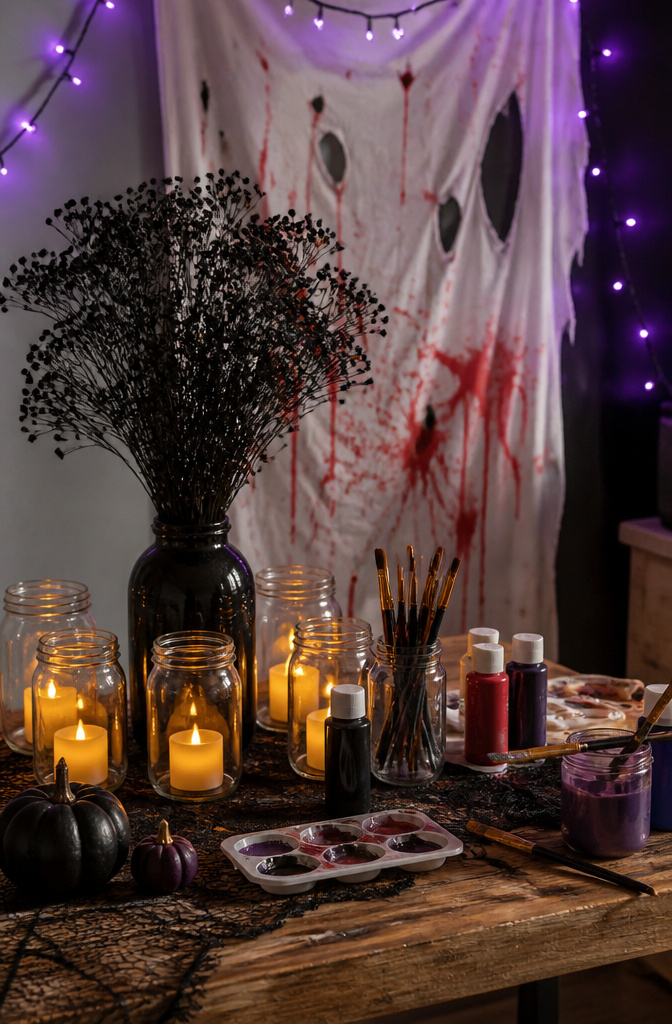
Spray paint dried baby’s breath black and drop it into a vase you already own. The stems stay wiry and architectural, and the whole thing reads haunted-house florist rather than craft-store clearance.
If you want something lower, fill mason jars with LED candles from the grocery store; the flicker does the work, and you are not stuck babysitting real flame all night.
For centerpieces, skip the plastic bones unless you are willing to hunt neon paint.
A faster route is the bedsheet trick: cut holes, splatter red paint in streaks rather than pools, and hang it behind the table where the light hits it.
Pair that with purple or orange string lights from a general store, and you have a backdrop that costs less than a premade banner and stores flat afterward.
The one prop that earns its space is dry ice, but only if you have a punch bowl or cauldron to set it in.
A fog effect that spills across the table works once; after that, you are chasing refills and watching guests back away from the cough. Use it for the first hour, then let the LED candles carry the mood.
6. Photo Booths With Props
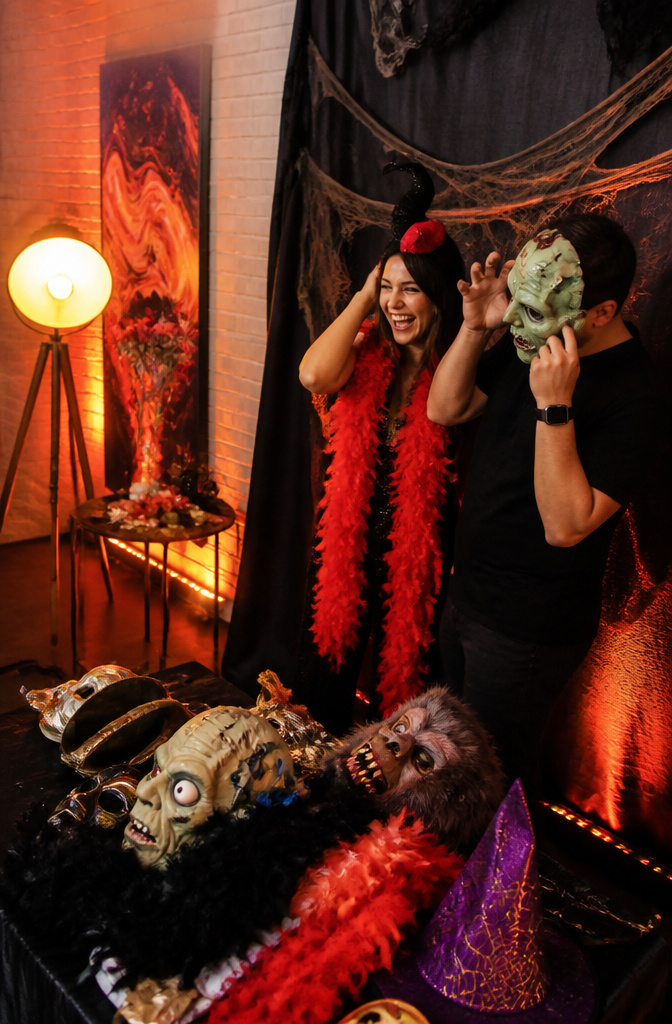
A phone on a tripod is the only equipment you need for a photo booth that actually gets used.
Guests take their own shots, which means you are not chasing anyone down for photos later or paying a photographer to stand in the corner of your living room.
The backdrop can be as simple as a curtain or a bare wall. What makes it work is the box of props you set out: monster masks, vampire teeth, witch hats, feather boas, and plastic glasses.
These are the things people grab without planning, and those unplanned shots are usually the ones they keep.
What you gain in atmosphere, you lose in visibility. A wall near a lamp works; a dark hallway does not.
If your best wall is dim, move a floor lamp behind the phone and angle it toward the backdrop.
The color wash from a cheap orange or purple bulb, the kind sold at any general store this time of year, covers a lot of setup sins and reads as intentional Halloween atmosphere rather than workaround.
Cleanup is a box back in the closet. No rented backdrop to return, no deposit.
7. Spooky Music Playlists
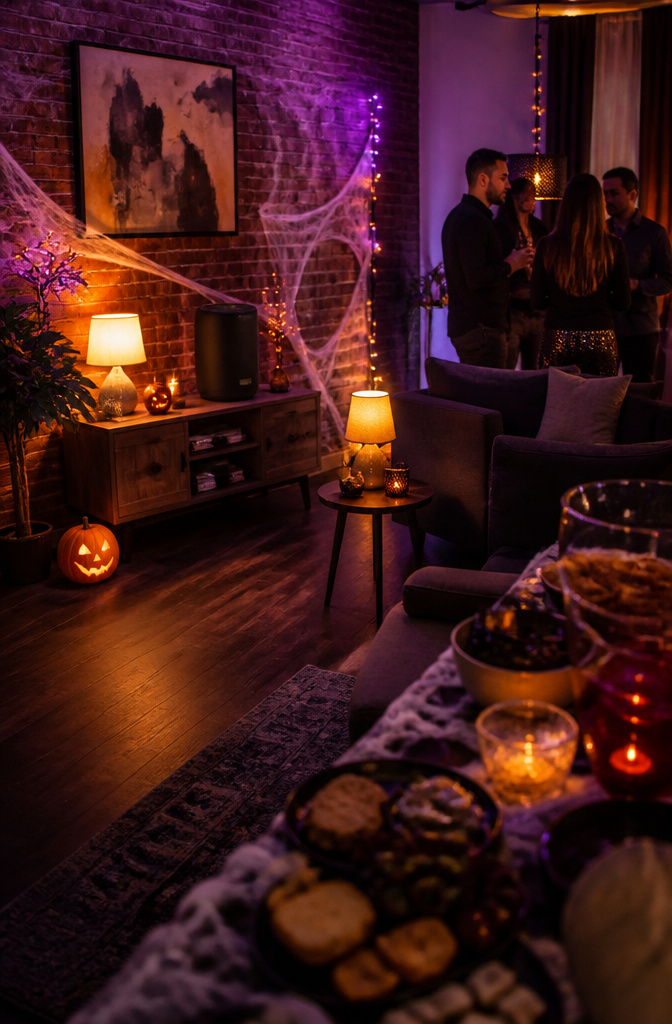
Music is the sense most hosts forget, and it shows. You have spent an hour on the cheese plate and the lamp dimmers, but if you queue a generic streaming station, the room goes flat.
Build a Halloween playlist yourself, or it will not match the night.
When the music shifts from background to foreground makes the difference. For the first hour, keep the volume low enough that guests can hear the candle crackle and their own introductions.
Old standards work here: "Monster Mash" once, because someone will ask for it, then let it rest.
Mix in something unexpected, like traditional Turkish music or a spare horror-film score, so the mood stays strange without turning into a haunted-house ride. When the energy shifts toward dancing, raise the volume and switch to upbeat tracks.
Keep the transition smooth; a dead silence between a bossa nova cover of "Thriller" and a pulsing synth track kills the room faster than no music at all.
If you want conversation, treat the playlist like scent: present, but only noticed when it is gone.
8. Pumpkin Carving and Apple Bobbing
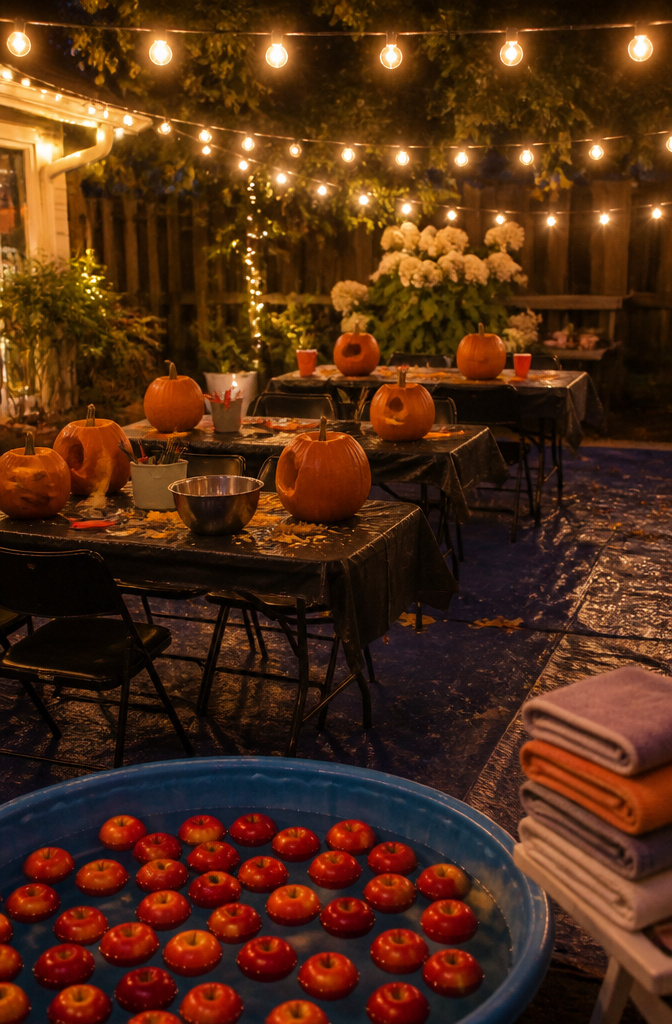
Seventy percent of adult Americans plan to celebrate Halloween, which means most of your guests are already looking for an excuse to do something besides stand around with drinks.
Pumpkin carving competitions and apple bobbing still work, but only if you restructure them for people who will leave if they feel ridiculous.
For the carving competition, have guests bring their own pumpkins and tools so you are not sourcing fifteen gourds and a knife set.
Set a firm deadline, then let everyone vote by walking past the finished designs with a sticky note in hand. Small prizes keep it competitive: gift cards, a bottle of wine, or just the pumpkin itself to take home.
The mistake is turning it into a timed sprint. Adults want to talk while they work, so budget two hours and let people arrive with a partially cleaned pumpkin if they want.
Apple bobbing needs more intervention. Fill a bowl or small inflatable pool with water, float five apples, and let guests go at them with teeth only.
Blindfolding a guest and having a teammate call directions adds a layer that feels silly on purpose rather than by accident.
The setup that saves you: lay down a tarp you can roll up afterward, keep towels stacked nearby, and move the whole thing outside if your climate allows.
The regret comes when someone soaks your kitchen floor at nine PM and you have no plan for it.
Virtual Options for Remote Guests
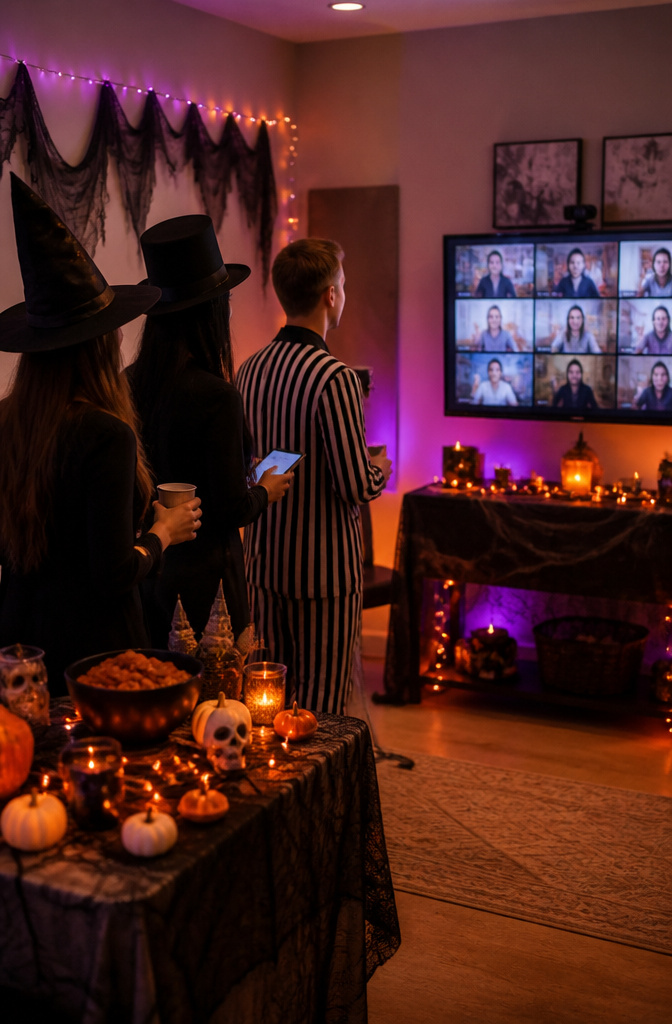
Not everyone who wants in can make it to your living room, and pretending otherwise is how you end up with a phone propped on a chair while someone shouts "can you hear us" into the cheese dip.
The fix is to run the virtual parts before the in-person party starts, not during it.
Set up a costume contest on a digital board where remote guests upload photos and vote by a deadline that lands an hour before your doorbell rings.
Categories like Scariest, Funniest, Most Creative, and Best DIY give more people a reason to play, and a fixed voting window keeps it fair across time zones.
The board stays live after winners are announced, so stragglers can still scroll the entries.
For trivia, the same rule applies: run a quick online round earlier in the week, or keep it entirely among remote guests while your in-person group does something physical.
If you do mix streams, assign one person to manage the screen and mute by default. Remote guests see the room; the room does not spend the night seeing the back of a laptop.
Adding a Charity Drive
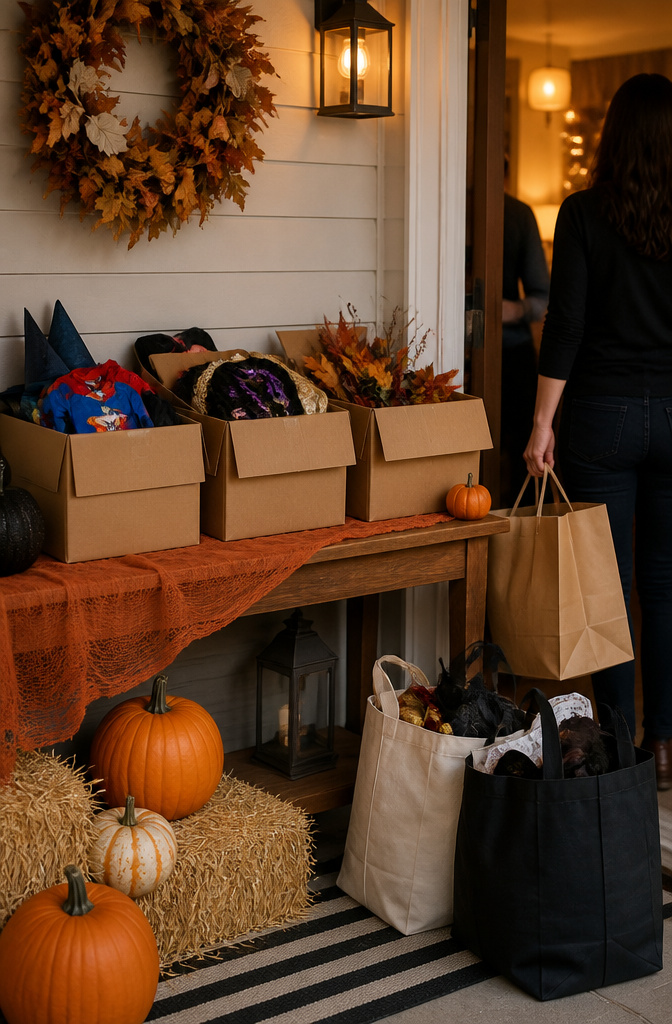
A costume or prop drive turns the clutter of Halloween into something another family can actually use. Ask guests to bring one gently-used item: a wig, a plastic scythe, a dress-up cape.
You are not running a full donation center; you are clearing their closet while they drink your punch.
The work belongs to the charity, not to you. Call a local shelter, school, or community center a week ahead and confirm they accept these items.
Ask how they want them sorted. Most will handle pickup the next day, which means you are not storing garbage bags of witch hats in your guest room.
Set a single table near the door. Label three cardboard boxes if the charity gave you categories: kids’ costumes, adult costumes, decorations and props.
Guests drop items on arrival. One person at the party will ask if they can get a receipt for tax purposes; the answer is no, because you are not the nonprofit, and that ends the conversation.
Skip the recognition board. Adults do not need their names posted for donating a vampire cape they have not touched since 2019.
The absence of performance is what makes this feel genuine rather than corporate.
What 70 Percent of Adults Already Know
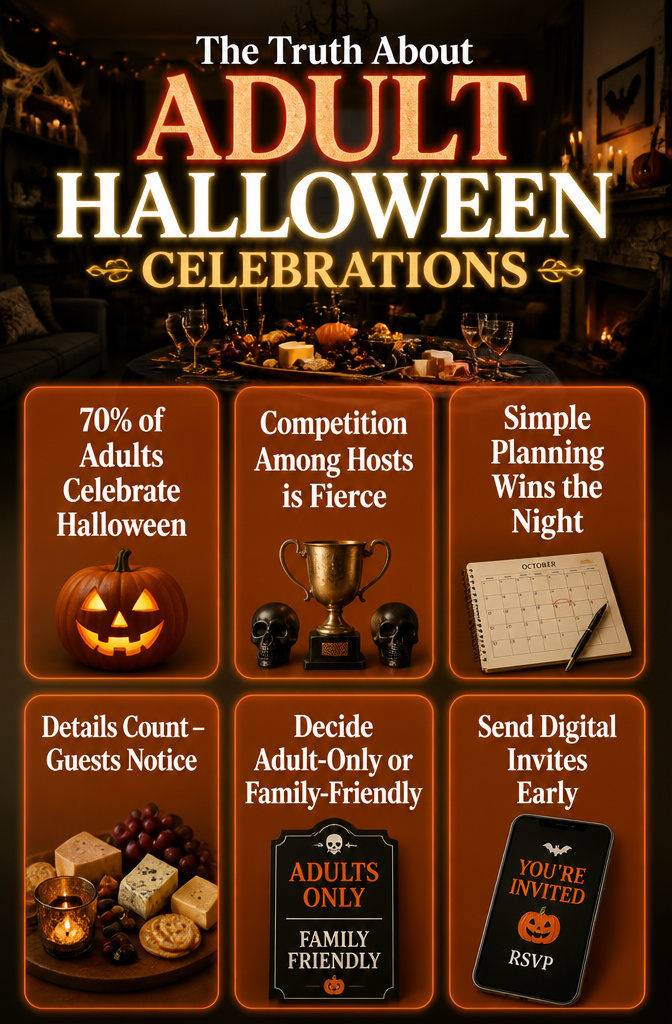
Seventy percent of adult Americans plan to celebrate Halloween this year, which means most of your friends already have somewhere to be and are comparing invitations. That statistic turns every group text into low-key competition.
The host who spent three weekends on Pinterest-level decor is running on resentment by 9 p.m., while the one who bought decent cheese and actually sat down usually gets the repeat guests.
The pressure to host is real because the pool is deep. Adults who want to celebrate outnumber the easy options, so someone in every circle ends up volunteering their living room.
The mistake is treating that volunteer slot like a performance review. Sources back this up in their own way: one notes that competition in the event-hosting space is fierce, another that thorough planning matters but checklist-for-checklist’s-sake does not.
What they agree on is that the little details add up, but only the ones guests notice.
Simple planning wins because it leaves you functional enough to enjoy your own party.
Start with a date that works for your actual people, send a digital invite early enough that they have not committed elsewhere, and decide upfront whether this is kid-friendly or adults-only so you are not improvising boundaries at the door.
The rest is decoration in both senses: nice if it fits your evening, expendable if it does not.
The Cleanup Reality
Monday morning hits different after a Halloween party. You will find glitter in the dishwasher for three days.
You will find it in the shower, in the toaster, ground into the kitchen grout.
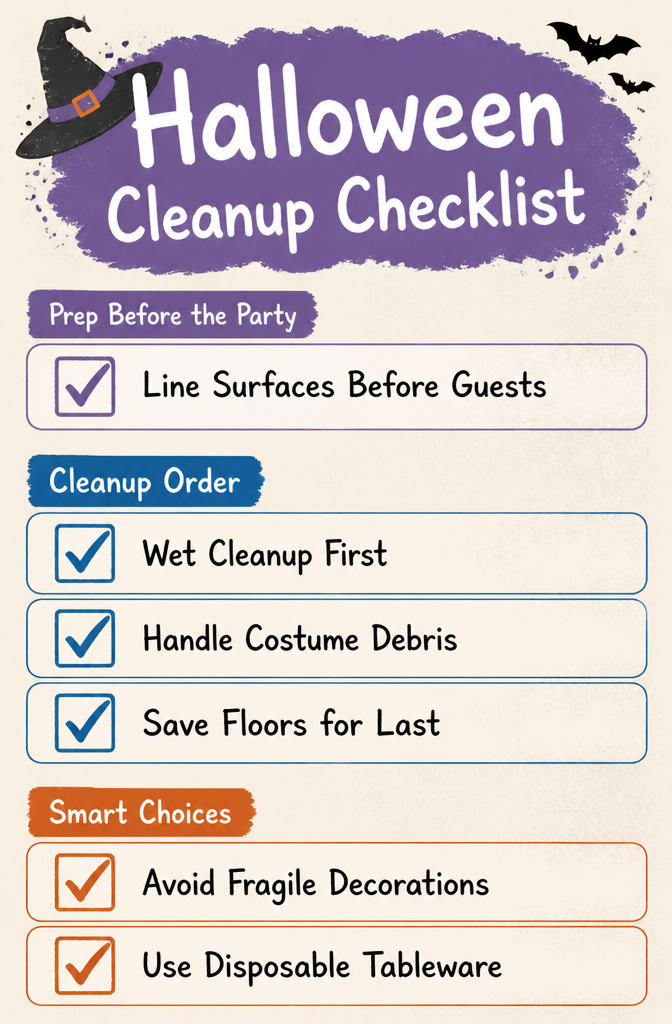
Line every surface you can before the first guest walks in, because that punch with the dry ice and the lychee eyeballs leaves a film that sets like syrup on countertops.
Start the cleanup order with the wet stuff. Punch bowls, drink rings on the coffee table, the bathroom someone used while still wearing their zombie mask.
Those go first because they get harder, not easier. Costume debris is next: fake blood smears, the feather that came off someone’s angel of death wings, the eyelash glue crusted on the bathroom sink.
Save the floors for last, or you will vacuum the same glitter three times while tracking new sticky footprints across it.
The real savings come from what you skip. Skip the crepe paper streamers that shred when you pull them down.
Skip the fake spider webs that tangle in curtain rods. A tablecloth you can gather up and bin beats a centerpiece that has to be disassembled piece by piece.
If you are serving red punch, you already know which cup it is. Do not use your good ones.
Grocery-Store Substitutions
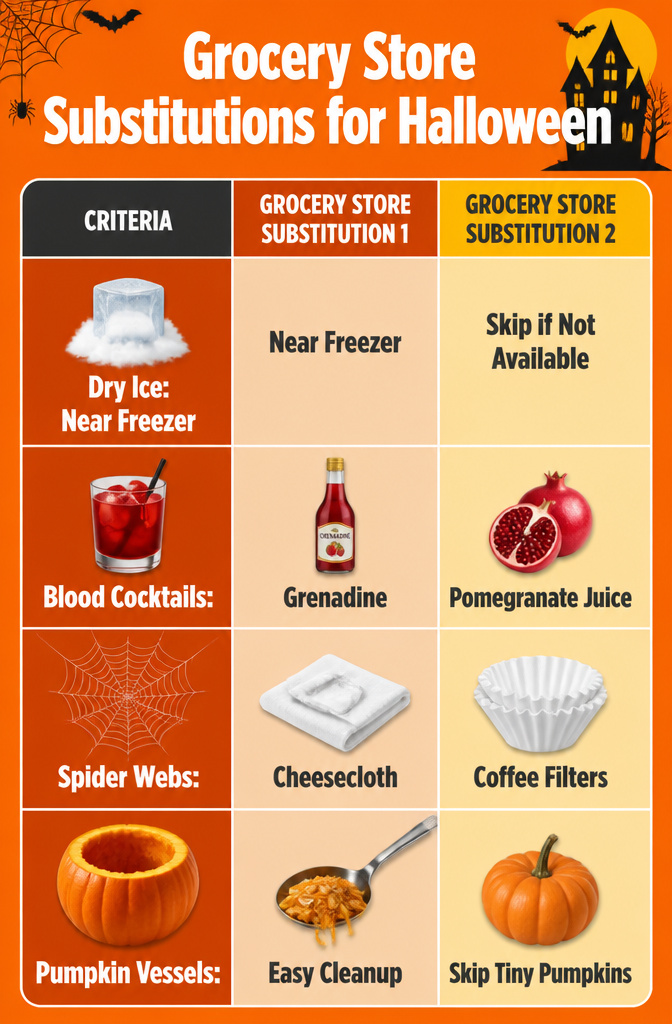
Everything you need for an adult Halloween party should come from a grocery store you already drive past.
Dry ice for fog effects sits near the front freezer in most supermarkets, usually beside the regular ice. If your store does not stock it, skip it.
A few cheap LED tea lights behind gauzy cheesecloth gives the same low glow without the burn risk or the special trip.
For blood-themed cocktails, grenadine works better than theatrical syrups. It is already in the mixer aisle, it tastes like something, and it washes out of clothes.
Pomegranate juice does nearly the same job if you want less sweetness.
Cheesecloth, the secret to decent-looking spider webs, hides in the baking section near the aluminum foil. Buy the cheapest grade; the tighter weave looks less convincing, not more.
Coffee filters torn into strips and lightly stained with watered-down soy sauce substitute well enough if the store is out.
Pumpkin guts make excellent serving vessels for dips. The insides scrape clean in about three minutes with a sturdy spoon, and the shell goes straight to compost when the night ends.
Skip the tiny ornamental pumpkins; they cost more per ounce and hold almost nothing.
Frequently Asked Questions
What are some fun Halloween party ideas for adults?
The strongest adult Halloween parties run on a single theme carried through every detail, from the invitation to the playlist.
Costume contests with five set categories, interactive murder mysteries or trivia, and a DIY photo booth with props all give guests something to do besides stand near the snack table.
Grocery-store ingredients like grenadine for drinks and cheesecloth for spider webs keep the work manageable.
How can I make my Halloween party more interactive?
Hand guests a job the moment they arrive. Murder mystery dinners give each person secret objectives and clues to trade, while scavenger hunts hide small trinkets around your space so strangers have a reason to talk.
A quick costume parade with ballots for voting, or blindfolded apple bobbing with a teammate calling directions, keeps people moving and laughing without forcing small talk.
What food should I serve at a Halloween party?
Set out a Witches’ Brew Punch made from lemon-lime soda, ginger ale, orange juice, pineapple juice, and grenadine so it streaks red through the pale mix without theatrical syrups.
Balance the sugar with savory grab-and-go options like mummy-wrapped hot dogs, and add one standout dessert like a Milk Bar Pumpkin Coffee-Cake Cake that gives guests a real talking point.
Skip the floating eyeball ice cubes unless you genuinely enjoy the prep.
How do I set up a Halloween photo booth?
A phone on a tripod is all the equipment you need; guests take their own shots, so you are not chasing anyone down later.
Use a simple wall or curtain as the backdrop, then set out a box of masks, vampire teeth, witch hats, and plastic glasses for unplanned shots that people actually keep.
Move a floor lamp behind the phone if the wall is dim, and swap in a cheap orange or purple bulb from any general store so the light reads as intentional atmosphere.