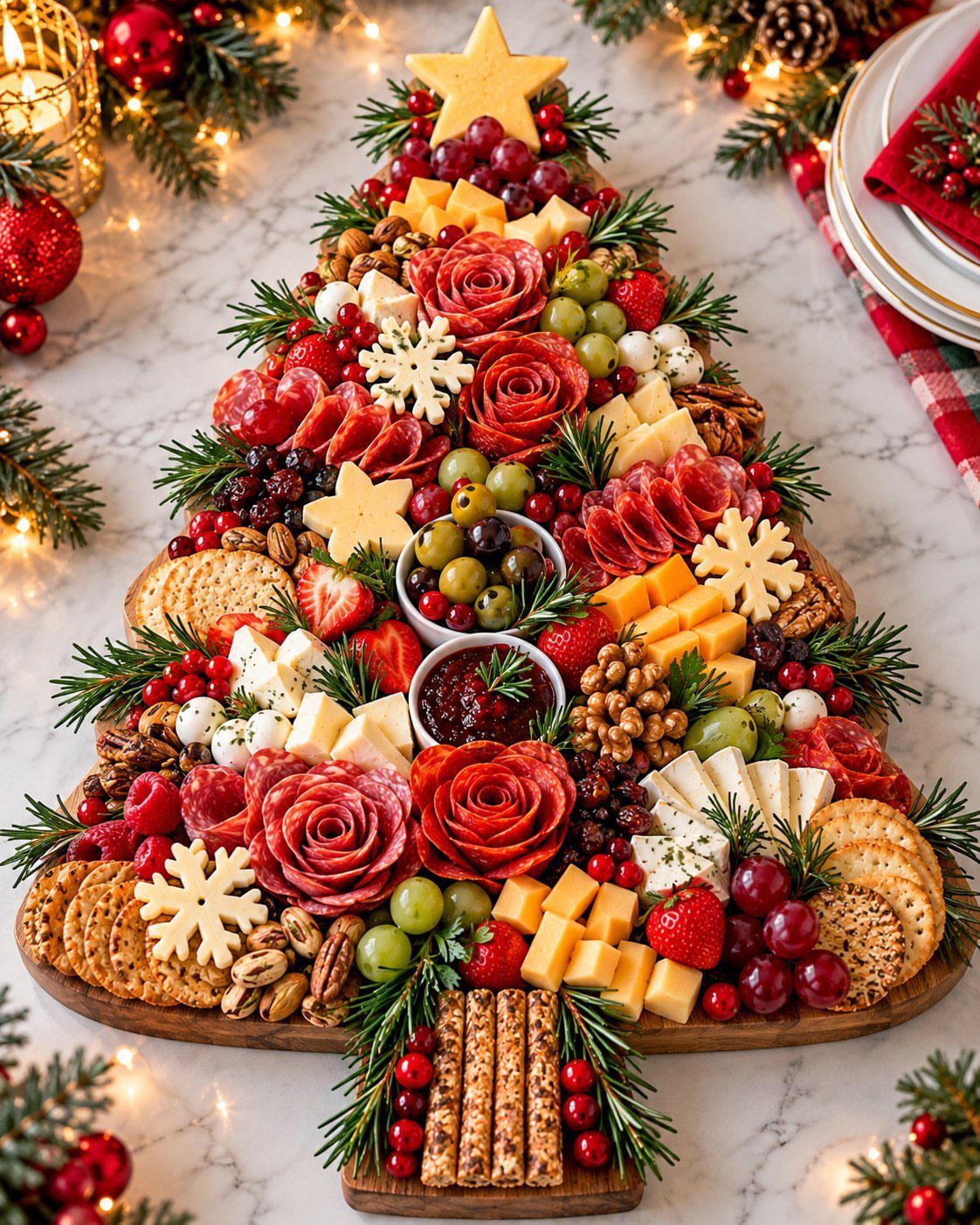
These boards range from a small dish of cornichons or sliced soppressata to a Santa face or a chessboard built from cheese and cured meat.
Shaped boards like the Santa face, the chessboard, and the Christmas tree plate need their outline settled before the first slice, while the olive wreath, the summer skewers, and the vegetables around a dip work with a looser layout.
For any style, 3 meats, 3 cheeses, and 3 crackers or breads make a good first count to buy.
1. Crunchy Vegetables and Dip
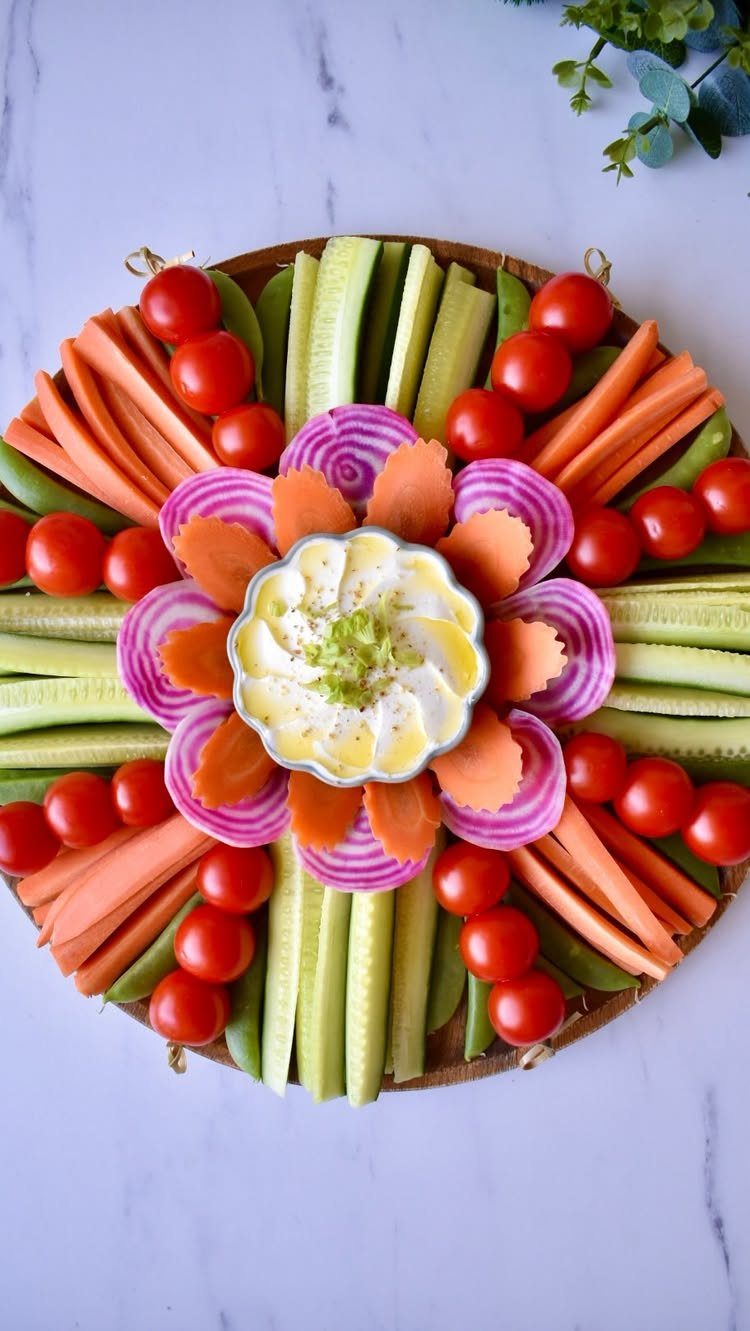
Cream cheese works as a dip when you loosen it with a drizzle of olive oil, add a little pepper, and scatter chopped celery over the top.
Set the bowl in the center and fan the carrots, cucumbers, radishes, and cherry tomatoes around it in separate groups, so each color gets its own patch.
Cut the cucumbers and carrots into sticks or rounds, and leave the radishes and tomatoes nearly whole.
This is the board to put out next to a heavier spread, since it keeps the table from feeling all meat and cheese.
2. Olives and Antipasti Wreath
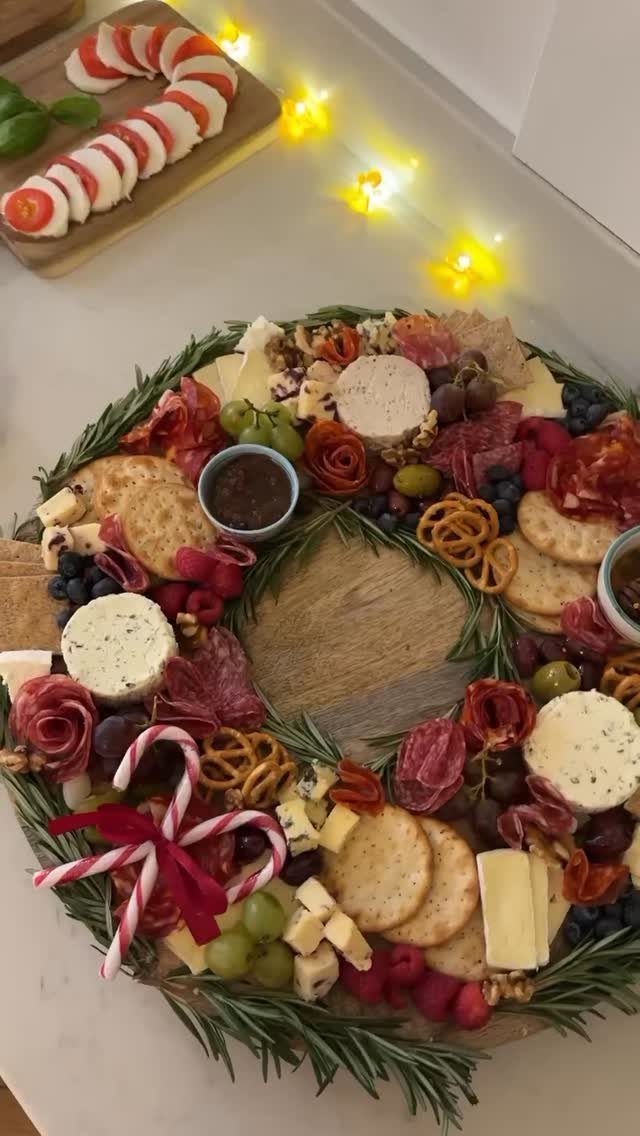
A wreath shape turns a plain antipasti board into a holiday centerpiece. Build it on a round board or platter, leaving the middle open for a small bowl or a candle in a jar.
Lay rosemary sprigs around the ring first, so they read as evergreen branches, then tuck meats, cheeses, and fruit in over them. Folded salami and small cheese cubes fill gaps better than large slices.
Rosemary is for looks here, though you can eat it. Lay the rosemary down before anything else goes on the board, so the sprigs stay fresh and green under the meats, cheeses, and fruit.
3. Cheese, Fruit and Nut Board
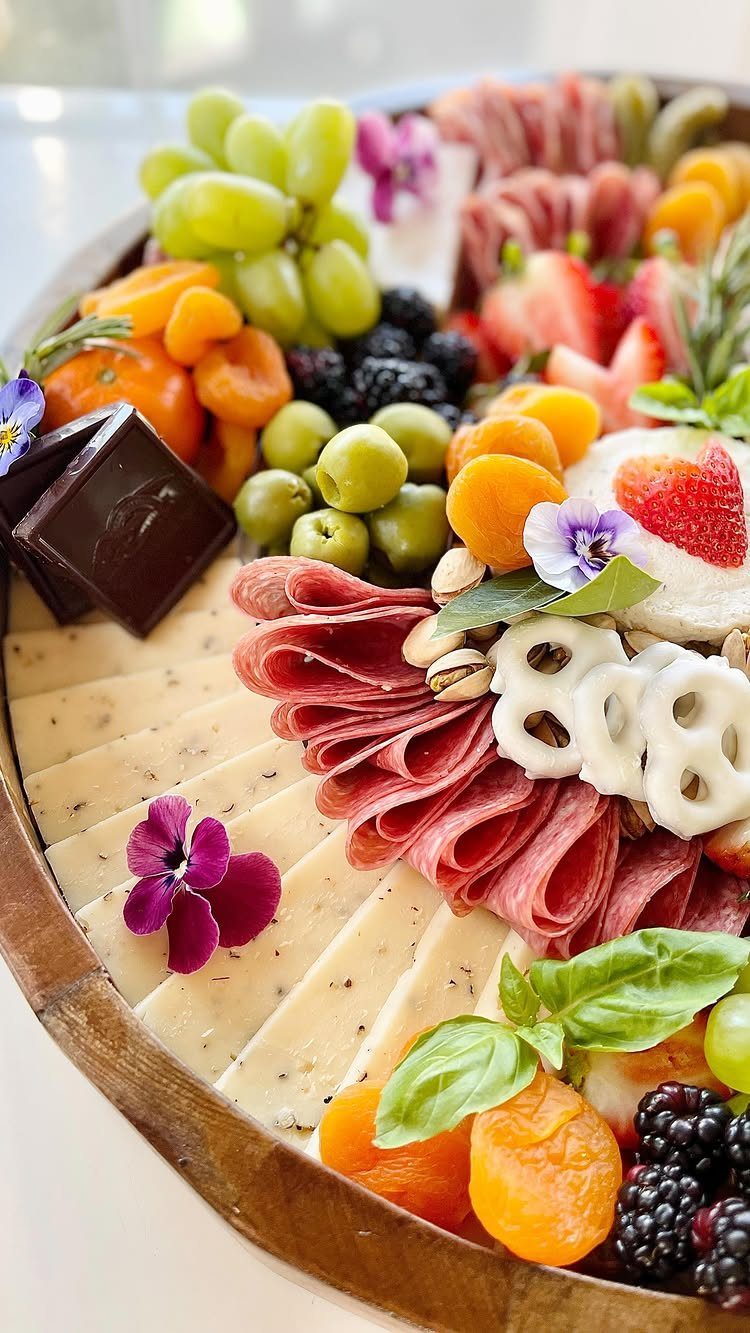
Four cheeses, three meats, one dip, fresh fruit, dried fruit, nuts, and chocolate fed 6–8 people for $85 on one home-built board. That is a workable budget for a snack-style gathering.
Chocolate and white-chocolate pretzels bring a sweet note that most boards skip, and they cost little. Dried apricots do the same job as fresh fruit with a longer shelf life, so you can buy them days ahead.
Spend the money on the cheeses, since they take up the most space. Fill the gaps with grapes, berries, and olives, and add edible flowers if your store carries them.
4. Sliced Soppressata
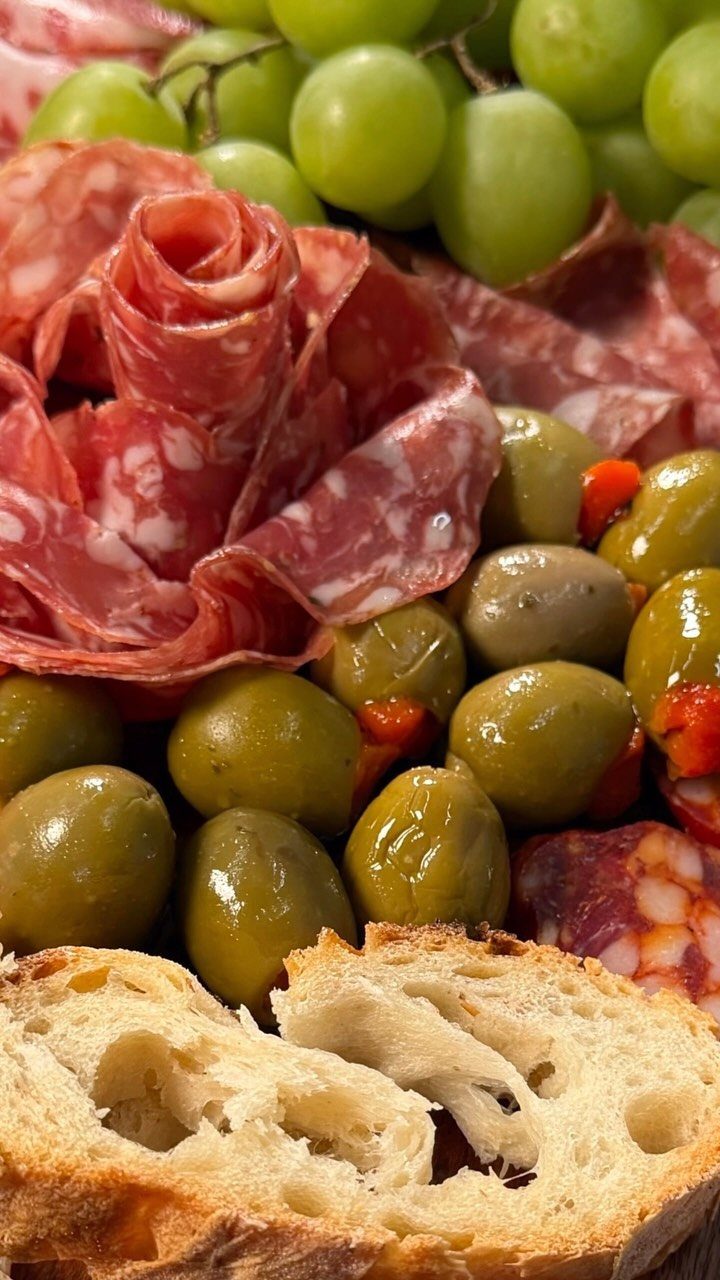
Soppressata is a seasoned pork salami from Southern Italy, and its firm slices roll into a rose with no tools at all.
Fold each slice in half, then fold again, and stand the pieces in a tight circle, overlapping them like petals.
Start from the outside with a ring of folded slices and keep stacking inward.
Press the last one into the center. A small glass set in the middle helps hold the shape while you build.
The salty meat needs something mild beside it.
5. Salmon Rillets
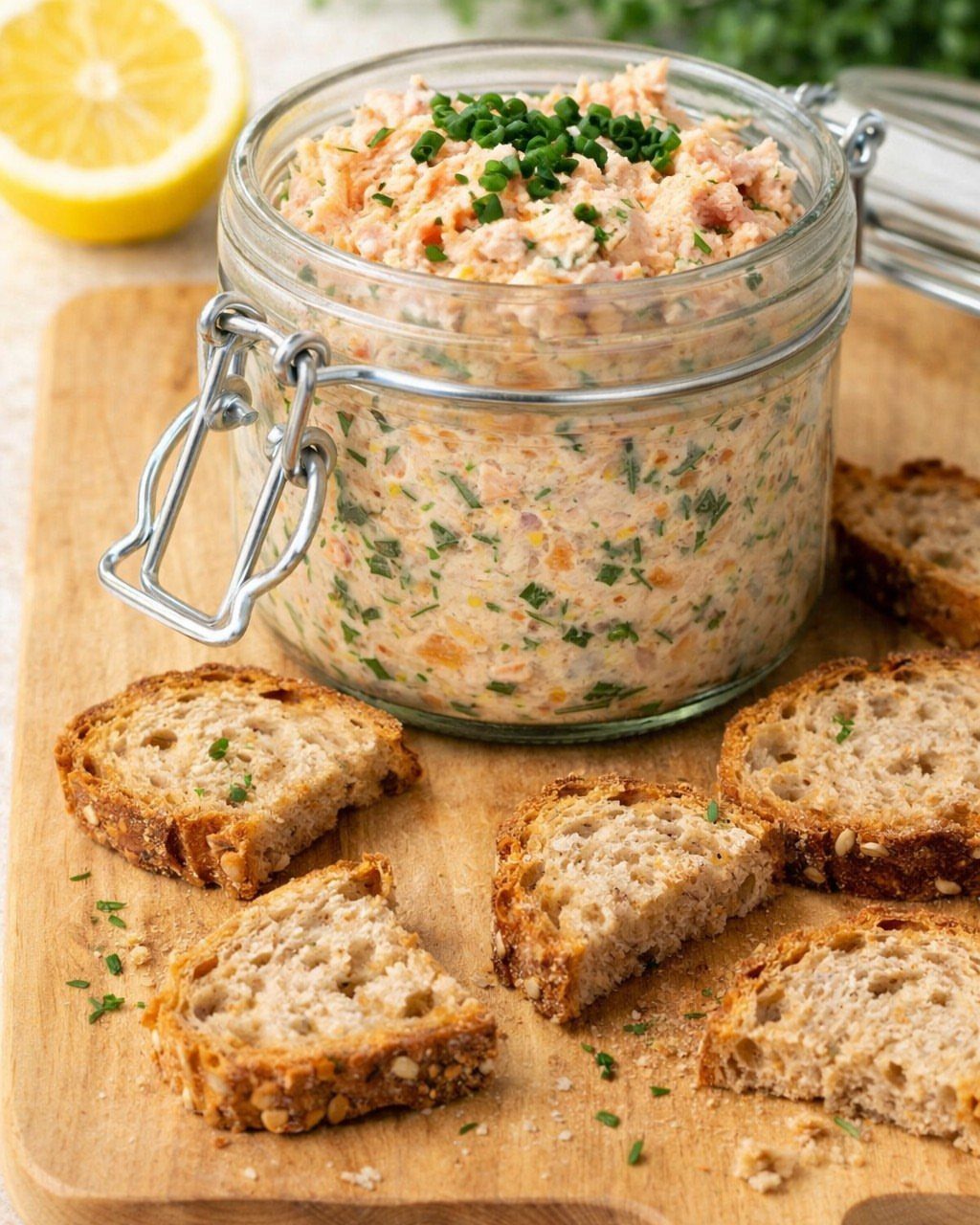
Rillettes is a traditional preservation method, and the salmon version spreads like pâté. Packed into a small glass jar, it looks finished before you add anything else.
Scatter chives on top for color.
Toast slices of bread until crisp, since soft bread tears under a thick spread. Put a lemon half on the board so guests can squeeze it over each bite; the acid cuts the richness.
Set the jar on one side of a wooden board with the toast fanned out beside it. A small spreading knife on the side lets people help themselves.
6. Sliced Prosciutto
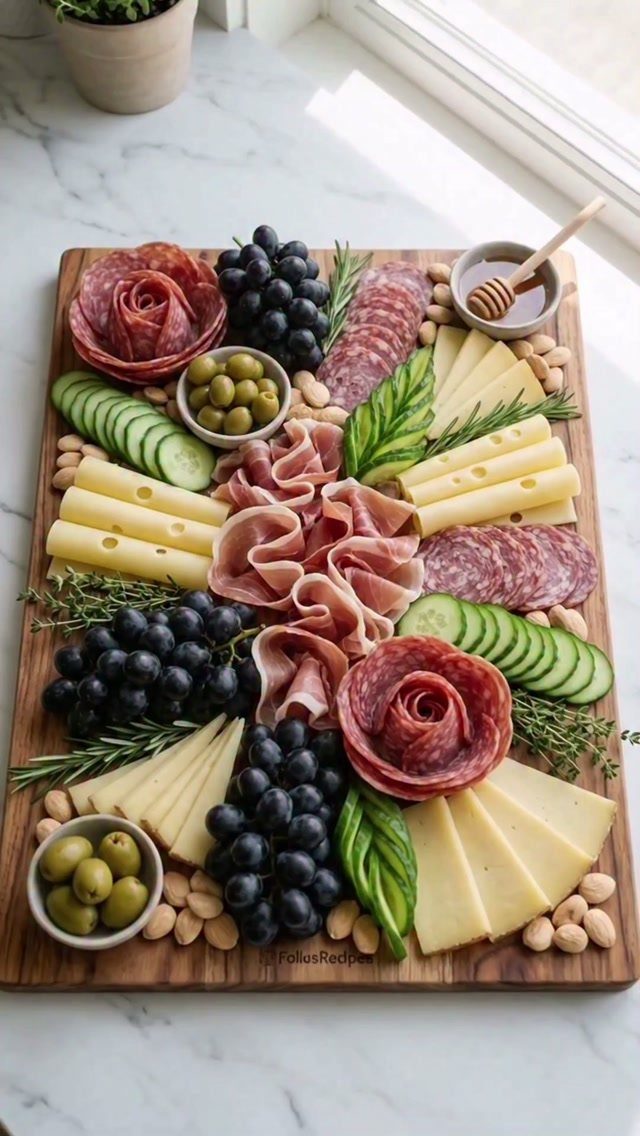
Prosciutto tears when you handle it too much, so drape it instead of folding it. Lift each slice from the middle and let it fall in loose ribbons, building small piles that sit high on the board.
Give the piles room.
Pair them with grapes, olives, cucumber slices, and a small dish of honey; a drizzle over salty ham tastes better than you would expect. Salami roses and a couple of cheeses fill out the rest.
Marble looks sharp under a board like this, but a plain wooden board works just as well and hides crumbs better.
7. Spiced Nuts
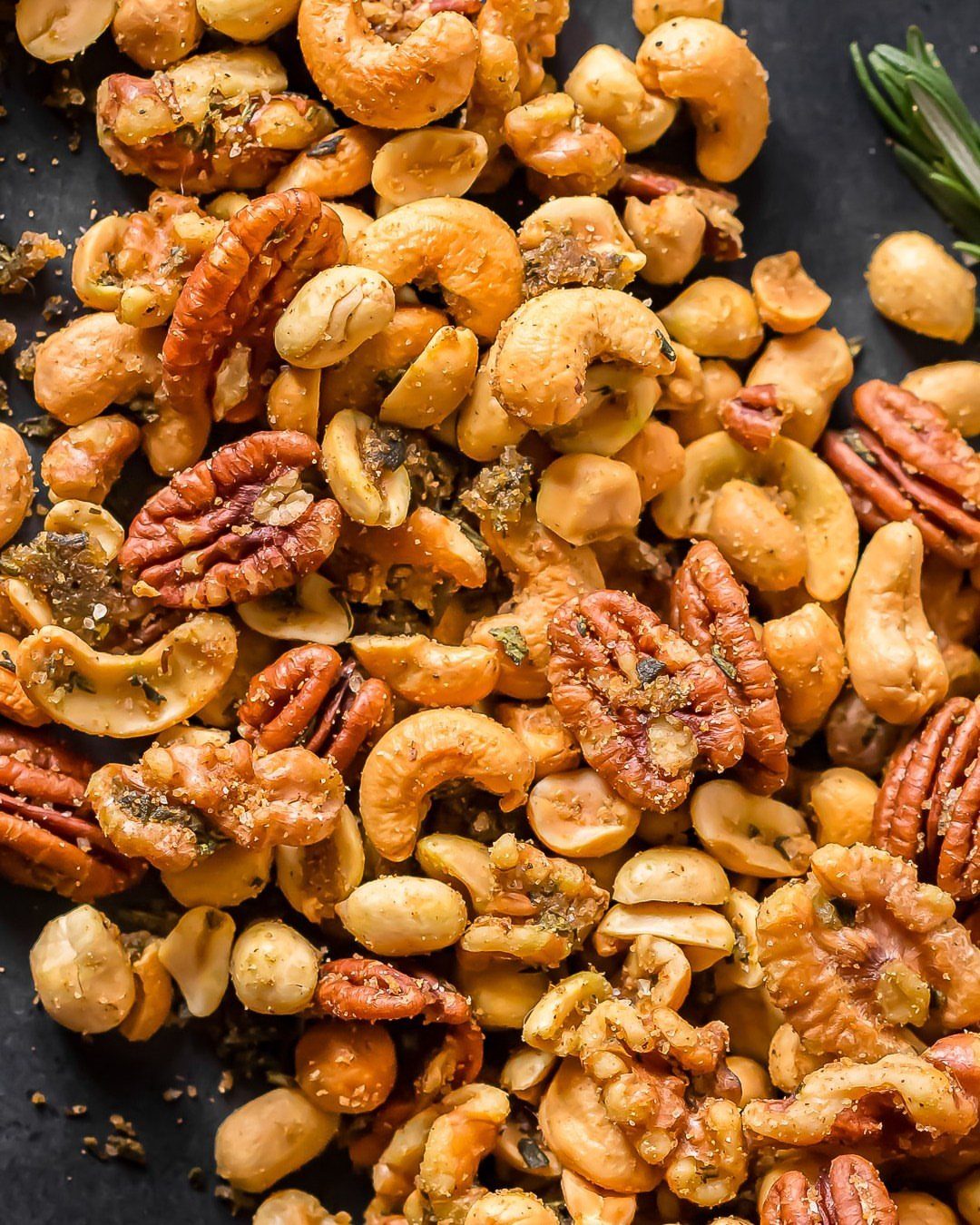
Cashews, pecans, and peanuts in one bowl give a board three shapes and three shades of brown, which one nut can’t do. The spiced coating adds a warm, savory note that plain nuts lack.
Use them as filler.
Pour a small pile into any open gap, or set a low bowl at the edge so they don’t roll into the cheese. A rosemary sprig on top adds scent and color.
Place them near a mild cheese, where the spice has something to push against.
8. Cornichons
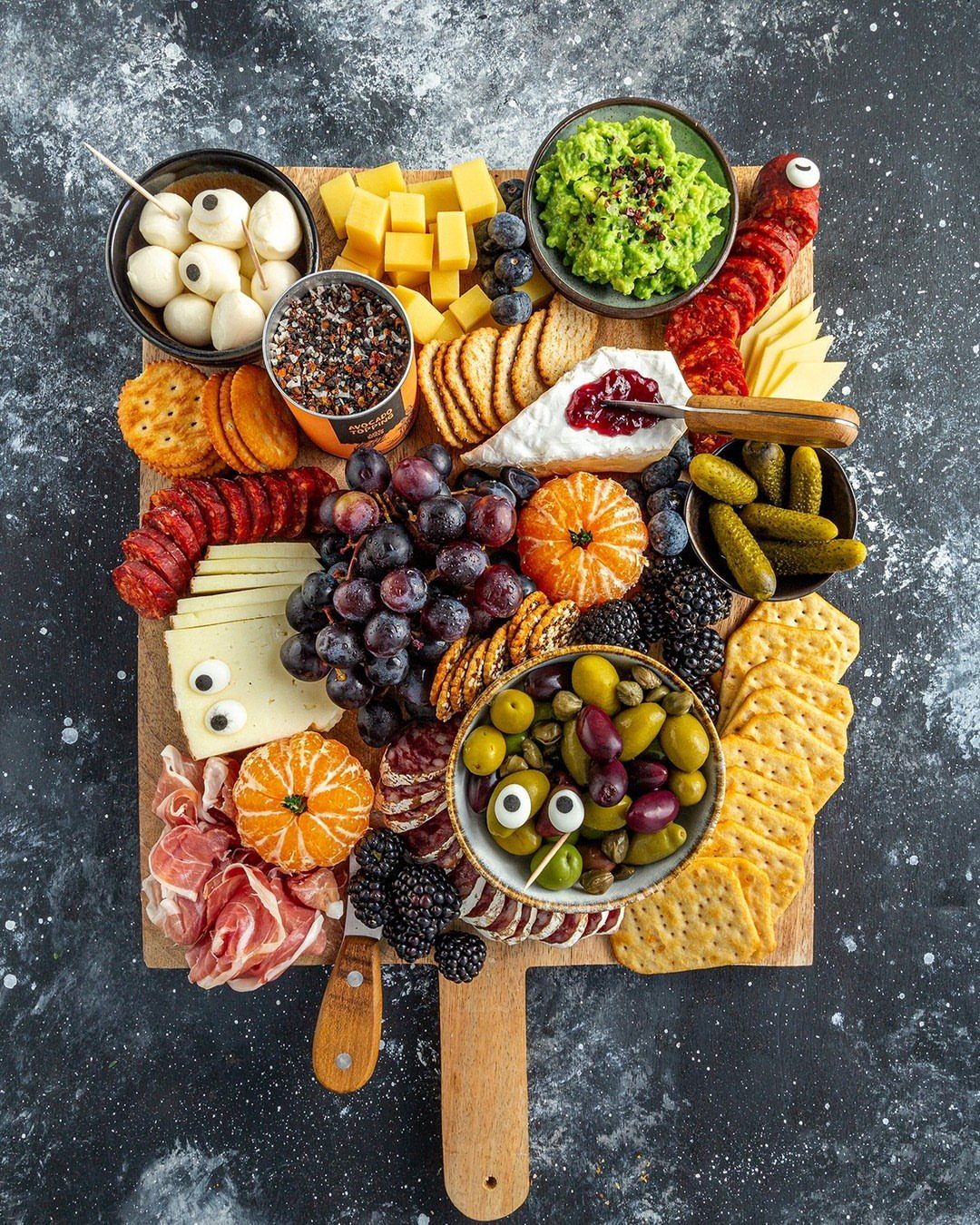
A small bowl of cornichons does a job nothing else on the board does: sharp, sour crunch against fat. The pickles are tiny, so each one is a single bite.
Drain them well and pat them dry before they go in the bowl, or brine will drip onto the crackers.
Set the bowl beside the salami and a creamy cheese, since the tang clears your mouth between bites. Grapes and a dip nearby soften the sour.
9. Whipped Ricotta and Grilled Bread
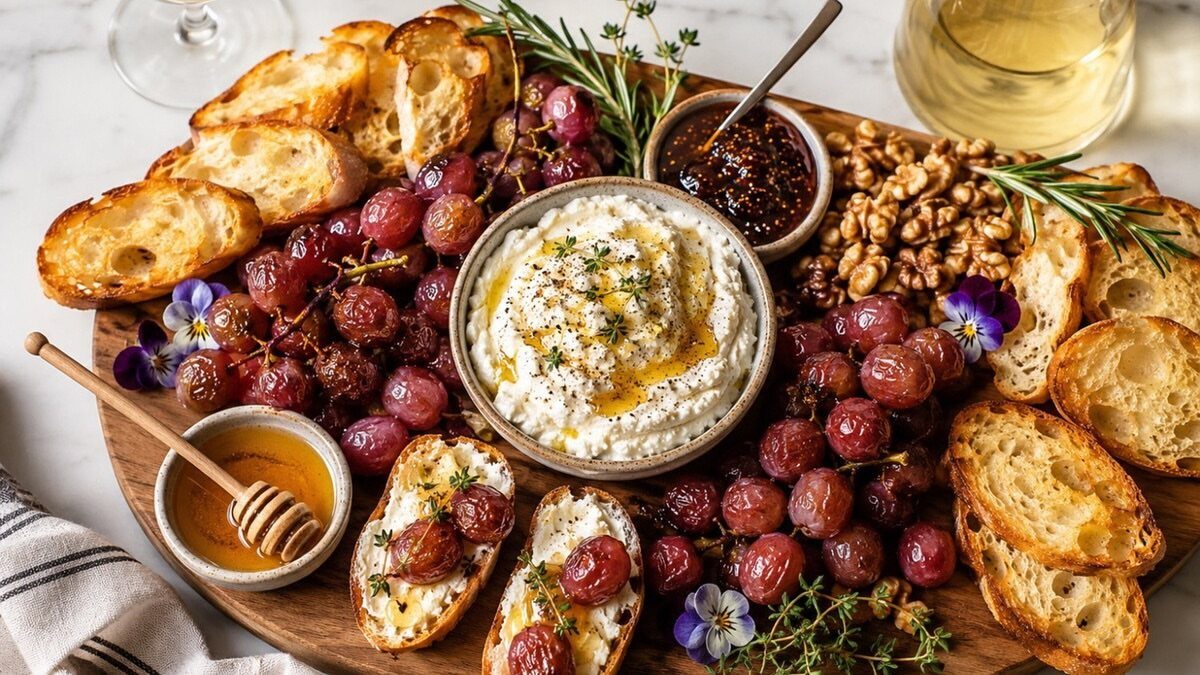
Ricotta becomes a spread once you beat it until smooth and fluffy.
Spoon it into a shallow bowl, press a well into the top with the back of the spoon, and pour in olive oil. Chopped herbs go over that.
Grill the bread so it holds up under a thick scoop; soft slices fold and break. Honey and a jam on the side let guests choose sweet or fruity, and grapes and walnuts bring juice and crunch.
10. Antipasti Picnic Board
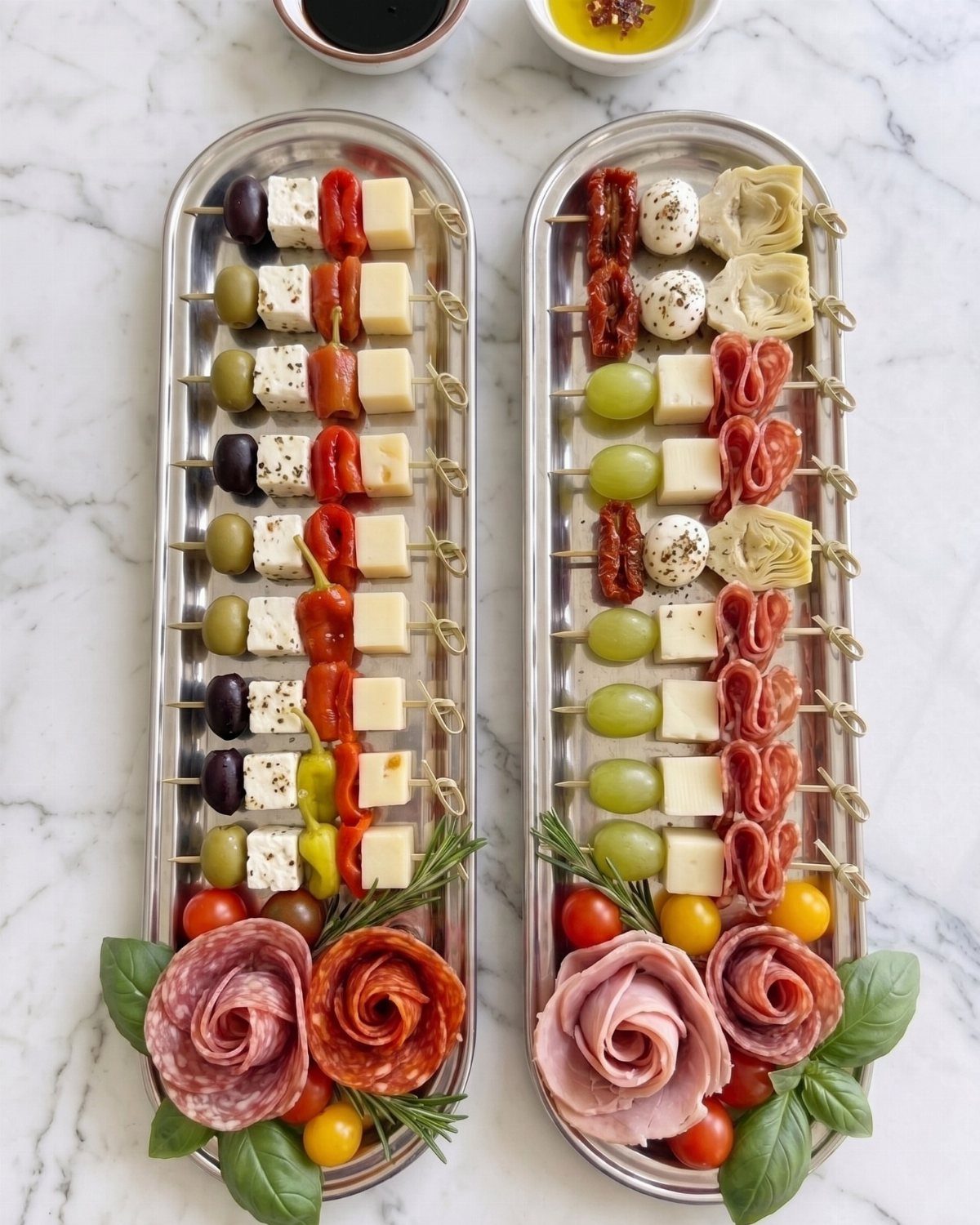
Skewers make a picnic board you can carry. Thread olives, cheese, and peppers onto picks, lay them in rows on a platter, and tuck basil leaves between the rows for green.
Guests lift one with a hand, so you can skip plates.
Put a dipping bowl at each end so nobody has to reach across the board. A rimmed platter keeps everything from sliding when you move it.
11. Date Night in Board
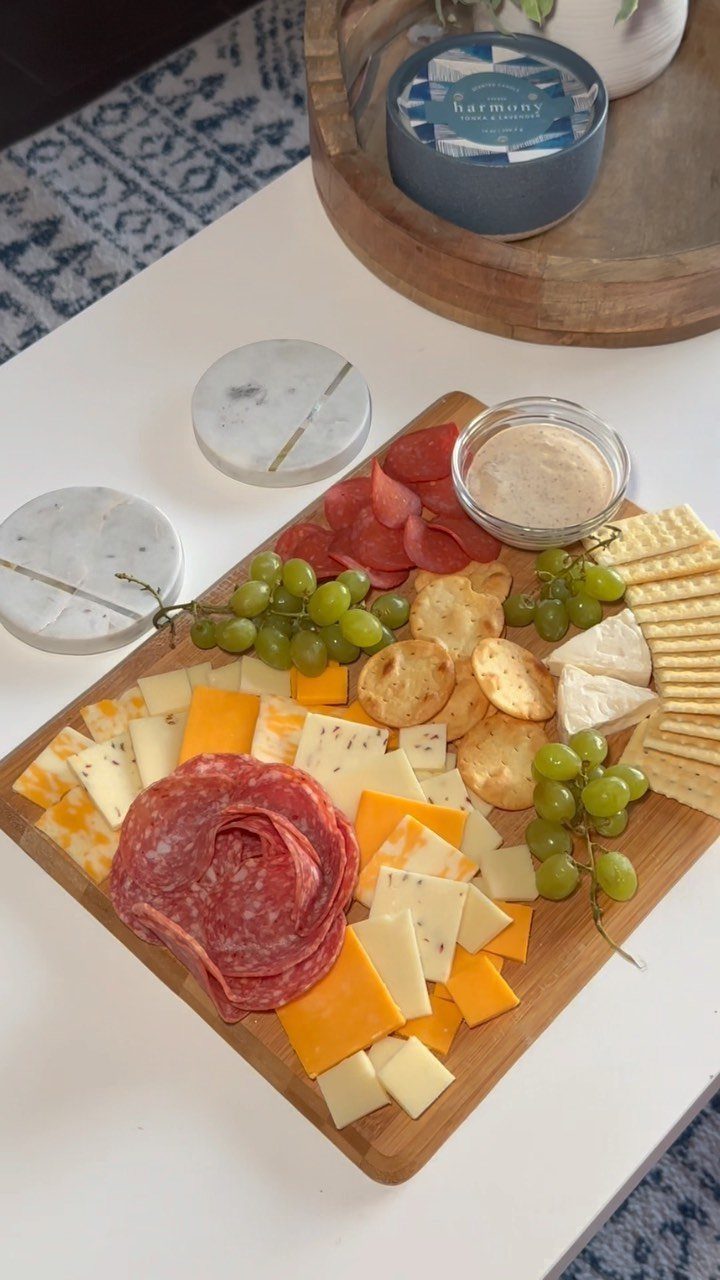
A board for two should look generous without leaving a week of leftovers.
Set the grapes next to the salty items so each bite can swing sweet or savory. A candle on a tray beside the board adds light; pick an unscented one so it doesn’t compete with the cheese.
12. Summer BBQ Skewers
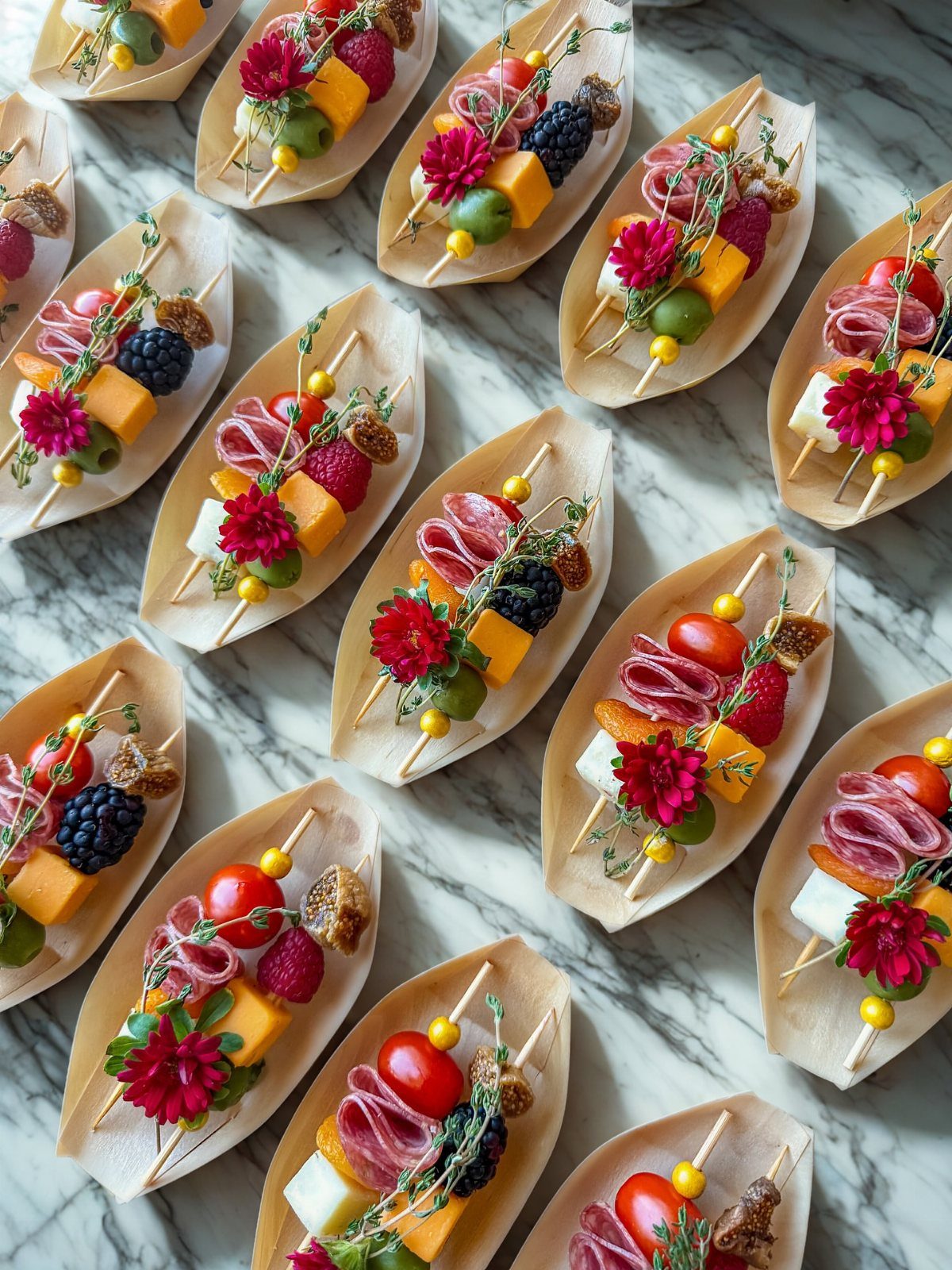
Skewers keep a summer board tidy. Alternate cheese, meat, and fruit on each pick so every bite is sweet and salty at once, and add an edible flower if your store has them.
Small wooden boats hold a handful each, so you can set one at each end of the table instead of crowding a single board. Guests grab a pick and keep talking.
13. Charcuterie for a Crowd
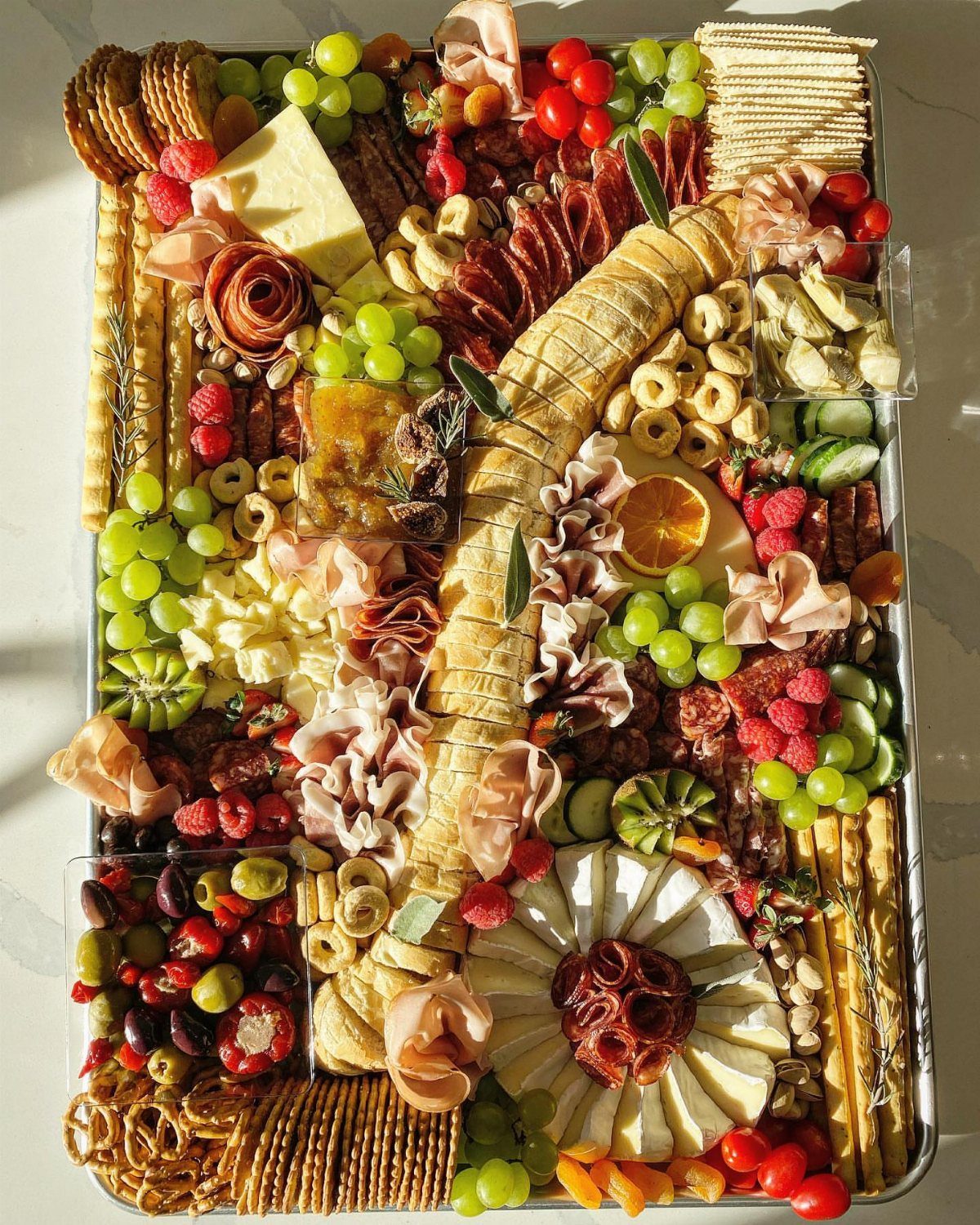
A tray this size works because it is packed tight, with no bare spots showing. Group the meats, cheeses, fruit, crackers, and olives in separate sections so guests can find what they want without digging through the rest.
Put the crackers in several spots instead of one pile, so people at different ends of the table can reach them. A rectangular tray holds more than a round board and lines up easily along a wall or a buffet.
Cheese and meat cost the most, so buy more fruit and crackers to fill the space.
14. Christmas Tree Antipasto Plate
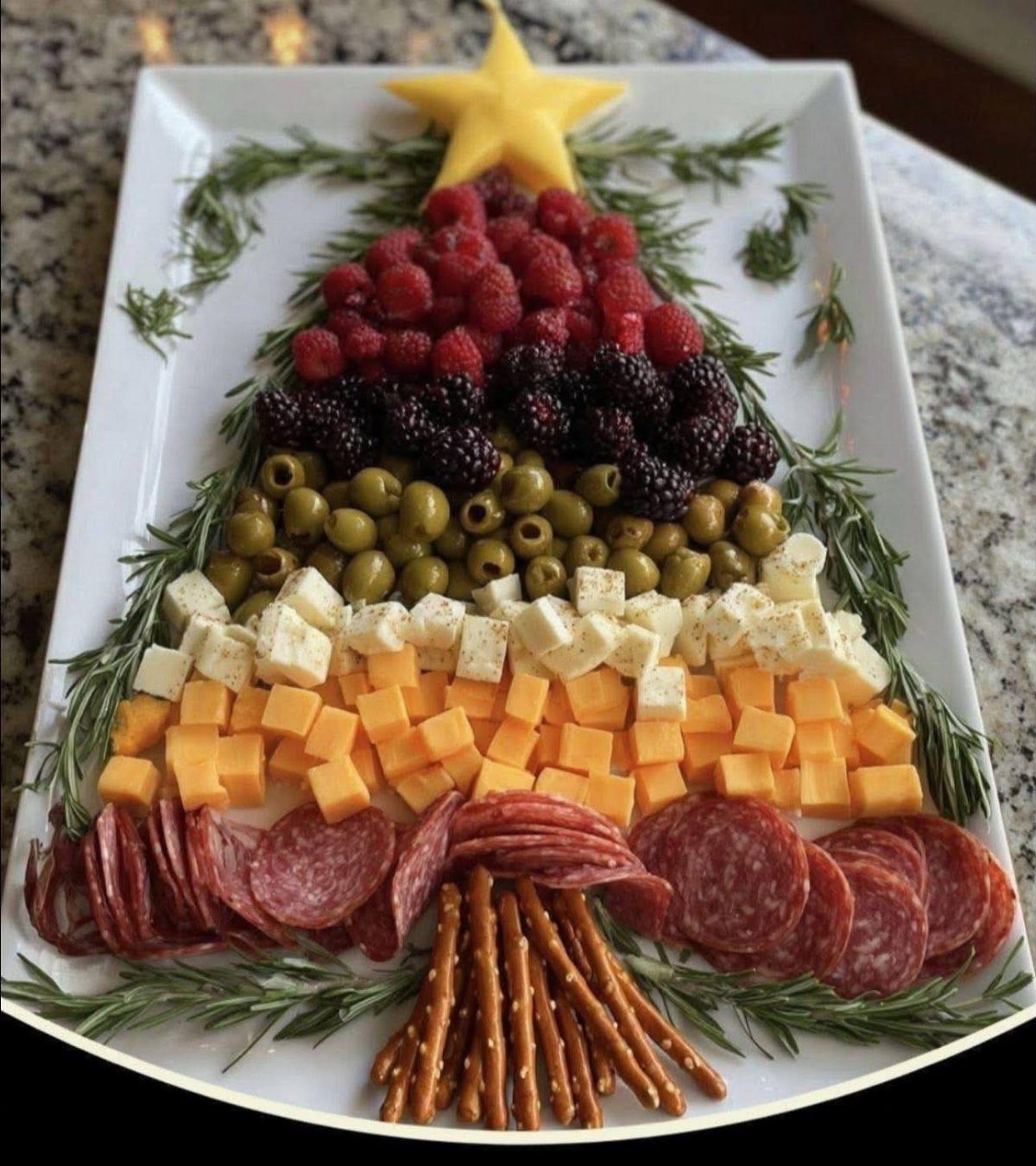
Berries make this one easy to read as a tree. Lay rosemary sprigs in a tree shape, then tuck in raspberries and blackberries for red and deep purple ornaments, and fill the branches with salami, cheese, olives, and pretzels.
Build the triangle first with a row of rosemary, then widen it toward the base. Pretzels hold their crunch, so they can go on just before guests arrive.
Use a rectangular platter so the tree has room to stand tall.
15. Summer Snack Board
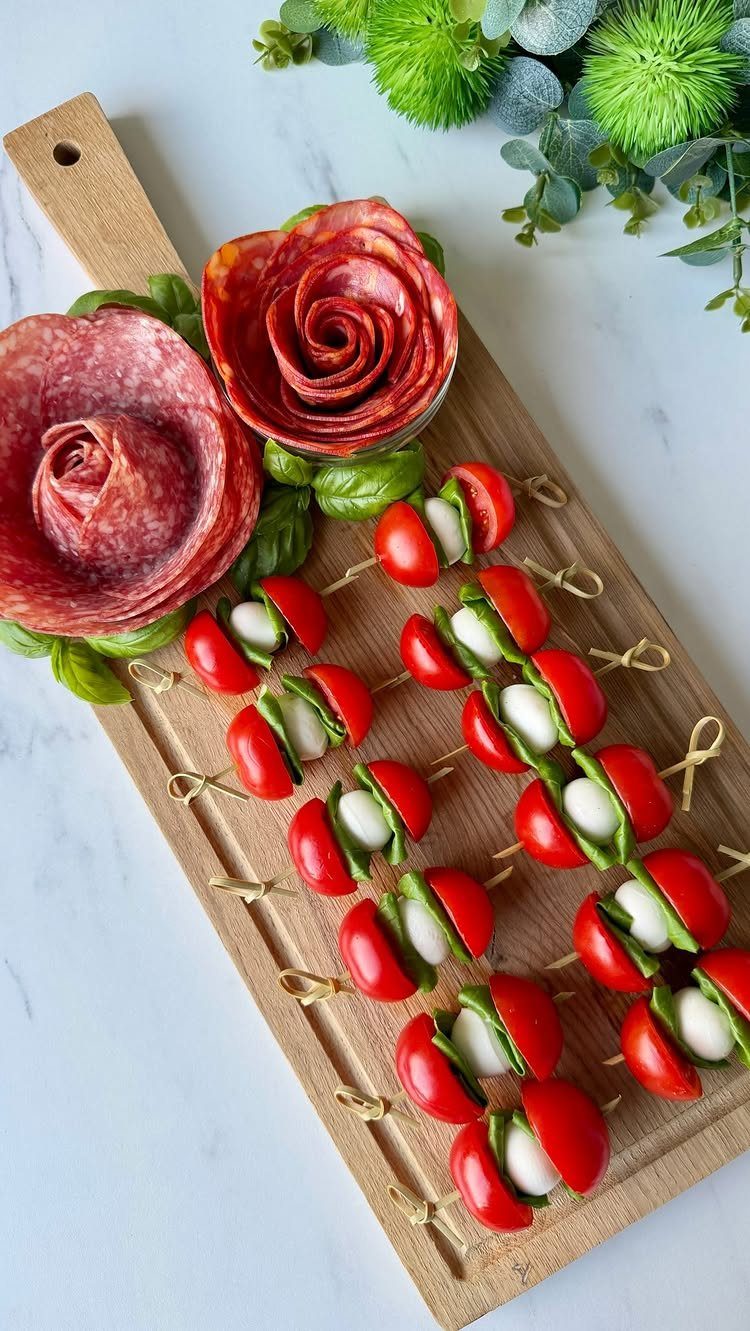
Caprese skewers carry this board. Thread a cherry tomato, a small mozzarella ball, and a basil leaf onto each pick, then line the skewers up along one edge of the board.
Keep it small.
2 roses and a row of skewers look neat on a wooden board, and the white and red read as fresh in warm weather. A few sprigs of greenery at the edge finish it.
Skewers travel well, so this works for a picnic. Pack the board flat in a cooler and add the basil last.
16. Fall Cheese Board
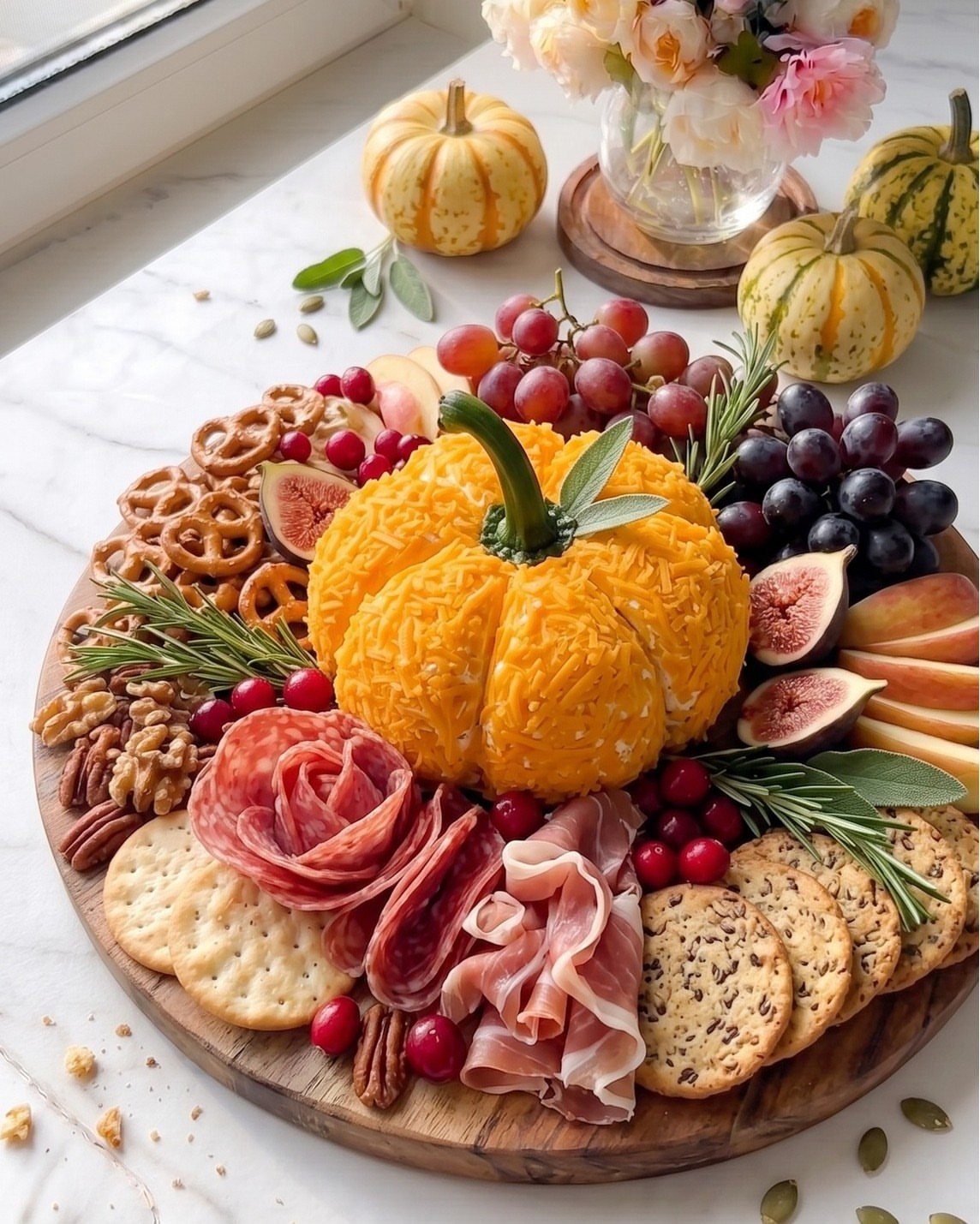
A cheese ball shaped like a pumpkin gives a fall board its center.
Roll a ball of cheddar, press it into a round with a slight flatten on top, and add a stem. A small piece of a cinnamon stick or a bit of herb stem works.
Warm colors from the cheddar, nuts, and fruit keep the whole board in season.
Chill the cheese ball until firm before you set it down, so the shape holds. Small real pumpkins around the board add to the look.
17. Lavish Edible-Flower Board
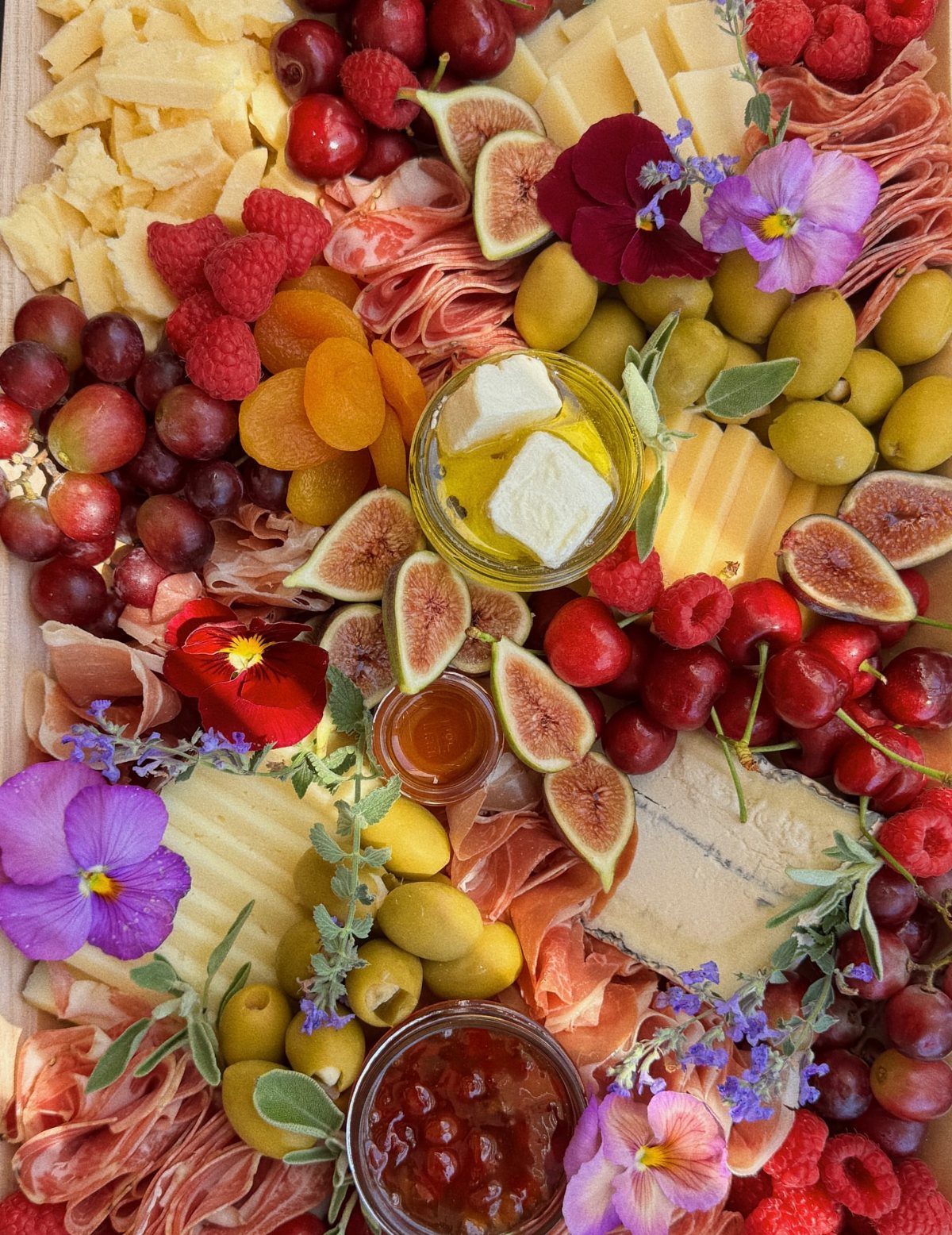
Edible flowers turn a standard spread into a centerpiece. Scatter them over cheeses, cured meats, fruit, and olives, and the board looks planned even if every ingredient came from one store run.
Put honey and jam in small bowls so guests can add sweetness wherever they like. Scatter a few flowers over each group instead of piling them in one spot, so the color spreads across the whole board.
Check that any flower is sold as edible; blooms from a florist are not made for eating. Add them last, right before serving, to keep them looking fresh.
18. Sugar Skull Charcuterie Board
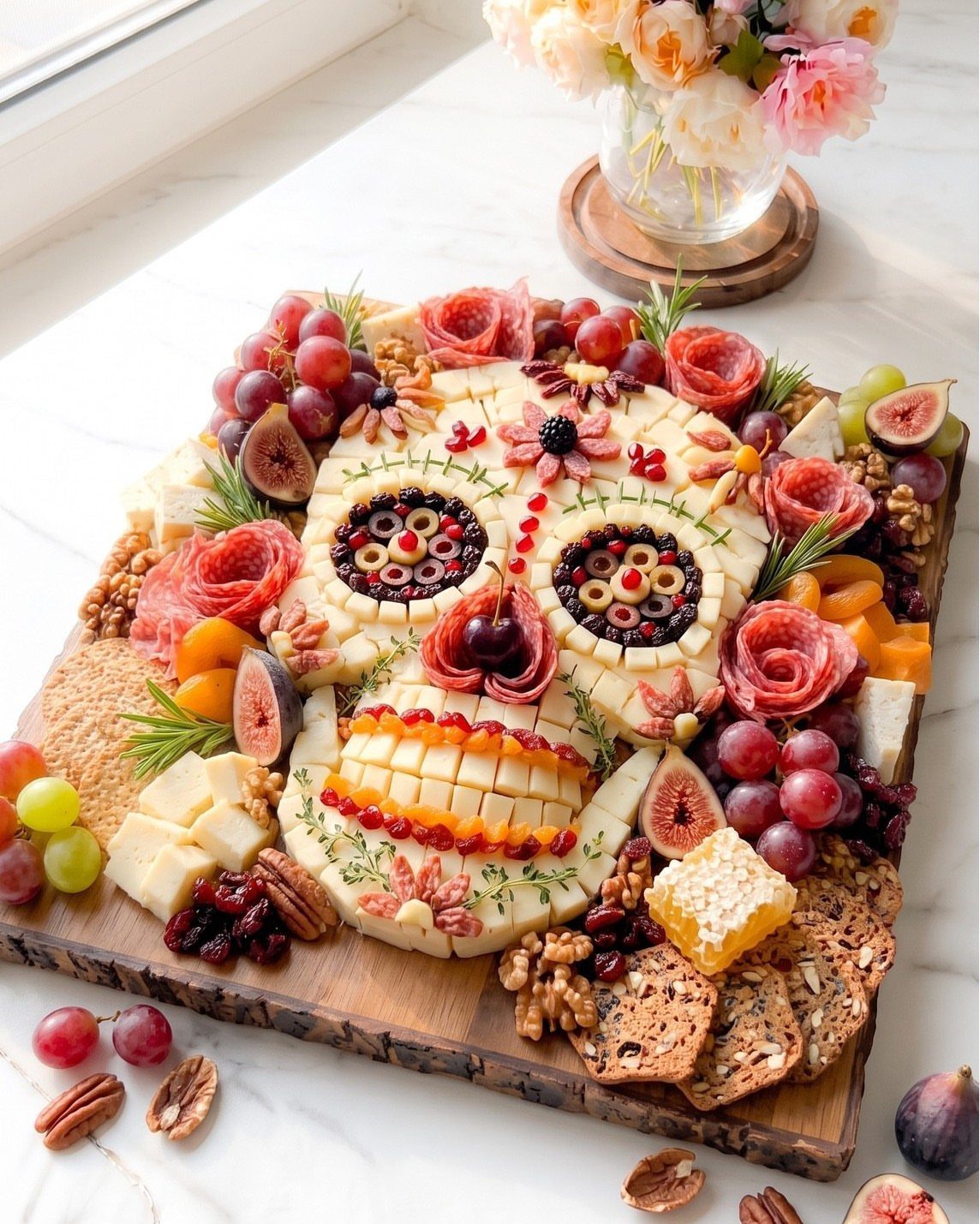
A sugar skull board is a design, not a spread, so plan the face before you start slicing.
Lay out 2 round fruits for eyes, a small piece of cheese or fruit for a nose, and a row of nuts or cheese cubes for teeth along the bottom.
Use a round or oval wooden platter and fill the outline of the head with cheese and meat. Then add fruit for color in the cheeks and forehead, the way a painted skull would have bright details.
Fresh flowers in a vase next to the board pick up the same palette.
19. Santa Face Charcuterie Board
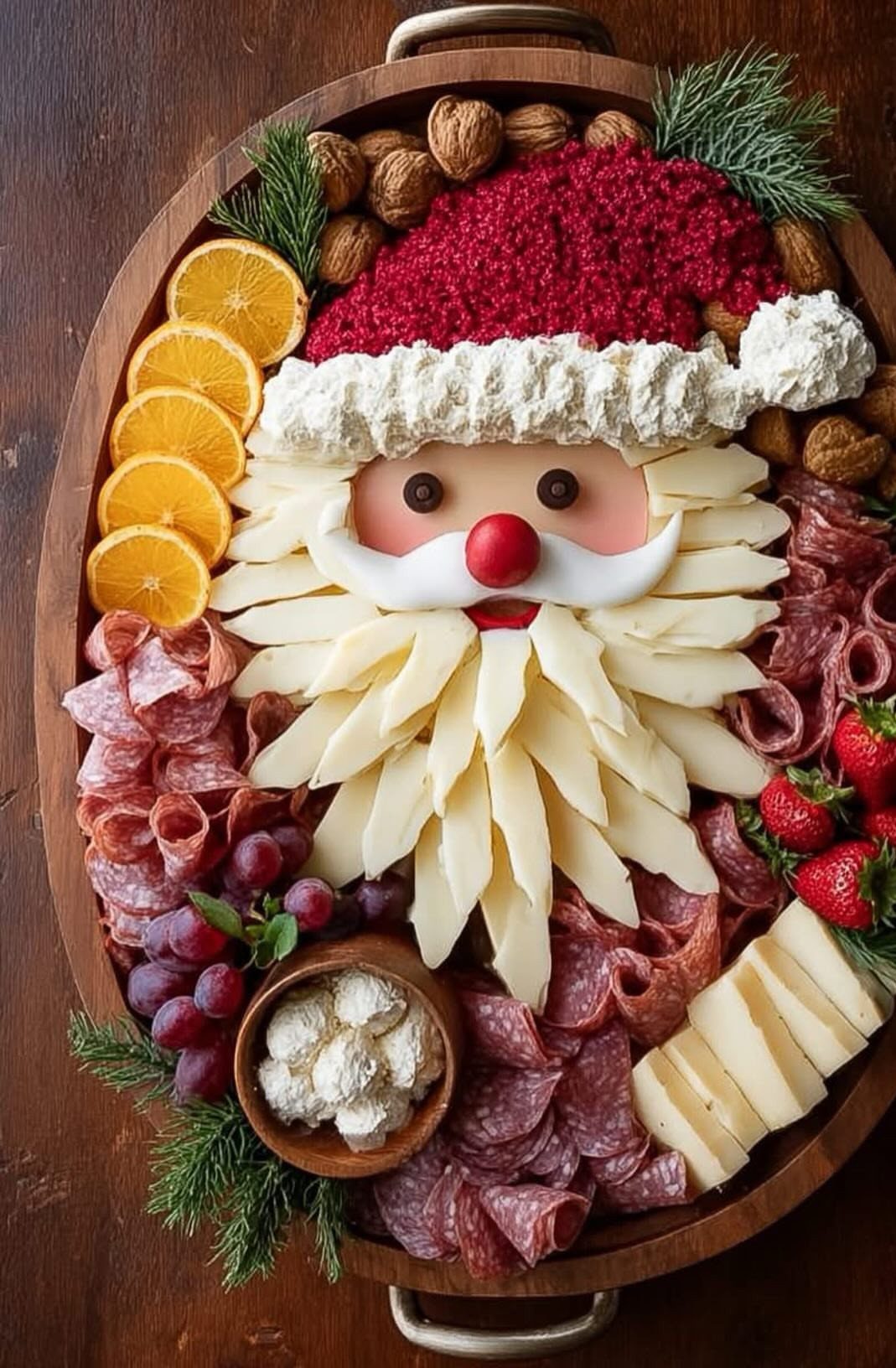
Santa’s face comes from 3 ingredients doing different jobs: cheese for the beard, salami for the hat and cheeks, and a dip for the nose and trim.
Pick a wooden platter large enough to hold the whole head with room around it.
Start with the hat and beard outline, then fill each area in. Evergreen sprigs tucked around the edge frame the face and keep the board looking festive without extra ingredients.
Add the sprigs last, so they stay green and don’t shed into the food.
20. Charcuterie Chessboard
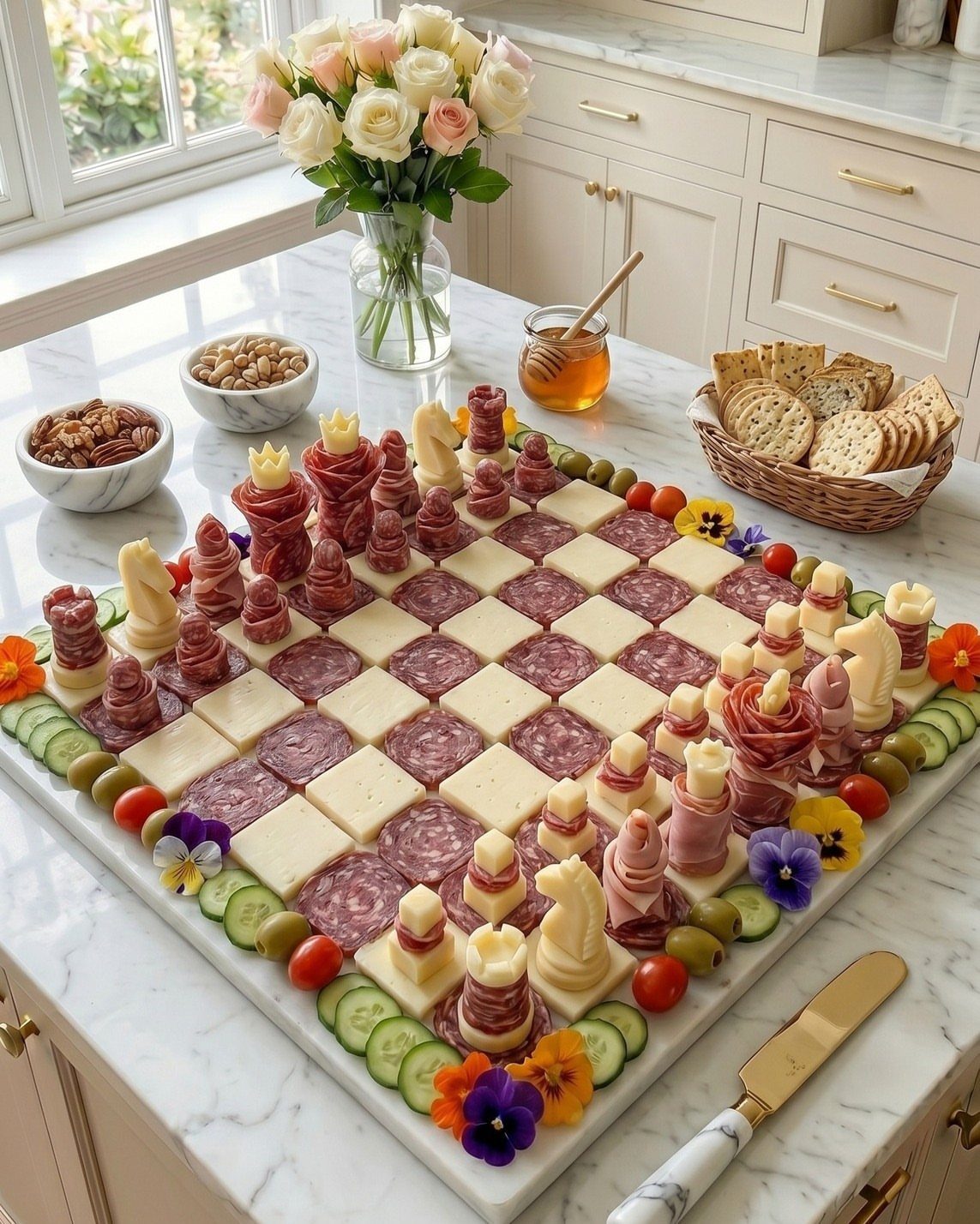
Squares of cheese and salami, set side by side in alternating rows, make a chessboard that needs no baking and almost no cooking. Cut everything to the same size first, because uneven squares are the first thing people notice.
Shape extra pieces from the same ingredients to stand on the board as chess pieces. Crackers, nuts, and a small dish of honey can sit around the edges, so the grid stays clean and easy to read.
A flat board or marble slab keeps the squares from sliding.
21. Figurative Meat-and-Cheese Board
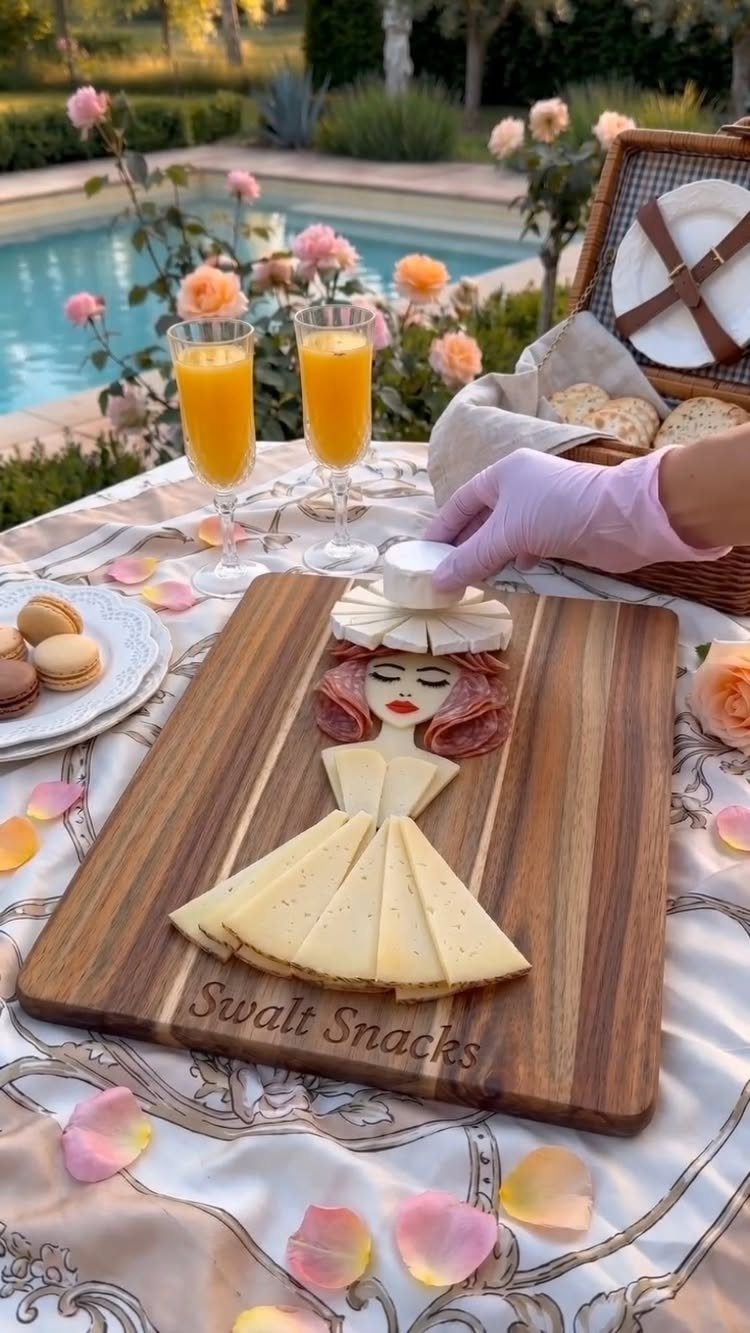
A figure board asks you to plan the outline before you lay a single slice. Sketch the shape in your head, then use sliced meats for the body and curve, and cheese for the details that need a lighter color.
Overlapping the slices keeps the shape solid, and a gloved hand makes placing small pieces cleaner.
Set it out with drinks nearby, since guests will want to admire it before they take the first slice.
Arranging Board Components
Set out the bowls and the biggest pieces first, and place them at opposite points across the board. Ramekins work well for olives and pickles, and a wedge of brie or a jar of jam can anchor another corner.
Don’t try to fill every inch yet. Hold back some of each item so you have something to place once the layout takes shape.
Vary how you cut and present things.
Give the meats some shape by rolling them into tubes, folding them into quarters, or fanning them out in overlapping rows, and cut the cheeses so each one looks different, whether crumbled, cubed, or sliced thin.
Mix shapes and colors too.
Put something round next to something long and thin, and keep 2 pale cheeses, or a pale cheese and pale crackers, from touching. Spread the meats across different parts of the board instead of piling them in one spot.
Think about flavor as you go. Set items that taste good together side by side, and move clashing ones apart: berries near a hard cheese and honey, for example, and away from roasted tomatoes.
Use nuts and crackers last, since they are neutral and fit into whatever gaps are left.
Select a Balanced Assortment
For a simple starting point on size, pick 3 meats, 3 cheeses, and 3 kinds of crackers or bread. It gives you enough variety without a shopping list that runs away from you.
Within those groups, pick items that differ from each other. Choose one soft cheese and one firm, or one cured meat and one that is mild, so every bite can taste a little different.
Choose a theme before you shop, whether that is a season, a holiday, or a single cuisine. It narrows your choices and keeps the board from looking like a random pile.
If the board is replacing dinner instead of sitting beside it, buy more of everything. A snack board and a meal board can use the same layout, but the meal board needs larger amounts of the meats, cheeses, and breads.
Frequently Asked Questions
What goes on a nice charcuterie board?
Cooked or cured meats, cheeses, and crackers or bread make up the base.
Fruit, vegetables, dips, nuts, olives, and pickles round it out and add color and crunch. Grapes, berries, dried apricots, and a small bowl of honey or jam are easy grocery-store extras.
What are things to avoid on a charcuterie board?
Avoid pairings that work against each other. Wet toppings sog out soft bread and crackers fast, so toast or grill the bread, and pat pickles and olives dry before they go on the board.
Keep clashing flavors apart (berries away from roasted tomatoes, for example), and don’t let 2 pale items touch. Use only flowers sold as edible, since florist blooms aren’t meant for eating.
What is charcuterie?
The word is French, and it started as the name for the craft of preparing cured and cooked meats, like pâté, sausage and ham.
A board built around it adds cheese and something crunchy to carry the bites, but the meat is what you build the rest around.