
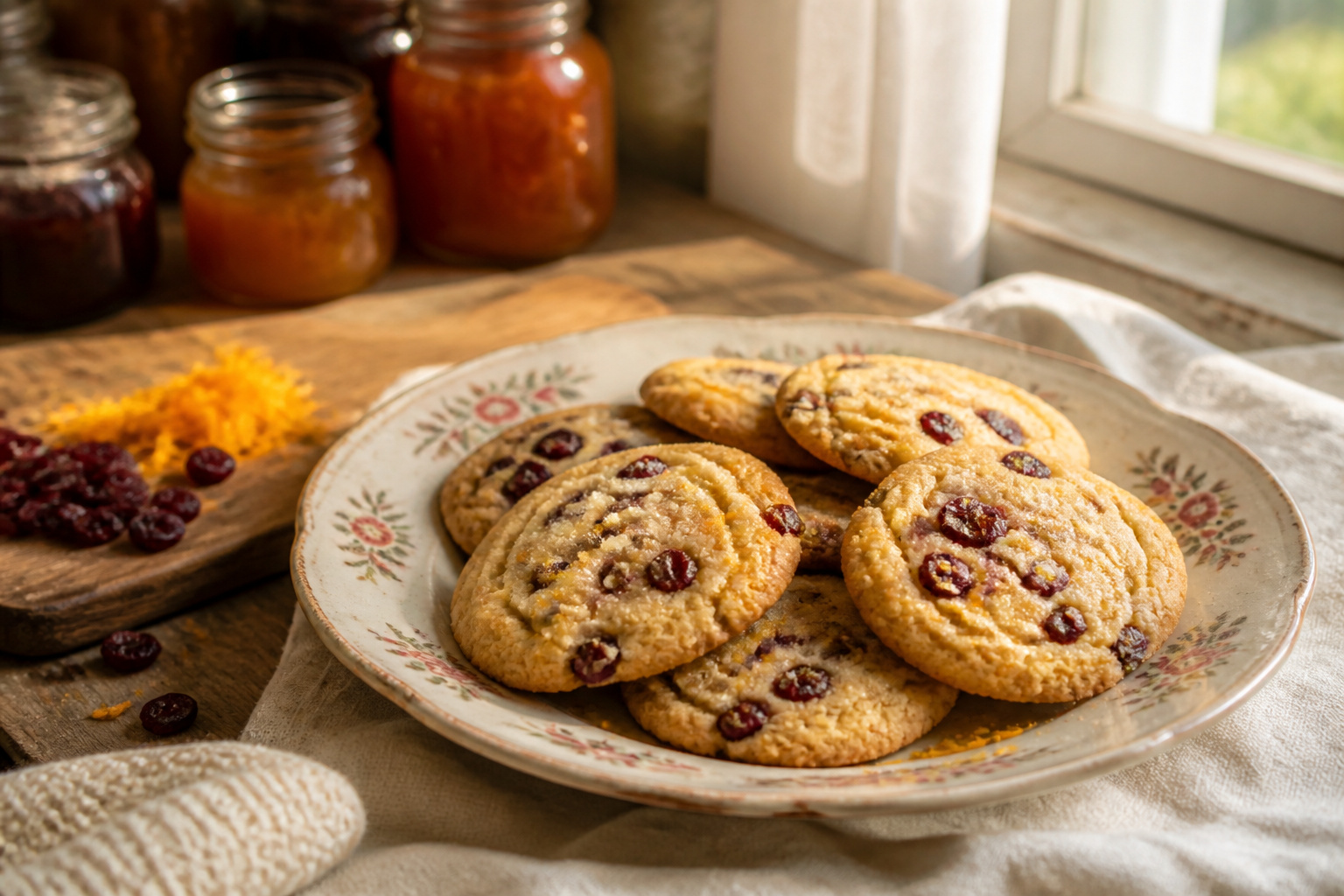
These cookies taste like a holiday compote in cookie form, bright with orange zest and chewy with dried cranberries, and the difference between soft and flat comes down to one decision: whether you chill the dough.
Skip the 60-minute rest and the butter melts too fast, pancaking the cookie into a thin, crisper disc.
Rest it, and the same dough bakes up tall and yielding, with centers that finish setting on the hot sheet after you pull them at the first golden edge.
Ingredients
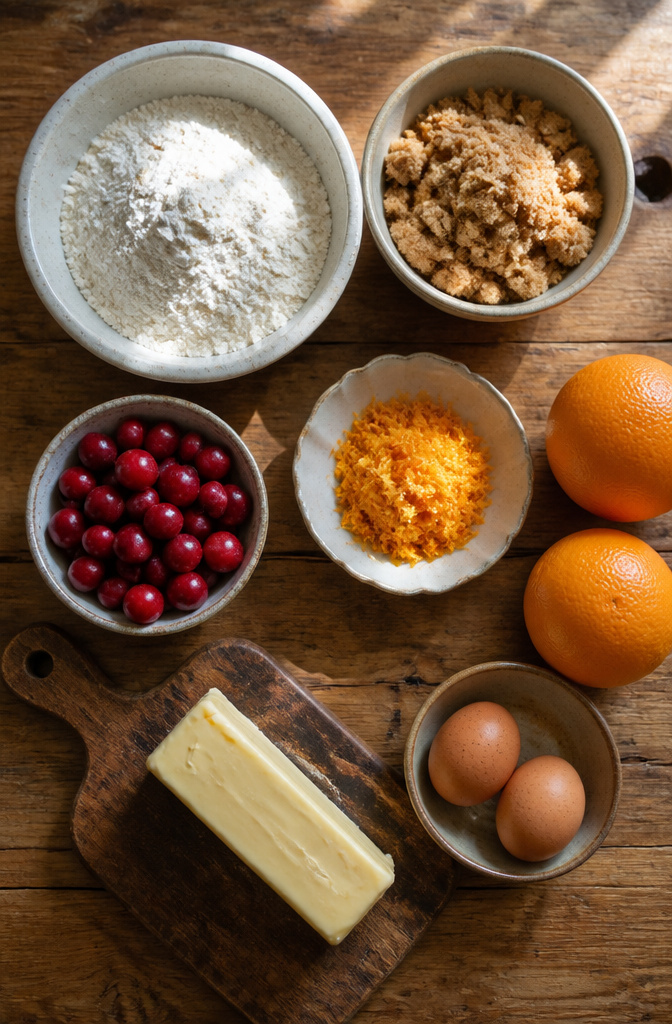
Most cranberry orange cookie recipes build from the same base with a few points of divergence worth knowing before you shop.
- 3/4 cup (1 1/2 sticks) unsalted butter, softened
- 1 cup granulated sugar
- 1/2 cup light brown sugar, packed (one recipe skips this entirely, another calls it optional)
- 2 large eggs, room temperature
- 2 tablespoons orange zest, about 3 to 4 oranges’ worth
- 2 teaspoons fresh orange juice
- 2 cups all-purpose flour (some versions push to 3 cups for a sturdier, more bakery-style cookie)
- 1 teaspoon baking powder
- 1/2 teaspoon baking soda
- 1 teaspoon salt
- 1 1/2 cups dried sweetened cranberries
Optional but common: white chocolate chips or chopped white chocolate bar, 2 to 3 ounces. One version adds 1 tablespoon neutral oil for extra chew.
If you want a crackly exterior, keep coarse sugar on hand for rolling the dough balls before baking.
How to Make Cranberry Orange Cookies
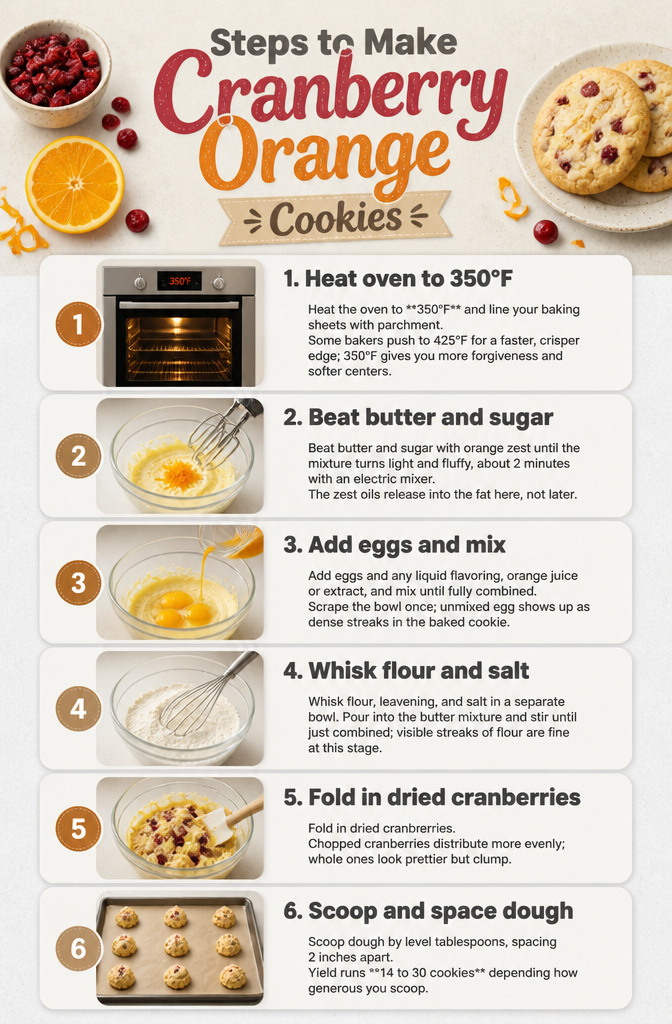
- Heat the oven to 350°F and line your baking sheets with parchment. Some bakers push to 425°F for a faster, crisper edge; 350°F gives you more forgiveness and softer centers.
- Beat butter and sugar with orange zest until the mixture turns light and fluffy, about 2 minutes with an electric mixer. The zest oils release into the fat here, not later.
- Add eggs and any liquid flavoring, orange juice or extract, and mix until fully combined. Scrape the bowl once; unmixed egg shows up as dense streaks in the baked cookie.
- Whisk flour, leavening, and salt in a separate bowl. Pour into the butter mixture and stir until just combined; visible streaks of flour are fine at this stage.
- Fold in dried cranberries. Chopped cranberries distribute more evenly; whole ones look prettier but clump.
- Scoop dough by level tablespoons, spacing 2 inches apart. Yield runs 14 to 30 cookies depending how generous you scoop.
- Bake 10 to 15 minutes until edges turn lightly golden. Pull at the first sign of color; centers finish on the hot sheet.
- Cool 5 to 10 minutes on the sheet, then transfer to a rack. The cookies are too tender to move immediately and too prone to overbaking if left too long.
Soft and Chewy Texture
Mix the dough until the flour is only halfway incorporated before you fold in the dried cranberries, then stop the moment the last streak of flour disappears. That restraint is what keeps a cranberry orange cookie tender instead of tough.
Overworked dough tightens up like a rubber band in the oven.
Pull the cookies when the edges are lightly golden but the centers still look slightly underdone, around 12 to 14 minutes at 400 degrees. They will finish setting on the hot pan during the five-minute rest.
Wait for firm centers in the oven and you have crisp cookies instead of soft ones.
Cornstarch, if your recipe includes it, works with the flour to hold moisture and block some gluten formation. The result is a finer, more delicate crumb than flour alone gives you.
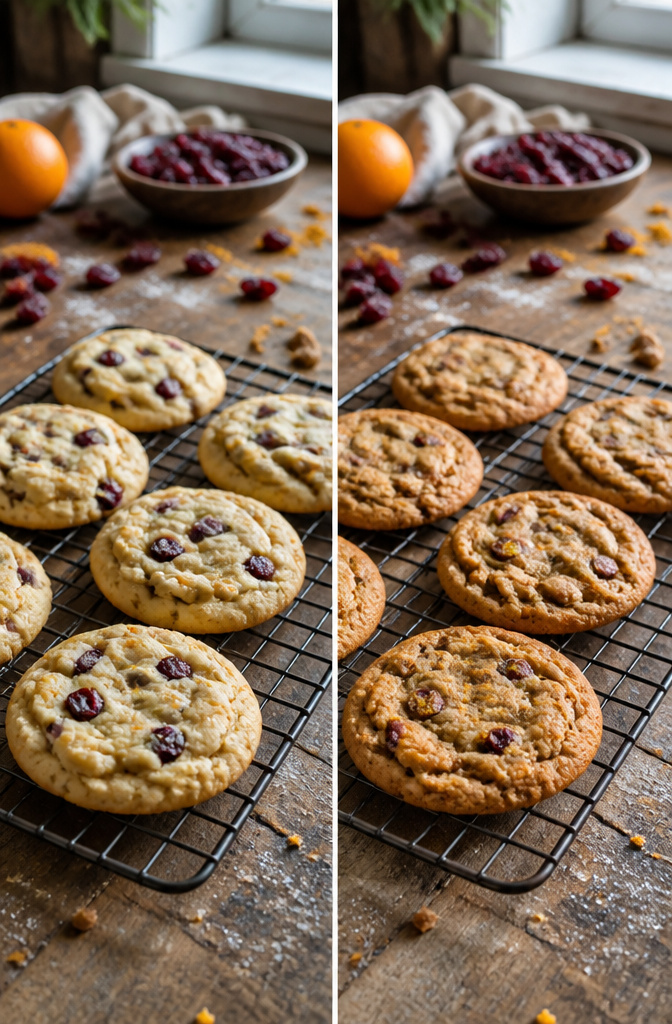
Chilling the scooped dough for one to two hours before baking slows spread so the cookie stays thick, which protects that soft center.
Without the cold rest, the butter melts too fast and the cookie pancakes into a thinner, crisper disc. The difference is immediate when you compare them side by side: one is tall and yielding, the other flat and snappy.
Tart-Sweet Flavor Balance
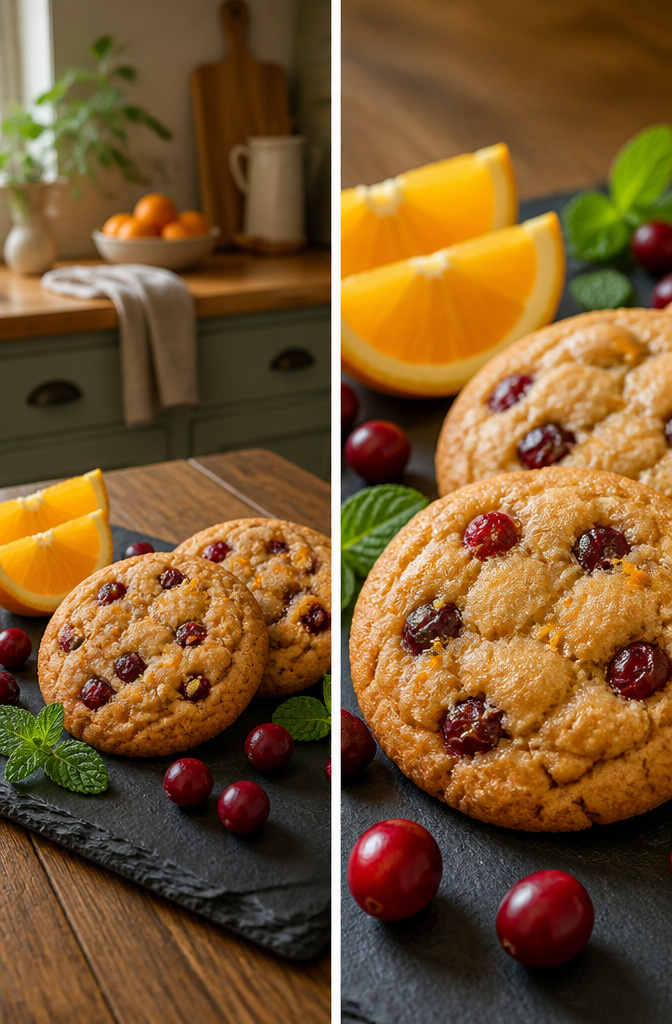
Cranberry and orange pair the way December light pairs with cold air: each makes the other brighter. The orange does the heavy lifting, and you need both zest and juice to get there.
The zest carries the oils that smell like the peel itself, while the juice adds acidity and moisture. Use only juice and the cookie tastes flat, like orange drink.
Use only zest and you miss the tart snap that wakes up the sugar.
Dried cranberries are the standard move for a reason. They are sweeter and chewier, almost like candy, and their low water content keeps the dough from turning soggy.
Fresh cranberries will swap in, but they are bigger, tarter, and juicier, so the texture shifts and the bite runs sharper. If you go fresh, expect a different cookie, not a lesser one; just know what you are trading.
The dried berry’s sweetness meets the orange’s tartness head on, and that tension is what makes the flavor read as festive rather than just fruity.
It is the same balance that works in cranberry orange bread or a holiday compote, but in a cookie it has to hold together through a bake.
Chilling the Dough
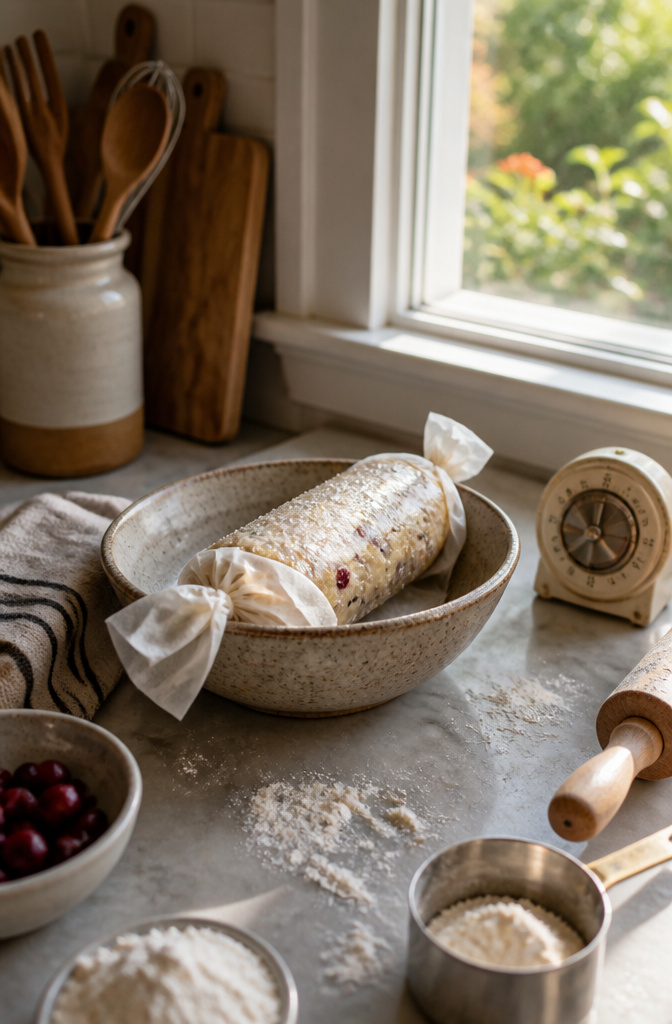
Several recipes suggest chilling the dough because cold butter melts slower in the oven, which keeps the cookies from spreading into thin, greasy puddles.
The rest time also lets the flour hydrate fully and the orange flavor deepen, so the baked cookie tastes more of itself.
You need at least 60 minutes in the refrigerator for the butter to firm up enough to matter.
If the dough has been in there longer than 2 hours, let it sit at room temperature for 10 to 15 minutes before baking, or the cold center will throw off your timing.
Skip the chill and you will likely get wider, flatter cookies with crisper edges and less chew in the middle. The flavor also stays one-note, bright orange on the surface but not much past it.
For a make-ahead option, shaped dough logs can stay refrigerated up to 5 days, or freeze them and thaw in the refrigerator for an hour or two before slicing and baking.
White Chocolate and Other Variations
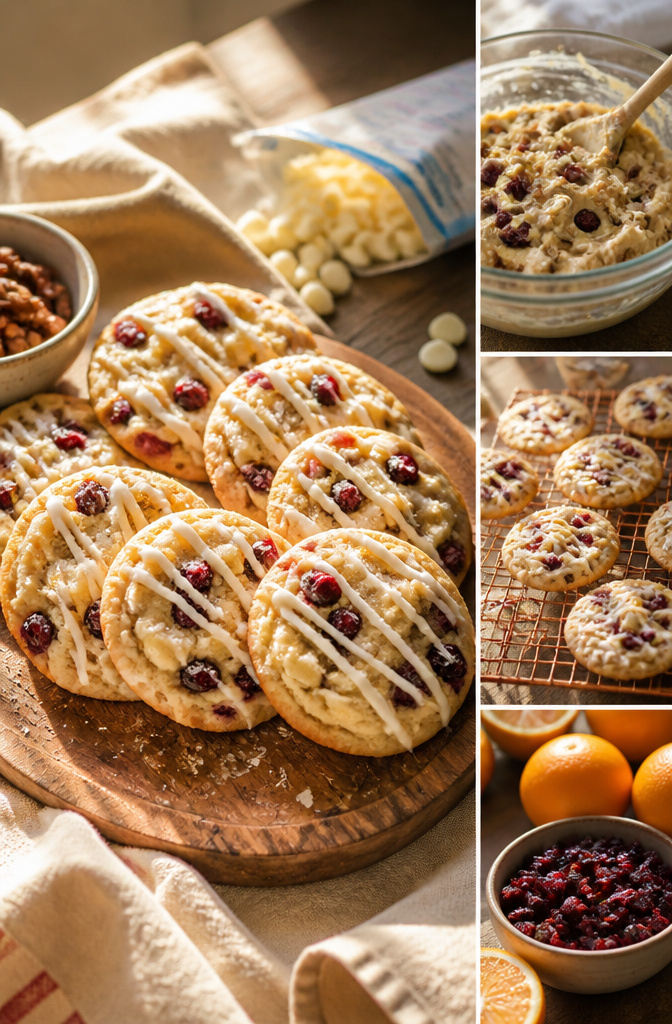
White chocolate chips turn a cranberry orange cookie into something closer to dessert than snack. The combination works because the sweetness balances the tart berry, and the fat in the chocolate keeps the crumb soft.
Sources that test this usually suggest folding in a standard half-cup measure with the cranberries, though some bakers prefer to press a few chips on top after baking for looks.
If you want crunch instead of more sweetness, toasted pecans or walnuts do the same job. Chop them roughly so they do not compete with the dried fruit in each bite.
For a decorative finish, roll the chilled dough log in coarse sugar before slicing. Sparkling sugar or something like Sugar in the Raw gives the baked cookie a crackled surface and a slight crunch against the chewy center.
It is optional, but it makes the batch look finished without icing.
Speaking of icing, a drizzle of melted white or dark chocolate over cooled cookies is another way to dress them up.
Use melting wafers or a good bar chocolate, microwave at half power in 30-second bursts, and stir between each until smooth. A spoon works; a small piping bag works neater.
A vegan version is possible with plant-based butter and an egg substitute, though most published recipes do not go there. If you need it, the swap is straightforward enough to adapt on your own.
Storing and Freezing
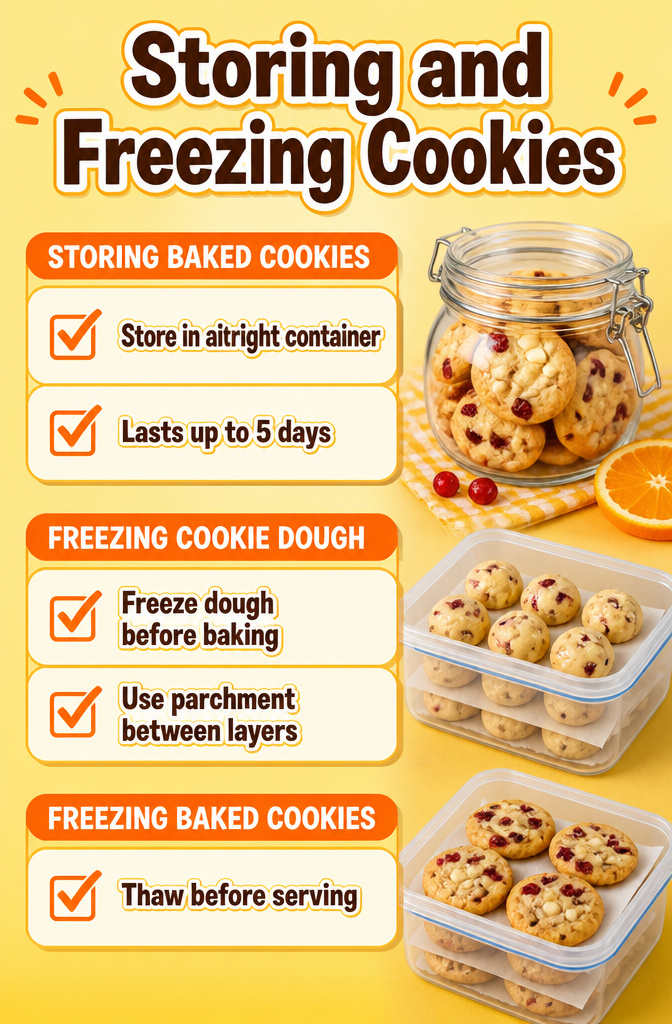
Once these cranberry orange cookies cool, store them in an airtight container at room temperature for up to 5 days. Some sources say 3 or 4, others 2 or 3, but 5 days is the outer limit if your kitchen runs cool and dry.
Warm, humid air shortens that window, so use your own judgment.
Freezing the dough is the better make-ahead move. Shape it into balls first, then freeze in an airtight container with parchment between layers for up to 2 months.
Bake straight from frozen, though you will need extra time and you will lose some of the crinkled texture on top.
Baked cookies can be frozen too, also up to 2 months in an airtight container with parchment layers. Thaw before serving, and if you drizzled white chocolate on top, add that after thawing rather than before freezing.
The flavor holds, the texture softens slightly, and the thawed chocolate finish looks cleaner.
Fresh vs. Dried Cranberries
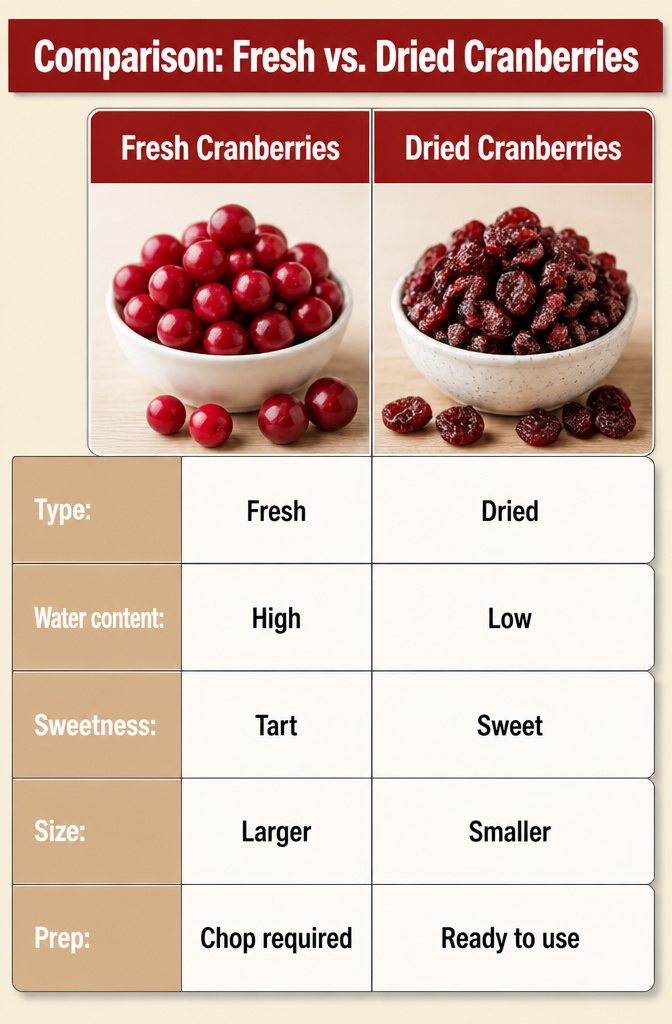
Most cranberry orange cookie recipes call for dried cranberries, and there is a practical reason. Dried cranberries carry less water and more concentrated sweetness, so they stay chewy inside the cookie without making the dough wet or fragile.
Fresh cranberries are larger, tarter, and juicier. They can burst in the oven and release moisture that changes the texture of the finished cookie.
If you do use fresh cranberries, chop them roughly first and measure about half to three quarters of a cup before chopping. That keeps the flavor balanced and the pieces small enough to distribute.
You may also want to plump dried cranberries in boiling water or liquor if you are substituting the other direction, since fresh cranberries add moisture that dried ones do not.
Dried cranberries win for weeknight baking because they behave predictably and need no extra prep. Fresh cranberries can work, but the cookie will be softer and the tartness sharper.
Sweetened dried cranberries are the safer bet if you want the chew and the sweetness most people expect from a cranberry orange cookie.
Frequently Asked Questions
Can I use fresh cranberries instead of dried?
Yes, but the cookie will be different. Chop fresh cranberries roughly and use about half to three quarters of a cup measured before chopping.
Fresh berries are tarter, juicier, and larger than dried, so the texture shifts to softer and the bite runs sharper. Dried sweetened cranberries stay chewier and keep the dough from getting soggy, which is why most recipes prefer them.
How do I store cranberry orange cookies?
Keep them in an airtight container at room temperature for up to 5 days, though warm or humid kitchens shorten that window. Some bakers refrigerate them to stretch freshness a little longer.
For best results, let the cookies cool completely before sealing them up so trapped steam does not soften the edges.
Can I freeze the cookie dough?
Yes, for up to 2 months. Scoop the dough into balls first, then freeze in an airtight container with parchment paper between layers to prevent sticking.
Bake straight from frozen, adding a few extra minutes to the timer. The dough can also be shaped into logs, refrigerated for up to 5 days, or frozen and thawed in the fridge before slicing.
Do cranberry and orange go together?
They pair naturally because each brightens the other. The orange zest carries the aromatic oils from the peel, while the juice adds acidity and moisture.
The dried cranberry’s concentrated sweetness meets that tart orange head-on, creating the tension that reads as festive rather than just fruity. It is the same balance that works in holiday breads and compotes.