
These shortbread cookies taste like December without leaning on cinnamon: bright orange zest, tart dried cranberry, and just enough almond extract to bridge them.
The trick that keeps the crumb sandy, not dense, is skipping juice entirely and getting all the citrus from the zest.
One hour of chilling is the minimum; the dough holds fine for three days, and a longer rest actually makes slicing easier.
Ingredients
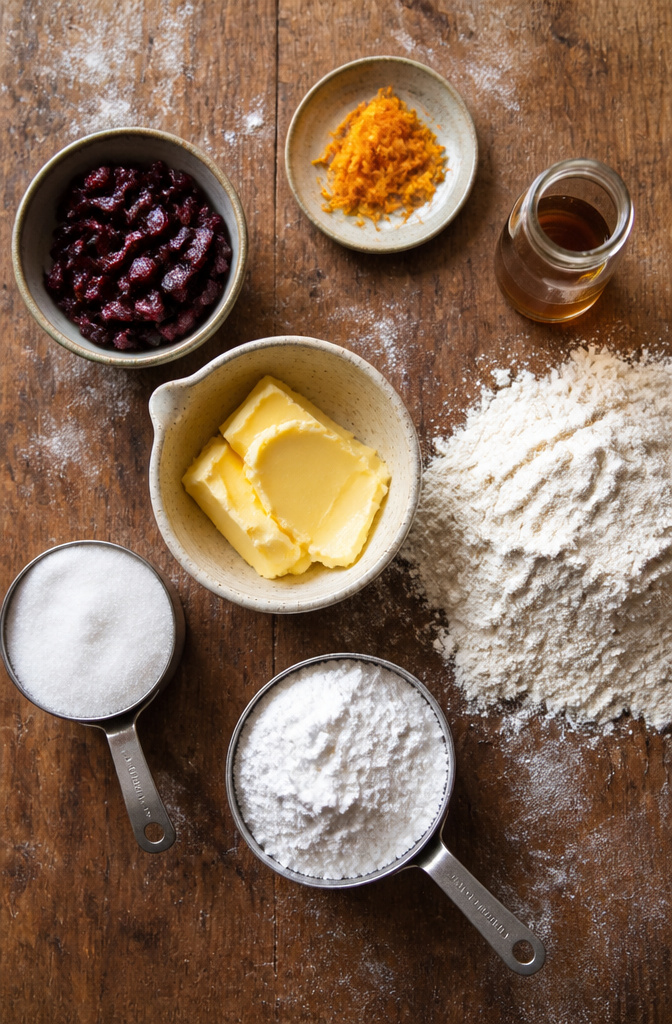
Unsalted butter is the move here, because you control the salt instead of guessing what the manufacturer added. Most brands land somewhere in the 1.5% to 2% salt range, which is already too much for a cookie this simple.
- 1 cup unsalted butter, softened
- 3/4 cup sugar, divided (granulated or powdered both work; powdered gives a slightly more tender crumb)
- 2 cups all-purpose flour
- 1/2 cup dried cranberries
- 1 tablespoon orange zest
- 1 teaspoon almond extract
Powdered sugar dissolves faster into the butter, so the dough comes together with less working. Granulated holds a bit more structure and gives you a crisper edge.
Either way, you are splitting that 3/4 cup: part beaten into the butter, part pressed onto the sliced rounds before baking.
Make the Dough, Chill, Slice, and Bake
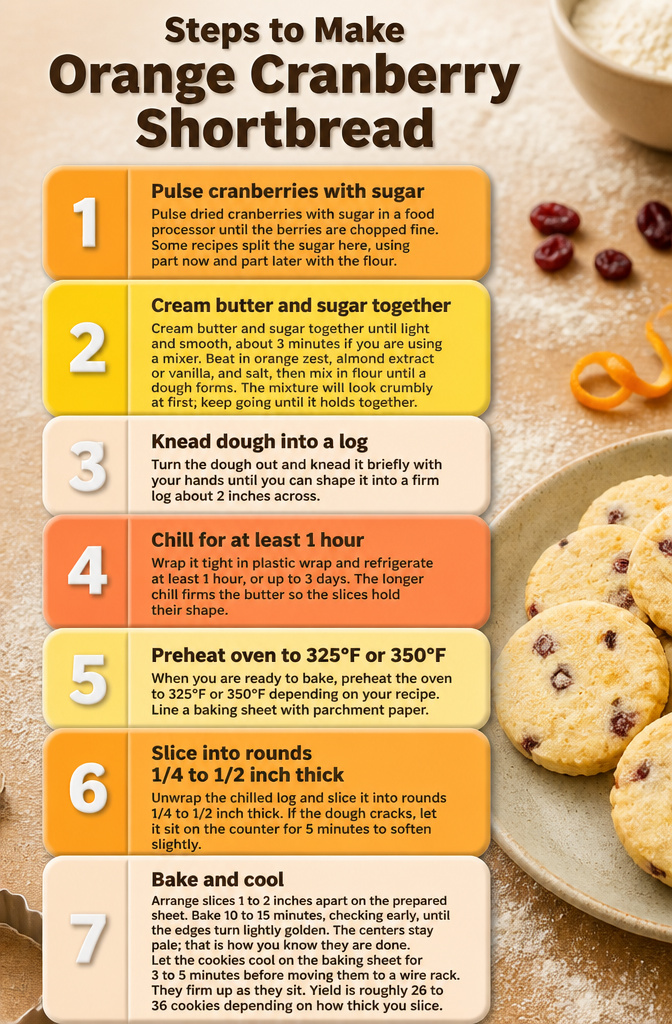
- Pulse dried cranberries with sugar in a food processor until the berries are chopped fine. Some recipes split the sugar here, using part now and part later with the flour.
- Cream butter and sugar together until light and smooth, about 3 minutes if you are using a mixer. Beat in orange zest, almond extract or vanilla, and salt, then mix in flour until a dough forms. The mixture will look crumbly at first; keep going until it holds together.
- Turn the dough out and knead it briefly with your hands until you can shape it into a firm log about 2 inches across. Wrap it tight in plastic wrap and refrigerate at least 1 hour, or up to 3 days. The longer chill firms the butter so the slices hold their shape.
- When you are ready to bake, preheat the oven to 325°F or 350°F depending on your recipe. Line a baking sheet with parchment paper.
- Unwrap the chilled log and slice it into rounds 1/4 to 1/2 inch thick. If the dough cracks, let it sit on the counter for 5 minutes to soften slightly.
- Arrange slices 1 to 2 inches apart on the prepared sheet. Bake 10 to 15 minutes, checking early, until the edges turn lightly golden. The centers stay pale; that is how you know they are done.
- Let the cookies cool on the baking sheet for 3 to 5 minutes before moving them to a wire rack. They firm up as they sit. Yield is roughly 26 to 36 cookies depending on how thick you slice.
Why Cranberry and Orange Work
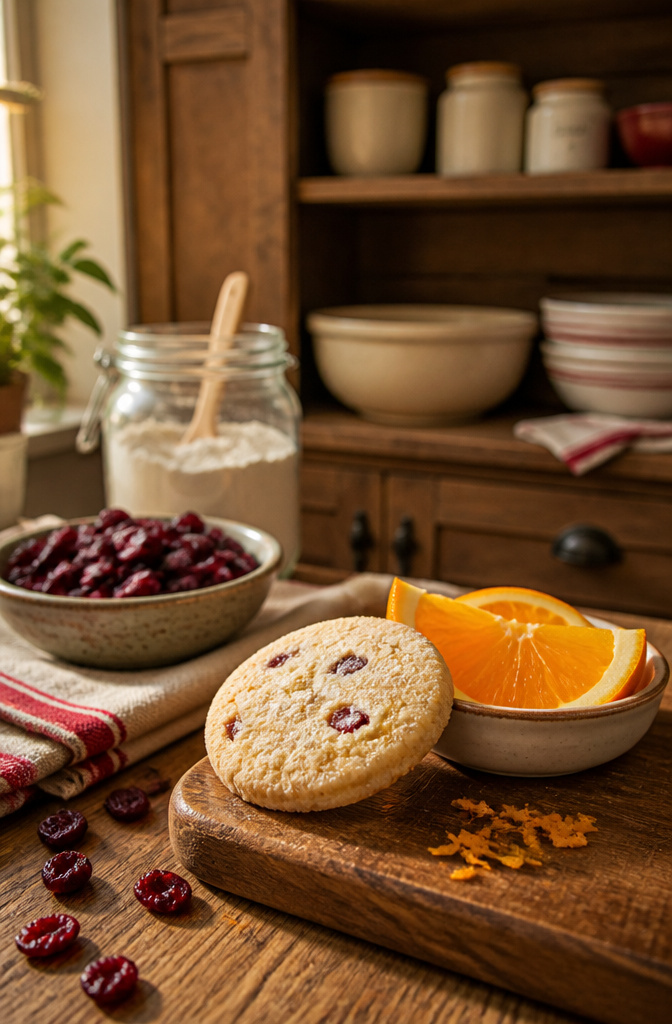
Tart dried cranberry and bright orange zest hit the same notes that make cranberry sauce work on a holiday table, but in a cookie that stays crisp for days.
The cranberry brings chew and a sharp sourness that keeps the butter from reading as flat sweetness.
Orange zest adds the citrus top note without the water that juice would introduce, which matters in shortbread because extra moisture turns the sandy crumb dense.
Some bakers add almond extract to bridge the two flavors, and that works if you keep it light enough that it reads as warmth rather than marzipan.
What you end up with is a cookie that tastes like December without leaning on cinnamon or clove, which means it pairs with coffee at breakfast just as well as it sits on a cookie tray after dinner.
Chilling Time and What It Does
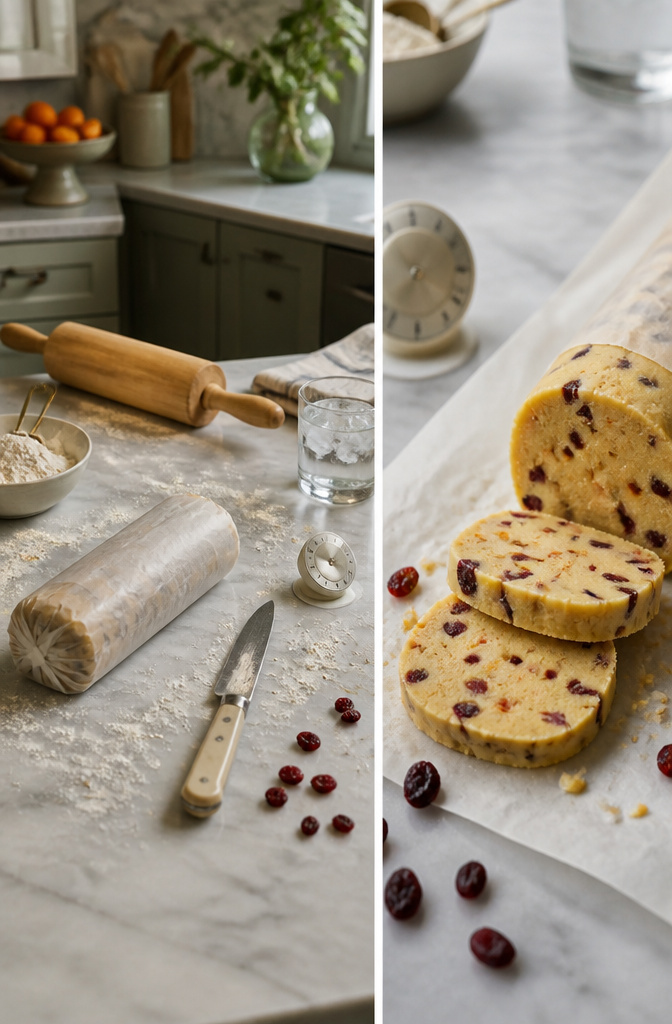
Chilling firms the butter in the dough so you can slice clean rounds without smushing the log.
That same cold keeps the cookies from spreading into puddles on the sheet, which is the difference between a neat shortbread and a melted mistake.
Give it at least an hour, though the dough holds fine for up to three days in the fridge, and a longer chill actually makes slicing easier because the butter gets fully set.
Some bakers make the dough a full day ahead and let it rest overnight; the flavor softens and deepens with that wait.
You can also freeze the log for up to two months, but thaw it overnight in the refrigerator before you slice, or the knife will catch and crumble the edges.
Fresh or Dried Cranberries
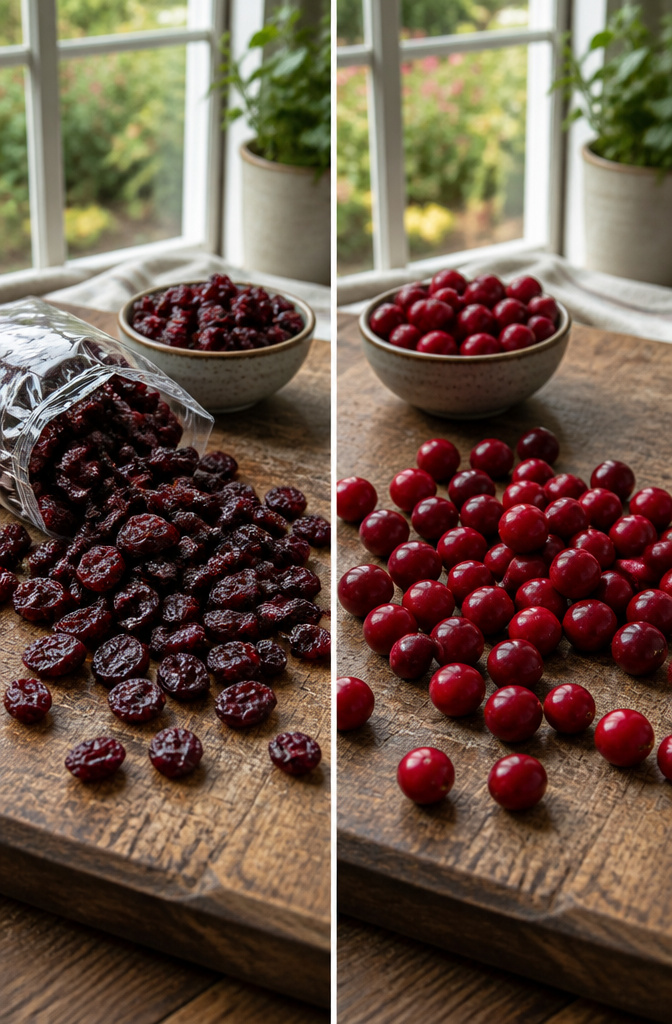
Most recipes call for dried cranberries because they are sweeter and easier to fold into shortbread dough without throwing off the texture.
Fresh cranberries are more tart and can release too much moisture into the dough, which is why frozen ones are an especially poor fit here.
If you do want that brighter pop of fresh berry, bring them to room temperature first and chop them fine, ideally with a quick pulse in the food processor.
Even then, you are working without standard measurements, since most written recipes assume dried. Dried cranberries keep the crumb tight and the bake predictable, so they are the safer choice unless you are comfortable adjusting by feel.
Storage and Freezing
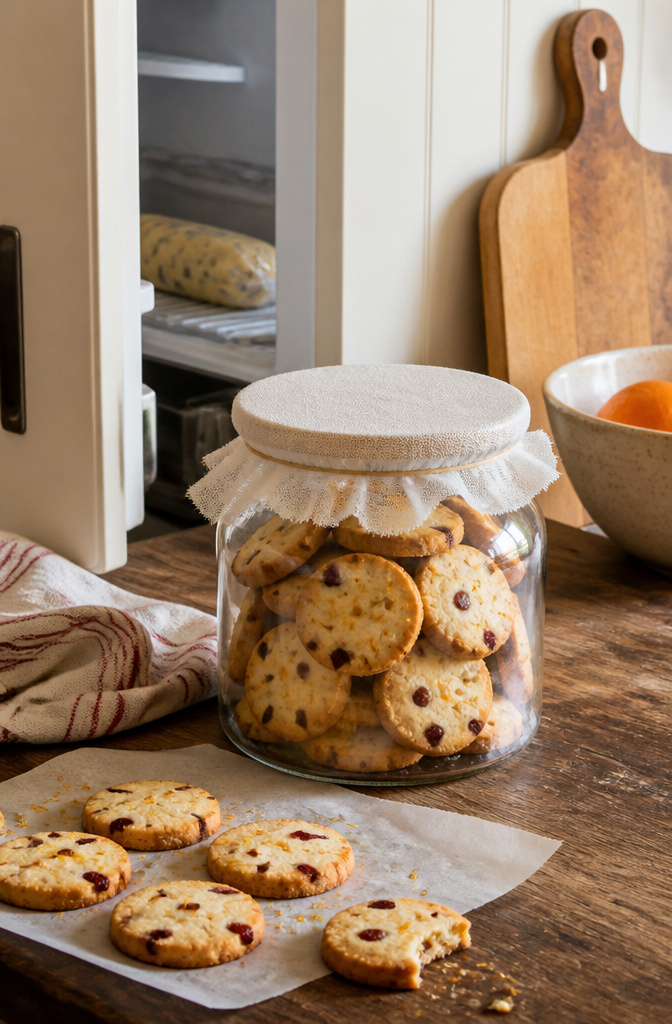
Baked cookies keep at room temperature for up to one week in an airtight container on the counter. There is no need to refrigerate them.
For longer storage, move them to the freezer in that same airtight container, where they will hold for two to three months.
You can also freeze the dough before baking. Shape it into a log, wrap it well, and freeze for up to two months.
Slice and bake straight from frozen, adding a minute or two to the oven time. This is the better route if you want the smell of fresh shortbread in the house without the work on a weeknight.
Variations and Additions
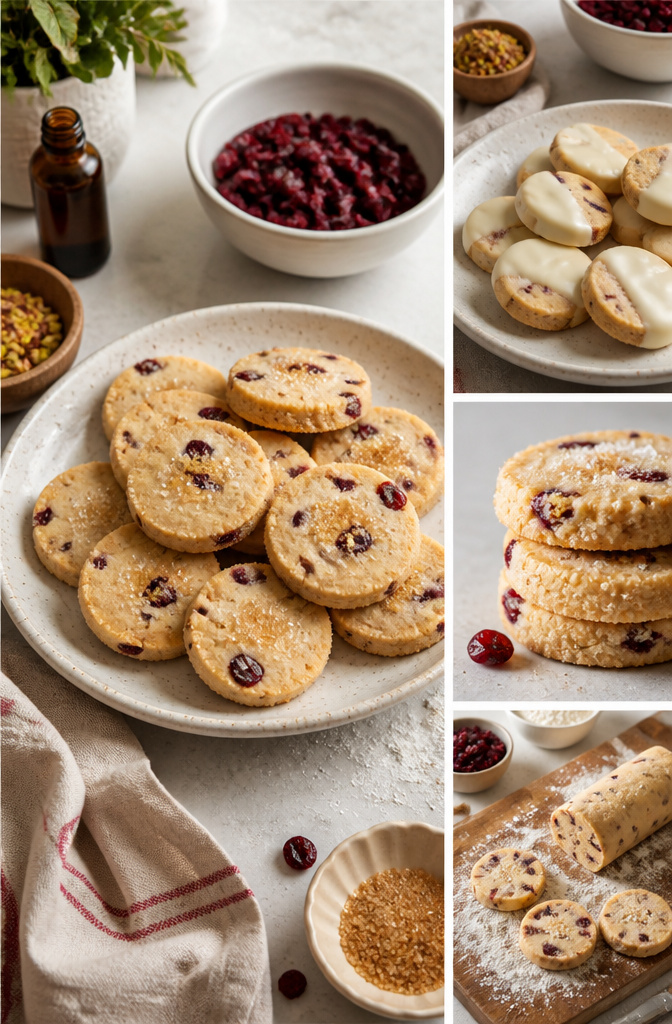
Turbinado sugar pressed onto the chilled log before slicing gives the baked cookies a glassy, crackled rim that catches light on a plate.
White chocolate works two ways here: chips folded into the dough for streaks of sweetness, or a quick dip of half the cooled cookie for a bakery-case finish.
Melt anywhere from two to eight ounces of chocolate, depending on your patience and your microwave.
Almond extract deepens the orange without tasting like marzipan, though vanilla is the fallback if that bottle is already in your cart.
Chopped pecans or walnuts add grit against the shortbread’s sandiness; pistachios read more festive if you are packing these for December.
A 9-by-9 pan turns the whole batch into bars you cut at whatever size the afternoon demands, which saves the slicing step entirely and still yields the same crumb.
Skip the chocolate if you want the cranberry sharpness up front, but do not skip the salt; it is what keeps orange from reading as candle.
Frequently Asked Questions
Can I use fresh cranberries instead of dried?
Fresh cranberries are more tart and can release too much moisture into the dough, so dried cranberries are the safer choice.
If you do want to use fresh, bring them to room temperature first and chop them fine, ideally with a quick pulse in a food processor.
Frozen cranberries are an especially poor fit here because they give off even more water.
How do I store cranberry orange shortbread cookies?
Keep baked cookies in an airtight container at room temperature for up to one week. There is no need to refrigerate them.
For longer storage, move them to the freezer in that same airtight container, where they will hold for two to three months.
How long do I need to chill the dough?
Chill the dough for at least 1 hour, though it holds fine for up to three days in the fridge.
The longer chill firms the butter so you can slice clean rounds without smushing the log, and it keeps the cookies from spreading into puddles on the baking sheet.
Some bakers make the dough a full day ahead; the flavor softens and deepens with that wait.
What are some tips for making cranberry orange shortbread cookies?
Use unsalted butter so you control the salt level yourself, and do not skip the salt entirely since it keeps orange from reading as candle.
Powdered sugar dissolves faster into the butter for a more tender crumb, while granulated holds more structure and gives a crisper edge.
Pulse dried cranberries with sugar in a food processor until finely chopped so they distribute evenly without tearing the dough.
What is the 321 rule for shortbread?
The classic 3-2-1 ratio means three parts flour, two parts butter, and one part sugar by weight, which is the traditional Scottish shortbread formula.
This recipe is close to that ratio but adds dried cranberries and orange zest as flavoring, plus a small amount of almond extract. The 3-2-1 rule produces the sandy, crumbly texture that defines shortbread.
When making shortbread, what must you not do?
Do not overwork the dough, because excess mixing develops gluten and turns the sandy crumb tough instead of tender. Do not add juice instead of zest, since extra moisture makes shortbread dense rather than crisp.
Do not skip the chilling step, or the log will smush when sliced and the cookies will spread into puddles in the oven.
Can you put dried cranberries in shortbread?
Yes, dried cranberries are the standard choice for this cookie and work well when chopped fine.
They are sweeter than fresh, easier to fold into shortbread dough without throwing off the texture, and they keep the crumb tight and the bake predictable. Most recipes assume dried, so the measurements are built around them.