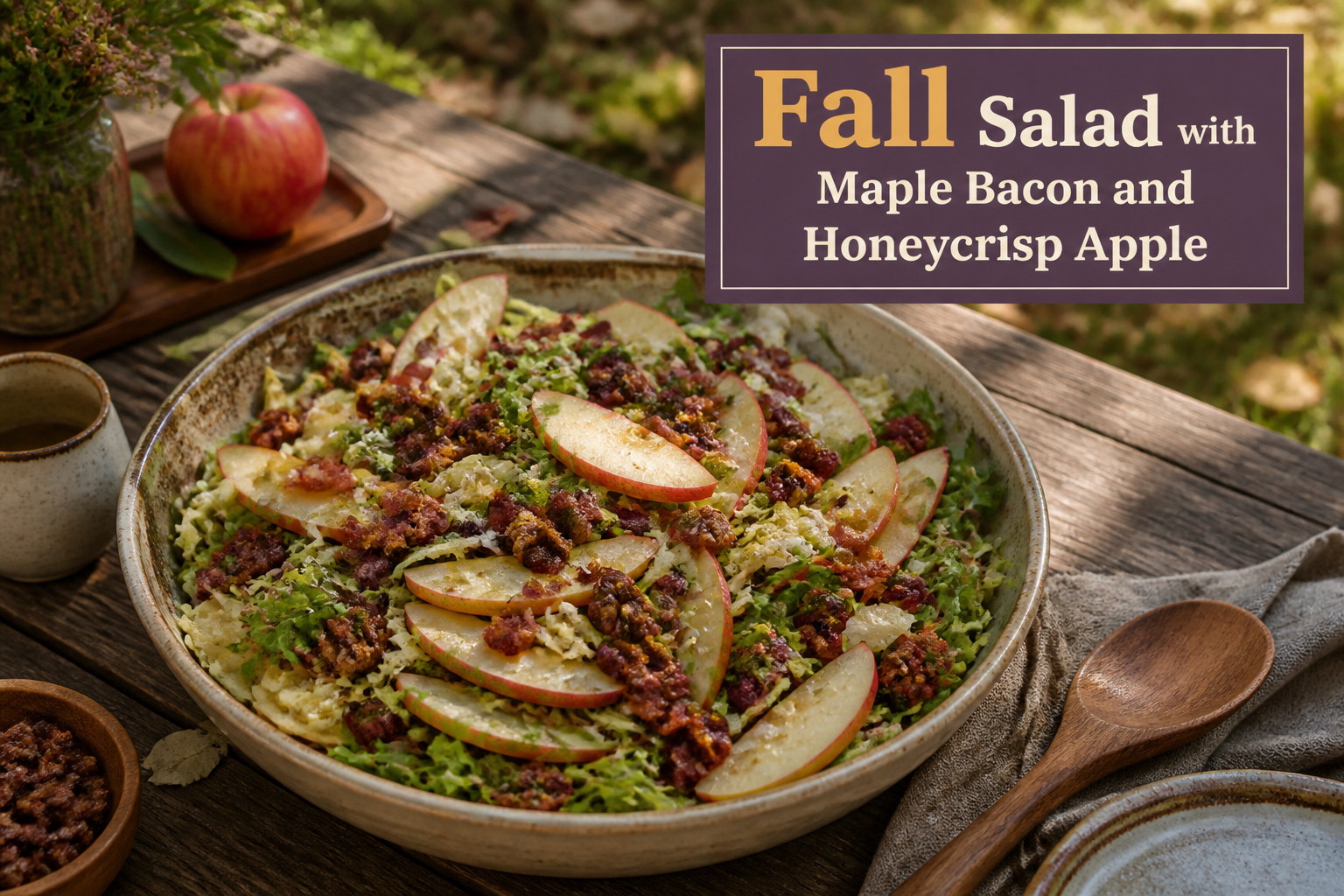
This salad lands somewhere between side dish and main event: crisp Honeycrisp apple, salty maple bacon, and enough structure that it holds up on a buffet table without wilting into a soggy pile.
The whole thing comes together in about 35 minutes, and the bacon gets cooked on a sheet pan alongside the candied pecans so you are not standing at the stove in batches.
The apple is what complicates things. Slice it too far ahead and it browns before you sit down; toss it with lemon immediately after cutting, or build the salad right before serving.
One source brings a shaved Brussels version to Thanksgiving every year and never has leftovers, which tells you how this flavor profile sits on a table already heavy with stuffing and gravy.
Spinach and Honeycrisp Apple Salad with Candied Pecans
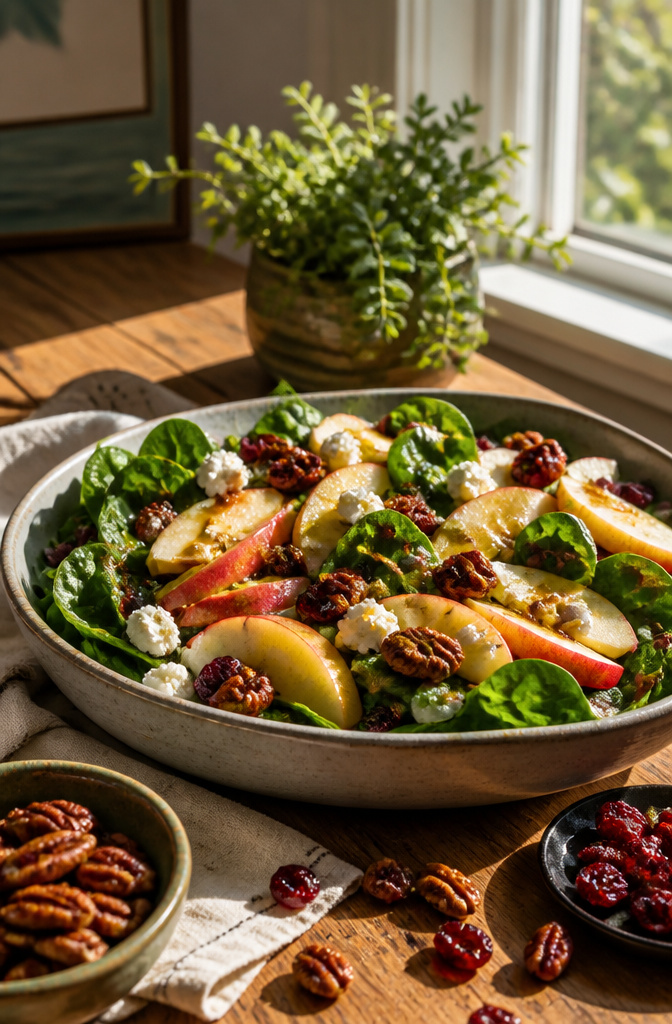
If you want a fall salad that shows up on every table for a reason, this is the one to start with.
The Honeycrisp apple makes this salad: buy it firm, slice it thin, and toss it with lemon if you’re not dressing the bowl immediately or it will brown before you sit down.
- Baby spinach holds up better than spring mix under the weight of toppings and doesn’t wilt into mush if someone takes seconds ten minutes later
- Dried cranberries add chew and tartness; scatter them rather than clumping or you get one bite that’s all sugar
- Goat cheese crumbles easiest straight from the fridge; let it warm and it smears instead of breaking into chunks
- Red onion works paper-thin or not at all; a mandoline helps but a sharp knife and patience does the same job
- Candied pecans are the bridge between sweet and savory here; source them or make them, but don’t skip them for plain nuts unless you’re out of time and out of options
The apple cider vinaigrette is what ties this together: tart, a little sweet, thin enough to coat leaves without drowning them. Shake it hard in a jar or whisk in a bowl; either way, taste before you pour.
One reader skipped the cider reduction entirely and still ate well, though the depth suffers.
If you double the batch, it keeps covered in the fridge for a couple days; the oil will solidify, so let it sit on the counter while you prep everything else.
Sweet Potato and Arugula Salad with Tahini Dressing
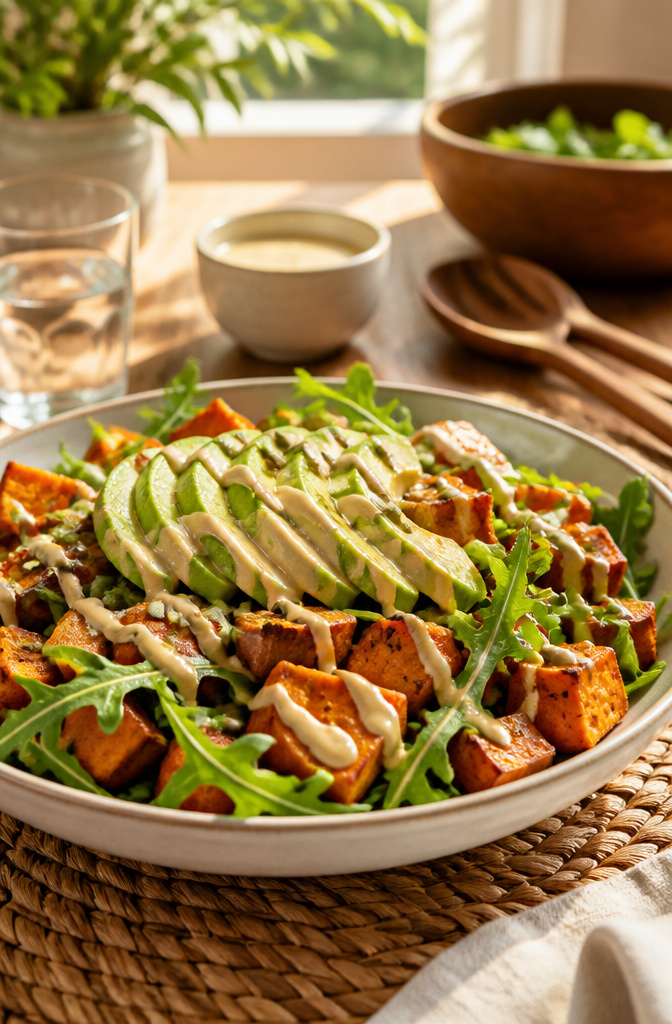
If you want a break from vinaigrettes, tahini dressing gives you creaminess without the heavy dairy feel that can weigh down a fall plate.
The roasted sweet potato method you will find in many fall salad recipes works here too: cube, oil, and roast until the edges brown and the centers turn soft.
That same technique shows up in delicata squash salads and other autumn combinations, so it is worth learning once and moving around.
- Toss the roasted sweet potatoes with peppery arugula while the potatoes are still warm; the leaves wilt slightly and the salad eats like a meal rather than a side.
- Add avocado in thick slices at the last second, or it will brown and soften into mush.
- Pepitas add crunch that holds up better than nuts if you are packing this for lunch.
- Feta brings the salt; crumble it fine so it distributes rather than landing in salty chunks.
- The tahini dressing should be thin enough to drizzle, not so thick it clumps. Thin it with water, not more oil, or it turns pasty.
Harvest Salad with Lemony Maple Dijon Dressing
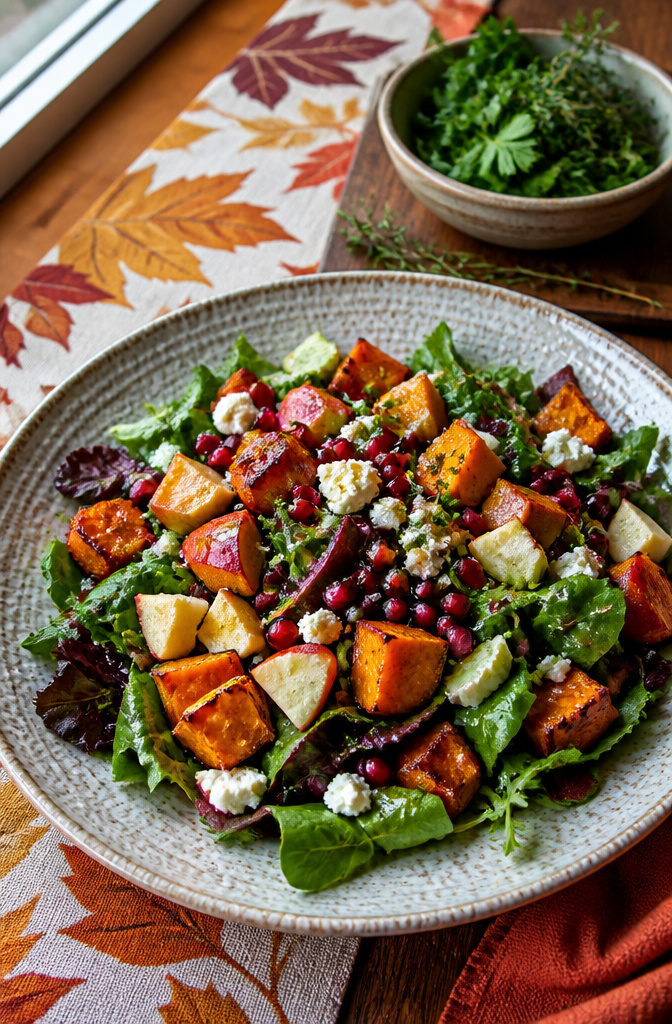
A harvest salad built on mixed greens, roasted sweet potatoes, diced Honeycrisp apple, pecans, pomegranate seeds, and feta holds up better than most fall combinations because two high-ranking recipes validate the same lineup.
You are not gambling on a random Pinterest find.
- Roast the sweet potatoes until the edges turn slightly crisp, then let them cool before they hit the greens. Hot potatoes wilt lettuce into a limp pile.
- The lemony maple Dijon dressing follows a pattern worth memorizing: maple syrup and Dijon mustard whisked together first, then apple cider vinegar, then olive oil drizzled in a slow stream while you whisk hard. The mustard and syrup emulsify the oil into something thick enough to coat a leaf instead of pooling at the bottom of the bowl.
- If the dressing breaks and stays oily, a hand blender saves it in about ten seconds. This is the one tool worth pulling out; the rest of the salad needs nothing but a sheet pan and a knife.
- One version of this recipe adds carrots and red onion; another skips them and still works. The core five ingredients, sweet potato through feta, are what matter.
Kale Caesar with Roasted Chickpeas
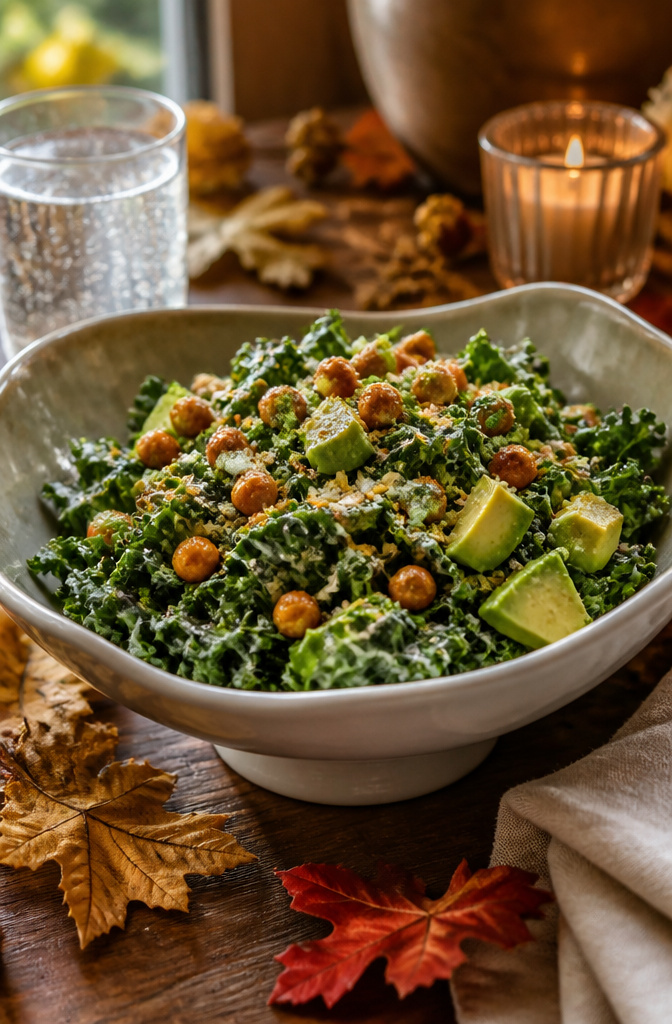
Romaine and kale together solve the texture problem that kills most kale salads. The romaine stays crisp and gives you something to snap into; the kale softens enough to coat evenly without going limp.
- Roast the chickpeas until they rattle when you shake the pan, about 20 minutes at 425°F. They should sound hollow, not soft, or they turn mealy by day two.
- Pat the chickpeas completely dry before oiling them. Water trapped in the fold of each one steams instead of crisps, and you end up with half the crunch.
- Toss the greens separately first: kale with the dressing needs a minute of massaging to break down the fibers, romaine gets folded in at the end so it doesn’t bruise.
- Avocado goes on last, in chunks big enough to hold their shape when you dig in. Small dice disappear into the dressing.
- The roasted chickpea method replaces bacon or croutons for a meatless version, but it also works alongside both if you want the full load.
Shaved Brussels Sprouts Salad
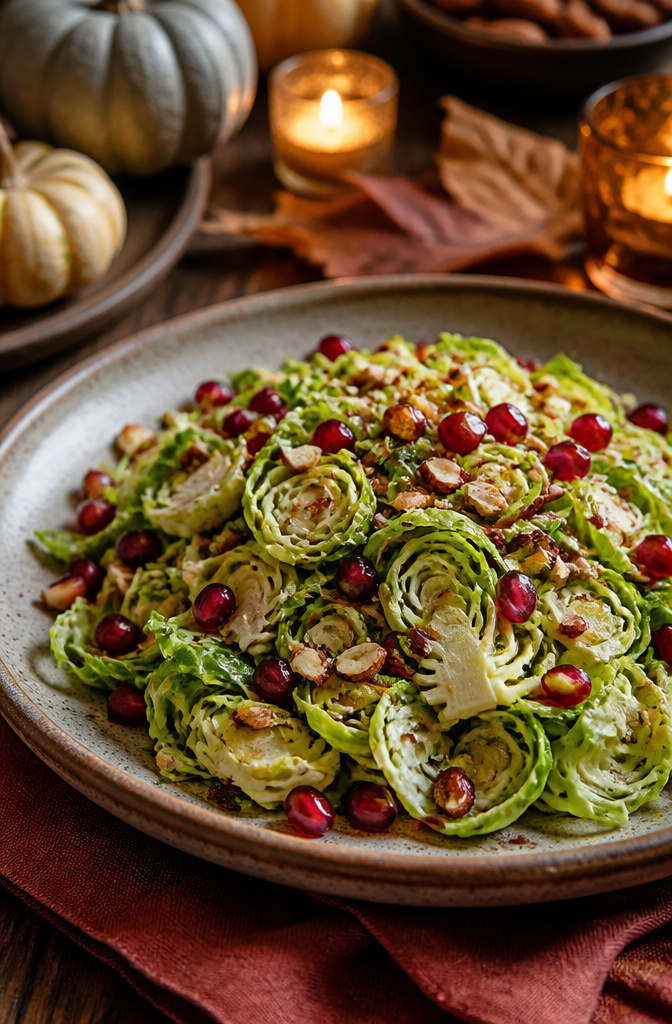
Shaved Brussels sprouts give you the crunch of a slaw without the usual cabbage heaviness. Raw sprouts sliced paper-thin soften just enough in a light dressing to lose their bitterness while keeping their structure through a long meal.
A few things to get right:
- Shave them thin, not chopped. A mandoline or the slicing disk on a food processor gets you to the right texture in under two minutes. Knife chopping leaves thicker pieces that stay tough and taste sulfurous.
- Plan this for Thanksgiving morning or the day before. The sprouts need at least twenty minutes with the dressing to mellow, and they hold well for hours without wilting.
- One source brings this to Thanksgiving dinner every year and never has leftovers. That tells you something about how it sits on a table heavy with stuffing and gravy.
- Keep the dressing light and acidic. A citrus vinaigrette works, or a simple lemon juice and olive oil base. Heavy cream dressings weigh the shavings down and turn them sodden by the second helping.
- Pomegranate arils add the color and juiciness that reads "holiday" without extra work. Scatter them on just before serving so they don’t bleed.
- If you want bulk, thin-sliced lacinato kale or red cabbage mixes in cleanly, though the Brussels sprouts should stay the majority so the salad doesn’t feel like a coleslaw in disguise.
Roasted Beet and Apple Salad with Goat Cheese
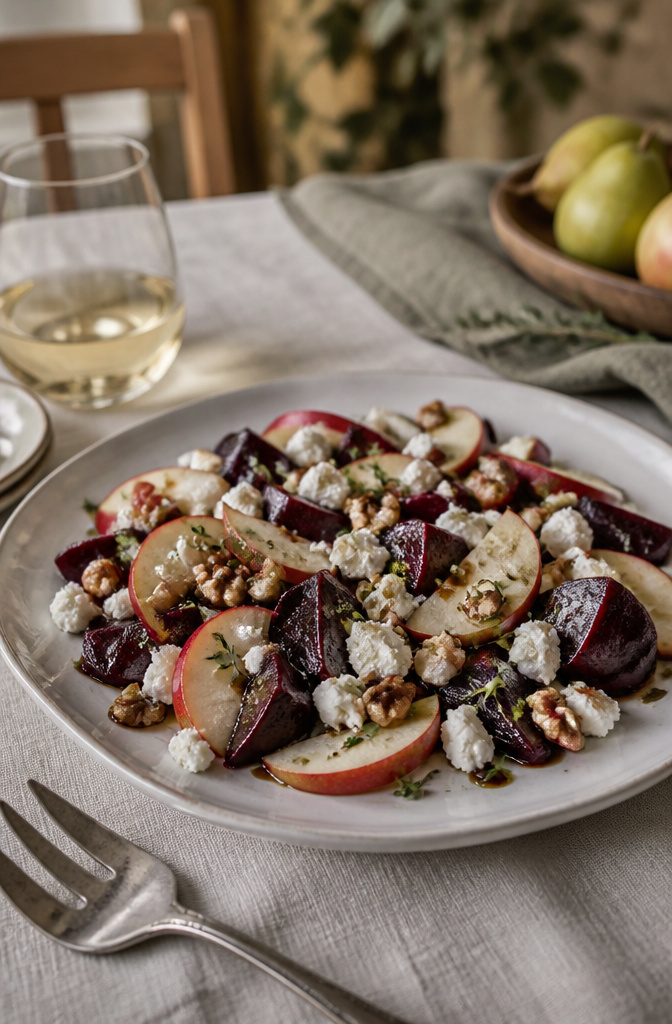
Roasted beets take time, but that time does not have to be Tuesday evening. Roast a batch on Sunday, let them cool in their skins, and slip the skins off with your thumbs when you are ready to use them.
The skins will come away cleanly once the beets have rested, and the flesh underneath will be dense and sweet without the tinny edge raw beets carry.
- Wrap whole scrubbed beets in foil, set them on a sheet pan, and roast at 400°F until a paring knife slides through to the center without resistance; medium beets usually need 45 to 60 minutes
- Let the roasted beets cool completely before you peel them; warm beets shed skins poorly and will stain your cutting board more deeply
- Slice or cube the peeled beets, then pair them with Honeycrisp apple wedges, crumbled goat cheese, and a simple balsamic vinaigrette made from three parts oil to one part vinegar
- The apple adds crisp sweetness against the beets’ earthiness, and the goat cheese softens the vinegar’s sharpness without requiring any additional creaminess
This combination appears in several foundational fall salad recipes because it works reliably and uses ingredients you already buy this time of year.
Wild Rice Salad with Roasted Sweet Potatoes and Cranberries
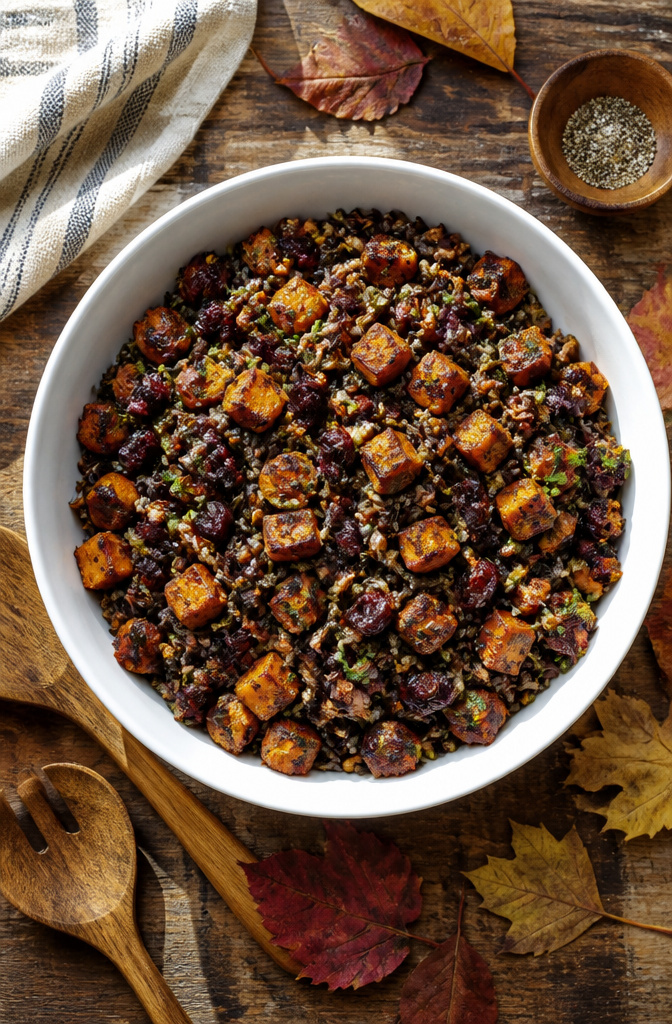
A grain-based salad keeps dinner interesting once you’ve cycled through the leafy options. Wild rice works here because it holds up for days without turning mushy.
- Roast sweet potato cubes at a high heat until the edges caramelize and the centers stay creamy; this takes about 25 minutes and is the only cooking step that can’t be skipped.
- Toss the still-warm potatoes with cooked wild rice so the grains absorb some of that sweetness.
- Add dried cranberries for chew and a little sharpness against the potato’s depth.
- Fresh herbs make this category distinct: parsley keeps it clean, but thyme or sage pushed in while the potatoes are hot will read more overtly autumn.
- Dress simply. The components are already sweet, so a sharp vinaigrette with cider vinegar or plenty of lemon balances rather than piles on more sugar.
This is a Sunday-prep salad that still tastes like something on Wednesday.
Carrot and Date Salad with Cumin Dressing
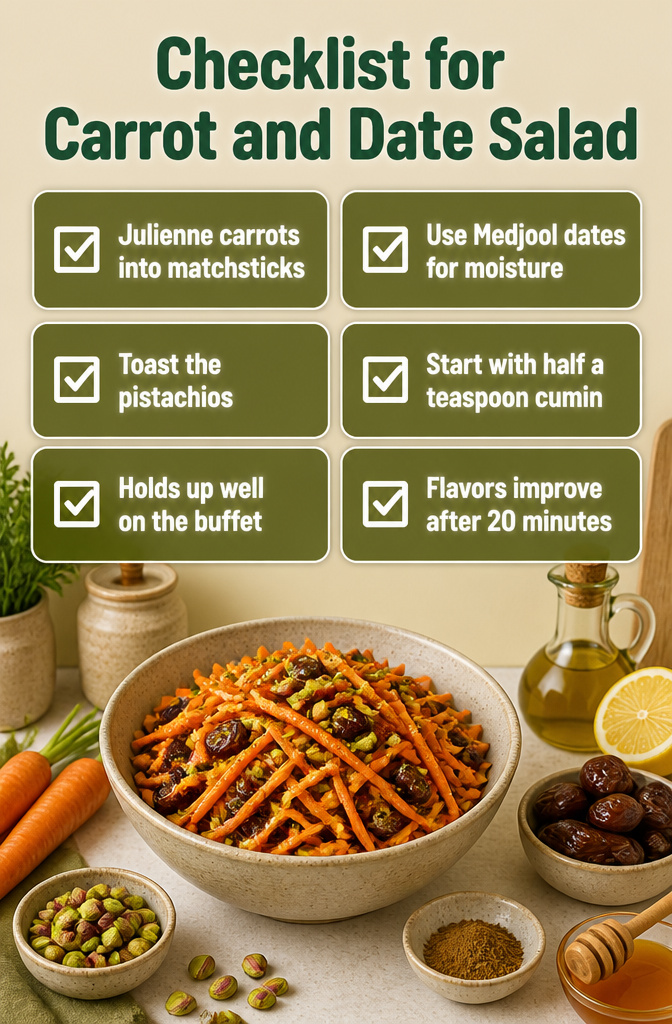
If you want a break from the apple-and-maple loop that dominates most fall salad recipes, julienned carrots with Medjool dates and pistachios is the move.
The North African flavor profile comes from a dressing of olive oil, lemon juice, honey, and cumin. It reads sweet and earthy rather than bright and citrusy, and it holds up on a buffet table.
- Julienne the carrots into matchsticks, not shreds. A mandoline with a julienne blade does this in minutes; a sharp knife and patience work fine. Uniform size matters here because the dates are soft and you want contrast in every bite.
- Use Medjool dates, not the drier Deglet Noor kind. They carry enough moisture to blend into the dressing without turning to paste.
- Toast the pistachios. The original skips this, but the extra step keeps them crunchy against the soft fruit.
- The cumin carries this salad. Start with half a teaspoon, taste, and add from there. It should register as warm and faintly smoky, not aggressively spiced.
- This one travels well. The carrots stay crisp for hours, and the flavors actually improve after twenty minutes of sitting together.
Pomegranate and Roasted Squash Salad
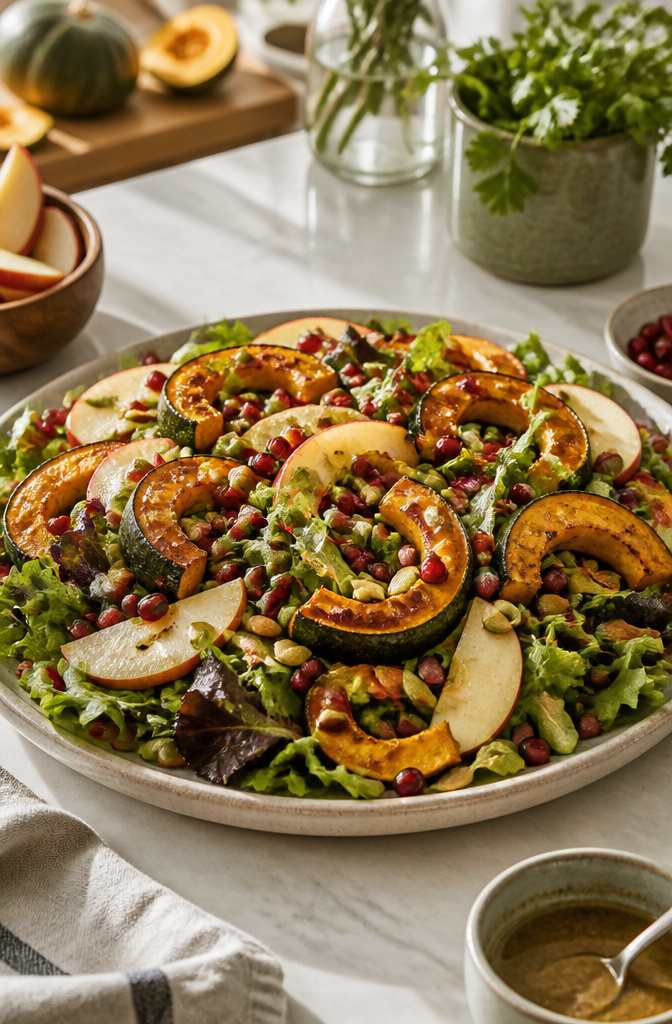
Roasted squash turns a pile of greens into a meal that holds you until bedtime. Warm butternut squash tossed onto cold greens wilts just enough to soften the edges without collapsing, and the leftover halves keep for days.
- Acorn squash works here too, or even pumpkin if that is what the bin holds. The roasting part matters more than the specific squash: the oven draws out sweetness you do not get from steaming, and the soft flesh catches dressing in a way raw vegetables never do.
- Pomegranate arils scatter over the top for juice bursts against the squash. One source admits they are decorative more than essential: the texture can fight the other ingredients, so use a light hand if you are skeptical, or skip them and let the squash carry the sweetness.
- Honeycrisp apple slices add crunch alongside the squash, and a handful of pepitas or candied pecans keeps every bite from feeling the same. Feta crumbles in for salt if you want a third layer beyond the maple bacon in the main recipe.
- Dress it while the squash is still warm, or at room temperature if you roasted ahead. Both work; the warm version just softens the greens faster.
Autumn Harvest with Butternut Squash and Feta
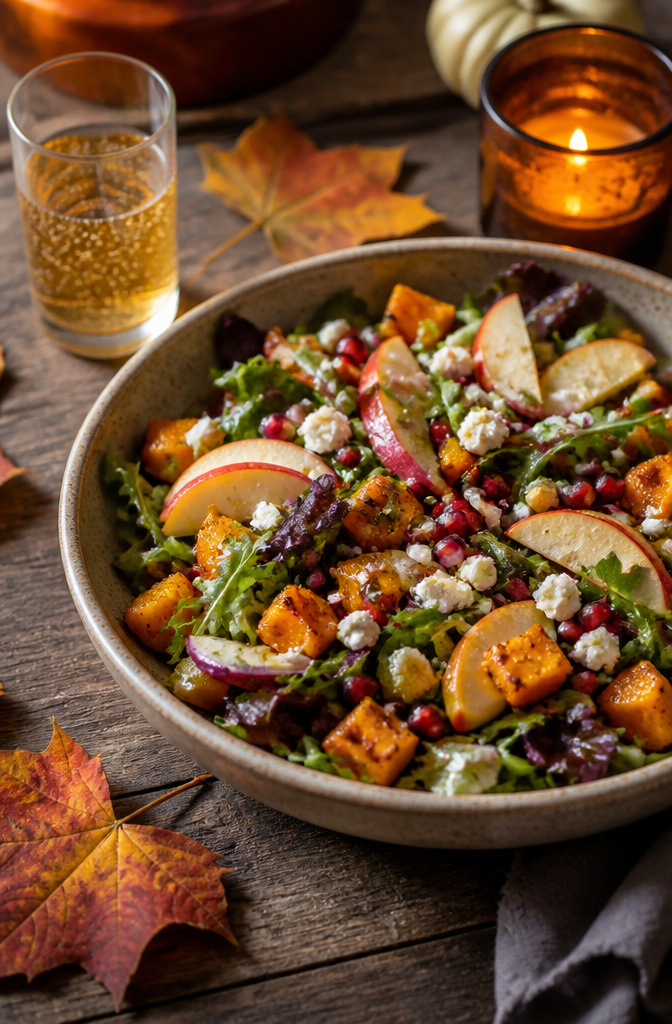
Butternut squash is the squash most recipe writers reach for when they build a fall salad, and two solid combinations show why. Here is what you get:
- Roast the squash until it caramelizes at the edges, then toss it with mixed greens, sliced Honeycrisp apples, candied pecans, and crumbled feta. The squash softens while the apples stay crisp, and the feta cuts the sweetness with something sharp and salty.
- Add a handful of pomegranate arils if you want more color and a quick burst of juice against the warm squash. Thin-sliced red onion works here too; it wakes the whole thing up without extra dressing.
- Some builds add roasted chicken to turn it into dinner. Others keep it vegetarian and lean on pepitas for crunch. Either way, the base holds: greens, squash, apple, pecan, feta.
- The dressing is usually a cider vinaigrette, tangy against all that sugar and starch. Cinnamon and maple versions exist, but cider is the one you see most.
This is the salad that covers the whole season on one plate. Make it once and you will keep the formula in your head.
Apple, Celery, and Walnut Salad
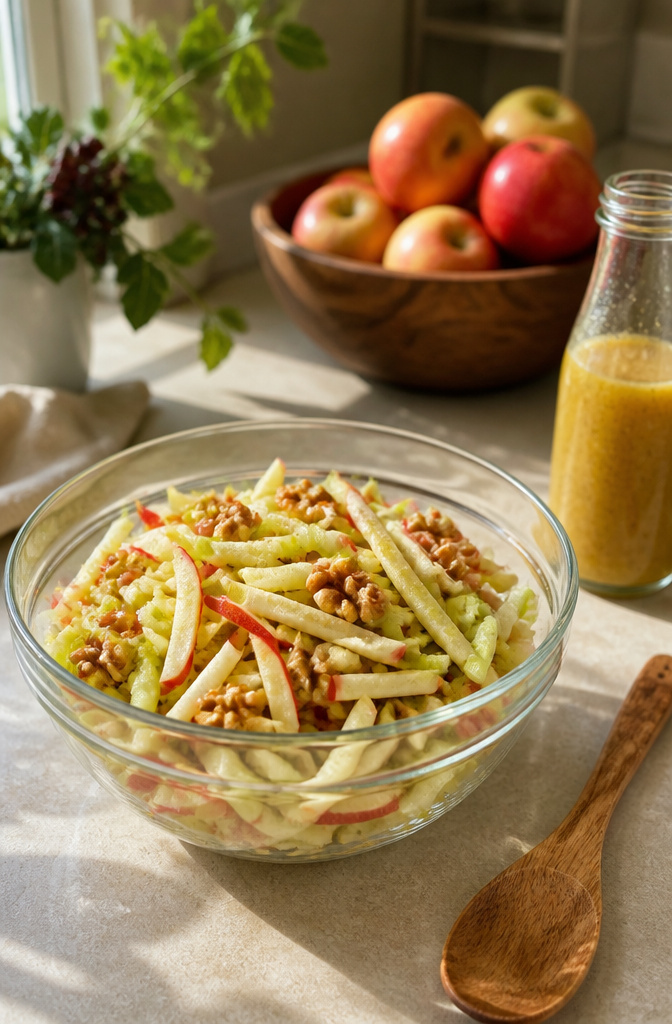
The Waldorf-adjacent pairing of apple, celery, and walnuts is what you make when you want crunch without the weight of cheese or roasted vegetables.
Tart Honeycrisp holds up against the faint bitterness of celery and walnuts, so the salad stays crisp on the plate longer than softer lettuces.
- The dressing pulls from pantry staples: extra-virgin olive oil, apple cider vinegar, Dijon mustard, maple syrup, salt, and pepper. Shake it hard in a jar until it thickens enough to coat the back of a spoon.
- Cut the apple into thin matchsticks rather than chunks. More surface area means more dressing clings to each bite, and the celery slices at the same width so neither dominates.
- Toast the walnuts in a dry skillet for three to four minutes until they smell nutty. Raw walnuts work in a pinch, but the toasting rounds out the bitterness that raw celery already brings.
- This combination works as a lighter counterpoint to heavier fall mains. Serve it alongside the maple bacon salad from the top of this post, or pack it for lunch where it will not wilt by noon.
Kale and Butternut with Maple Spiced Pecans
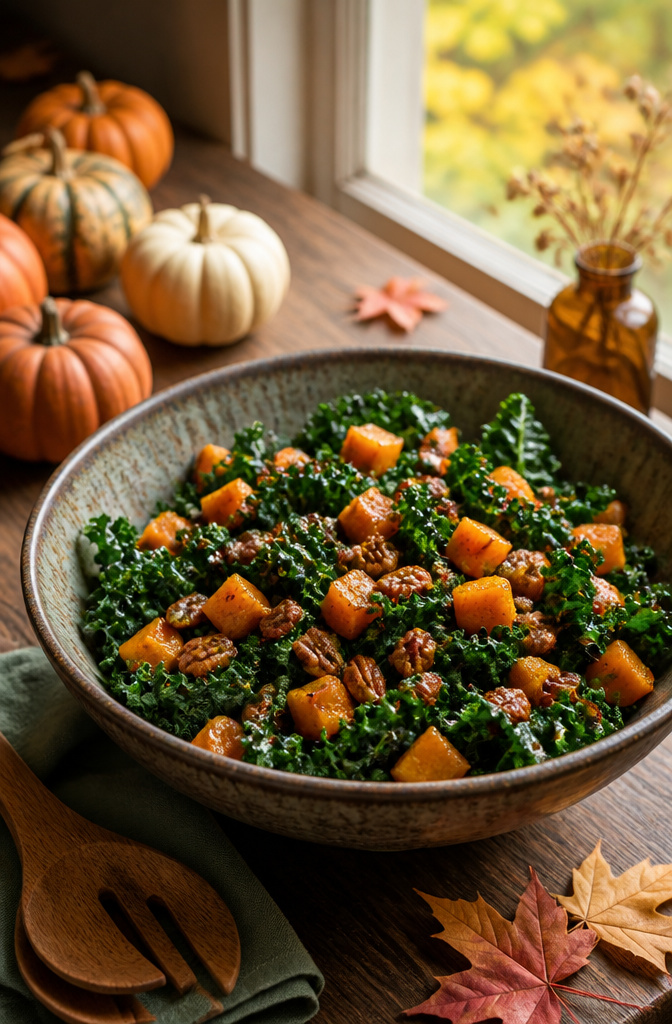
The maple pecans are where most home cooks slip up, so treat them as their own step, not an afterthought. To get them right:
- Start with 1 cup chopped pecans, not halves. Smaller pieces coat more evenly and bake in 7 to 10 minutes at 400°F instead of risking scorching on the outside while the center stays raw.
- Toss the pecans with 1 tablespoon olive oil, ½ tablespoon pure maple syrup, and ¼ teaspoon fine sea salt. Spread them on parchment paper. The syrup caramelizes fast; if your oven runs hot, check at 6 minutes.
- Pull them when they smell toasted and the glaze looks set but not dark. They firm up as they cool, so do not wait for crunch in the oven or you will burn them.
- For the kale, use lacinato (destemmed and thinly sliced) and massage it for about 15 seconds with lemon juice and vinegar from the dressing. This breaks down the fibers so it softens without wilting.
- Add roasted butternut squash while it is still warm. The residual heat helps the kale relax further and mixes the flavors together.
- Toss in the cooled pecans last so they keep their snap. If you are holding the salad for later, store them separately and add before serving.
Cabbage Salad with Sesame Peanut Dressing
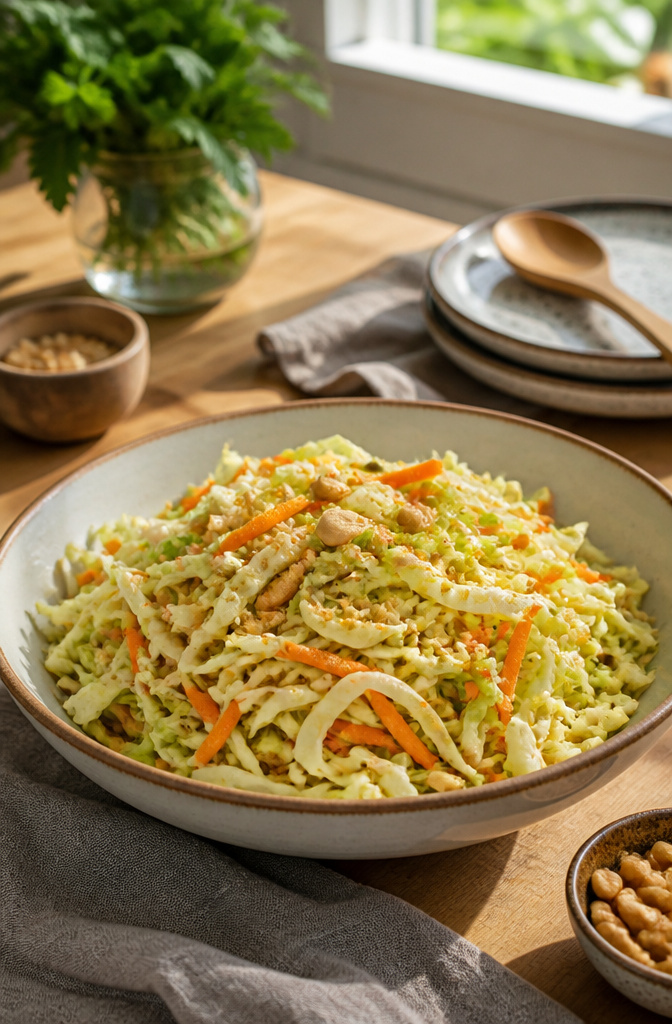
A sharp sesame peanut dressing cuts through the autumn sweetness that dominates most fall salad recipes. Shredded green or napa cabbage holds up for days without wilting, which matters when you are packing lunch on Tuesday from Sunday prep.
- Toast the sesame seeds in a dry skillet until they darken by one shade; carryover heat pushes them to burned while you are still at the stove.
- Thin the dressing with warm water, not more oil, so it coats the cabbage instead of pooling.
- Add a handful of roasted peanuts at the last second; they soften to leather if they sit in the dressing overnight.
- A grated carrot and sliced scallion are enough vegetable company; this is not the place for roasted squash or dried fruit.
The flavor lands somewhere between coleslaw and cold peanut noodles. Serve it when the maple-apple group at the table needs a reset, or when you want a fall salad that reads as dinner rather than dessert.
Keep the dressing and cabbage separate until the day you eat it; even sturdy cabbage weeps if it sits dressed too long.
Broccoli Honeycrisp Slaw
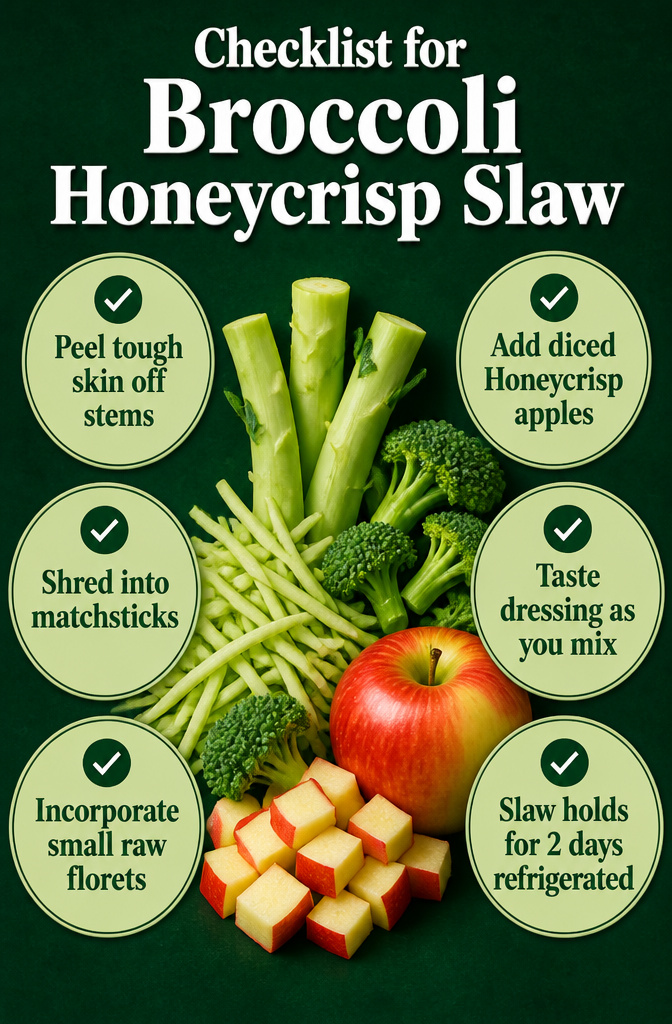
Most broccoli slaw recipes never mention that you are eating a different vegetable than the florets you steam for dinner. The stems carry a milder, sweeter crunch once you peel away the fibrous outer layer and shred what is left.
- Run the flat side of a chef’s knife along each stem to strip the tough skin, then cut the pale interior into matchsticks or run it through the shredding disk of a food processor.
- Toss the shredded stems with small raw florets broken apart by hand; the two textures keep each bite interesting.
- Add diced Honeycrisp apple right before serving so the acid in the dressing does not soften the edges.
- A sweet dressing binds this salad, though you will want to taste as you go; Honeycrisp brings its own sugar and can tip the balance toward candy.
- The slaw holds well for two days refrigerated, which matters for weeknight dinners, though the apple will darken slightly even with lemon juice in the mix.
Loaded Farro Salad with Lemon Dressing
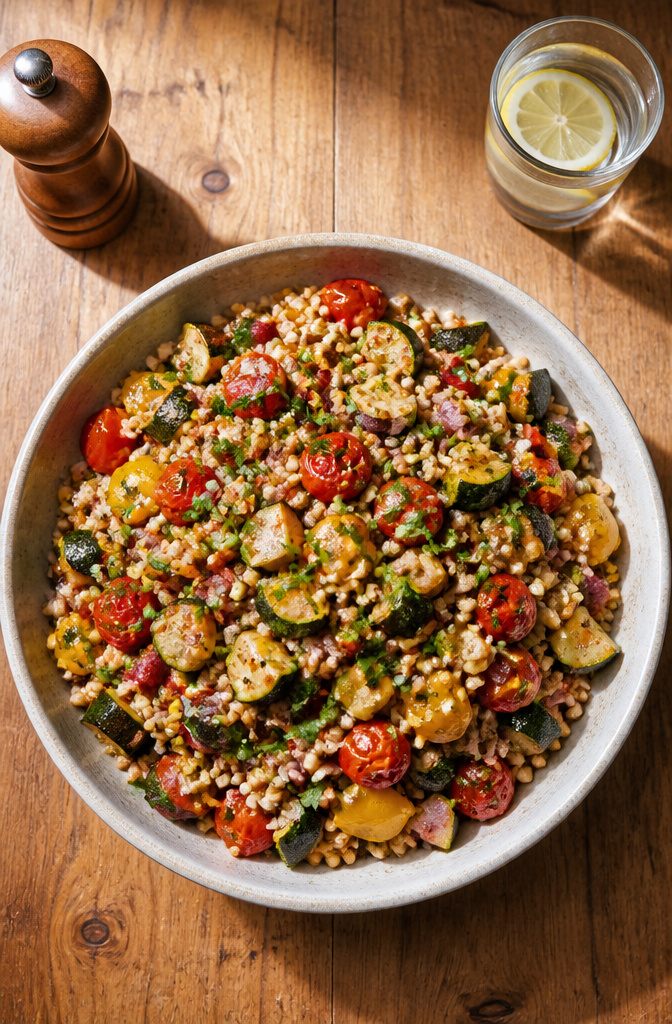
Farro holds up better than most grains when you cook it ahead, which matters when you are trying to get dinner on the table fast.
Cook the farro until it still has some chew, drain it well, and toss it with a little olive oil while it is warm so the grains do not clump together. Let it cool completely before you store it.
- Make the farro up to three days ahead and keep it in an airtight container in the fridge.
- Prep your vegetables while the farro cooks or while it cools. Roast anything that needs roasting, then let those components cool too.
- Chop raw vegetables like carrots or sweet potatoes ahead, but wait on the apple until just before serving so it does not brown.
- Store the lemon dressing separately in a jar. Dress the salad right before you eat, since dressed leftovers will get soggy.
- If you are assembling for lunch, pack the dressing in a small container and pour it on at your desk.
Undressed assembled salads keep for a couple of days in the fridge. Once the dressing hits, plan to eat it fresh.
Charcuterie Salad
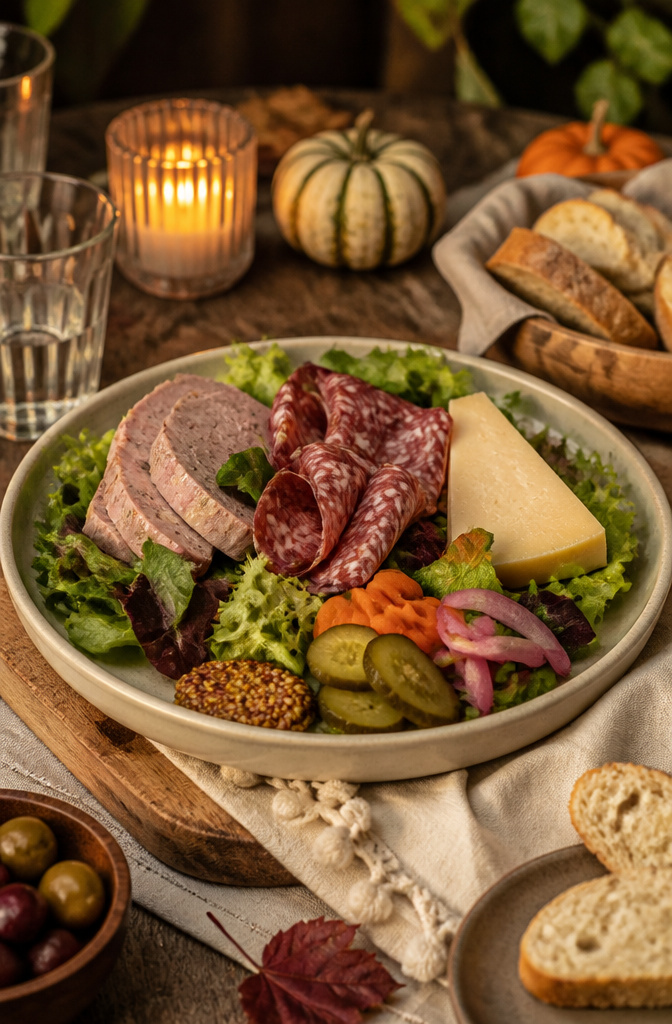
A composed salad built around cured meat, cheese, and pickled elements fills the plate like a main dish, not a quiet side.
- Start with a thick slice of country pâté or a few folds of dry-cured salami as the base layer. You want something that can sit in a warm kitchen for fifteen minutes without turning slick.
- Add a wedge of aged cheese that holds its shape when cut. Manchego or a firm Alpine-style cheese works; soft cheeses will smear across the board before you plate.
- Pickled vegetables cut the fat. Cornichons, pickled red onion, or giardiniera bring the acid that makes the next bite of meat taste fresh again.
- A small pot of whole-grain mustard or fig jam lets people compose each bite themselves. This matters more than you’d think: a set dressing pools and turns the meat gummy.
- A few leaves of radicchio or endive underneath keep the plate from looking like a deli tray. Their bitterness also resets your palate between bites.
- Bread is optional but practical. A torn piece of baguette does the work of pushing cheese onto a fork, and it turns the salad into a full dinner without extra cooking.
Fig and Fried Goat Cheese Salad
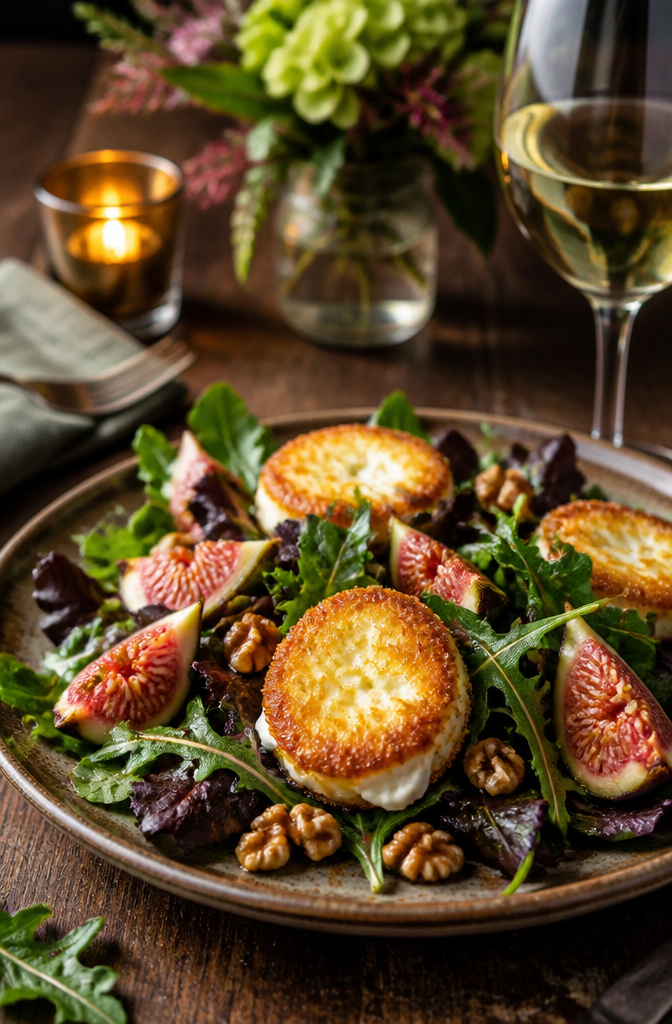
Fried goat cheese turns a salad from a side into something you actually want to eat.
Bread rounds of chilled chèvre in panko, fry them in a thin layer of oil until the crust is golden and the center just starts to soften, and set them on the plate while they are still warm.
The contrast against cool fresh figs and crisp walnuts is the reason this works.
- Fry the cheese last, after the greens are dressed and the bowls are out. A warm round placed on top just before serving keeps its crunch against the figs’ softness.
- Use Black Mission or Brown Turkey figs when they are in season in early fall. Cut them into quarters so each bite has both skin and flesh.
- Walnuts are the nut to use here. Their slight bitterness balances the sweetness of the figs and the richness of the cheese.
- If you cannot find fresh figs, this preparation still works with ripe pears or late-season tomatoes. The fried cheese is the element that carries the dish.
- The breading will slide off if the cheese is too wet. Pat it dry, then freeze the rounds for ten minutes before coating them.
Roasted Apple and Radicchio with Bacon
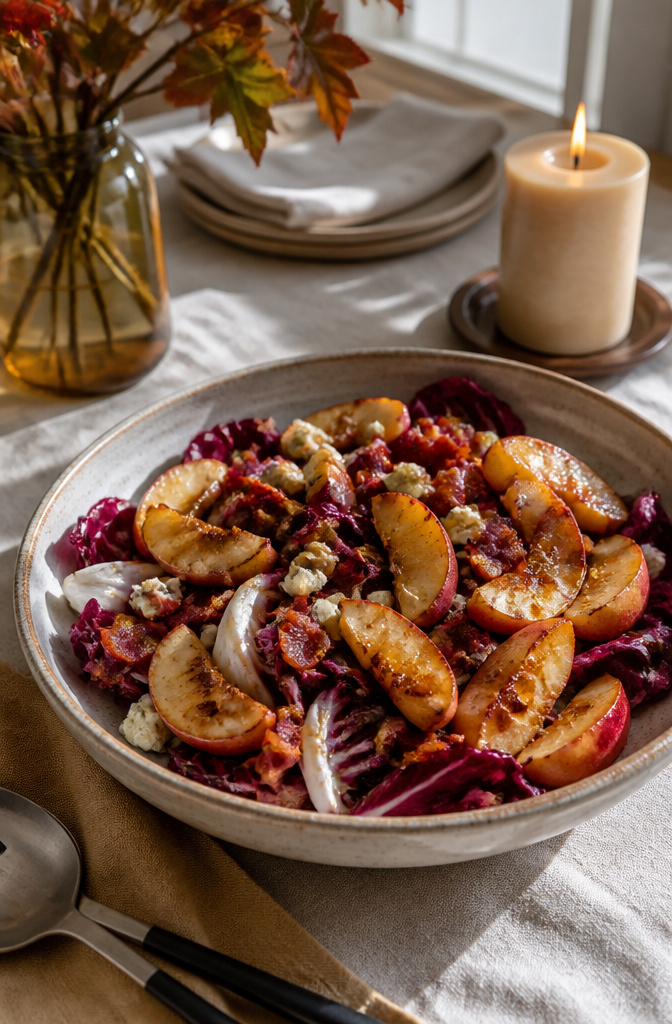
Raw apple salads have their place, but roasting the fruit changes what fall salad recipes can do. The method works like this, and the result lands differently from raw preparations.
- Roast Honeycrisp wedges at high heat until the edges caramelize and the flesh turns tender; the heat collapses some of the apple’s water, so the sweetness concentrates instead of reading as one-note crispness.
- Toss the warm apples with torn radicchio while both are still from the oven; the residual heat wilts the leaves slightly and takes the raw bite down without losing the bitter backbone that balances the sugar.
- Add the bacon last, crumbled over the top so it keeps its snap against the yielding fruit and wilted greens; the salt and fat bridge the two flavors instead of fighting them.
- The result eats closer to a warm side dish than a chilled starter, which is the point: this is the salad you build when you want something that holds up to pork chops or roast chicken without needing a separate vegetable.
Crispy Rice Salad with Seasonal Vegetables
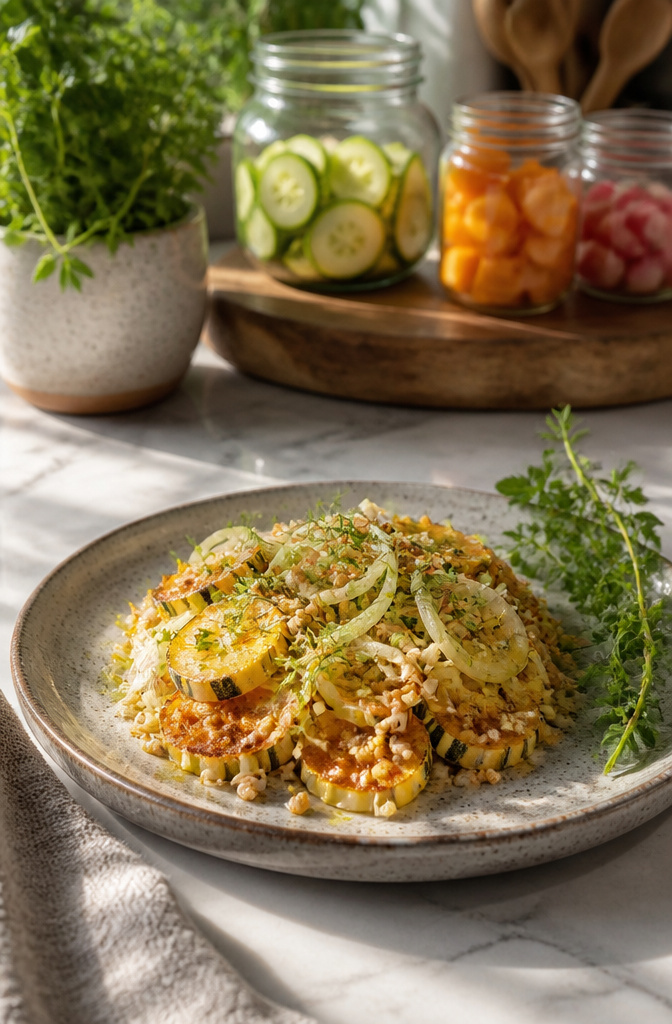
Cold rice fries faster and crunchier than fresh, so this is a fine use for leftovers. Spread day-old cooked rice on a sheet pan, drizzle with oil, and bake at a high temperature until the grains turn golden and brittle.
The texture is the point here: you want separate, glassy pieces that shatter between your teeth, not a chewy cluster.
- Start the rice in a cold oven if you want the most even color; it heats slowly and dries the grains without burning the edges.
- Season the rice while it is hot so the salt and any spices stick to the surface oil.
- Build the salad on the crispy rice just before serving. Dressed too early, the grains soften and you lose the contrast.
- For fall vegetables, roasted delicata squash coins and raw shaved fennel hold up to the crunch without competing.
- A dressing of rice vinegar, a little maple, and toasted walnut oil bridges the warm and raw elements without pooling in the bowl.
Maple Bacon Fall Chopped Salad
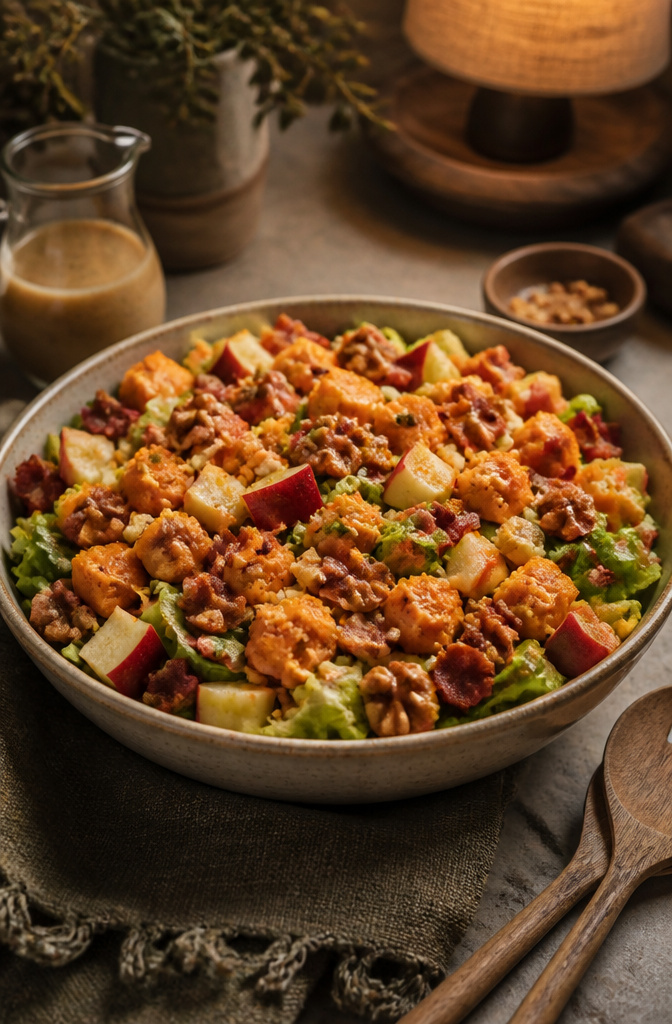
A chopped format turns fall salad from a side dish into the main event. Precut butternut squash from the market is a true weeknight time-saver here, cooking alongside bacon on a single baking sheet.
As soon as the bacon is done, chopped walnuts take their place on the sheet pan to toast in the oven. Hard-boiled eggs and cheddar add heft, while fall’s crisp apples bring a sweet crunch.
Precut butternut squash from the market is a true weeknight time-saver here, cooking alongside bacon on a single baking sheet. As soon as the bacon is done, chopped walnuts take their place on the sheet pan to toast in the oven.
This means one sheet pan, one timer, and no extra skillet for the nuts.
- Chop everything to roughly the same size so you get squash, bacon, apple, and walnut in each bite
- Use Honeycrisp or any crisp apple; softer varieties turn mealy against the hot squash
- The maple-bacon pairing works because the fat carries the smoke and the syrup clings to the chop, not the leaf; this is why a chopped salad beats a plated one here
- Walnuts toast fast, so set the timer or they burn while you dice the apple
- Cheddar and egg make it dinner; skip both if you want it lighter, but keep the bacon fat in the dressing
Frequently Asked Questions
What are some good fall salad recipes?
Start with spinach and Honeycrisp apple salad with candied pecans, or sweet potato and arugula with tahini dressing for something creamy.
A harvest salad with lemony maple Dijon dressing holds up reliably for groups, and kale Caesar with roasted chickpeas solves the usual texture problems of raw kale salads.
How do I make a fall salad dressing?
Shake or whisk the components hard so they emulsify instead of staying oily. For a maple Dijon version, whisk maple syrup and mustard together first, then add vinegar, then drizzle oil slowly while whisking.
Taste before you pour; one reader skipped the cider reduction entirely and still ate well, though the depth of flavor suffered.
What are the best ingredients for a fall salad?
Honeycrisp apples add crisp sweetness, roasted butternut squash or sweet potatoes bring substance, and bitter greens like arugula and kale balance the sugar.
Feta cuts sweetness with salt, candied pecans bridge sweet and savory, and pomegranate arils or dried cranberries add chew and sharpness against all that starch.