
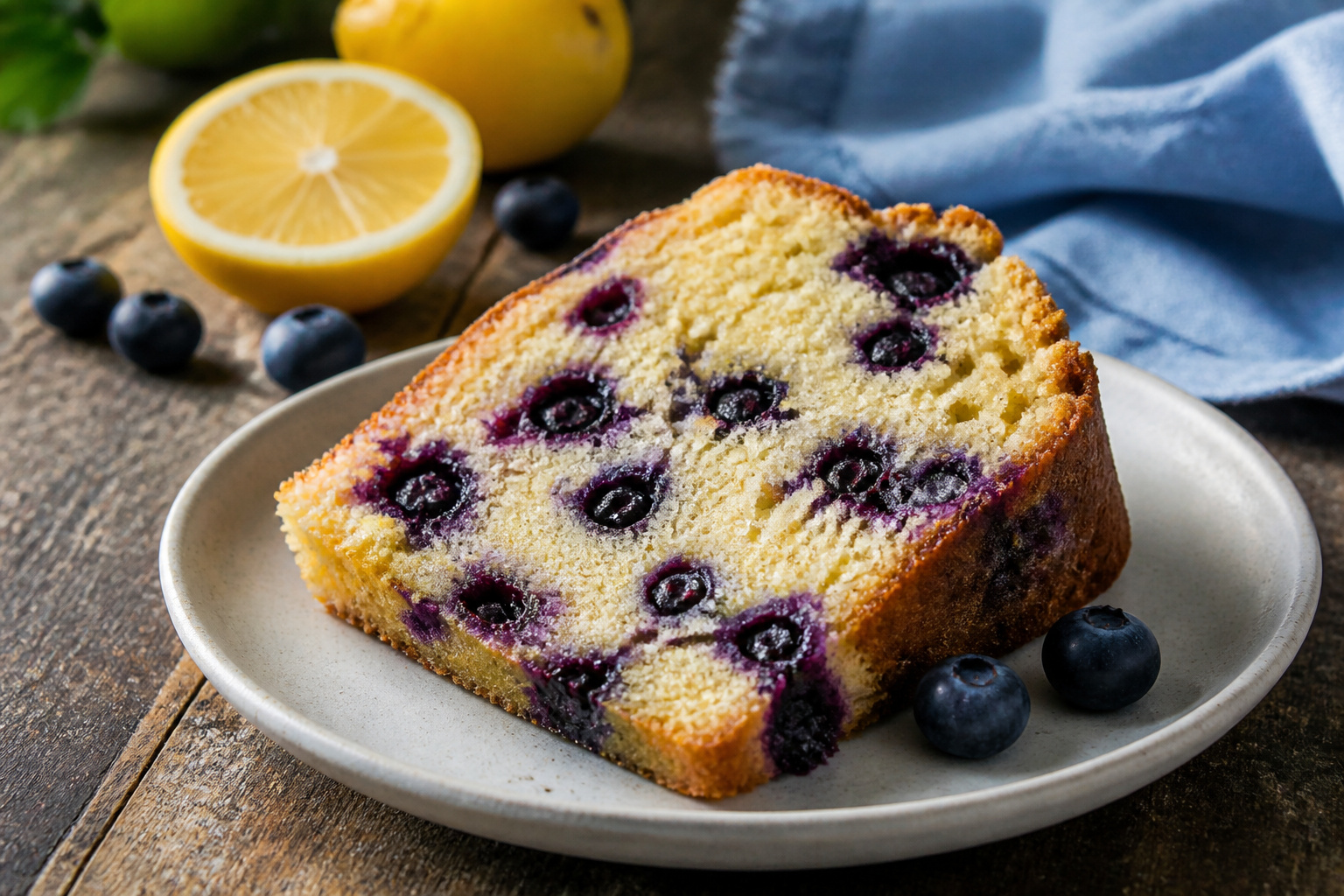
This cake tastes bright and not too sweet, with lemon doing most of the work and blueberries showing up in every bite or staying in the background depending on how many you fold in.
What sets it apart is the batter itself: Greek yogurt or buttermilk gives it enough body that the berries stay suspended instead of sinking, provided you toss them in flour first.
From mixing to cooling, plan on about an hour and a quarter, plus whatever time you need to talk yourself out of eating it warm.
Ingredients
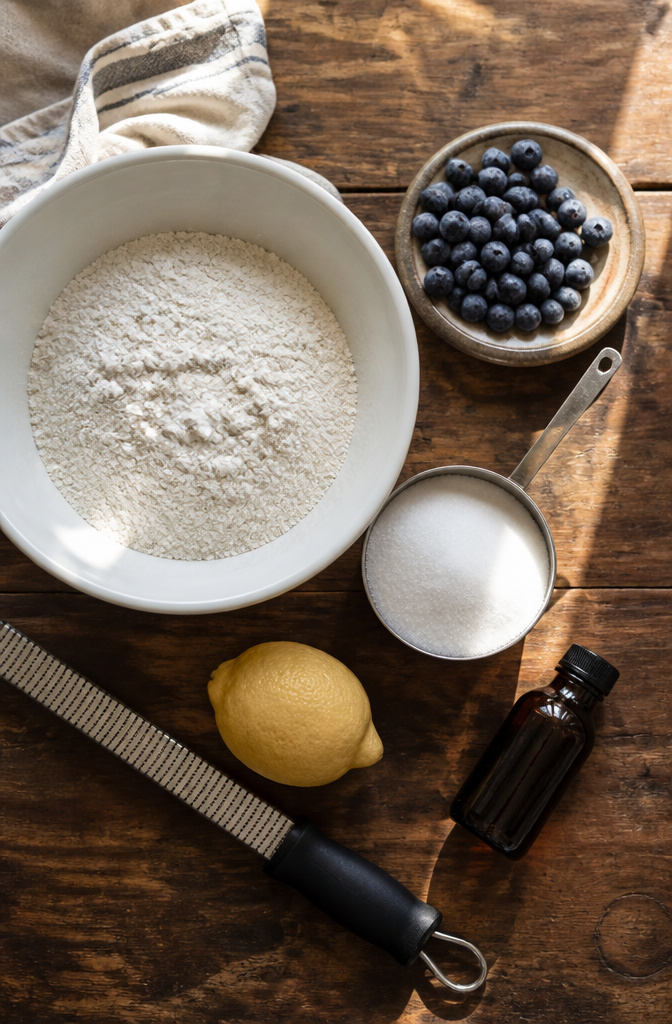
You probably have most of this in your kitchen already.
- 2 cups all-purpose flour
- 1 to 1½ cups granulated sugar (use the lower amount if you like it tart, the full cup and a half if you want it closer to a coffee-cake sweetness)
- 2 to 4 eggs (2 keeps it quick and lighter; 4 gives you a richer, tighter crumb)
- 2 teaspoons baking powder
- ½ teaspoon salt
- ⅓ to ½ cup fresh lemon juice plus the zest of one good-sized lemon (zest before you juice, always)
- ½ cup vegetable oil or melted butter (oil stays moist longer; butter tastes like butter)
- 1 cup plain yogurt or buttermilk (yogurt makes a denser, almost pound-cake texture; buttermilk gives you a softer, more open crumb)
- 1 teaspoon vanilla extract
- 1 to 2 cups fresh blueberries (2 cups if you want berry in every bite; 1 cup if you prefer the lemon forward)
Frozen blueberries work fine. Do not thaw them first; toss them in still frozen or they bleed gray streaks through the batter and sink straight to the bottom.
Method
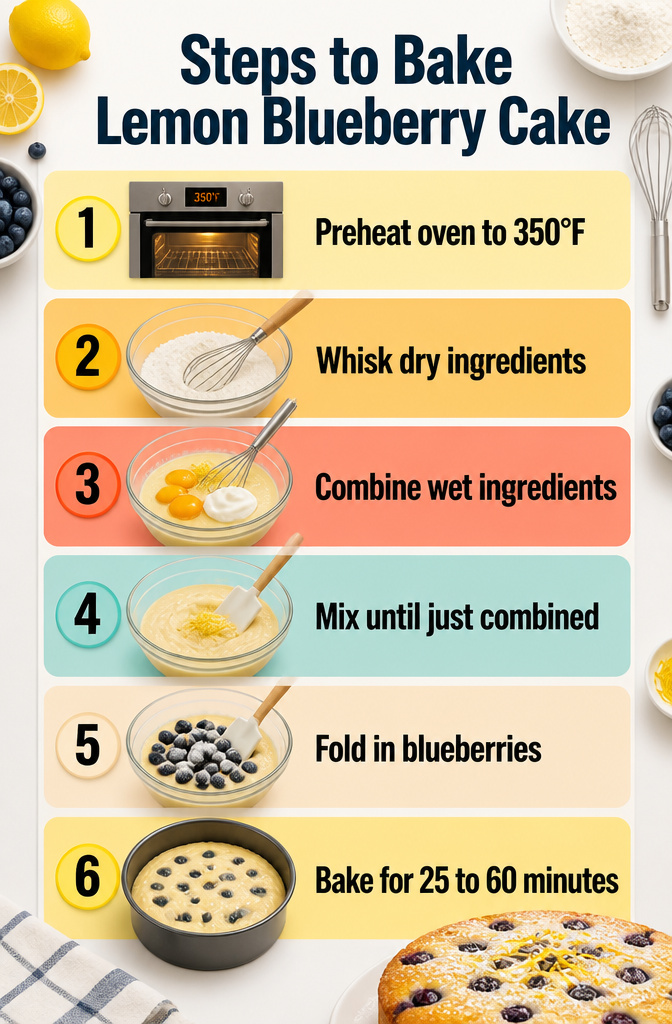
- Heat the oven to 350°F. Grease your pan with butter or nonstick spray, line the bottom with parchment, and grease the paper too. A 9 by 2-inch round is standard, but an 8- or 9-inch square or a 9×13-inch baking pan also works.
- Whisk flour, baking powder, and salt in a medium bowl. Sifting helps, though whisking well is enough.
- Rub sugar and lemon zest together with your fingers until the sugar is moist and fragrant. Beat in eggs, oil, yogurt, lemon juice, and vanilla until smooth. Use room-temperature eggs and plain whole-milk Greek yogurt for the richest crumb; 2% or fat-free still works. A neutral oil like canola or vegetable keeps the cake moist.
- Add the dry ingredients and mix until just combined and lump-free. Do not overmix, or the cake turns dense and may sink.
- Toss blueberries with a tablespoon of flour, then fold them in. This keeps them from sinking. Reserve a handful to scatter on top if you want.
- Pour the batter into the prepared pan and smooth the top. Bake for 25 to 60 minutes depending on pan size: 35 to 50 minutes for a 9-inch round, 50 to 60 minutes for a square. Start checking early; the cake is done when a toothpick in the center comes out clean and the top bounces back when lightly pressed.
- Cool in the pan for 5 to 20 minutes. Run a knife around the edge, turn out onto a wire rack, peel off the parchment, and let cool completely.
- If you want frosting, spread on cream cheese frosting or a simple lemon glaze made from confectioners’ sugar, melted butter, and lemon juice once the cake is fully cool.
Blueberries That Stay Put
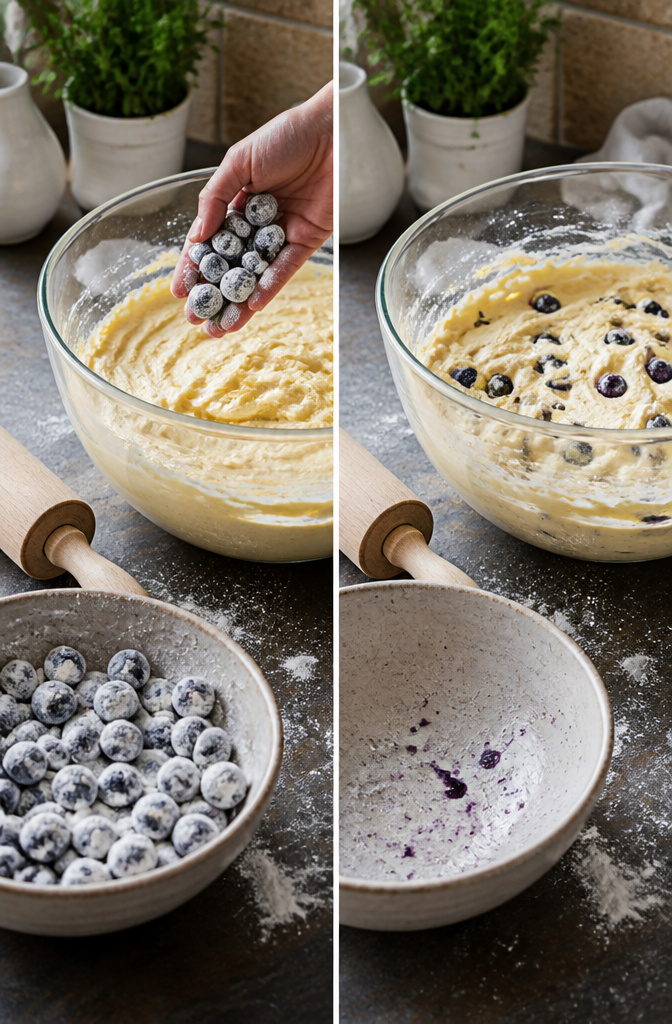
Blueberries sink because they are denser than cake batter, and a thin batter will let them drop straight to the bottom before the oven heat sets anything.
A thick batter helps, which is why this recipe builds in Greek yogurt and just enough flour to give the mix some body. Still, toss the berries in 1 tablespoon of flour before you fold them in.
The flour roughs up the surface of each berry so it can grip the batter around it instead of sliding past.
This works for fresh blueberries and for frozen ones straight from the freezer, still unthawed. Thawed berries bleed juice and turn the flour coating to paste, so keep them cold and firm.
The same trick holds for nuts if you want to add those instead. One tablespoon is enough for the 1¼ cups of berries this cake calls for.
Fold them in last, gently, so you do not knock the coating off or streak the batter purple.
Baking Time by Pan
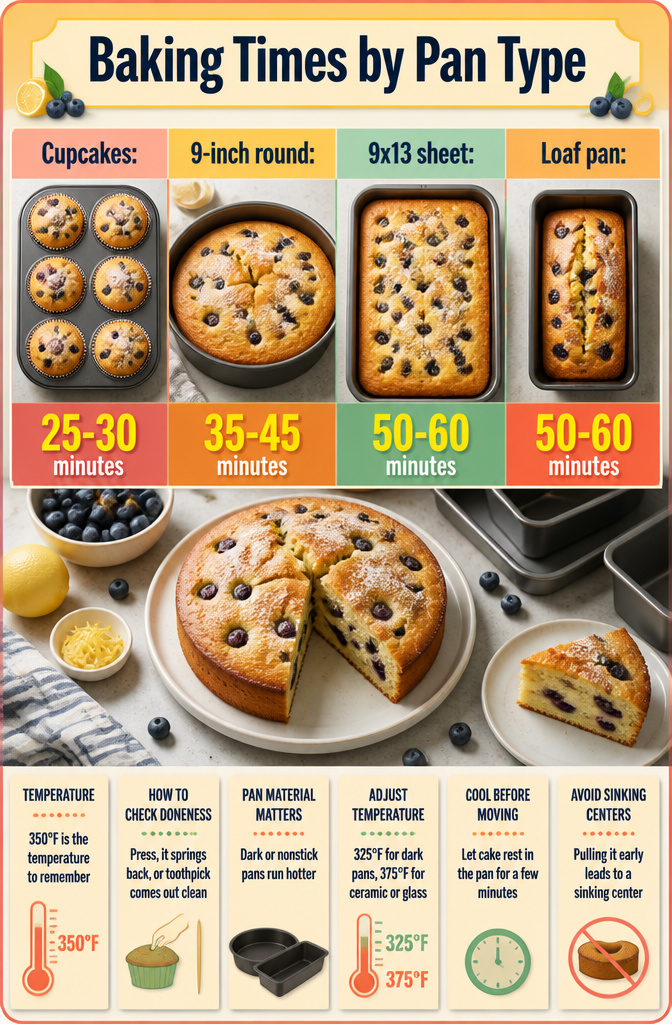
350°F is the temperature to remember, and it stays put for almost every shape this batter takes. Cupcakes finish fastest, usually between 25 and 30 minutes.
A 9-inch round needs 35 to 45 minutes. Push the same batter into a loaf pan or a 9×13 sheet and you are looking at 50 to 60 minutes.
The wider the surface, the more the heat reaches the center quickly; the deeper the pan, the longer that center takes to set.
Doneness is not about the timer alone. Press the top gently with a finger.
It should spring back and not leave a dent. Or slide a toothpick into the center.
If it comes out clean, with no wet batter clinging, the cake is done. If you pull it early, the center sinks as it cools, and no frosting fixes that.
Dark or nonstick pans run hotter, so drop to 325°F or start checking a few minutes sooner. Heavy ceramic or glass can push you toward 375°F to get the same rise.
Either way, let the cake cool in the pan for a few minutes before you try to move it. The berries are soft and the crumb is tender; it needs that rest.
Frosting or Not
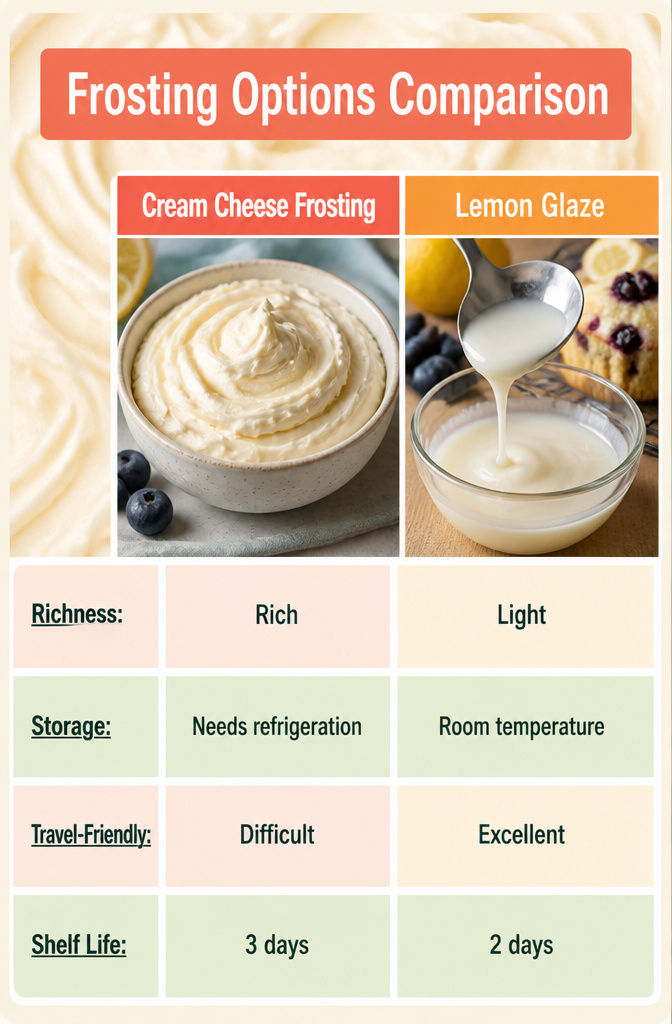
Cream cheese frosting gives you the richest finish, but it needs to stay cold and it turns a simple lemon blueberry cake into something closer to cheesecake territory.
That tang pairs well with the berries, yet it also means pulling the cake from the fridge an hour before serving so the crumb softens again.
For a Tuesday night when you want to slice and eat, that step can feel like one too many.
A lemon glaze sets crisp in about twenty minutes and travels without worry. You whisk powdered sugar with lemon juice until it runs off the spoon in a thin ribbon, then pour it over the cooled cake.
It cracks slightly when you cut, which some people find charming and others find messy. It is the only option that holds up on a countertop for two days without weeping or separating.
Whipped cream looks elegant for exactly three hours, then it starts to deflate and pool. If you are serving the cake the same afternoon and eating every last piece, it works.
For leftovers or a potluck, it becomes a liability you have to manage rather than a topping you can forget about.
Storing What Is Left
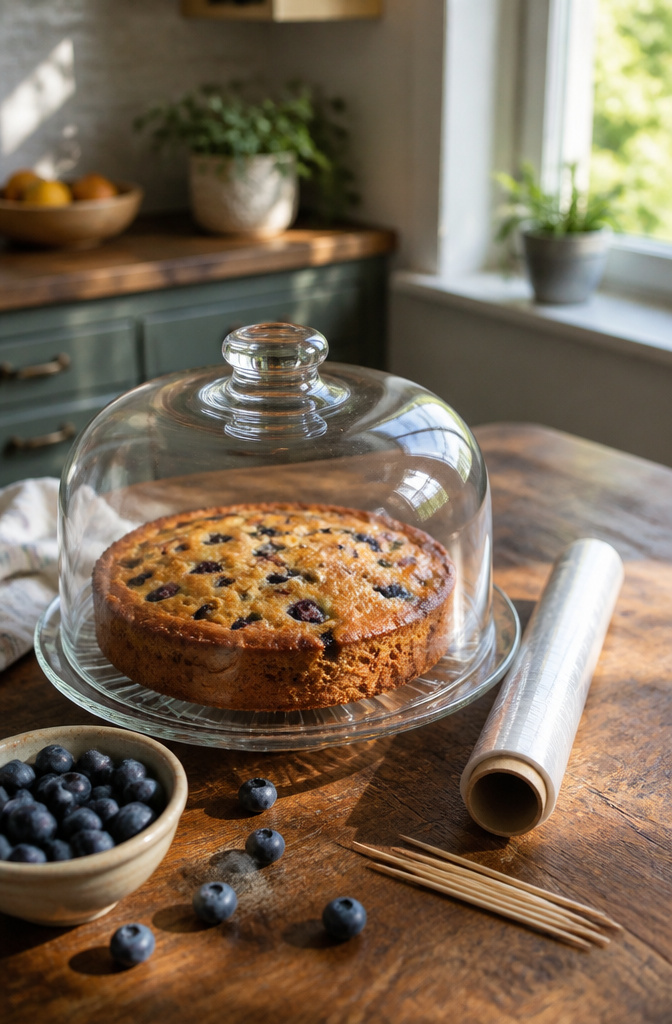
Unfrosted cake keeps at room temperature for 2 to 3 days under a cake dome or wrapped tight in plastic.
The dome is the better choice if you have one; wrapping can lift the top crust if you are not gentle peeling it back.
Frosting changes where the cake lives. A lemon glaze or thin icing can still sit out under that same dome.
Cream cheese frosting, though, has to go in the refrigerator, and so does any cake with whipped cream on top.
Cover it loosely so the wrap does not stick to the surface; a few toothpicks poked into the top will hold it off.
For longer storage, freeze the cake unfrosted. Wrap it in plastic, then foil, and it will hold for up to a month.
Thaw it in the refrigerator overnight, then add whatever topping you planned to use and the fresh berries just before you serve.
Frozen Berries and Other Swaps
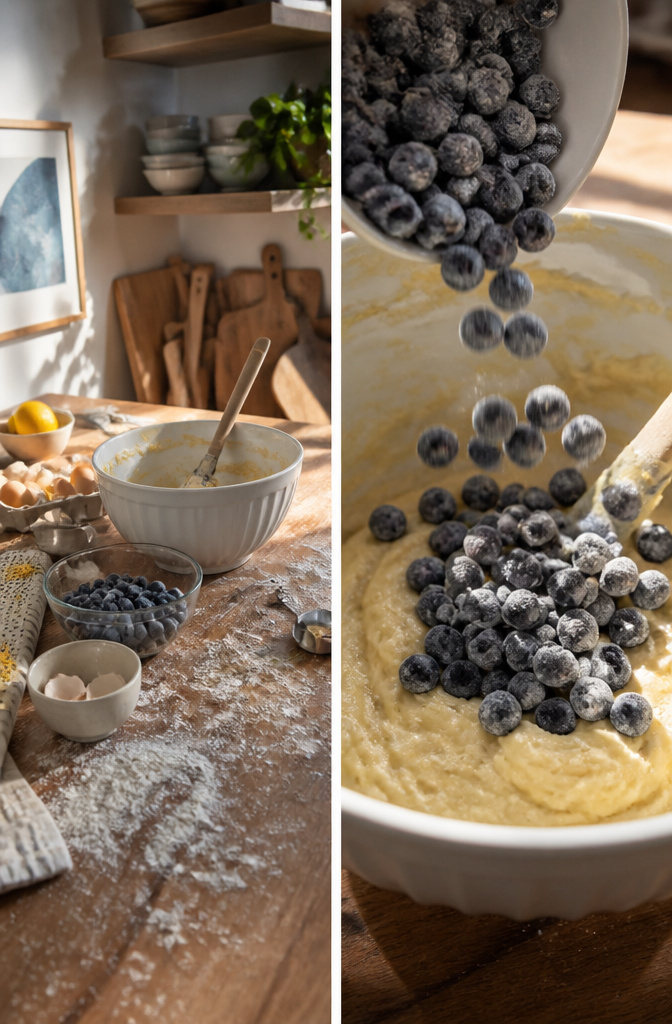
Frozen blueberries work here, but do not thaw them first. Add them straight from the freezer; frozen berries bleed less and will not turn the batter purple the way thawed ones do.
If the center is still wet when you test it, give the cake another five minutes and check again.
Cake mix versions speed things up if you are starting from a box, and the results hold up fine. For a gluten-free swap, use a 1:1 all-purpose blend, though you may need to cut back the liquid slightly.
Letting the batter rest fifteen minutes before baking gives the gluten-free flour time to absorb moisture so the crumb does not go gummy.
Frequently Asked Questions
How do you prevent blueberries from sinking?
Toss them in a tablespoon of flour before folding them into the batter. The flour roughs up each berry so it can grip the surrounding batter instead of sliding past it.
A thick batter also helps, which is why this recipe uses Greek yogurt and enough flour to give the mix real body.
Can I use frozen blueberries?
Yes, but do not thaw them first. Add them straight from the freezer; frozen berries bleed far less and will not streak the batter gray or purple the way thawed ones do.
Toss them in flour while they are still frozen and firm, then fold them in gently.
What is the best way to store the cake?
Unfrosted cake keeps at room temperature for 2 to 3 days under a cake dome or wrapped tight in plastic. If you use cream cheese frosting or whipped cream, refrigerate the cake instead.
For longer storage, freeze the cake unfrosted, wrapped in plastic then foil, for up to a month.
Can you add fresh blueberries to a lemon cake mix?
You can, but cake mix batters tend to be thin and light, so the berries may sink. Toss them in flour or cornstarch first to give them weight and grip, and expect a softer crumb than a scratch-made cake.
For best results, add a teaspoon of lemon extract and a tablespoon of lemon zest to the mix so the lemon flavor comes through.
What are common lemon blueberry cake mistakes?
Overmixing the batter makes the cake dense and can cause it to sink. Thawing frozen berries before adding them stains the batter purple and lets them drop straight to the bottom.
Pulling the cake from the oven too early leaves the center wet and prone to collapsing as it cools. Check with a toothpick and a light press on top; it should spring back.
What makes lemon blueberry cake so good?
The tart lemon and sweet berries balance each other, and the thick, yogurt-based batter bakes into a moist crumb that holds the fruit in place rather than letting it sink.
You can adjust the sugar and egg count to make it lighter or richer depending on what you want that day.
How do you make Mary Berry’s lemon blueberry cake?
This is not Mary Berry’s recipe. The cake here is a simpler American-style sheet or layer cake built from all-purpose flour, oil or butter, yogurt or buttermilk, and fresh lemon juice and zest.
It bakes in a 9-inch round, square, or 9×13-inch pan at 350°F, with no layered assembly or formal decoration required.