These cakes range from a round library shelf that skips the sculpting to a fairytale castle built as its own piece and set on last. The message you want on the cake decides which one fits.
A name, an age and a greeting sit well on open fondant pages, a stack of book spines holds several titles, and a topper carries the words when the pages are gone. Settle the wording first, and the shape follows.
1. Classic Open Book Cake
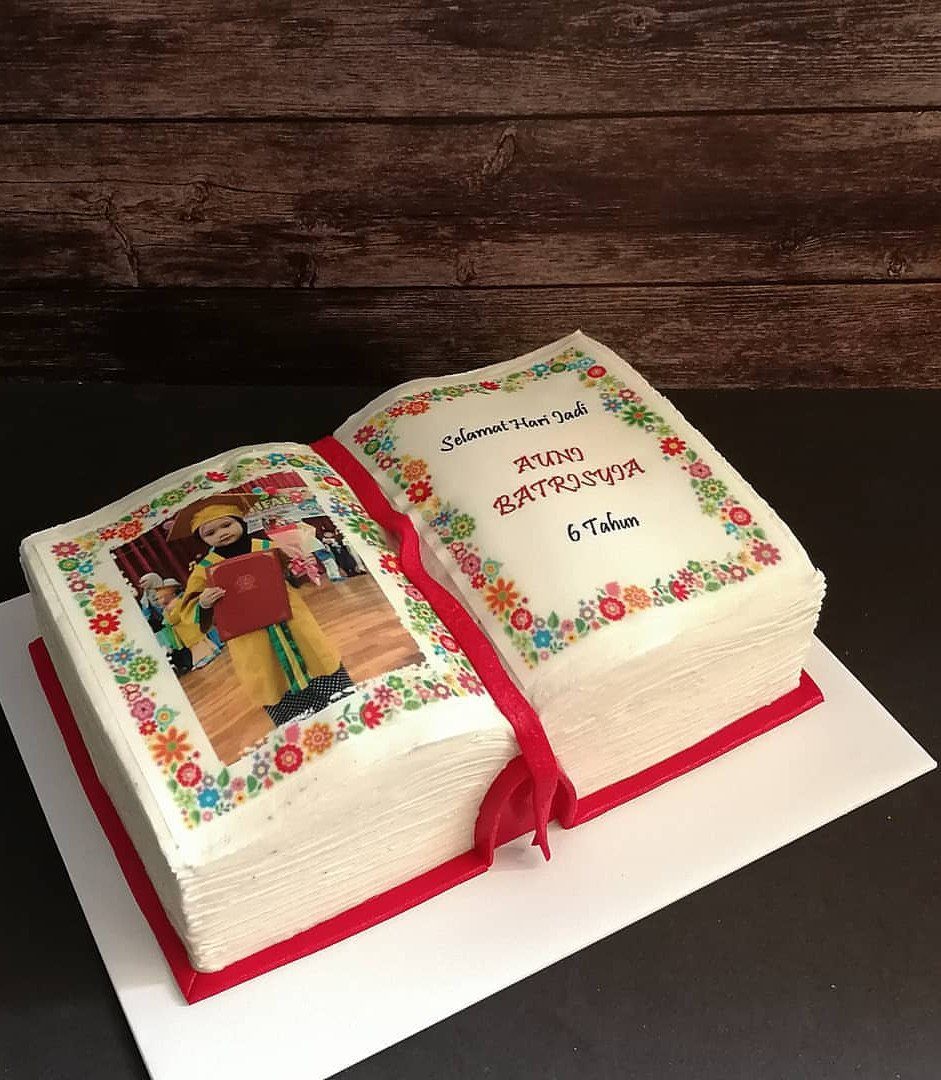
Fondant gives this cake its crisp, smooth pages, and the pages are where you personalize it.
A portrait and a name turn a generic book into one made for a single person, and a red cover frames the white pages without competing with them.
Keep the lettering short.
A name, an age and a greeting fill the space well. Anything more starts to crowd the portrait.
2. Library Shelf Book Cake
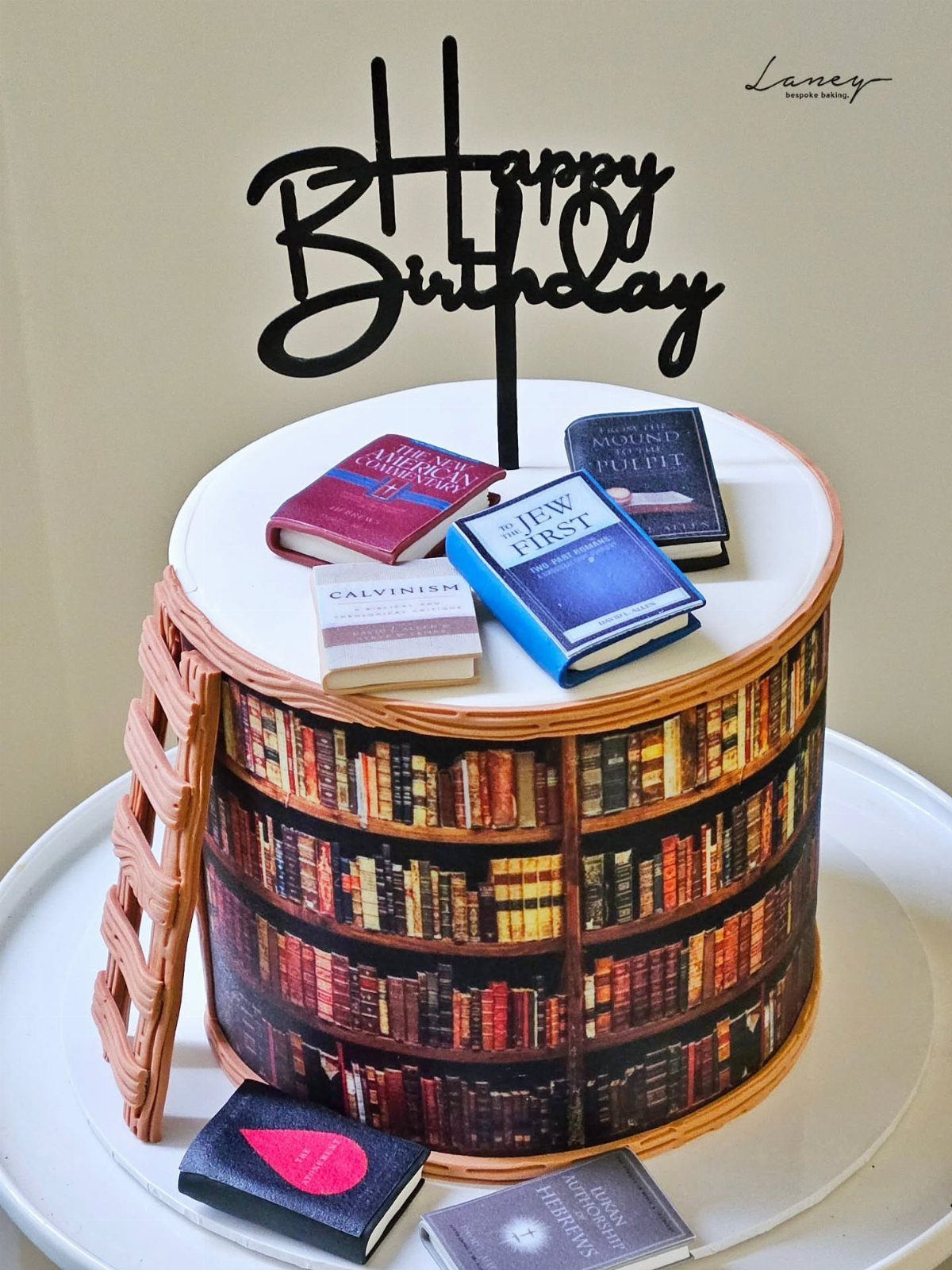
Not every book cake needs an open spread. A round cake dressed as a library shelf skips the sculpting and puts the work into the details: the shelf image around the sides and a handful of miniature books on top.
You give up the blank pages, so the topper carries the message. Pick a topper that matches the occasion, and group the books on one side so the greeting stays easy to read.
3. Fairytale Open Book Cake
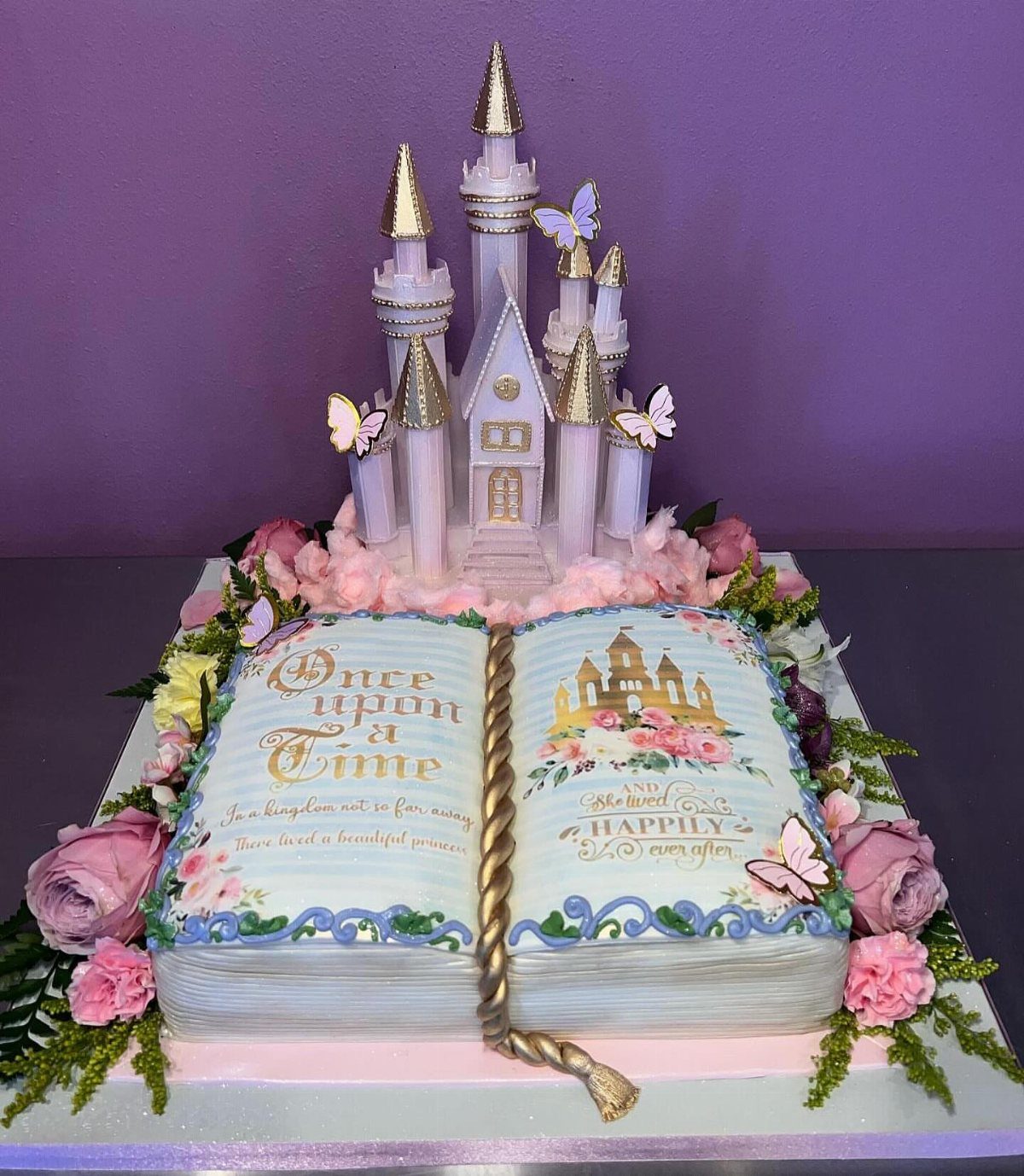
A castle rising from the pages makes the cake taller than a flat book, so build it as its own piece and set it on last. That keeps the pages clean for lettering while you work.
"Once upon a Time" and "Happily ever after" are the natural lines, since they open and close any fairytale.
Flowers around the base soften the join between castle and book. White and gold keeps the castle looking like part of one design.
4. Children’s Storybook Cake
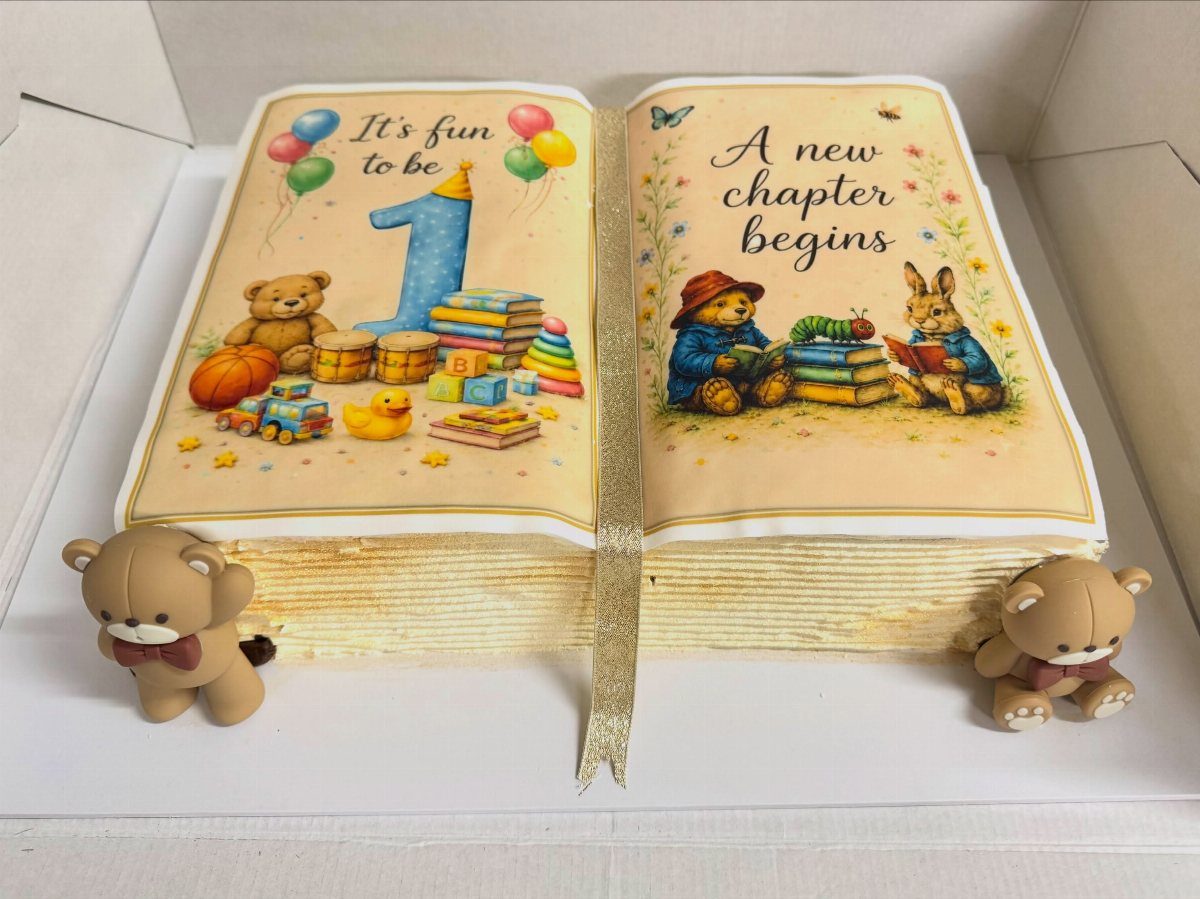
Pick the story the birthday child already knows by heart, then draw its characters on the pages.
Teddy bears and toys work for a first birthday because the child will recognize them, though the real audience is the parents holding the cameras.
"A new chapter begins" is the line to borrow for a 1st birthday; it fits the book shape better than a plain greeting. Small figurines set beside the cake add height without changing the book.
5. Wedding Book Cake
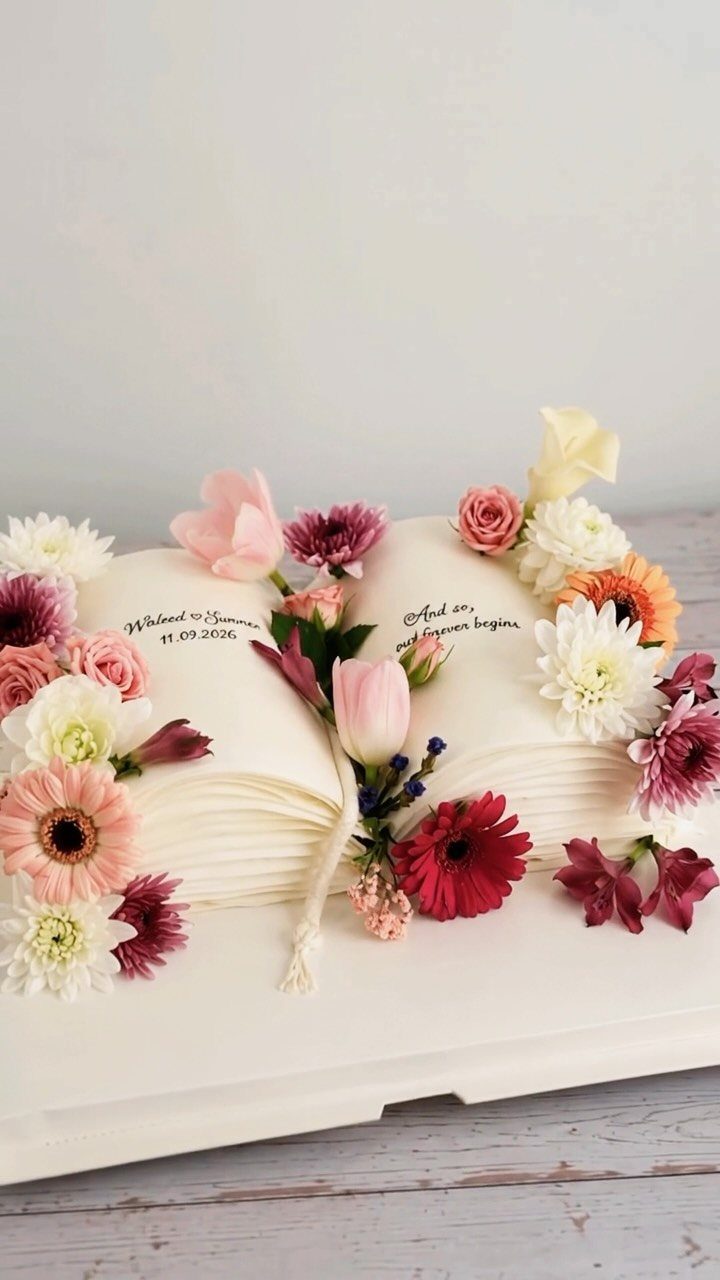
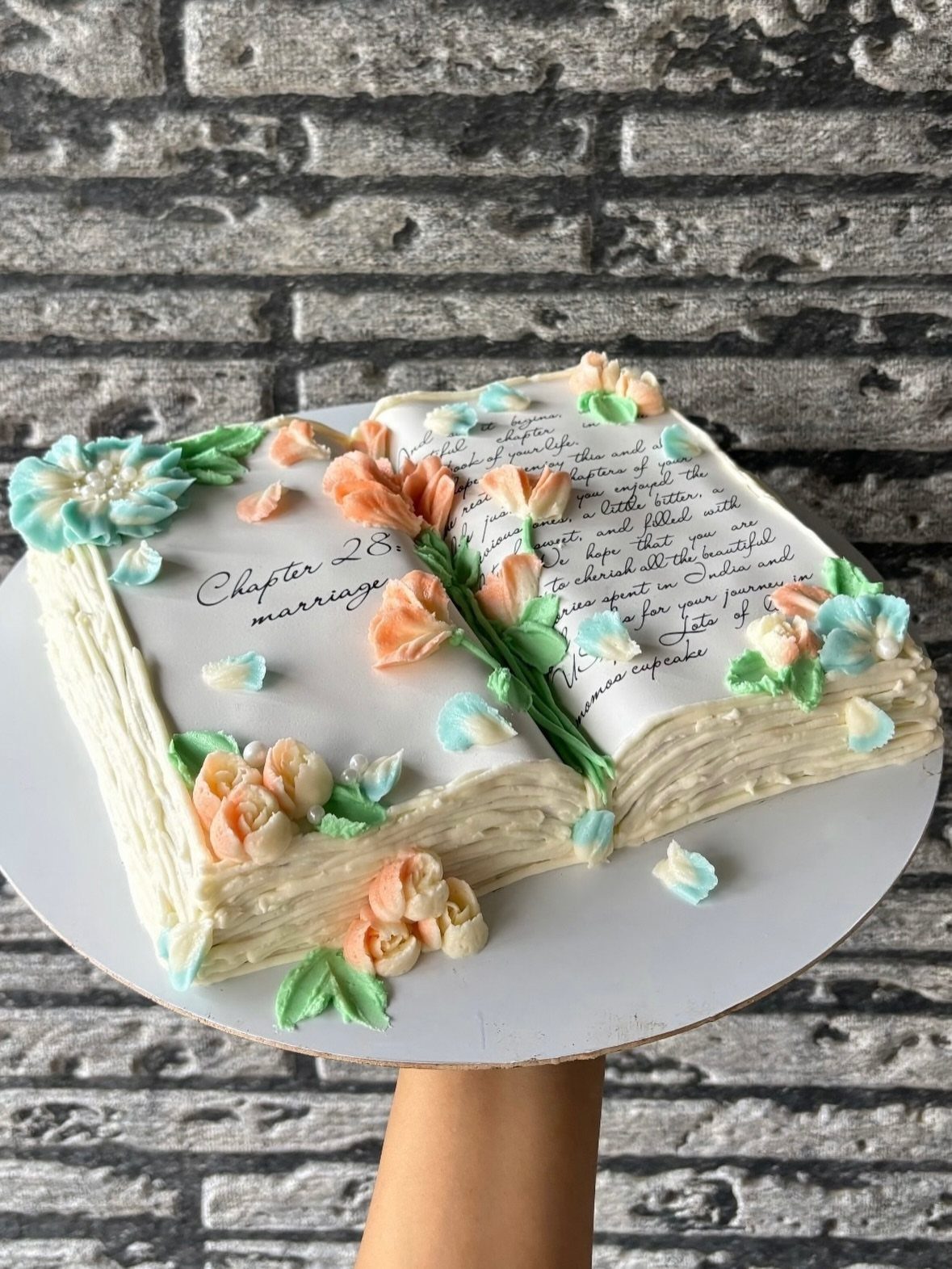
White frosting lets the flowers do the talking. Colorful blooms on a pale book look formal without needing much sugar work, and cursive lettering keeps the pages feeling like a wedding invitation.
Names and the date belong on the pages, with a closing line such as "And so, our forever begins" underneath. Check that any fresh flowers are safe to place near food, and keep stems out of the cake itself.
6. Book Stack Graduation Cake
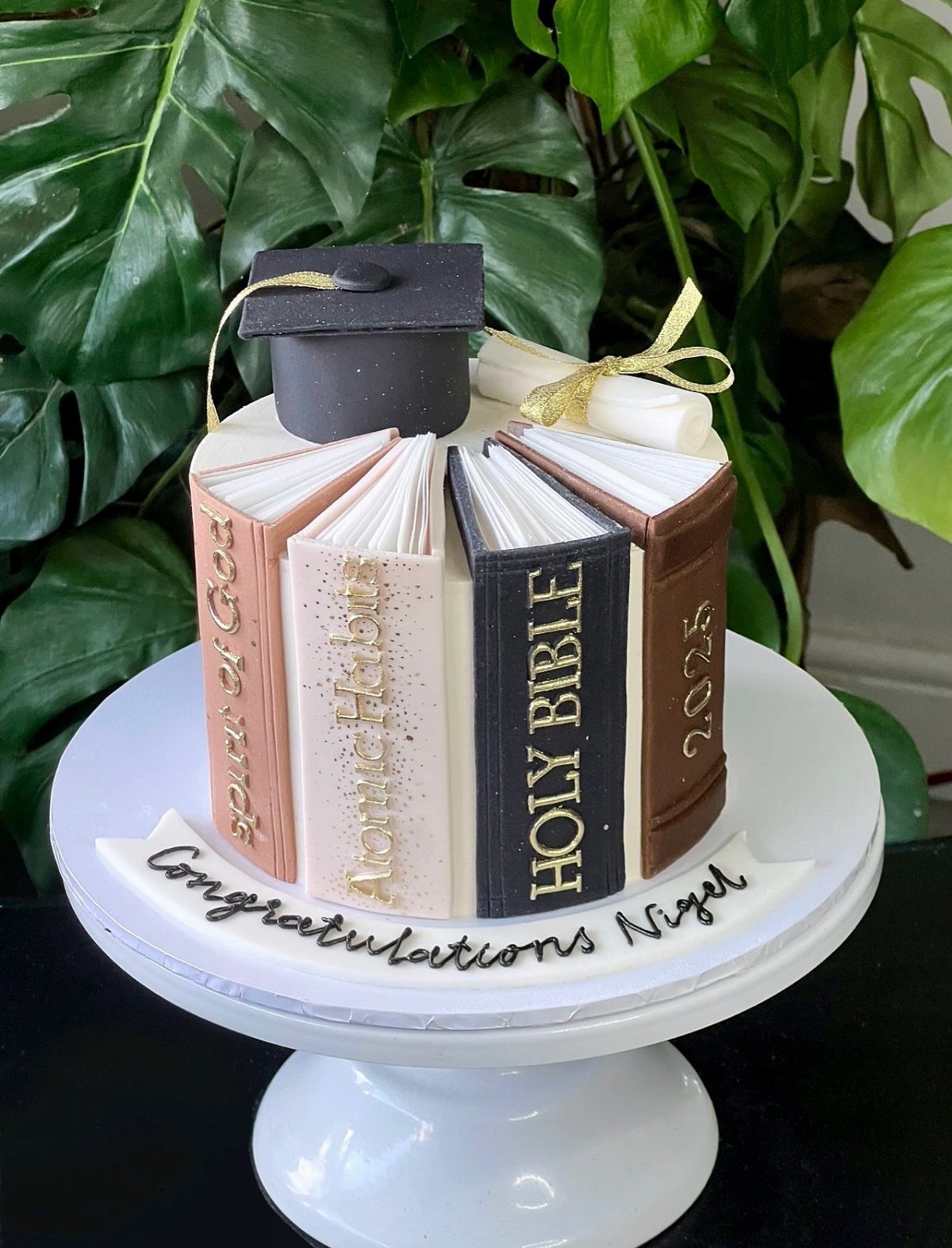
A stack of books gives you spines, and each spine is a line of text. Use them for titles that mean something to the graduate: a favorite book, a field of study, a personal belief.
Put the graduation year on one spine so the cake dates itself.
A mortarboard and rolled diploma on top say "graduation" at a glance, which frees the spines to be personal. Three or four titles is plenty before the stack looks crowded.
7. Anniversary Book Cake
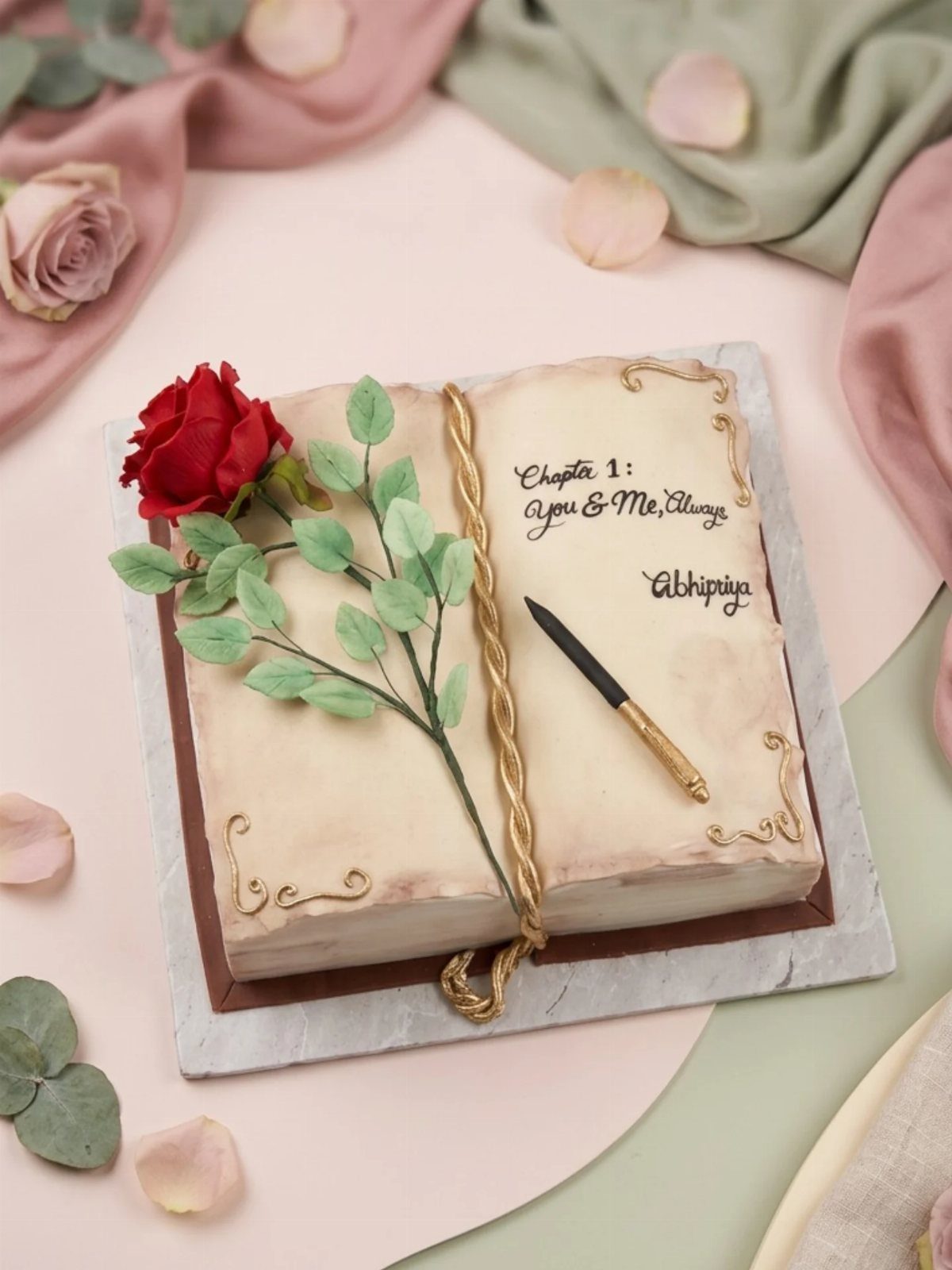
"Chapter 1" turns an anniversary into the start of a longer story, which suits a couple better than a closing line would. Change the number to match the year: Chapter 10 for a tenth, for example.
Keep the wording to one line and a name. A single red accent, like the rose, gives the pages a focal point, and a pen beside the book adds to the idea without cluttering the surface.
8. Monster-Themed Open Book Cake
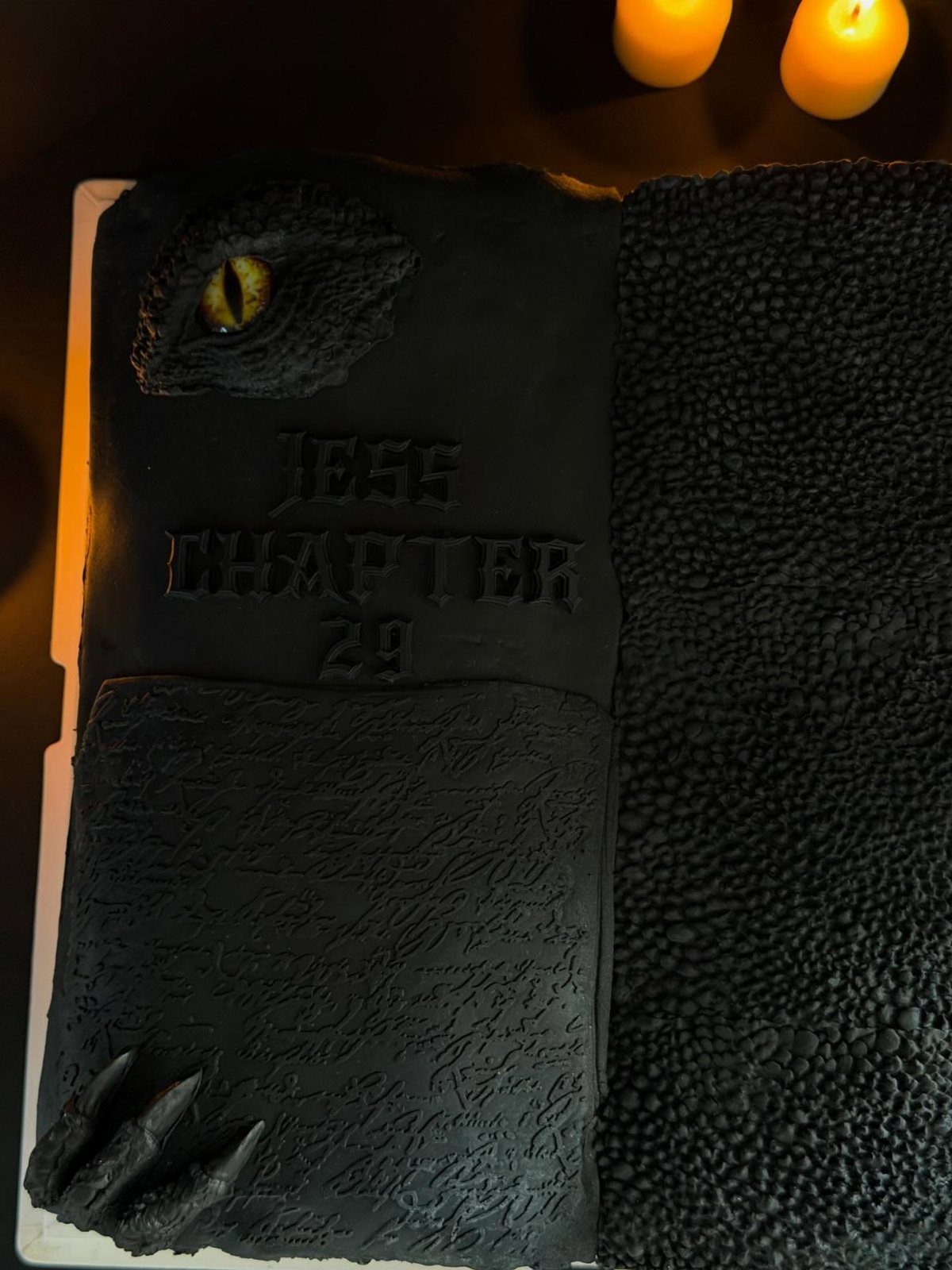
A chapter number is an easy way to carry an age, and "Chapter 29" with a name tells guests whose birthday it is without a single candle-count joke.
Black frosting and a yellow eye make a monster book that suits an adult party better than a cartoon one.
Dark cakes hide dark lettering, so use a light color for gothic script and keep it to a name and a number. Let the eye and claw be the only sculpted details.
9. Heart-Shaped Open Book Cake
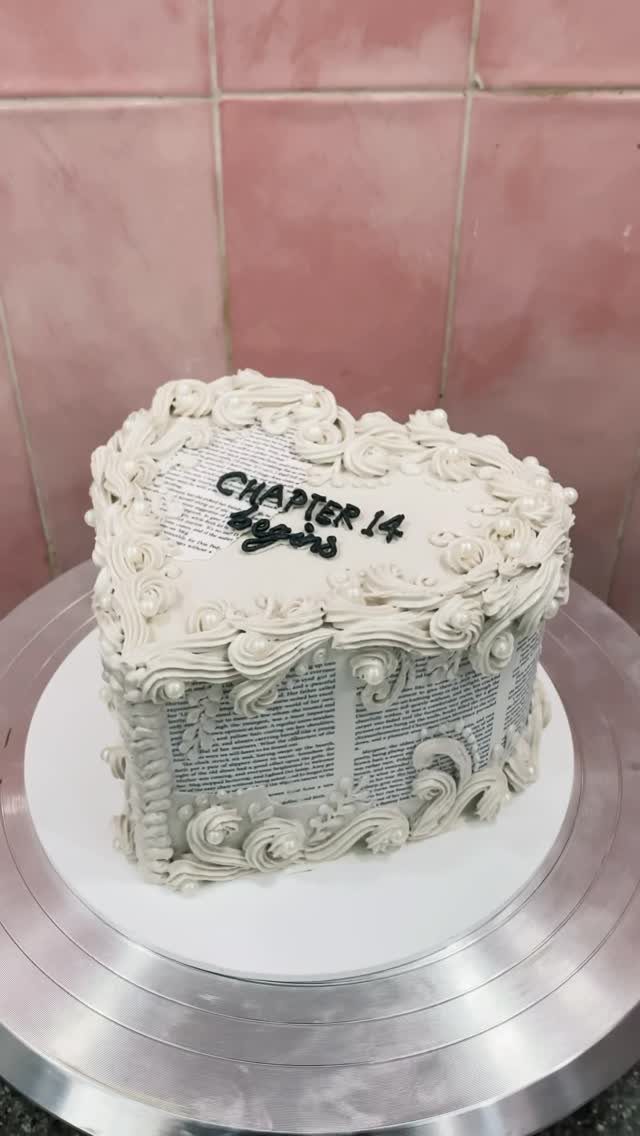
A heart pan does the shaping, which frees your time for piping. White swirls across the top read as pages, and a message set in the middle of them keeps the cake from looking like a plain heart.
"Chapter 14 begins" works for any number you want to mark: an age, a year together, a milestone. A pale cake on a pink backdrop photographs well, though a plain board works just as well.
10. Floral Open Book Cake
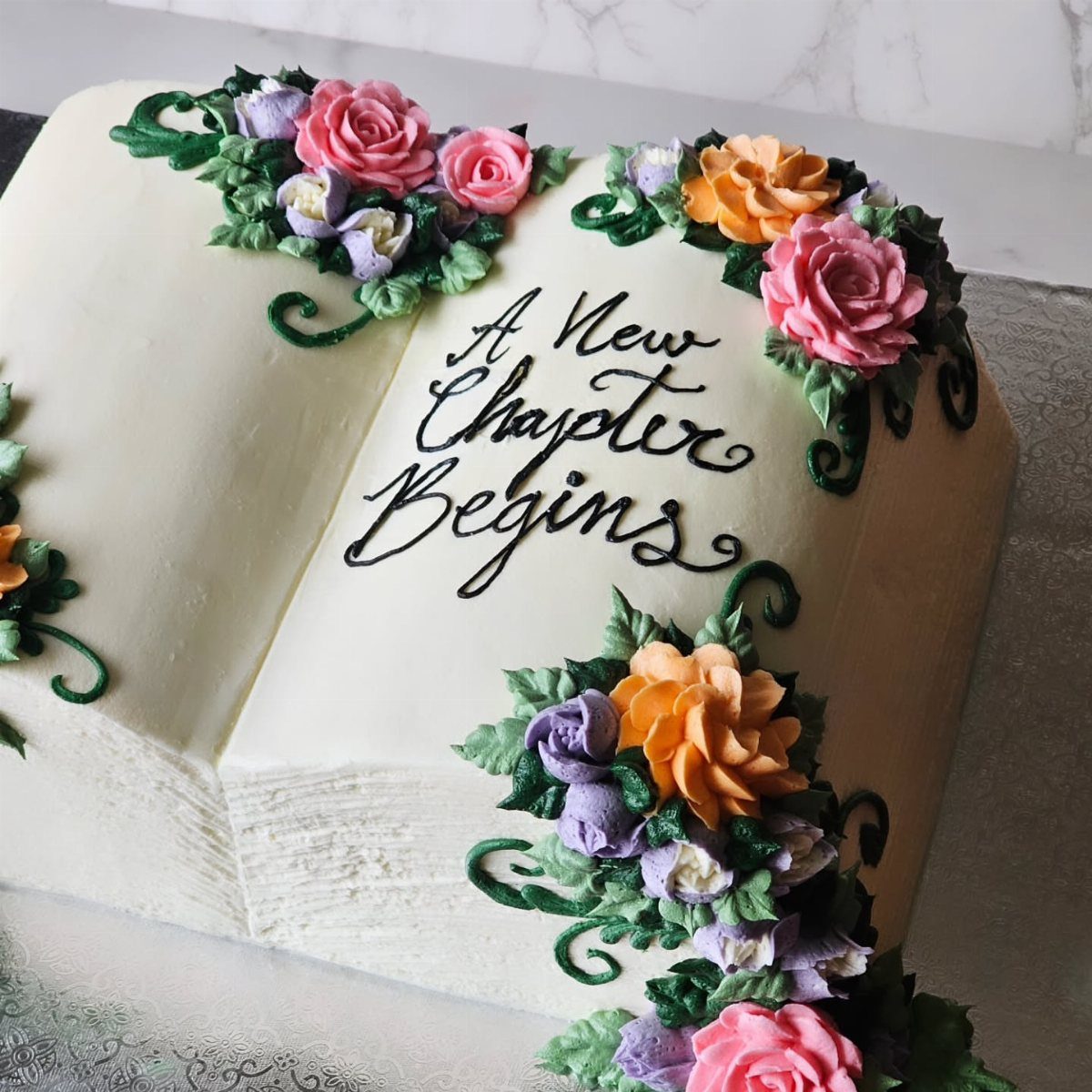
Write the message first, then pipe the flowers around it. Black icing on white frosting reads clearly, and the blooms can then crowd the edges without covering a single letter.
Cluster the roses and leaves toward one side or along the center fold, and leave a clean patch of page for "A New Chapter Begins."
A mix of colors makes the cake feel playful; one or two shades would look more formal.
11. Antique Open Book Cake
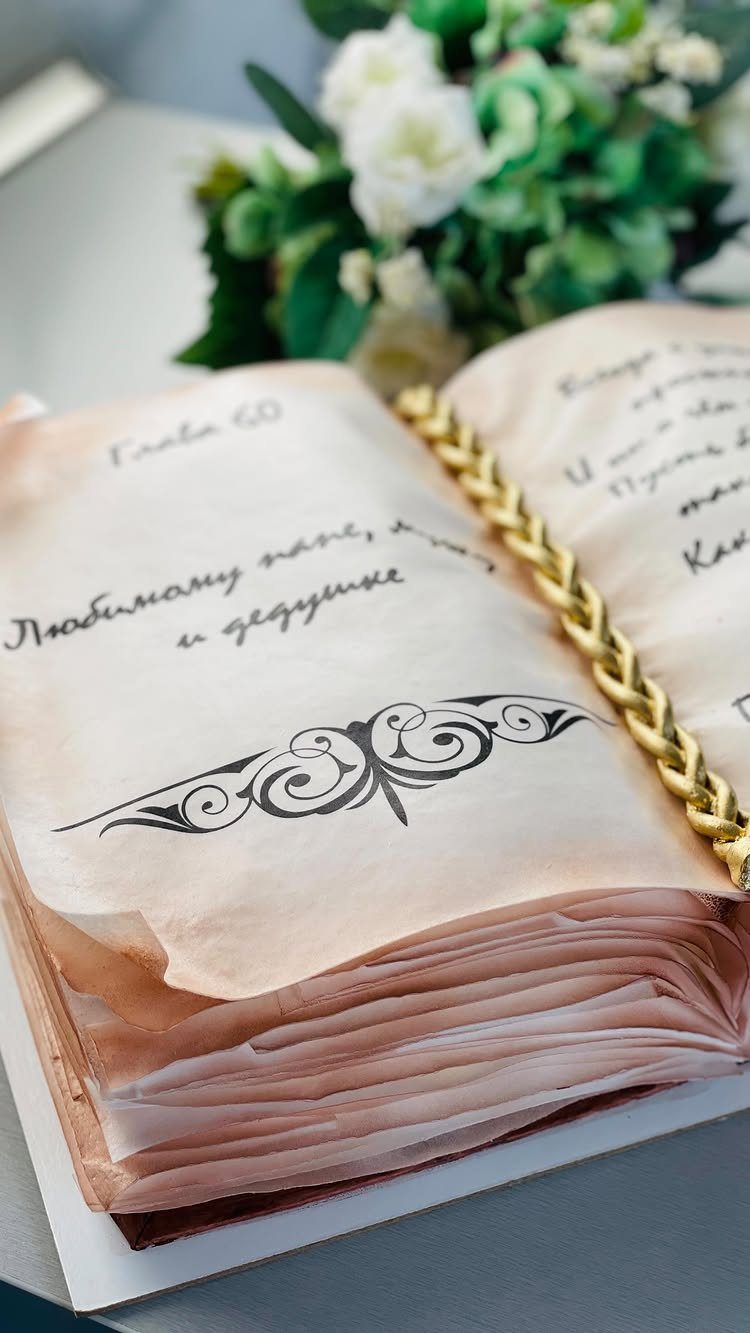
Old books are all about texture.
Tint the pages a warm, aged shade rather than bright white, and let the handwriting do the rest. A gold braided spine adds the finishing detail that says "heirloom."
Write the text in a language or a line that means something to the person receiving the cake, such as a verse or a family saying.
Practice the handwriting on paper first, since script can’t be erased once it’s on the cake.
12. Scientific Open Book Cake
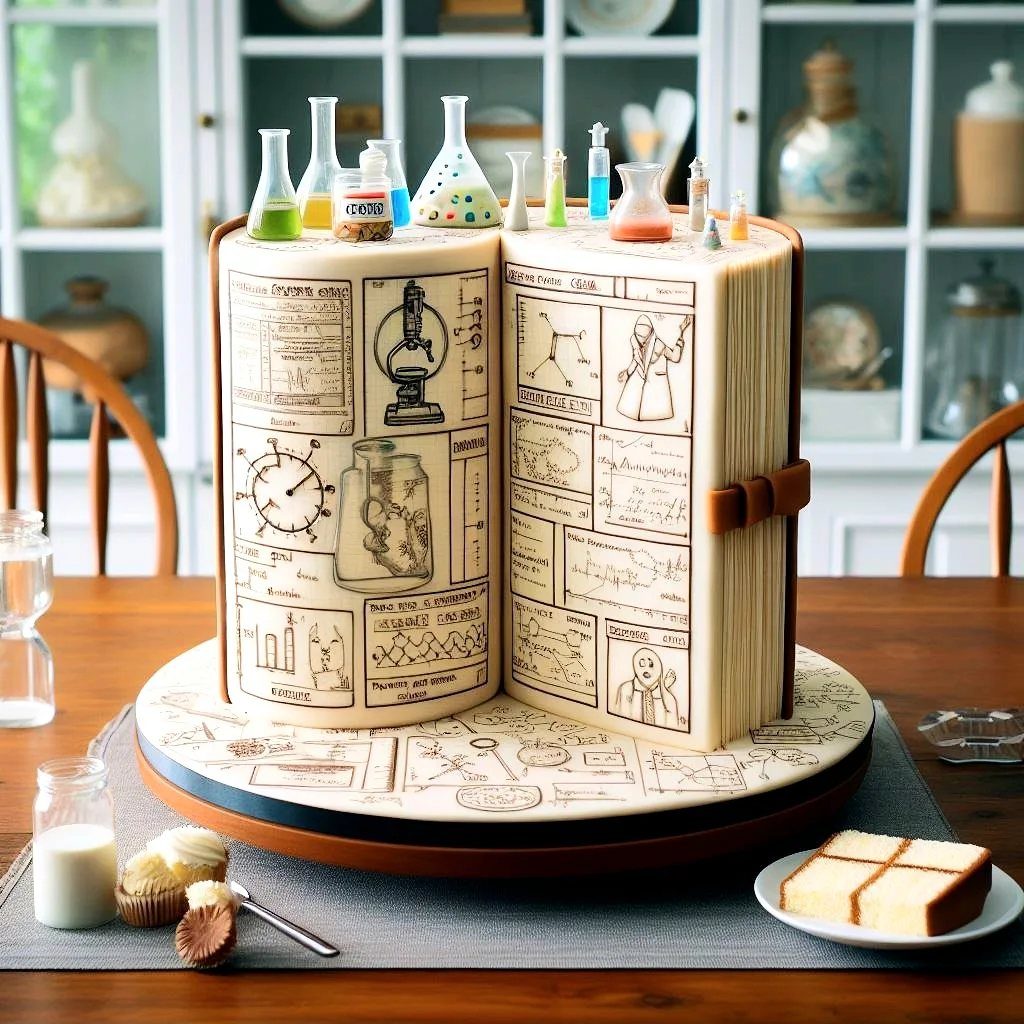
Choose diagrams and formulas from the recipient’s actual field, whether that’s chemistry, biology or physics, so the pages look like their own notebook rather than a generic lab.
Tiny flasks on top add a three-dimensional touch.
Keep them to one corner so the drawings stay visible, and make them small enough that they don’t overpower the book. This one suits a teacher, a student or anyone who likes a good experiment.
13. Pink Open Book Cake
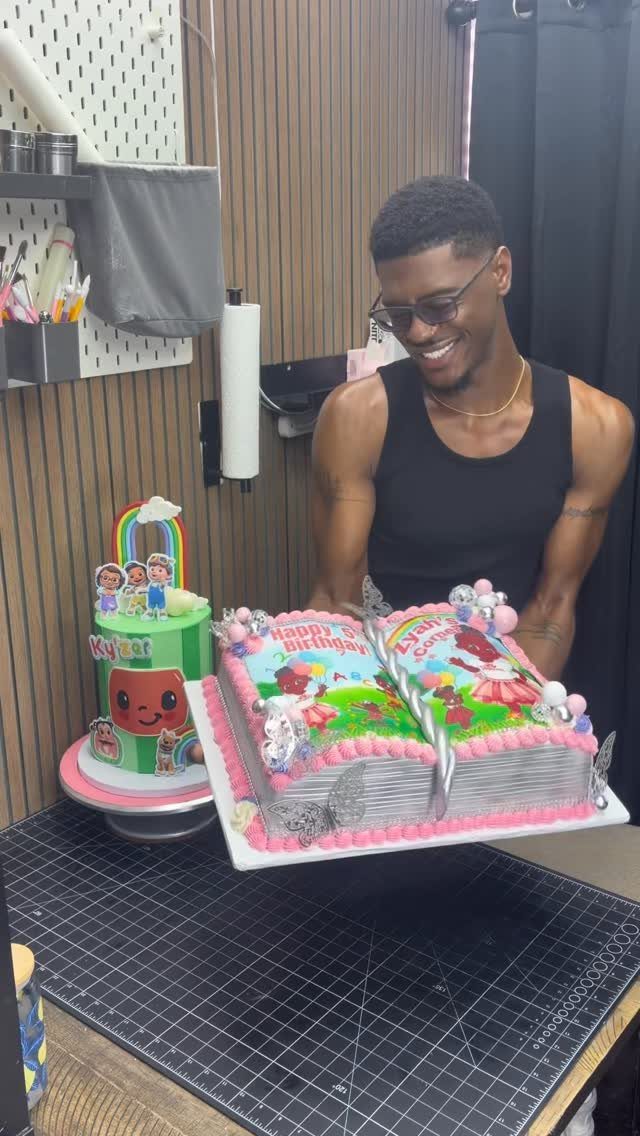
Pink frosting turns an open book into a party cake, and it suits a birthday better than a red or black cover would.
Pair it with colorful decorations and a "Happy Birthday" greeting on the pages, and the cake reads as a celebration before anyone sees a candle.
Keep the pink one even shade across the whole book so the decorations are the only thing that varies. Pipe the greeting in a deeper or lighter color than the frosting, so it stays readable against the pages.
A smaller second cake beside the book, like a rainbow, adds more color without crowding the main piece.